Category: Pets in Japan

Pet guides, pet-friendly living, and pet products in Japan

  • Pet-Friendly Apartments in Japan 2026 | The Expat’s Complete Guide

    Pet-Friendly Apartments in Japan 2026 | The Expat’s Complete Guide

    Finding a pet-friendly apartment in Japan (ペット可物件) is one of the biggest challenges for expats relocating with cats or dogs. Only around 20–30% of apartments in cities like Tokyo officially allow pets. With the right approach, however, finding a great home for you and your pet is absolutely achievable.

    Why Is Pet-Friendly Housing So Difficult to Find?

    Japan’s apartment culture has historically been conservative about pets. Thin walls in Japanese buildings mean barking and pet odors can affect neighbors significantly. Landlords worry about floor scratches and lingering odors reducing property value. Japan’s deposit system (敷金) wasn’t designed specifically for pets, creating liability ambiguity. Condo management associations (管理組合) often set blanket no-pet rules. The market is changing, though — rising pet ownership and landlord adaptation are creating more options every year.

    Types of Pet-Friendly Properties

    ペット可 (Pet Allowed)

    The standard designation. Always confirm which species and sizes are allowed — many permit cats but not dogs, or dogs under 10kg only.

    ペット共生 (Pet Co-Living)

    Premium category designed for pet owners — built-in pet doors, entrance wash stations, scratch-resistant flooring, pet-optimized ventilation. More expensive but ideal long-term.

    一戸建て (Detached Houses)

    Suburban detached houses are significantly more pet-friendly — private gardens, no shared walls, relaxed landlord attitudes. Great for large dogs or multiple pets.

    Where to Find Pet-Friendly Apartments

    Major platforms: Suumo (スーモ) at suumo.jp — Japan’s largest portal with pet filter. Homes.co.jp — second largest with pet filter. GaijinPot Apartments at apartments.gaijinpot.com — English platform for expats with foreigner-friendly and pet-friendly listings. Sakura House — share houses with English support, some pet-friendly.

    Expat Tips: Renting Successfully with Pets

    1. Always Be Transparent

    Never hide your pet — discovery is grounds for immediate lease termination. Disclose species, breed, weight, age, and neuter status upfront. Japanese landlords value honesty highly, and transparency is what gets applications approved.

    2. Prepare a Pet Resume (ペットの履歴書)

    A 1–2 page document with your pet’s photos, vaccination records, personality description, and neuter/spay confirmation. This practice is uniquely popular in Japan and extremely effective. Include your pet’s Japanese name for extra goodwill — it signals respect for Japanese culture.

    3. Offer a Pet Deposit (ペット敷金)

    Proactively offering an additional month’s rent as a pet deposit (typically 50,000–150,000 yen) demonstrates responsibility and gives landlords concrete reassurance against potential damage.

    4. Consider Suburban Areas

    Central Tokyo has limited, expensive pet-friendly options. Areas 30 minutes out — Nerima, Edogawa, Koenji, Kawasaki — dramatically increase availability at lower rents. For large dogs, suburban Kanagawa or Saitama offer excellent space at significantly lower cost.

    5. Use a Guarantor Company (保証会社)

    Many landlords require a Japanese guarantor — difficult for expats. Guarantor companies like Orico Forent, Roombank, and CASA are widely accepted alternatives and your real estate agent will handle the process.

    Pet-Friendly Neighborhoods in Tokyo

    Sangenjaya (三軒茶屋) Best Overall — dog owners, great parks, vibrant pet cafe scene
    Nakameguro (中目黒) Excellent — Meguro River walkway, thriving pet culture hub
    Koenji (高円寺) Great — affordable, artsy, many cat-friendly spaces
    Nishi-Ogikubo (西荻窪) Good — relaxed suburban feel, great for dogs
    Suginami-ku (杉並区) Good — quiet, family/pet-friendly, reasonable rents
    Hachioji (八王子) Excellent for large dogs — space, nature, affordable

    Pet-Friendly Cities Beyond Tokyo

    Osaka: Tennoji and Abeno wards have good pet-friendly availability at lower rents. Nagoya: One of Japan’s most pet-friendly cities — Moriyama and Midori wards offer excellent housing at low rents. Fukuoka: Widely considered the most livable city for expat pet owners — lower rents, access to nature, relaxed culture, strong expat community. Sapporo: Excellent for large dogs — spacious parks and cool climate, though winter paw care is essential.

    Pet Supplies in Japan

    Japan has outstanding pet supplies available everywhere. Amazon Japan (amazon.co.jp) offers the best online selection. Cainz Home (カインズ) is a nationwide home center with large pet sections. Aeon Pet (イオンペット) is a major specialty chain inside AEON malls. Kojima Pet offers grooming and veterinary services. Rakuten is ideal for bulk food with point rewards.

    Final Thoughts

    Finding pet-friendly housing in Japan takes preparation — start your search early, be transparent about your pet, prepare a pet resume, and focus on pet-culture-rich neighborhoods. Once settled, Japan’s excellent veterinary care, abundant pet supplies, and animal-loving culture make it a wonderful place to live with your furry companion.

    Useful Products for Pet Owners in Japan

    Once you’ve found your pet-friendly apartment, these products will help you and your pet settle into Japanese life:

    Pet Odor Eliminator (Japanese Apartments Have Thin Walls!)

    Keeping smells under control is essential for maintaining good relations with neighbors in Japan’s close-quarters housing.

    Pet Hair Roller / Lint Remover

    Required by many landlords to keep tatami and flooring clean. Japanese lint rollers are particularly sticky and effective.

    Scratch Protection Mat for Floors

    Many ペット可 leases require you to restore floors to original condition. Protective mats prevent scratches from claws.

  • Bringing a Pet to Japan 2026: The Complete Guide for Expats

    Bringing a Pet to Japan 2026: The Complete Guide for Expats

    Bringing a pet to Japan is one of the most complex international pet relocations in the world. Japan has some of the strictest animal import regulations globally, designed to maintain its rabies-free status. However, with proper planning and the right documentation, thousands of pet owners successfully bring their cats and dogs to Japan every year — including thousands of expats, international company employees, and military families.

    This complete guide covers everything you need to know about bringing a pet to Japan in 2026 — from quarantine rules and rabies titer tests to microchipping requirements and what to expect at Japan’s ports of entry. We’ll also cover tips for finding pet-friendly housing and adjusting your pet to Japanese life.

    Can You Bring Pets to Japan?

    Yes — cats and dogs can be brought to Japan, but the process varies significantly depending on your country of origin. Japan uses a risk category system based on each country’s rabies status:

    • Category 1 (Designated Rabies-Free Countries): Australia, New Zealand, Hawaii, Iceland, Fiji. Shortest quarantine (may be 0–12 hours).
    • Category 2 (Countries with Proof of Rabies-Free History): UK, Ireland, Sweden, Norway. Requires documentation but shorter quarantine.
    • Category 3 (All Other Countries): USA, Canada, most of Europe, most of Asia. Requires full protocol including 2 rabies vaccinations, titer test, and 180-day waiting period. This is the most common scenario for expats.

    Important: Birds, rabbits, hamsters, reptiles, and other exotic pets have completely different (often stricter) import regulations. This guide focuses on cats and dogs.

    Step-by-Step: Bringing Your Cat or Dog to Japan

    Step 1: Microchip Your Pet (ISO Standard)

    Your pet must have a microchip that meets ISO Standard 11784/11785 (15-digit FDXB chip). This is mandatory — no microchip, no entry. Most modern veterinarians use ISO-standard chips. If your pet has an older, non-ISO chip, you’ll need to add a second compliant one. The chip must be implanted before the first rabies vaccination counts toward Japan’s requirements.

    Step 2: Two Rabies Vaccinations

    Japan requires two rabies vaccinations given at least 30 days apart. The first vaccination must be given after microchipping (the chip must be confirmed scannable at the time of vaccination). Both vaccinations must use an inactivated (killed) rabies vaccine. Keep all vaccination records with lot numbers and dates — you’ll need them for documentation.

    Step 3: Rabies Antibody Titer Test

    This is the critical and often most time-consuming step. You must have a rabies neutralizing antibody titer test performed at a Japan-approved laboratory. The test must show a result of 0.5 IU/mL or higher. The blood sample must be taken at least 30 days after the second rabies vaccination.

    Approved laboratories include: Kansas State University Rabies Lab (USA), APHA Weybridge (UK), BioResearch Laboratory (USA), and others listed on the Ministry of Agriculture, Forestry and Fisheries (MAFF) Japan website. Results typically take 2–4 weeks. Keep the original test certificate — you’ll need it for the import declaration.

    Step 4: 180-Day Waiting Period

    After the blood draw for the titer test (not after receiving results), you must wait 180 days before your pet can enter Japan with no quarantine. This is the rule that surprises most pet owners. If you move to Japan before the 180 days pass, your pet will spend the remaining days in quarantine at an Animal Quarantine Service (AQS) facility in Japan — at your expense (typically ¥8,000–¥12,000/day).

    Plan ahead: Start the process at least 8–9 months before your planned Japan arrival date to avoid quarantine costs.

    Step 5: Health Certificate (AHEV or Equivalent)

    Within 10 days of departure, have a government-accredited veterinarian complete and sign a health certificate. In the USA, this means a USDA-accredited vet and then USDA APHIS endorsement. In the UK, it requires an Official Veterinarian (OV) and APHA endorsement. The certificate must match Japan’s required format exactly — your vet should use Japan’s official health certificate form from the MAFF website.

    Step 6: Book a Direct Flight When Possible

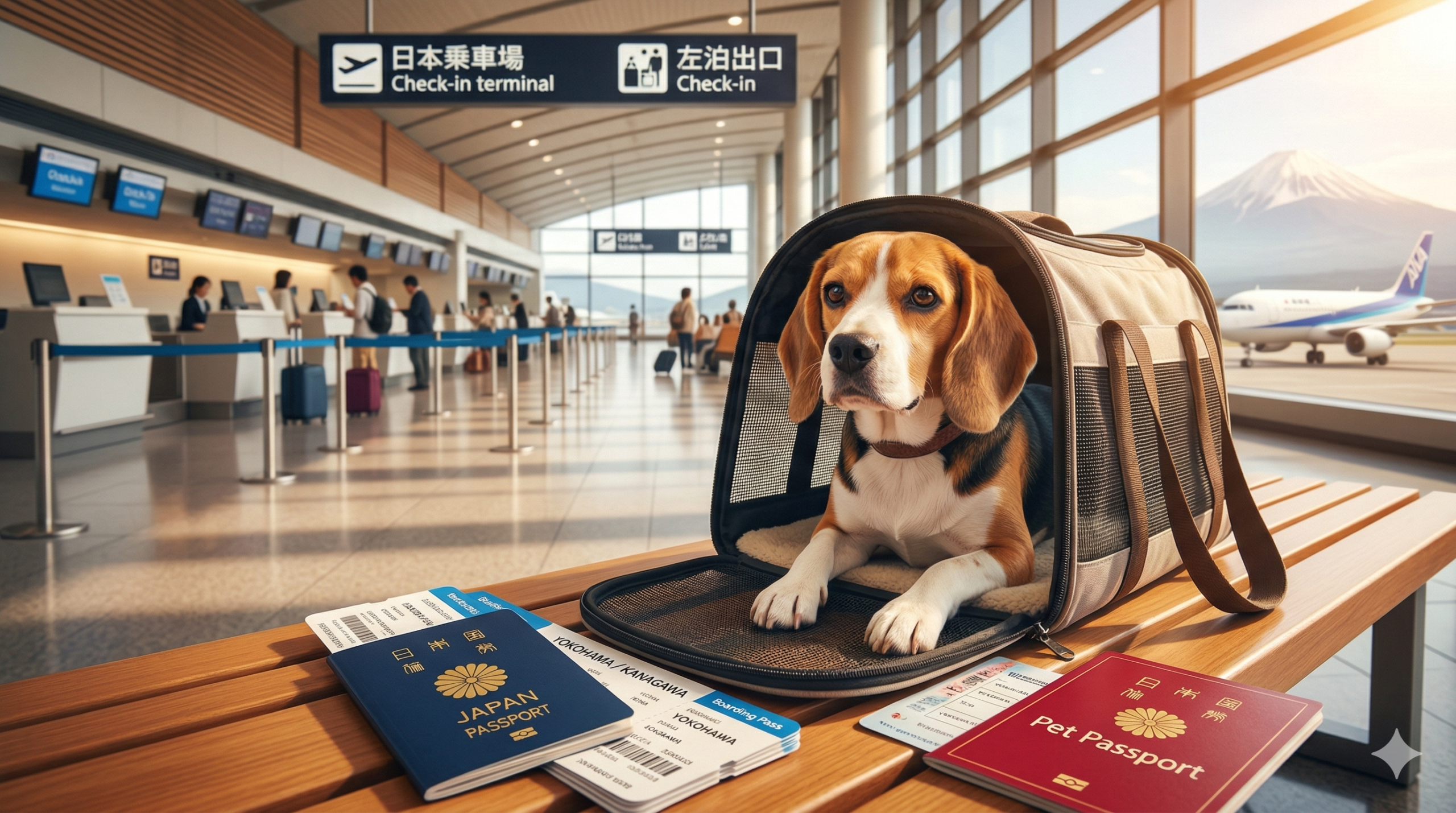
    Japan requires pets to arrive on the same flight as their owner (or within a specific timeframe). Japan’s three main international airports that accept pets are: Narita (NRT), Haneda (HND), and Kansai International (KIX). Not all airports have AQS inspection facilities — confirm with Japan’s Animal Quarantine Service before booking.

    Most major carriers (ANA, JAL, United, Delta, Lufthansa, British Airways) accept pets in the cabin (cats, small dogs) or as cargo. Cabin rules: generally under 8kg total (pet + carrier). Cargo is required for larger dogs. Note that some airlines have breed restrictions (brachycephalic breeds like Pugs, Bulldogs, and Persian cats may be refused).

    Step 7: Japan Airport Inspection

    Upon arrival in Japan, proceed to the Animal Quarantine Service inspection counter before going through customs. AQS officers will verify:

    • Microchip scan (matches all documents)
    • Vaccination records (timing, lot numbers)
    • Titer test certificate (approved lab, ≥0.5 IU/mL)
    • 180-day wait calculation from blood draw date
    • Health certificate (within 10 days of travel, government endorsed)

    If all documents are in order, the inspection typically takes 30–60 minutes and your pet is released to you the same day. If any document is missing or incorrect, your pet may be detained for quarantine — which can extend to 180 days in the worst case.

    Costs: Bringing a Pet to Japan

    Microchip (if not already implanted) ¥3,000–¥8,000 ($20–$60 USD)
    Rabies vaccinations (×2) ¥3,000–¥10,000 each
    Rabies titer test ¥15,000–¥30,000 ($100–$200 USD)
    Health certificate + government endorsement ¥10,000–¥30,000 ($70–$200 USD)
    Airline pet fees (in-cabin) ¥10,000–¥30,000 per flight
    Japan AQS inspection fee ¥400–¥1,000 per pet
    Japan quarantine (if needed) ¥8,000–¥12,000/day

    Total expected cost (no quarantine, Category 3 country): Approximately ¥60,000–¥120,000 ($400–$800 USD) depending on country, veterinary rates, and airline fees.

    What Happens at Japan Quarantine?

    If your pet is detained at quarantine (due to incomplete documents, failed titer test, or not completing the 180-day wait), they’ll be housed at an Animal Quarantine Service facility until the required period completes. AQS facilities are professional and humane, but they can be stressful for pets. You can visit your pet daily during quarantine hours. The cost is billed to the pet owner and paid before release.

    For this reason, working with a professional pet relocation specialist (like PetRelocation.com, Asia Pacific Pet Relocation, or Japan-based services) is highly recommended for complex situations. They handle all documentation and coordination — fees typically run $500–$1,500 USD but can save significantly on quarantine costs and stress.

    Finding Veterinary Care in Japan

    Japan has excellent veterinary care, including many English-speaking vets in major cities. Key resources:

    • Tokyo: Nishi Azabu Animal Hospital (English), Azabu Animal Medical Center, Tokyo Midtown Veterinary Clinic
    • Osaka: Umeda Animal Hospital (English-friendly), Shinsaibashi Veterinary Clinic
    • Nationwide: Japan Animal Referral Medical Center (ARM), Pet ER Japan (emergency care)

    Japan does not have a standardized system for international vaccine records, so your Japanese vet will start fresh records. Bring all original vaccination history from your home country — many Japanese vets appreciate this for context even if they can’t formally use it in Japan’s system.

    Pet Insurance in Japan

    Japan has a well-developed pet insurance industry. Major providers include:

    • Anicom Insurance (アニコム損保): Japan’s largest pet insurer. Japanese-language only.
    • Ipet Insurance (アイペット損保): Second largest. Japanese-language focus.
    • Trupanion Japan: International-friendly, English customer service available.

    Pet insurance in Japan typically covers 50–70% of veterinary fees up to annual limits. Monthly premiums range from ¥2,000–¥8,000 depending on species, breed, age, and coverage level. Enrollment must usually be done within 6 months of arriving in Japan or within a set age limit (often under 8–10 years old). Highly recommended given Japan’s relatively high veterinary costs.

    Registering Your Dog in Japan

    Japan legally requires all dogs to be registered with the local municipal government (市区町村) within 30 days of arrival. Registration is done at your local city/ward office or health center. You’ll receive a rabies vaccination certificate that must be renewed annually. Annual rabies vaccination (注射) is legally required for all dogs in Japan. Failure to register can result in a fine up to ¥200,000.

    Cats are not currently required to be registered by national law, though some municipalities are introducing cat registration programs. However, microchipping cats became legally required for newly born kittens in Japan from June 2022 — imported cats should ensure their ISO microchip is properly documented.

    Adjusting Your Pet to Life in Japan

    Japan’s urban environment can be quite different for pets used to suburban or rural settings. Key adjustment tips:

    • Compact apartments: Most Tokyo apartments are small (1K/1LDK). Create vertical space with cat trees and wall shelves. Dogs need structured walks.
    • Hot and humid summers: Japan’s summer (July–September) is extremely hot and humid. Never leave pets in cars. Keep air conditioning running during heat waves.
    • Typhoon season: June–October brings typhoons. Keep emergency pet supplies (food, water, medication) ready. Know your local pet-friendly evacuation shelter.
    • Pet etiquette: Dogs must be on leash in public. Most parks prohibit off-leash dogs. Train your dog to be quiet — loud barking in close-proximity Japanese apartments causes neighbor complaints.
    • Pet-friendly spaces: Japan has excellent pet cafés, pet-friendly restaurants (outdoor seating), pet hotels (ペットホテル), and pet-friendly accommodation options. Many shopping centers like IKEA Japan and some department stores allow leashed pets in outdoor areas.

    Resources for Pet Owners in Japan

    • Ministry of Agriculture, Forestry and Fisheries (MAFF) Japan: Official import requirements
    • Animal Quarantine Service (AQS): Direct inquiry service available in English
    • Facebook: Expat Pet Owners in Japan (large community with real-world advice)
    • Reddit: r/japanlife (active thread community for expat pet questions)
    • Japan Pet Supplies: Amazon Japan (amazon.co.jp), Rakuten Pet, Aeon Pet, Cainz Home

    Final Thoughts

    Bringing a pet to Japan requires patience and meticulous documentation, but it’s absolutely achievable. The most important rules: start early (8–9 months minimum for Category 3 countries), get the ISO microchip first, complete two rabies vaccinations, get the titer test, and wait 180 days from the blood draw. With everything in order, Japan’s AQS inspection is smooth and your pet can join you in your new life in Japan without quarantine.

    Japan is actually a wonderful country for pet owners once you’re here — excellent veterinary care, a huge pet product market, pet-friendly cafés and parks, and a culture that deeply loves animals. Welcome to Japan, and welcome to your pet’s new adventure! 🐾

    Essential Products for Bringing Your Pet to Japan

    These items are must-haves for your pet’s journey to Japan and for settling in once you arrive:

    IATA-Approved Pet Travel Carrier (Cabin/Cargo)

    IATA-compliant carriers are required for most international airlines. Look for rigid carriers for cargo holds and soft-sided for cabin travel.

    Pet Travel Documents Organizer

    Keep your pet’s vaccination records, health certificates, and MAFF documents organized in a waterproof travel document holder.

    Portable Water Bowl & Food Container for Travel

    Keep your pet hydrated during the long journey with a collapsible water bowl and spill-proof food container.

  • Best Automatic Pet Feeders in Japan 2026 | Top 5 for Cats and Dogs

    Best Automatic Pet Feeders in Japan 2026 | Top 5 for Cats and Dogs

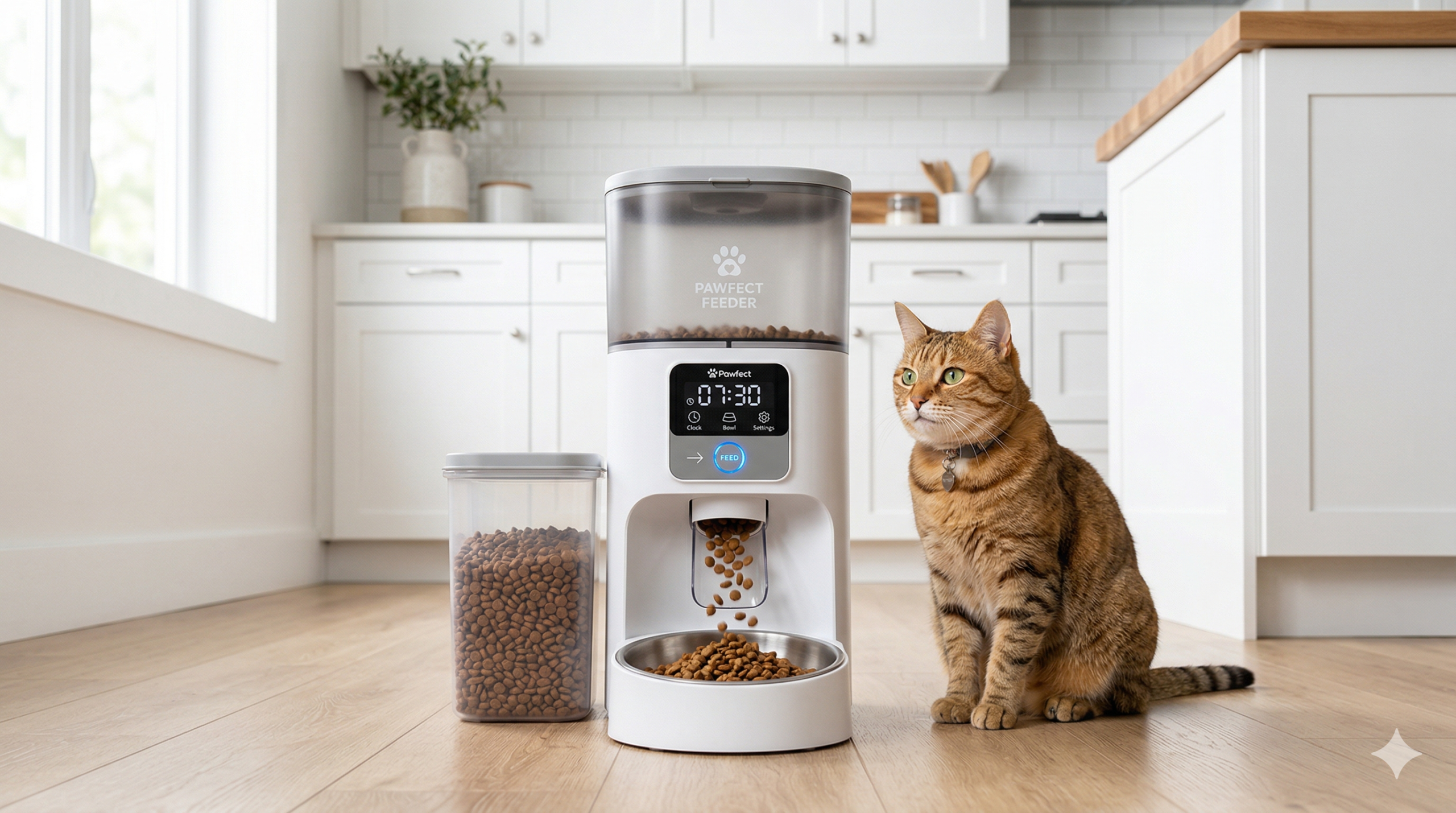
    Automatic pet feeders (自動給餌器) have become a staple of modern pet care in Japan. Whether you’re an expat working long hours in Tokyo, a traveler exploring Japan’s beautiful countryside, or an international buyer interested in Japanese pet tech, automatic feeders let you ensure your cat or dog is fed on schedule — even when you’re away.

    Japan has some of the world’s most advanced automatic pet feeders, with brands like PETKIT, PETLIBRO, and Japanese domestic brands available at excellent prices. This guide covers the best automatic pet feeders available in Japan in 2026, including where to buy them (Amazon Japan, Rakuten, Yahoo Shopping) and how to ship them internationally via Buyee.

    How to Choose the Best Automatic Pet Feeder in Japan

    1. Portion Control and Meal Scheduling

    The best feeders let you program multiple meals per day (typically 1–6) with precise portion sizes. Look for gram-level precision for cats on calorie-controlled diets, and models that handle both dry kibble and wet/semi-moist food if needed. Most Japanese market feeders are designed for dry food only — check compatibility if you use wet food.

    2. Camera Integration and Remote Monitoring

    Premium feeders include a built-in HD camera with two-way audio, letting you watch your pet eat via smartphone and talk to them remotely. In Japan, this feature is popular for single pet owners who work long shifts. Look for feeders with Japanese app language support if you’re less comfortable with English-only interfaces.

    3. Battery Backup

    Japan experiences occasional power outages, especially during typhoon season (June–October). A feeder with battery backup (typically via USB power bank or built-in battery) ensures your pet is fed even during outages. This is a must-have feature for pet owners who travel.

    4. Food Container Size and Material

    Container sizes range from 1.5L to 6L+. For cats, 2–3L is typically sufficient for 1–2 weeks of dry food. Stainless steel bowls are more hygienic than plastic and resist bacterial growth — a feature Japanese consumers particularly value. BPA-free materials are standard in Japanese-market products.

    5. Japan-Specific Considerations

    Japanese apartments are often compact, so a sleek, space-efficient design matters. Wi-Fi compatibility (2.4GHz is most common in Japanese homes) and Japanese-language app support are important for daily use. Models sold through Amazon Japan come with Japanese instruction manuals and local support.

    Best Automatic Pet Feeders in Japan 2026 — Top 5 Picks

    1. PETKIT Yumshare Solo|Best Overall — Camera + Feeder Combo

    The PETKIT Yumshare Solo is the leading automatic pet feeder with integrated camera in Japan’s 2026 market. It combines a 2.4L food hopper, a built-in 1080p camera with two-way audio, and precise meal scheduling via the PETKIT smartphone app. The AI food recognition system detects when your pet has finished eating and records meal data, building a health profile over time.

    The feeder supports up to 12 meal schedules per day with portion sizes down to 5g accuracy. The camera has infrared night vision and 160° wide-angle view — ideal for watching your cat or small dog at feeding time. The PETKIT app is available in Japanese and English, making it equally accessible for Japanese residents and expats. Battery backup via USB power bank is supported.

    Available on Amazon Japan at competitive prices. Works seamlessly with other PETKIT devices (water fountain, pet door sensor). Consistently rated 4.4+ stars on Amazon Japan. For cat owners who want to monitor meals remotely, this is the top choice in 2026.

    Capacity 2.4L
    Meal Schedules Up to 12/day
    Portion Accuracy 5g minimum
    Camera 1080p, 160° wide, night vision
    App Language Japanese & English
    Battery Backup Yes (USB power bank)

    Pros

    • 1080p camera with two-way audio built-in
    • AI meal tracking and health data recording
    • Japanese and English app support
    • Battery backup for power outages
    • Integrates with PETKIT ecosystem
    • Precise 5g portion control

    Cons

    • Premium price vs. camera-free alternatives
    • 2.4L may require frequent refilling for large dogs
    • Some users report app connectivity issues

    User Reviews

    “Perfect for my cat in Tokyo — I can watch her eat from my office.” “Japanese app works great, easy to set up.” ★★★★☆ (4.4/5)

    Who Should Buy This

    • Cat owners who want to monitor meals remotely
    • Expats who want Japanese + English app support
    • Smart home enthusiasts building a PETKIT ecosystem
    • Those who travel and need battery backup

    2. PETLIBRO Granary Automatic Feeder|Best Value — Reliable and Simple

    The PETLIBRO Granary is the best value automatic feeder available in Japan in 2026. It offers a clean, reliable feeding experience without the camera premium. The 4L stainless steel bowl provides hygienic feeding and resists the bacterial buildup that plastic bowls can develop. Up to 6 meals per day with 1–50 portions per meal gives plenty of scheduling flexibility for cats and dogs.

    The feeder features a slow-dispense twist mechanism that prevents food jamming — a common problem with cheaper feeders. The manual feeding button lets you give extra food with one press. The display shows meal status and a low-food warning LED. Power is via DC adapter with AA battery backup for outages. Available in Japan via Amazon Japan and Rakuten at an attractive price point.

    No camera or app required — this is a “set it and forget it” feeder for owners who want reliable, simple feeding automation without smartphone dependency. The stainless steel bowl is dishwasher safe, a feature that Japanese buyers especially value for hygiene.

    Capacity 4L
    Meal Schedules Up to 6/day
    Bowl Material Stainless steel (dishwasher safe)
    Camera No
    Battery Backup Yes (AA batteries)
    Display LCD with meal status

    Pros

    • Stainless steel bowl for maximum hygiene
    • 4L large capacity — less frequent refilling
    • No app or smartphone required
    • Anti-jamming slow-dispense mechanism
    • Battery backup for power outages
    • Dishwasher safe bowl

    Cons

    • No camera or remote monitoring
    • No smartphone app
    • Limited to dry food only

    User Reviews

    “Simple, reliable, and my cat loves it. Stainless bowl is a huge hygiene plus.” “Never jammed once in 6 months.” ★★★★☆ (4.3/5)

    Who Should Buy This

    • Users who want simple, reliable feeding without app dependency
    • Hygiene-conscious owners who prefer stainless steel
    • Large capacity needs (multiple cats or dogs)
    • Those who want affordable, no-frills automation

    3. GEX Eatplayfeed Auto Feeder|Best Japanese Brand — Domestic Quality

    GEX is one of Japan’s most trusted pet product brands, and their Eatplayfeed automatic feeder is built specifically for the Japanese market. Available at every major Japanese pet shop (Cainz, Kojima Pet, Pet Paradise) and home center, GEX feeders come with full Japanese manuals and domestic customer support — a significant advantage for Japanese residents.

    The feeder supports 1–5 meal schedules with customizable portion sizes. A voice recording function lets you record your voice to call your pet at feeding time — a popular feature in Japan. The LCD display is clear and easy to program. The desiccant cartridge system keeps dry food fresh longer in Japan’s humid climate, which is especially useful during summer months.

    The trade-off is that GEX feeders lack app connectivity and camera features. But for pet owners who prefer a domestic brand with local warranty support and the ability to buy replacement parts at any Japanese pet shop, GEX is the natural choice.

    Capacity 1.8L
    Meal Schedules Up to 5/day
    Voice Recording Yes
    Camera No
    Desiccant System Yes (for Japan’s humidity)
    Availability All major Japanese pet shops

    Pros

    • Japanese brand with full Japan warranty and support
    • Available at all major Japanese pet shops
    • Voice recording to call your pet at meal time
    • Desiccant system for Japan’s humid climate
    • Easy to set up with Japanese instructions
    • Replacement parts readily available in Japan

    Cons

    • No app or smartphone connectivity
    • Smaller 1.8L capacity
    • No camera

    User Reviews

    “Love being able to call my cat with my recorded voice! She runs to the feeder.” “Peace of mind from Japanese brand support.” ★★★★☆ (4.1/5)

    Who Should Buy This

    • Japanese residents who prefer domestic brands
    • Those who want feeder accessible at local pet shops
    • Users who want voice calling feature at meal time
    • Owners dealing with Japan’s humid summers

    4. WOPET Automatic Feeder 6L|Best for Large Dogs — Maximum Capacity

    For large dog owners in Japan, the WOPET 6L automatic feeder is the go-to choice. With 6 liters of capacity, this feeder can hold up to 2 weeks’ worth of kibble for a medium-sized dog, or several weeks for cats and small dogs. Up to 6 meals per day with 1–20 portions per meal and a voice recording function for meal-time calls.

    The slow-feed dispenser prevents the gulping behavior common in large dogs, reducing bloating risk. A removable stainless steel bowl makes cleaning easy, and battery backup via D-cell batteries provides reliable operation during Japan’s occasional power outages. Available via Amazon Japan at an attractive price relative to its large capacity.

    The WOPET app provides basic remote scheduling and meal logging features. While the app is English-only, the setup is straightforward even for non-English speakers. Great for large dog breeds common among international residents in Japan (Golden Retrievers, Labradors, Border Collies).

    Capacity 6L
    Meal Schedules Up to 6/day
    Bowl Material Stainless steel (removable)
    App Yes (English)
    Voice Recording Yes
    Battery Backup Yes (D-cell batteries)

    Pros

    • 6L maximum capacity for large dogs
    • Slow-feed dispenser reduces bloating risk
    • Removable stainless steel bowl for easy cleaning
    • Voice recording meal-time calling
    • Smartphone app for remote scheduling
    • Battery backup for power outages

    Cons

    • App is English-only
    • No camera
    • Bulky size may not suit small Japanese apartments

    User Reviews

    “Perfect for my Labrador in Japan. 6L lasts two weeks!” “Great value for the size and features.” ★★★★☆ (4.0/5)

    Who Should Buy This

    • Large dog owners in Japan
    • Those who want maximum capacity to reduce refilling
    • Users who need slow-feed dispensing for fast-eating dogs
    • Expats with large breed dogs

    5. Iseebiz Automatic Pet Feeder|Best Budget Pick — Simple and Affordable

    The Iseebiz automatic feeder is the best budget option for pet owners in Japan who need reliable automatic feeding without extra features. Available for under ¥3,500 on Amazon Japan, it offers 1–4 meal schedules with customizable portions. A simple rotary dial and LCD display make programming straightforward — no app or Wi-Fi required.

    The feeder has a 1.5L capacity with a gentle dispense mechanism that works well with most dry kibble sizes. It uses 3× AA batteries (no adapter included), making it fully portable and power-outage-proof from the start. A simple voice recording function lets you record a short call message. The build is plastic and basic, but for a budget option, it’s surprisingly durable.

    Ideal for cat owners who travel within Japan occasionally and need basic automatic feeding without investment in a premium feeder. Also a good choice for trying automatic feeding for the first time before committing to a more expensive model.

    Capacity 1.5L
    Meal Schedules Up to 4/day
    Camera No
    Battery 3× AA (no adapter)
    Voice Recording Yes
    Price Range Under ¥3,500

    Pros

    • Very affordable — under ¥3,500
    • No Wi-Fi or app needed
    • Fully battery-powered for maximum portability
    • Simple setup for non-tech-savvy users
    • Voice recording for meal-time calling
    • Good starter feeder to try automatic feeding

    Cons

    • Small 1.5L capacity
    • No camera or smartphone features
    • Basic plastic build

    User Reviews

    “Great starter feeder at this price. My cat figured it out immediately.” “Simple and reliable — exactly what I needed.” ★★★★☆ (4.0/5)

    Who Should Buy This

    • Budget-conscious cat owners in Japan
    • First-time automatic feeder users
    • Those who want fully battery-powered operation
    • Occasional travelers who need basic coverage

    Comparison Table: Best Automatic Pet Feeders in Japan 2026

    Feeder Capacity Camera App Battery Backup Best For
    PETKIT Yumshare Solo 2.4L 1080p JP + EN Yes Smart monitoring
    PETLIBRO Granary 4L No No Yes (AA) Value + hygiene
    GEX Eatplayfeed 1.8L No No Yes Japanese brand
    WOPET 6L 6L No EN only Yes Large dogs
    Iseebiz Budget 1.5L No No Battery only Budget / beginner

    Where to Buy Pet Feeders in Japan

    All feeders listed above are available on Amazon Japan (amazon.co.jp) with fast domestic shipping. Major Japanese pet shop chains (Cainz, Kojima Pet, Pet Paradise, DogMan) carry GEX and other Japanese domestic brands in-store. Rakuten and Yahoo! Shopping Japan often have seasonal sales with additional point rewards.

    For international buyers outside Japan, all imported brand feeders (PETKIT, PETLIBRO, WOPET, Iseebiz) are also available on Amazon.com. Japanese domestic brands like GEX can be purchased internationally via Buyee, a proxy shopping service that ships from Japanese stores worldwide.

    Final Thoughts

    Japan offers some of the best automatic pet feeders in the world. For the best all-around experience with remote monitoring, the PETKIT Yumshare Solo is unmatched. For simple, hygienic reliability, the PETLIBRO Granary is the top value pick. Large dog owners should consider the WOPET 6L, while those who prefer a Japanese brand will appreciate the GEX Eatplayfeed. Budget buyers can confidently start with the Iseebiz feeder for under ¥3,500.

  • Best Pet Cameras in Japan 2026 | Top 5 for Cats, Dogs & Expat Life

    Best Pet Cameras in Japan 2026 | Top 5 for Cats, Dogs & Expat Life

    Japan has a thriving pet culture, and some of the world’s most innovative pet cameras are available here. Whether you’re living in Japan as an expat, traveling, or buying Japanese products to ship abroad, pet cameras (ペットカメラ) have become essential for modern pet owners. In 2026, the best models offer AI-powered tracking, two-way audio, treat dispensing, and seamless smartphone integration.

    This guide covers the top 5 pet cameras available in Japan in 2026, including models from Japanese brands like Panasonic and popular global options sold through Amazon Japan. All products are available via Amazon Japan (amazon.co.jp) and Amazon.com for international buyers.

    How to Choose the Best Pet Camera in Japan

    1. Video Quality and Night Vision

    Look for 1080p Full HD or higher (2K/4K for larger homes). Night vision (infrared) is essential if your pet is active at night or you want 24/7 monitoring. The best models offer clear night-vision footage without disturbing your pet with visible light.

    2. AI Motion Detection and Smart Tracking

    2026 models with AI-powered pet detection can distinguish between your cat/dog and random movement, reducing false alarms. Auto-tracking cameras physically follow your pet around the room — great for active dogs and playful cats. Look for models with customizable detection zones.

    3. Two-Way Audio and Treat Dispenser

    Two-way audio lets you talk to your pet and hear them via the app. Treat dispensers (built into some models) let you reward your pet remotely. These features are especially popular in Japan, where “ペット見守りカメラ” (pet monitoring cameras) with interactive functions are in high demand.

    4. Storage and Privacy

    Cloud storage plans, local microSD storage, or both are available depending on the model. Japanese buyers often prefer local storage (no subscription) for privacy reasons. Check whether the app and cloud service work in Japan if you’re buying a non-Japanese brand.

    5. Japan Compatibility and App Support

    Make sure the app has Japanese language support (if needed) and that the Wi-Fi frequency (2.4GHz or 5GHz) matches your Japanese home router. Most modern Japanese routers support both bands.

    Best Pet Cameras in Japan 2026 — Top 5 Picks

    1. Furbo 360° Dog Camera|Best Overall for Dogs

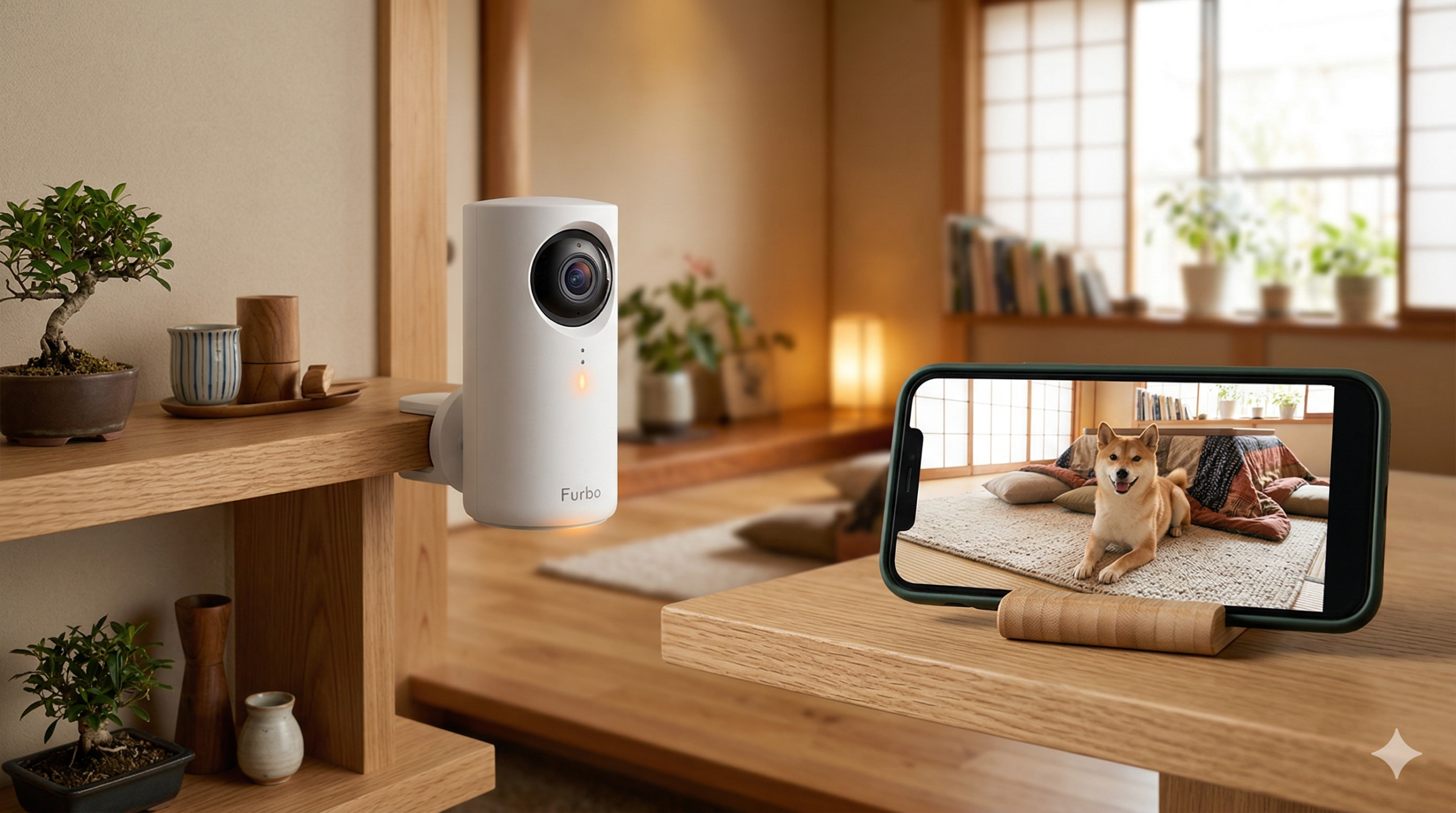
    The Furbo 360° is the gold standard for dog monitoring cameras in Japan. Its 360-degree rotating lens provides complete room coverage, eliminating blind spots. The AI “Dog Alert” system sends notifications for barking, crying, or unusual movement — with high accuracy compared to basic motion detection cameras.

    The built-in treat tossing mechanism lets you launch treats remotely through the smartphone app, which Japanese dog owners love for training and bonding during work hours. Two-way audio (speak and listen) is crystal clear. Video quality is 1080p with infrared night vision. The companion app (available in Japanese) works seamlessly on iOS and Android. Furbo is available on Amazon Japan and in major pet shops including Kojima Pet.

    The main downside is the ongoing cloud subscription cost (Furbo Dog Nanny plan). For cat owners, the treat tossing angle doesn’t always work as well. But for dog owners in Japan, this is consistently the top-rated option in 2026 reviews.

    Video Quality 1080p Full HD
    Field of View 360° rotating
    Night Vision Yes (infrared)
    Two-Way Audio Yes
    Treat Dispenser Yes
    Storage Cloud (subscription)

    Pros

    • 360° lens covers the entire room
    • AI Dog Alert with high accuracy
    • Treat tossing for remote training and bonding
    • Japanese app support available
    • Crystal clear two-way audio
    • Widely available in Japan (Amazon Japan + pet shops)

    Cons

    • Cloud subscription required for full features
    • Less ideal for cats vs. dogs
    • Premium price point

    User Reviews

    “Best investment for my dog’s safety while I’m at work in Tokyo.” “Treat tossing feature made my dog so excited to see the camera!” ★★★★☆ (4.4/5)

    Who Should Buy This

    • Dog owners in Japan who want complete room coverage
    • Pet owners who want interactive treat dispensing
    • Expats wanting a camera with Japanese app support
    • Those prioritizing AI-powered smart detection

    2. PETKIT PETKIT-Mate P2|Best for Cats — GPS + Camera Combo

    PETKIT continues to dominate the smart pet tech market in Japan in 2026. The PETKIT Mate P2 combines a home monitoring camera with pet-specific AI features. Its 1080p camera with 170° wide-angle captures your entire living room. The AI distinguishes between cats, dogs, and humans with impressive accuracy, and the auto-pan tracking follows your pet smoothly across the room.

    The PETKIT app (available in Japanese and English) integrates with other PETKIT devices like the Eversweet water fountain and the Yumshare feeder — making it the centerpiece of a connected pet care ecosystem. Two-way audio is clear, and night vision performs well in low-light Japanese apartments. Local microSD storage is supported (no mandatory subscription), which appeals to privacy-conscious Japanese users.

    Available widely on Amazon Japan and Rakuten. Great value for the feature set, especially for multi-pet households and smart home enthusiasts.

    Video Quality 1080p Full HD
    Field of View 170° wide angle + auto pan
    Night Vision Yes (infrared)
    Two-Way Audio Yes
    Storage microSD (local) + cloud optional
    App Language Japanese & English

    Pros

    • AI pet detection (cat/dog/human) with high accuracy
    • Integrates with PETKIT ecosystem (feeder, fountain)
    • Local microSD storage — no mandatory subscription
    • 170° wide angle + auto-tracking
    • Japanese and English app support
    • Great value for features offered

    Cons

    • No treat dispenser
    • App can be slow to load occasionally
    • Best value when combined with other PETKIT devices

    User Reviews

    “Perfect for monitoring my two cats in Japan. App works great in Japanese.” “No subscription needed — local storage is a huge plus.” ★★★★☆ (4.3/5)

    Who Should Buy This

    • Cat owners wanting smart AI monitoring
    • Privacy-conscious users who prefer local storage
    • Smart home enthusiasts building a PETKIT ecosystem
    • Expats wanting Japanese + English app support

    3. Tapo C225 (TP-Link)|Best Budget Camera — Excellent Value

    The TP-Link Tapo C225 is the best budget-friendly pet camera available in Japan in 2026. For under ¥5,000, you get 2K QHD resolution (2560×1440), 360° pan/tilt coverage, and AI motion detection. The Tapo app is fully available in Japanese, making setup and daily use smooth for both Japanese residents and expats.

    The C225 offers local microSD storage (up to 512GB) and optional Tapo Care cloud storage. Two-way audio and infrared night vision perform well for the price. The pan/tilt motor is quiet and responsive. Motion zones are fully customizable. It’s available on Amazon Japan for around ¥4,000–¥6,000 and at Yodobashi Camera, Bic Camera, and other major electronics retailers across Japan.

    The main limitation is that the treat dispensing and advanced AI pet-specific features of premium models are absent. But for pure monitoring quality at an affordable price, the C225 is hard to beat in Japan’s 2026 market.

    Video Quality 2K QHD (2560×1440)
    Field of View 360° pan/tilt
    Night Vision Yes (infrared)
    Two-Way Audio Yes
    Storage microSD + Tapo Care cloud
    Price Range ¥4,000–¥6,000

    Pros

    • 2K QHD resolution at budget price
    • Full Japanese app support
    • 360° pan/tilt coverage
    • Available at major Japanese electronics stores
    • microSD local storage (no subscription needed)
    • Reliable TP-Link brand with good Japan support

    Cons

    • No treat dispenser
    • No pet-specific AI features
    • Less premium build quality than higher-end models

    User Reviews

    “Amazing value for ¥5,000. Crystal clear 2K video.” “Set up in 5 minutes with the Japanese app.” ★★★★☆ (4.4/5)

    Who Should Buy This

    • Budget-conscious pet owners in Japan
    • First-time pet camera buyers
    • Those who want high video quality without premium pricing
    • Users who want Japanese retail availability

    4. Panasonic KX-HZN100|Best Japanese Brand Pet Camera

    Panasonic’s KX-HZN100 is the premium Japanese-brand option for pet monitoring in 2026. Built specifically for the Japanese market, it offers exceptional reliability and customer support in Japanese. The camera features 1080p video, 3× optical zoom, automatic pet tracking, and integration with Panasonic’s HomeHawk smart home ecosystem.

    Japanese expats and residents who prefer Japanese build quality and local warranty support will appreciate the KX-HZN100’s domestic manufacturing standards. The HomeHawk app (Japanese-first) provides clear notifications, video history, and multi-camera management. It’s available at all major Japanese electronics retailers and comes with a full 1-year Japan warranty.

    The price is higher than imported alternatives (¥15,000–¥25,000), but for users who want Japanese customer service and a locally supported product, the premium is worth it. Night vision and audio quality are excellent for a Japanese home environment.

    Video Quality 1080p Full HD + 3× optical zoom
    Field of View Auto-tracking
    Night Vision Yes
    Two-Way Audio Yes
    Storage Cloud + local
    Japanese Support Full (Japanese warranty + CS)

    Pros

    • Japanese brand with full Japan warranty and customer support
    • 3× optical zoom for detailed monitoring
    • Integrates with Panasonic HomeHawk smart home
    • Available at all major Japanese retailers
    • Excellent build quality (Japanese manufacturing)
    • Japanese-first app and interface

    Cons

    • Higher price than imported alternatives
    • App is Japanese-only (limited English)
    • Ecosystem locked to Panasonic HomeHawk

    User Reviews

    “Love the Japanese build quality and support. Worth the extra cost.” “Perfect for my smart home setup — HomeHawk integration is seamless.” ★★★★☆ (4.2/5)

    Who Should Buy This

    • Japanese residents who prefer domestic brands
    • Users wanting Japanese customer support and warranty
    • Smart home users with Panasonic devices
    • Those who prioritize build quality and reliability

    5. Eufy Indoor Cam E220|Best for Privacy — Local Storage Focus

    The Eufy Indoor Cam E220 by Anker is the top choice for privacy-focused pet owners in Japan. Unlike many competitors, Eufy cameras store video locally on the HomeBase 3 station (sold separately) or an optional microSD card — with no mandatory cloud subscription. 2K resolution provides detailed video, and the AI person/pet detection reduces unnecessary alerts.

    The EufySecurity app works in Japanese and English. Eufy cameras are compatible with Apple HomeKit, Google Home, and Amazon Alexa — making integration easy for expats who use English-language smart home systems. Available on Amazon Japan and directly from Anker Japan’s online store. Anker has excellent Japan customer service support in Japanese.

    The main consideration is that the best storage experience requires the HomeBase 3 hub (sold separately). But for users who want high-resolution monitoring without cloud fees, Eufy offers the best value privacy-focused solution in Japan in 2026.

    Video Quality 2K (2304×1296)
    Field of View 135° wide angle
    Night Vision Yes (color night vision)
    Two-Way Audio Yes
    Storage Local (HomeBase/microSD) — no subscription
    Smart Home Apple HomeKit / Google Home / Alexa

    Pros

    • No mandatory cloud subscription — full local storage
    • Apple HomeKit / Google Home / Alexa compatible
    • 2K video with color night vision
    • Anker Japan support in Japanese
    • Privacy-first design (data stays local)
    • Works seamlessly for English-speaking expats

    Cons

    • Best features require HomeBase 3 hub (extra cost)
    • No treat dispenser
    • 135° field of view is narrower than 360° models

    User Reviews

    “Privacy-focused with no subscription — exactly what I needed in Japan.” “Works with HomeKit perfectly. Highly recommended for Apple users.” ★★★★☆ (4.3/5)

    Who Should Buy This

    • Privacy-conscious pet owners who want local storage
    • Apple HomeKit users in Japan
    • English-speaking expats wanting familiar smart home integration
    • Those who want 2K quality without subscription fees

    Comparison: Best Pet Cameras in Japan 2026

    Camera Resolution Coverage Treat Dispenser Storage Best For
    Furbo 360° 1080p 360° Yes Cloud (sub) Dog owners
    PETKIT Mate P2 1080p 170° + auto-track No microSD + cloud Cats / smart home
    Tapo C225 2K QHD 360° pan/tilt No microSD + cloud Budget pick
    Panasonic KX-HZN100 1080p + 3× zoom Auto-track No Cloud + local Japanese brand
    Eufy E220 2K 135° No Local only Privacy first

    Final Thoughts

    Finding the right pet camera in Japan depends on your priorities. For dog owners who want interactive features, the Furbo 360° is the clear winner. Cat owners and smart home enthusiasts will love the PETKIT Mate P2. Budget buyers get exceptional value from the Tapo C225. If you want a Japanese brand with local support, the Panasonic KX-HZN100 delivers. And privacy-focused expats who use Apple HomeKit should go with the Eufy E220. All five cameras are available on Amazon Japan — perfect for both residents and expats shopping online.