Category: Travel in Japan

Travel guides, destinations, and tips for visiting Japan

  • Japan Convenience Stores: The Ultimate Guide for Foreigners (2026)

    Japan Convenience Stores: The Ultimate Guide for Foreigners (2026)

    Why Japan’s Convenience Stores Will Change Your Life

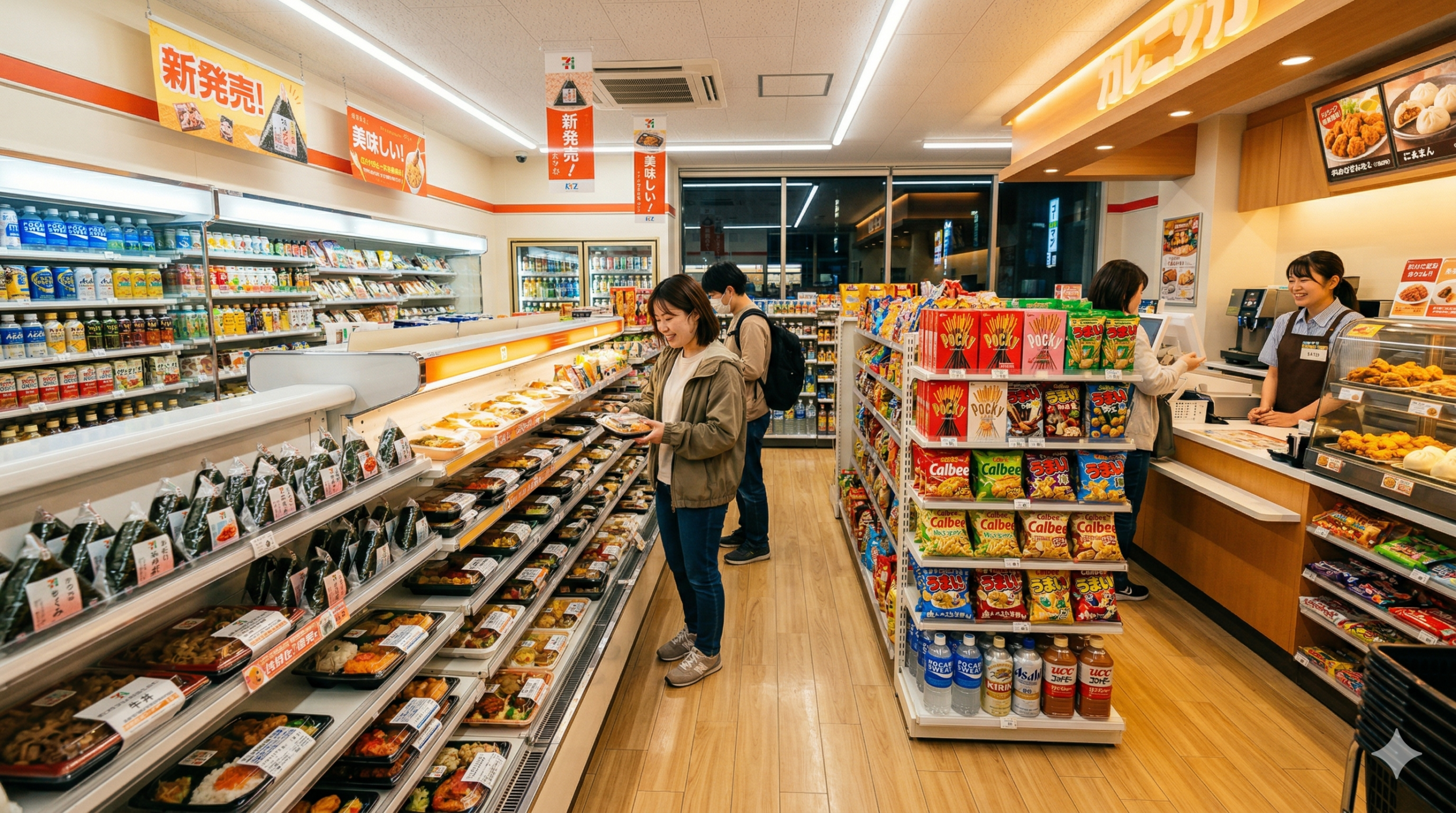
    If you’ve never set foot in a Japanese convenience store — locally called a konbini (コンビニ) — you’re in for a revelation. These aren’t the sad, fluorescent-lit gas station shops you might be picturing. Japan’s konbini are clean, warm, fully stocked havens open 24 hours a day, 365 days a year. Whether you’re a tourist, a newcomer to Japan, or a long-time resident, the konbini will become one of the most important places in your daily life.

    There are over 55,000 convenience stores across Japan, meaning there’s almost always one within a few minutes’ walk. In Tokyo, you can barely go two blocks without passing one. In this guide, we cover everything you need to know — from the three major chains to the best things to buy, and all the surprisingly useful services they offer.

    The Big Three: 7-Eleven, FamilyMart & Lawson

    7-Eleven Japan (セブン-イレブン)

    7-Eleven is the largest konbini chain in Japan with over 21,000 stores. Their Seven Premium private-label food line is outstanding. Their ATMs are the most foreigner-friendly, accepting international Visa, Mastercard, and UnionPay cards.

    Best for: Food quality, ATM access, premium private-label products

    FamilyMart (ファミリーマート)

    FamilyMart is beloved for its Famichiki — a juicy, perfectly seasoned fried chicken with a near-religious following. Their hot food selection is widely considered the best among the big three. Their FamiPort terminal is one of the easiest to use for event tickets and bill payments.

    Best for: Hot food, fried chicken, desserts, event tickets

    Lawson (ローソン)

    Lawson has carved out a niche as the “health-conscious” konbini. Their Uchi Café dessert line — particularly their cream puffs (シュークリーム) — is legendary. They tend to have better selection of fresh fruit and salads.

    Best for: Healthy options, premium desserts, fresh produce

    What to Buy: The Essential Konbini Shopping List

    🍙 Onigiri (おにぎり) — Rice Balls

    Arguably the most iconic konbini item. These triangular rice balls wrapped in crispy nori come in dozens of fillings — tuna mayo, salmon, pickled plum, mentaiko (spicy cod roe), and many more. They cost around ¥120–¥180 and make the perfect quick meal. The packaging is ingeniously designed to keep the nori crispy until you open it — follow the numbered steps on the wrapper!

    ☕ Hot Drinks & Coffee

    Japan’s konbini coffee is genuinely excellent and ridiculously cheap. A freshly brewed cup from the machine costs around ¥110–¥150. 7-Eleven’s “Seven Café” is consistently rated among the best konbini coffees in Japan.

    🍱 Ready-Made Meals

    From bento boxes and pasta to curry rice and ramen bowls, the hot food section is a lifesaver. Most stores have a microwave you can use right in the store. Prices typically range from ¥300–¥700 for a full meal.

    🍮 Desserts & Sweets

    Japanese konbini desserts have become globally famous. Lawson’s cream puffs, 7-Eleven’s roll cake, and FamilyMart’s seasonal ice cream are must-tries. Prices are usually ¥150–¥400, and the quality is remarkably high.

    🧴 Daily Essentials

    Forgot your toothbrush? Need an umbrella? Konbini have you covered with medicines, skincare, phone chargers, socks, razors, and more.

    Services You Didn’t Know Konbini Offer

    🏧 ATM (International Cards Welcome)

    7-Eleven ATMs are the most reliable for foreign-issued cards, accepting Visa, Mastercard, Maestro, Plus, and Cirrus. Always carry some cash in Japan — many smaller restaurants and shops are still cash-only.

    📦 Package Delivery & Pickup

    Japan’s major delivery services let you send or receive packages at any konbini. You can also use your konbini as a pickup address for online shopping — perfect for expats in apartments with limited mail access.

    🎫 Event Tickets & Bills

    Book concert tickets through Lawson Ticket or FamilyMart’s FamiPort. You can also pay utility bills, insurance premiums, and taxes at the konbini cashier — just bring the bill with the barcode.

    📠 Printing & Copying

    Every major konbini has a multi-function printer/copier. Print documents from USB, smartphone app, or cloud services. This is invaluable for official procedures and paperwork in Japan.

    💳 Suica, IC Cards & Payments

    Almost all konbini accept IC cards like Suica and PASMO. You can charge your Suica at the register. Most stores also accept PayPay, LINE Pay, and major credit cards.

    Konbini Etiquette: Unspoken Rules for Foreigners

    • Say “arigatou gozaimasu” when you receive your receipt — a small gesture appreciated by staff.
    • Don’t eat while walking — most Japanese people eat at the small counters inside.
    • The microwave is self-service — staff will ask “atatamemasu ka?” (shall I heat it?). Say “hai” (yes) or “ii desu” (no thanks).
    • Dispose of trash properly — use designated bins near the entrance, not public rubbish bins.

    Best Konbini Items to Try First

    • 🍙 Tuna mayo onigiri (ツナマヨ) — the classic starter
    • ☕ Hot black coffee from the machine (~¥110)
    • 🍗 FamilyMart Famichiki fried chicken
    • 🍮 Lawson cream puff (シュークリーム)
    • 🍜 Cup ramen — Japan’s are on a completely different level
    • 🍫 Any seasonal limited-edition candy or snack
    • 🍵 Matcha latte from the hot drink corner

    Final Thoughts

    Japanese convenience stores are one of those things that sound mundane but end up being genuinely life-changing. Once you’ve experienced the quality, variety, and sheer usefulness of a Japanese konbini, it’s very hard to go back to convenience stores elsewhere in the world. They’re a perfect window into what makes everyday life in Japan so uniquely comfortable and well-organized.

    Whether you’re visiting Japan for a week or planning to live here long-term, make the konbini part of your daily routine. You won’t regret it.

    Japan Convenience Store Finds on Amazon & Rakuten

    Can’t get enough of Japanese convenience store products? Many popular items are available to order online — perfect for stocking up or sending as gifts:

    Japanese Convenience Store Snacks & Foods

    Onigiri, melon bread, pocky, and other iconic konbini snacks — available in bulk online.

    Portable Umbrella (for Sudden Rain in Japan)

    Japan’s konbinis sell umbrellas at the door for ¥500–700. For a sturdier option, check these compact travel umbrellas:

    Reusable Shopping Bag (Eco Bag)

    Since Japan’s plastic bag fee took effect, carrying a reusable eco bag is essential for convenience store shopping.

  • Best Things to Do in Tokyo 2026 | Top 5 Must-Have Experiences

    Why Tokyo Belongs on Every Travel Bucket List

    Tokyo is one of the world’s most exhilarating cities — ancient temples beside futuristic skyscrapers, Michelin-starred restaurants more than any other city on earth, and streets that are immaculately clean despite 14 million residents. In 2026, Tokyo continues to evolve while preserving the cultural depth that makes it uniquely Japanese.

    🤖
    Navigator

    Where should a first-time visitor to Tokyo start?

    🍣
    Japan Guide

    Start with Asakusa for traditional Japan, then Shibuya for modern Tokyo energy. From there, let your interests guide you — Tokyo has something extraordinary for everyone!

    Planning Tips

    Best Time: Spring (late March–April) for cherry blossoms; autumn (Oct–Nov) for fall foliage. Avoid Golden Week (late April–early May) crowds.

    Getting Around: Get a Suica IC card at any major station — works on all trains, subways, and even convenience stores.

    Budget: Excellent ramen: ¥800–¥1,200. Budget ¥5,000–¥10,000/person/day for food and activities.

    Top 5 Must-Do Experiences in Tokyo

    1. Senso-ji Temple & Asakusa | Best Cultural Experience

    Tokyo’s oldest temple (founded 628 AD) with the iconic Kaminarimon Gate and Nakamise shopping street. Visit before 8am for an atmospheric, crowd-free experience. The surrounding Asakusa district preserves an old-Tokyo (Shitamachi) feel with rickshaw rides, traditional izakayas, and Sumida River views. The Sky Tree towers dramatically just across the river.

    🍣
    Japan Guide

    Visit at dawn for pure magic — incense smoke, golden light, and the feeling of stepping 400 years back in time!

    2. Shibuya Crossing & Harajuku | Best Modern Tokyo

    The world’s busiest pedestrian crossing — up to 3,000 people cross simultaneously. Watch from Starbucks second floor or Scramble Square rooftop (one of Tokyo’s best free views). Harajuku’s Takeshita Street celebrates youth fashion and creative food. Omotesando offers high-end shopping in architecturally stunning boutiques. Meiji Shrine — a vast forested sanctuary — is a 5-minute walk away.

    🍣
    Japan Guide

    See Shibuya Crossing at night when the neon is at full intensity — it genuinely looks like a scene from a sci-fi film!

    3. TeamLab Borderless & Planets | Best Unique Experience

    TeamLab’s digital art installations are among the most talked-about experiences in Asia. TeamLab Planets (Toyosu) immerses visitors in room-scale projections — walk through virtual water, giant flowers grow around your feet, infinite reflections. TeamLab Borderless (Azabudai Hills) is an entire museum where artworks flow between rooms. Book tickets at least 2 weeks ahead — they sell out fast. Nothing else on Earth compares.

    🍣
    Japan Guide

    TeamLab is unlike anything else on the planet. Book in advance — this is one experience that genuinely lives up to the hype!

    4. Tsukiji Outer Market Breakfast | Best Food Experience

    Over 400 stalls selling the world’s finest fresh seafood and street food. Arrive 6–9am for the freshest tuna sashimi, grilled scallops, and tamagoyaki (rolled omelette) available anywhere. Standing breakfast — a bowl of tuna on rice for ¥1,500–¥2,500 while watching vendors prep for the day — is an unmissable Tokyo ritual. Bring cash; most stalls are cash only.

    🍣
    Japan Guide

    Eating the world’s freshest tuna at 7am in Tsukiji is a Tokyo bucket-list moment. Don’t miss the grilled scallops — absolutely incredible!

    5. Day Trip to Nikko or Kamakura | Best Escape

    Tokyo’s rail network makes it a superb day-trip hub. Nikko (2 hours north) features UNESCO World Heritage shrines in forested mountains — the ornate Toshogu Shrine rivals Kyoto’s best. Kamakura (1 hour south) has the iconic 13.35m Great Buddha, coastal Zen temples, and charming café streets. Weekday visits avoid crowds significantly; consider staying overnight for a magical post-daytrip atmosphere.

    🍣
    Japan Guide

    Don’t spend all your time in central Tokyo! Nikko and Kamakura offer completely different atmospheres that enrich your entire Japan experience.

    Quick Tips for Tokyo

    Topic Tip
    Cash Withdraw yen at 7-Eleven or Japan Post ATMs (accepts foreign cards)
    Transport Suica IC card works on all trains, subways, buses, and convenience stores
    WiFi Rent pocket WiFi at the airport or activate an eSIM before landing
    Translation Google Translate camera mode handles menus and signs instantly
    Manners No eating while walking; speak quietly on trains; always queue politely

    Final Verdict

    Tokyo rewards every type of traveler. With world-class infrastructure, unmatched safety, and endless variety, it consistently ranks among the world’s top destinations. Book TeamLab and popular restaurants well in advance, get a Suica card and pocket WiFi on arrival, and let Tokyo’s extraordinary energy carry you through one of the world’s greatest urban adventures.

  • Best Places to Visit in Japan 2026 | Top 5 Destinations for First-Time Visitors

    Why Japan Should Be Your Next Travel Destination

    Japan is one of the most unique travel destinations in the world — a country where ancient temples sit beside gleaming skyscrapers, where you can eat a Michelin-starred meal for under $15, and where bullet trains whisk you from one spectacular city to the next in under an hour. Whether you’re drawn by the cherry blossoms of Kyoto, the neon-lit streets of Tokyo, or the snow-capped peaks of Hokkaido, Japan has something unforgettable waiting for every type of traveler.

    In 2026, Japan continues to be one of the top travel destinations for international visitors. With a weak yen making it more affordable than ever for foreign tourists, there has never been a better time to visit. But with so many incredible places to explore, where should you start?

    In this guide, we have rounded up the top 5 must-visit destinations in Japan for 2026 — covering everything from what to see and do, to where to stay and how to get around.

    How to Choose Your Japan Destination

    1. Travel Style

    Japan caters to every kind of traveler. Culture lovers will adore Kyoto’s temples and traditional arts. Foodies will find paradise in Osaka, the self-proclaimed kitchen of Japan. Nature seekers should head north to Hokkaido or south to the Okinawa islands. Urban explorers can spend weeks in Tokyo without running out of things to discover.

    2. Season

    Japan’s seasons dramatically change each destination. Cherry blossom season (late March to April) is magical almost everywhere. Autumn foliage (October to November) is stunning in Kyoto and Nikko. Summer brings festivals and fireworks. Winter transforms Hokkaido into a snow wonderland. Plan your destination around what you most want to experience.

    3. Time Available

    For a 1-week trip, focus on the Golden Route: Tokyo to Kyoto to Osaka. For 2 weeks, add Hiroshima, Nara, or Hakone. For 3+ weeks, venture to Hokkaido, Kyushu, or the Okinawa islands — regions that most short-term visitors miss entirely.

    4. Budget

    Japan is more affordable than its reputation suggests. Budget travelers can get by on 6,000–8,000 yen per day (around $40–55 USD) staying in hostels and eating at convenience stores and ramen shops. Mid-range travelers spending 15,000–25,000 yen per day will enjoy comfortable hotels and restaurant dining. Luxury travelers will find world-class ryokans and kaiseki dinners that justify any price tag.

    5. Getting Around

    Consider purchasing a Japan Rail Pass before you arrive — it offers unlimited travel on JR trains including the Shinkansen bullet train, and pays for itself quickly if you are visiting multiple cities. For single cities, IC cards (Suica or Pasmo) work on subways and buses everywhere. Renting a car is recommended for rural areas like Hokkaido or the Noto Peninsula.

    Top 5 Must-Visit Destinations in Japan 2026

    1. Tokyo — The World’s Greatest City

    Tokyo is a city that defies superlatives. The world’s largest metropolitan area is simultaneously the most futuristic and most traditional city you will ever visit. In a single day, you can explore the ancient Senso-ji Temple in Asakusa, wander the robot-filled streets of Akihabara, have lunch in a Michelin-starred restaurant, and end the evening watching the sunset from the Tokyo Skytree. No other city on earth packs this much variety into one place.

    Tokyo is also the gateway for most international visitors, with two major airports (Narita and Haneda) offering connections to cities worldwide. Most visitors recommend spending at least 3 to 4 days here — though most locals will tell you you would need a lifetime to fully explore it.

    Must-See in Tokyo: Shibuya Crossing, Tsukiji Outer Market, teamLab digital art museums, Shinjuku, Harajuku, Ueno Zoo and Museums, Odaiba, and day trips to Nikko or Kamakura.

    Category Details
    Best Time to Visit March–April (cherry blossoms), October–November (autumn leaves)
    Getting There Narita Airport or Haneda Airport (both serve major international routes)
    Getting Around JR Yamanote Line, Tokyo Metro, Toei Subway
    Budget (per day) Budget ¥6,000 / Mid ¥15,000 / Luxury ¥50,000+
    Recommended Stay 3–5 days minimum

    2. Kyoto — The Soul of Traditional Japan

    If Tokyo represents Japan’s future, Kyoto is its heart. Japan’s imperial capital for over 1,000 years, Kyoto is home to more than 1,600 Buddhist temples, 400 Shinto shrines, and 17 UNESCO World Heritage Sites. Walking through the bamboo groves of Arashiyama, watching geisha glide through the stone-paved lanes of Gion, or contemplating the infinite red torii gates of Fushimi Inari — Kyoto offers experiences that simply do not exist anywhere else on earth.

    Kyoto is also a food lover’s paradise, with a unique culinary tradition called kyo-ryori (Kyoto cuisine) centered on beautiful, delicate flavors and seasonal ingredients. From kaiseki multi-course dinners to obanzai vegetable dishes, eating in Kyoto is an experience in itself.

    Must-See in Kyoto: Fushimi Inari Taisha, Arashiyama Bamboo Grove, Kinkaku-ji (Golden Pavilion), Gion District, Nishiki Market, Philosopher’s Path, and Nijo Castle.

    Category Details
    Best Time to Visit Late March–April (sakura), November (autumn leaves)
    Getting There Shinkansen from Tokyo (2h15m), or from Osaka (15 min)
    Getting Around Buses, subway, rental bicycles, taxi
    Budget (per day) Budget ¥7,000 / Mid ¥20,000 / Luxury ¥80,000+
    Recommended Stay 2–3 days minimum

    3. Osaka — Japan’s Food Capital and Entertainment Hub

    Osaka is the city that never sits still. Known as Japan’s “nation’s kitchen,” Osaka has a food culture so vibrant and distinctive that locals have a saying: kuidaore, meaning “eat until you drop.” Takoyaki (octopus balls), okonomiyaki (savory pancakes), kushikatsu (deep-fried skewers), and fresh sushi from Kuromon Market — the eating never stops in Osaka.

    Beyond food, Osaka is also Japan’s entertainment capital, home to Universal Studios Japan with Super Nintendo World, Dotonbori’s iconic neon strip, and a nightlife scene that rivals anywhere in Asia. It’s also the most budget-friendly of Japan’s major cities, with cheaper accommodation and food than Tokyo or Kyoto.

    Must-See in Osaka: Dotonbori, Kuromon Ichiba Market, Osaka Castle, Universal Studios Japan, Shinsekai neighborhood, and Namba shopping district.

    Category Details
    Best Time to Visit Any time — Osaka is great year-round
    Getting There Shinkansen from Tokyo (2h30m), close to Kansai International Airport
    Getting Around Osaka Metro, JR Osaka Loop Line, walking
    Budget (per day) Budget ¥5,500 / Mid ¥13,000 / Luxury ¥40,000+
    Recommended Stay 2–3 days

    4. Hiroshima and Miyajima — History, Peace, and Natural Beauty

    Hiroshima is a city of profound historical significance and remarkable resilience. The Peace Memorial Park and Museum, built near the hypocenter of the 1945 atomic bomb, is one of the most moving and important sites in the world — a place that transforms visitors and serves as a powerful reminder of the importance of peace. Despite its tragic history, modern Hiroshima is a vibrant, friendly city with excellent food (try the local-style okonomiyaki, which differs from Osaka’s version) and warm, welcoming people.

    Just a short ferry ride away lies Miyajima Island (Itsukushima), famous for its iconic “floating” torii gate rising from the sea — one of Japan’s most photographed images. The island is also home to freely roaming deer, forested mountain trails, and the spectacular Itsukushima Shrine.

    Must-See: Peace Memorial Museum and Park, Atomic Bomb Dome, Miyajima Island, Itsukushima Shrine, Senjokaku Pavilion, and Mt. Misen for panoramic views.

    Category Details
    Best Time to Visit Spring or autumn; avoid summer heat
    Getting There Shinkansen from Osaka (1h10m) or Tokyo (4h)
    Getting Around Streetcar (tram), ferry to Miyajima
    Budget (per day) Budget ¥5,000 / Mid ¥12,000 / Luxury ¥35,000+
    Recommended Stay 1–2 days

    5. Hokkaido — Nature, Snow, and Outdoor Adventure

    Japan’s northernmost main island is a world apart from the rest of the country. Hokkaido is vast, sparsely populated, and staggeringly beautiful — a land of volcanic peaks, pristine national parks, lavender fields, and some of the world’s best powder snow. In summer, the rolling hills of Biei and Furano burst into color with fields of lavender, sunflowers, and canola. In winter, Niseko and Rusutsu offer world-class skiing conditions that draw powder hunters from around the globe.

    Hokkaido is also Japan’s dairy country, producing exceptional cheese, butter, soft cream, and fresh seafood including crab, scallops, and sea urchin. Sapporo, the island’s capital, hosts Japan’s most famous winter festival each February — the Snow Festival, where enormous ice sculptures transform the city into an outdoor art gallery.

    Must-See in Hokkaido: Sapporo Snow Festival (February), Furano lavender fields (July), Shiretoko National Park, Noboribetsu hot springs, Lake Toya, and Otaru canal town.

    Category Details
    Best Time to Visit July (lavender fields) or January–March (skiing/snow festival)
    Getting There Fly from Tokyo Haneda to Sapporo New Chitose Airport (1h30m)
    Getting Around Rental car strongly recommended; some JR rail coverage
    Budget (per day) Budget ¥7,000 / Mid ¥18,000 / Luxury ¥60,000+
    Recommended Stay 3–5 days

    Japan Destination Quick Comparison

    Destination Best For Best Season Ease for Tourists Budget Level
    Tokyo City exploration, shopping, food, culture Spring / Autumn ★★★★★ Mid–High
    Kyoto Traditional culture, temples, history Spring / Autumn ★★★★☆ Mid–High
    Osaka Food, entertainment, budget travel Any season ★★★★★ Budget–Mid
    Hiroshima History, peace tourism, island scenery Spring / Autumn ★★★★☆ Budget–Mid
    Hokkaido Nature, skiing, unique seasonal experiences Summer / Winter ★★★☆☆ Mid

    Essential Japan Travel Tips for 2026

    Get a SIM card or pocket Wi-Fi at the airport. Japan’s mobile internet is fast and reliable, and you’ll need it for navigation. IIJmio and AEON Mobile offer great tourist SIM options available at both Narita and Haneda airports.

    Download Google Translate with the Japanese offline pack. While English signage has improved dramatically in major tourist areas, the camera translation feature works remarkably well on menus and signs in smaller towns.

    Always carry cash. Despite modernization, many local restaurants, smaller shops, and shrines are still cash-only. Keep 5,000–10,000 yen on hand. ATMs in 7-Eleven and Japan Post offices accept foreign cards reliably.

    Book accommodation early for peak seasons. Popular destinations during cherry blossom season (late March to April) and autumn foliage (October to November) book out months in advance. Secure your accommodation at least 3 to 4 months ahead for these periods.

    Purchase a Japan Rail Pass before you leave home. The JR Pass must be purchased outside Japan and activates major savings if you’re traveling between multiple cities. A 7-day pass currently costs around $280 USD and covers Shinkansen travel between Tokyo, Kyoto, and Osaka multiple times over.

    Book Your Japan Trip

    Ready to start planning? Use these trusted booking platforms to find the best deals on hotels, tours, and experiences across Japan.

    Plan Your Japan Rail Pass

    The Japan Rail Pass is the most cost-effective way to travel between Japan’s major cities on the Shinkansen. It must be purchased before arriving in Japan — order online and it arrives by mail or can be picked up at the airport upon arrival.

    7-day pass: approx. $280 USD | 14-day pass: approx. $445 USD | 21-day pass: approx. $570 USD

    Summary

    Japan is one of those rare destinations that lives up to — and often exceeds — every expectation. Whether this is your first visit or your tenth, there is always something new to discover. The five destinations in this guide represent the best starting points for experiencing Japan’s extraordinary depth of culture, food, history, and natural beauty.

    For first-time visitors, the classic Tokyo–Kyoto–Osaka Golden Route remains the perfect introduction. For those who’ve already done the basics, Hiroshima’s emotional depth and Hokkaido’s wild beauty offer experiences that will stay with you for a lifetime. Start planning your Japan adventure today — and prepare to fall in love with a country unlike any other on earth.