This article was created with AI writing assistance (ChatGPT, Claude, etc.). Product selection, specifications, and reviews are verified by the Japan Life Lab editorial team.
This article contains promotional / affiliate links.
📌 What you will learn
You do not have to read it all — jump to what you need.
- Japan Tourism in 2026: What Nobody Tells You Before You Go
- The Overtourism Problem Is Real — But Only in Certain Places
- What Japan Actually Costs in 2026
- The Experiences That Are Still Worth Every Yen
- Honest Advice: How to Visit Japan Without Hating It
- Is Japan Worth Visiting in 2026?
※ Start wherever fits your situation.
Japan Tourism in 2026: What Nobody Tells You Before You Go
Japan has broken its own records again. After a record 42.7 million international visitors in 2025, the country that once quietly welcomed travelers with empty temple courtyards and orderly queues is now grappling with something entirely new: the pressure of being the world’s most-wanted destination.
If you’ve been scrolling through Instagram reels of golden torii gates and serene bamboo groves wondering whether Japan lives up to the hype — the honest answer is yes, but with caveats. This guide cuts through the filtered photos to give you the real picture of visiting Japan in 2026, from overcrowded hotspots to genuinely unmissable experiences.
The Overtourism Problem Is Real — But Only in Certain Places
Japan’s overtourism crisis is highly concentrated. The same half-dozen spots that appear on every Instagram feed are genuinely overwhelming — but step even slightly off the beaten path and you’ll find a country that feels remarkably unhurried.
The Most Overcrowded Spots in 2026
These destinations have become genuinely difficult to enjoy at peak times:
- Arashiyama Bamboo Grove (Kyoto) — Walking it shoulder-to-shoulder at 10am on a Saturday feels nothing like the photos.
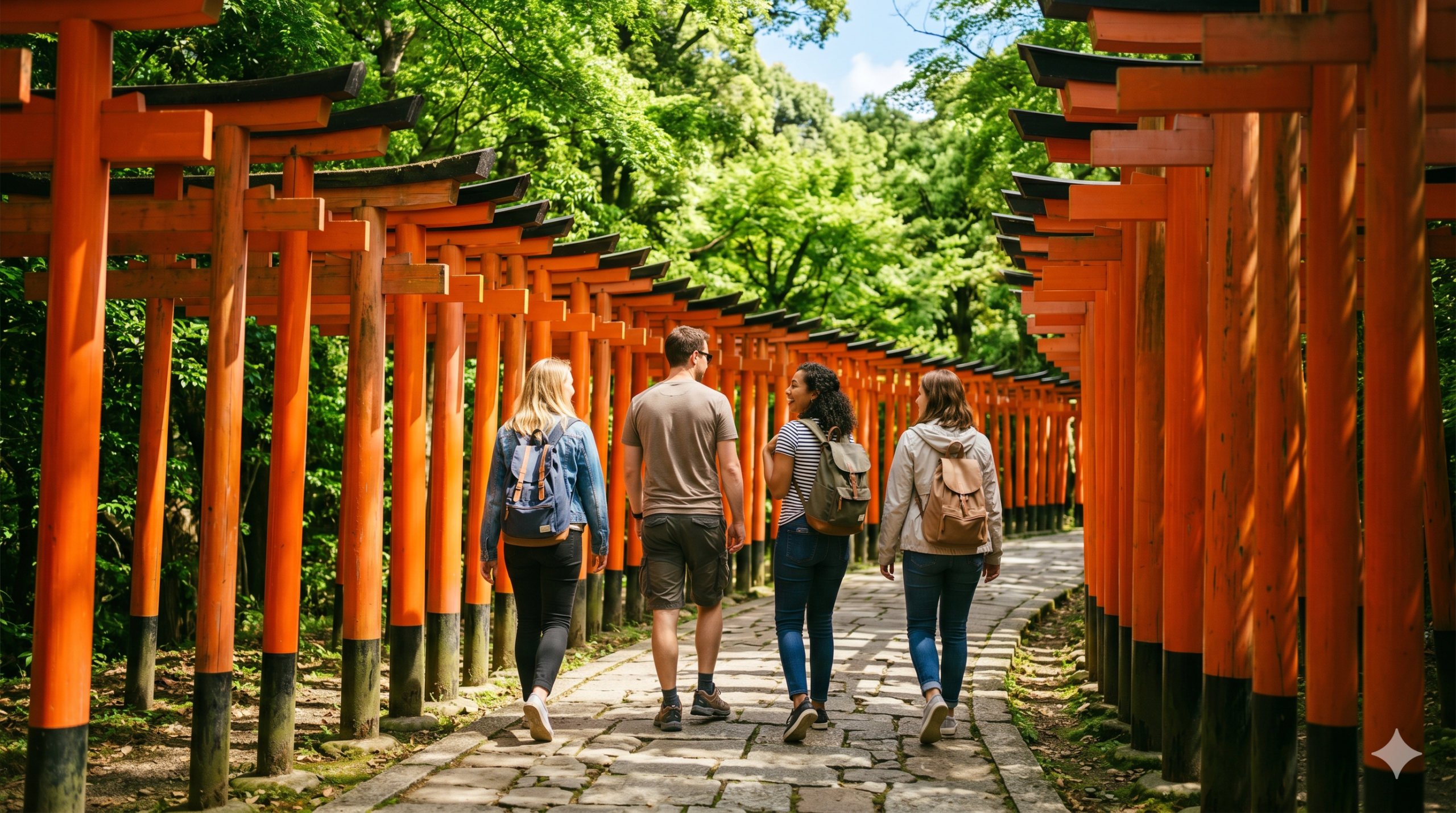
- Fushimi Inari Shrine (Kyoto) — The lower gates are packed from 9am to 5pm. The only way to see it peacefully is arriving before 7am or hiking past the first hour up the mountain.
- Senso-ji Temple, Asakusa (Tokyo) — The main approach (Nakamise-dori) is a tourist conveyor belt. Still worth a visit but set expectations accordingly.
- Shibuya Crossing observation decks — Now ticketed at most venues, with queues often 30–60 minutes long.
- Mount Fuji viewpoints, Fujikawaguchiko — The famous lawson convenience store view now has a barrier. Sunrise spots fill up the night before.
New Rules Tourists Need to Know
Japan has responded to overtourism with a wave of new policies in 2025–2026:
- Tourist tax hikes — Osaka (September 2025) and Kyoto (March 2026) have raised accommodation taxes, and Tokyo switches to a 3% rate in April 2027. Kyoto now charges up to ¥10,000 per night for luxury ryokan stays.
- Timed entry at some attractions — Some popular attractions sell timed tickets that can sell out, so book ahead.
- Photography restrictions — Gion (Kyoto’s geisha district) has strict no-photography rules in residential lanes, with fines for violations.
- Cruise ship caps — Several ports including Nagasaki and Shimizu have limited cruise ship arrivals to reduce same-day visitor spikes.
What Japan Actually Costs in 2026
The yen has recovered partially from its historic lows, but Japan still represents excellent value compared to Europe or North America — if you know where to spend and where to save.
| Expense | Budget | Mid-range | Luxury |
|---|---|---|---|
| Accommodation/night | ¥3,500–6,000 (hostel) | ¥10,000–20,000 | ¥30,000+ |
| Meals/day | ¥1,500–2,500 (konbini+ramen) | ¥3,000–6,000 | ¥15,000+ |
| Transport/day (local) | ¥500–1,000 | ¥1,000–2,000 | Taxi/private car |
| 7-day JR Pass (2026) | ¥50,000 (adult; ¥53,000 for most purchases from 1 October 2026) — worth it for 3+ long Shinkansen trips | ||
The Experiences That Are Still Worth Every Yen
Overtourism hasn’t ruined Japan — it’s just concentrated the crowds. These experiences still deliver on their promise in 2026:
1. Staying in a Traditional Ryokan
A night in a quality ryokan — tatami floors, yukata robes, multi-course kaiseki dinner, private or shared onsen — remains one of the most distinctive travel experiences in the world. The key is booking mid-week and avoiding Kyoto city center. Hakone, Kinosaki Onsen, and the Noto Peninsula offer excellent ryokan stays without the Kyoto price premium.
2. Eating Your Way Through Japan
Tokyo is famous for its many Michelin-starred restaurants, but the real joy is the everyday food culture. A bowl of ramen at a neighborhood shop, fresh sushi at Tsukiji Outer Market, takoyaki from an Osaka street stall — these experiences are completely unspoiled by tourism. Japan’s konbini (convenience store) food culture alone is worth the flight.
3. The Shinkansen Network
Traveling at 320km/h through the Japanese countryside — Mount Fuji appearing briefly through the window — never gets old. The Shinkansen is punctual to the second, spotlessly clean, and a genuine engineering marvel. The 2024 extension of the Hokuriku Shinkansen to Tsuruga makes Kanazawa and Fukui easier to reach than ever.
4. Cherry Blossom and Autumn Foliage Seasons
Yes, these seasons are crowded — but they’re crowded because the experience is genuinely transcendent. The trick is to seek out neighborhood parks and lesser-known spots alongside the famous ones. Local Japanese residents do this too; the famous spots are for photos, the neighborhood parks are for picnics.
5. Day Trips to Small Cities
Japan’s efficient rail network makes it easy to escape the main tourist circuit. Kamakura, Nikko, Kawagoe, Nara, and Uji are all easy day trips that offer world-class sights with a fraction of the crowds at their big-city counterparts.
Honest Advice: How to Visit Japan Without Hating It
Timing Is Everything
The worst times to visit Japan in 2026 are Golden Week (late April–early May), Obon (mid-August), and the cherry blossom peak (late March–early April in central Honshu). The best times are mid-May to mid-June (before rainy season), September–October, and January–February (cold but crowd-free, with incredible winter scenery in Hokkaido and Tohoku).
Book Everything in Advance
This is no longer optional. Popular ryokan book out 3–6 months ahead. Timed entry slots for major attractions fill up weeks in advance. The Japan National Tourism Organization (JNTO) offers visitor information, but reservations are made on each attraction’s own official site.
Get Off the Golden Route
The Tokyo–Kyoto–Osaka golden route is excellent, but Japan rewards those who venture further. Hiroshima and Miyajima island are deeply moving and surprisingly uncrowded. Kanazawa is arguably more beautiful than Kyoto with one-tenth the visitors. Tohoku in autumn is one of Japan’s best-kept secrets.
Learn a Little Japanese
Japan has improved English signage dramatically, especially at train stations. But making the effort to learn basic phrases — sumimasen (excuse me), arigatou gozaimasu (thank you), eigo ga hanasemasu ka (do you speak English?) — genuinely transforms how locals respond to you.
Is Japan Worth Visiting in 2026?
Absolutely — but go in with realistic expectations. The iconic spots can feel like theme parks at peak times. The country’s natural beauty, food culture, craftsmanship, public transport, and everyday politeness remain extraordinary. The secret is knowing when to follow the crowds and when to deliberately avoid them.
Japan isn’t broken by tourism — it’s just changed. And the travelers who adapt to that change tend to have the best experiences.
🗾 More Japan Travel Guides
🇯🇵 Travel & Life Essentials for Japan
Hand-picked gear to make your time in Japan easier. Available on Amazon US & Amazon Japan.
🔋 Portable charger
A must for long days of sightseeing and photos.
View on Amazon (US)View on Amazon Japan🔌 Travel plug adapter
Japan uses Type A outlets. Bring the right adapter.
View on Amazon (US)View on Amazon Japan🎧 Translation earbuds
Real-time translation to talk without barriers.
View on Amazon (US)View on Amazon JapanAs an Amazon Associate, Japan Life Lab earns from qualifying purchases.
🔥 Editor’s Picks for Life & Travel in Japan

Japan Expat Starter Kit 2026 PDF guide
Your first 90 days in Japan, step by step: 17 chapters · 24 pages · 100 phrases in Japanese script · 40 kanji · printable checklists. Bank account, My Number, health insurance, apartment, phone, taxes & pension.
$9.99 $4.99 current price
📥 Get the kit →📄 Read 5 pages free: contents + Chapter 2
⚡ Instant PDF download · 🛡️ 30-day money-back guarantee · 🔄 Free 2026 updates
Practical guides for life and travel in Japan — free, about once a week. No spam, unsubscribe anytime.
☕ Enjoying our Japan guides?
If this article helped you, you can support our work with a coffee!
Did this guide help you? 🍵
Japan Life Lab is a small independent blog, and every guide we publish is completely free — no paywalls, ever. If our work saved you time (or a headache), you can support us with a cup of Japanese tea. Every contribution, big or small, goes straight into keeping these guides free, accurate and up to date for everyone.
☕ Support Japan Life Lab
Leave a Reply