This article was created with AI writing assistance (ChatGPT, Claude, etc.). Product selection, specifications, and reviews are verified by the Japan Life Lab editorial team.
This article contains promotional / affiliate links.
📌 What you will learn
You do not have to read it all — jump to what you need.
- Why Japan’s Hidden Gems Are Better Than the Famous Ones
- 10 Japan Hidden Gems Worth the Detour in 2026
- Practical Tips for Off-the-Beaten-Path Japan
※ Start wherever fits your situation.
Why Japan’s Hidden Gems Are Better Than the Famous Ones
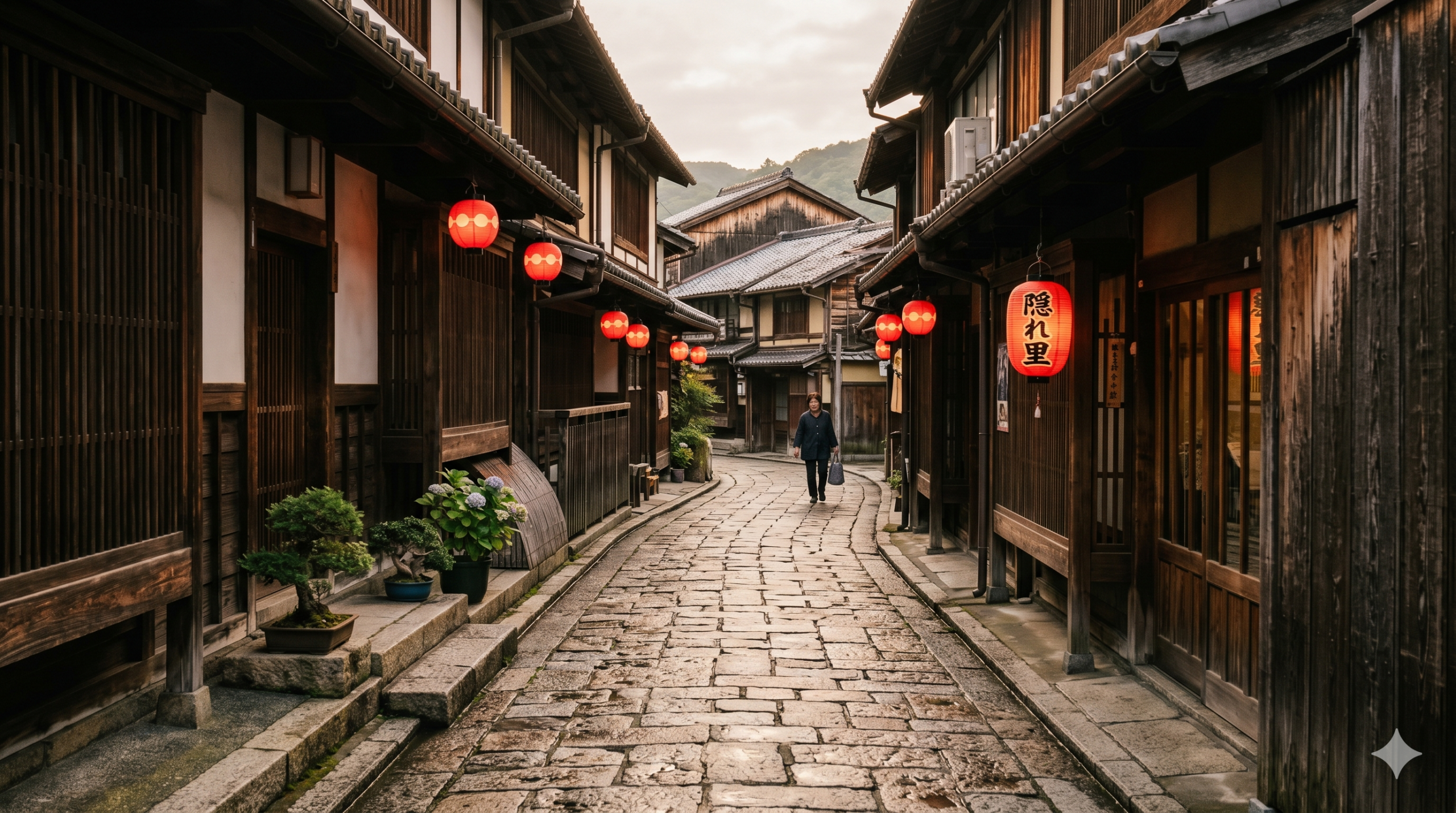
Here’s a travel truth most guides won’t tell you: Japan’s most memorable experiences rarely happen at its most photographed spots. They happen in the narrow alleyways of a castle town that doesn’t appear on the top-10 lists, at a quiet hot spring inn with no English menu, or on a ferry crossing to an island most tourists have never heard of.
With a record 42.7 million foreign visitors in 2025, most of them crowding the same golden route, the case for going off the beaten path has never been stronger — or easier. Japan’s excellent rail network and improving English signage mean you can now explore regions that felt genuinely remote a decade ago.
10 Japan Hidden Gems Worth the Detour in 2026
1. Kanazawa — Japan’s Best-Kept Cultural Secret
Often called “little Kyoto,” Kanazawa offers preserved samurai districts, geisha teahouses, and one of Japan’s top three gardens — all with a fraction of Kyoto’s crowds. The Higashi Chaya geisha district is genuinely atmospheric without the tour groups, and the Kenroku-en garden is stunning year-round. Now just 2.5 hours from Tokyo on the extended Hokuriku Shinkansen.
Best time to visit: Early November for autumn foliage, or March before cherry blossoms hit the main cities. Don’t miss: The Omicho Market for fresh seafood, and a stay in a traditional machiya townhouse.
2. Naoshima — Japan’s Art Island in the Inland Sea
A small island in the Seto Inland Sea that has transformed itself into one of the world’s great contemporary art destinations. Yayoi Kusama’s iconic Yellow Pumpkin, museum buildings by Tadao Ando half-buried in hillsides, and art installations integrated into renovated traditional houses. The island’s pace is unhurried, the ferry ride is beautiful, and the contrast between ancient rural Japan and cutting-edge art is unlike anything else.
Getting there: Ferry from Uno Port (near Okayama), about 20 minutes. Tip: Stay overnight — the island’s crowds thin dramatically after day-trippers leave.
3. Matsumoto — Feudal Castle Town in the Alps
Matsumoto’s black-and-white castle is arguably the most beautiful in Japan — and unlike Himeji or Osaka, you’ll share it with a manageable number of visitors. The surrounding Alps provide a dramatic backdrop, and the town has excellent craft shops, a renowned art museum, and a vibrant jazz scene. Easy base for exploring the Japanese Alps.
Getting there: 2.5 hours from Shinjuku (Tokyo) on the Azusa limited express. Don’t miss: Rowing a boat on the moat at sunset.
4. Kinosaki Onsen — Japan’s Most Charming Spa Town
A traditional hot spring town on the Japan Sea coast where the custom is to don a yukata robe and wooden geta sandals, then wander between the town’s seven public bathhouses. The willow-lined canal, wooden ryokan facades reflected in the water, the sound of geta clacking on stone streets — Kinosaki is what Arashiyama used to feel like. Far less visited and far more authentic.
Getting there: About 2.5 hours from Kyoto on the Kinosaki limited express. Tip: A one-night stay with a yukata-clad bathhouse crawl is the essential experience.
5. Tohoku — Northern Japan’s Forgotten Region
The six prefectures north of Tokyo collectively receive fewer visitors than Kyoto alone — yet contain some of Japan’s most dramatic scenery: volcanic national parks, the UNESCO Shirakami-Sanchi beech forest, and the wild Sanriku Coastline. Sendai is a liveable, modern city with excellent food and easy access to Matsushima Bay, one of Japan’s three great views.
Best time: Late September to early November for peak autumn foliage. Don’t miss: The Nebuta Matsuri festival in Aomori (August) — one of Japan’s most visually stunning summer festivals.
6. Yakushima Island — Primeval Forest and Coastal Wilderness
A UNESCO World Heritage island off the southern tip of Kyushu, covered in ancient cedar forests said to have inspired Studio Ghibli’s Princess Mononoke. The Jomon Sugi cedar is estimated to be over 2,000 years old. The island also has stunning coastline, sea turtles nesting on beaches, and some of Japan’s most challenging hiking.
Getting there: Ferry from Kagoshima (4 hours) or high-speed ferry (2 hours), or a short domestic flight. Best time: May–June and October–November.
7. Fukui — The Dinosaur Prefecture Nobody Visits
Fukui Prefecture has two extraordinary attractions almost no tourists know about: the Fukui Prefectural Dinosaur Museum (the best in Asia) and Eiheiji Temple — one of Japan’s most important Zen monasteries, set in cedar forests with practicing monks. The 2024 Shinkansen extension now makes Fukui accessible in under 2 hours from Kyoto.
Don’t miss: The Tojinbo cliffs — dramatic basalt columns on the Sea of Japan coast.
8. Noto Peninsula — Wabi-Sabi Japan
A rugged, rural peninsula jutting into the Japan Sea with terraced rice paddies descending to the coast, traditional lacquerware workshops, and fishing villages where time moves slowly. The peninsula was hit by an earthquake in January 2024 and is rebuilding — visiting respectfully and spending money locally is genuine support for communities that need tourism revenue.
9. Kamikochi — The Alps Without the Crowds
A pristine mountain valley in the Northern Alps, accessible only by bus (private cars are banned year-round). The Azusa River runs crystal clear past Japanese larch trees, with the jagged Hotaka peaks as backdrop. Less than 3% of Japan visitors make it here.
Open season: Mid-April to mid-November. Getting there: Bus from Matsumoto (~80 minutes).
10. Shimane — Izumo Taisha and the Forgotten Sanin Coast
Home to Izumo Taisha — one of Japan’s most sacred Shinto shrines — and the Adachi Museum of Art, whose garden is consistently ranked the finest in Japan. The surrounding Shimane Peninsula has atmospheric sea-fog, dramatic cliffs, and almost no foreign tourists. Which is exactly why you should go.
Practical Tips for Off-the-Beaten-Path Japan
Getting Around
Japan’s rural areas have less frequent train service, so a combination of regional rail passes and occasional buses works well. The Japan Rail Pass covers most Shinkansen and limited express trains. For very rural areas, a rental car provides the most flexibility — use Google Maps Japan for route planning.
Language in Rural Japan
English is less common outside major cities, but Google Translate’s camera function handles menus brilliantly. The effort to communicate in Japanese — even just a few polite phrases — is rewarded generously by rural hosts who genuinely appreciate foreign visitors making the effort to reach them.
Accommodation
Rural Japan’s accommodation sweet spot is the small family-run minshuku (guesthouse) or mid-range ryokan, often including breakfast and dinner. Book through Jalan or Rakuten Travel for Japanese-language options, or through boutique booking sites for English support.
🗾 More Japan Travel Guides
🇯🇵 Travel & Life Essentials for Japan
Hand-picked gear to make your time in Japan easier. Available on Amazon US & Amazon Japan.
🔋 Portable charger
A must for long days of sightseeing and photos.
View on Amazon (US)View on Amazon Japan🔌 Travel plug adapter
Japan uses Type A outlets. Bring the right adapter.
View on Amazon (US)View on Amazon Japan🎧 Translation earbuds
Real-time translation to talk without barriers.
View on Amazon (US)View on Amazon JapanAs an Amazon Associate, Japan Life Lab earns from qualifying purchases.
🔥 Editor’s Picks for Life & Travel in Japan

Japan Expat Starter Kit 2026 PDF guide
Your first 90 days in Japan, step by step: 17 chapters · 24 pages · 100 phrases in Japanese script · 40 kanji · printable checklists. Bank account, My Number, health insurance, apartment, phone, taxes & pension.
$9.99 $4.99 current price
📥 Get the kit →📄 Read 5 pages free: contents + Chapter 2
⚡ Instant PDF download · 🛡️ 30-day money-back guarantee · 🔄 Free 2026 updates
Practical guides for life and travel in Japan — free, about once a week. No spam, unsubscribe anytime.
☕ Enjoying our Japan guides?
If this article helped you, you can support our work with a coffee!
Did this guide help you? 🍵
Japan Life Lab is a small independent blog, and every guide we publish is completely free — no paywalls, ever. If our work saved you time (or a headache), you can support us with a cup of Japanese tea. Every contribution, big or small, goes straight into keeping these guides free, accurate and up to date for everyone.
☕ Support Japan Life Lab
Leave a Reply