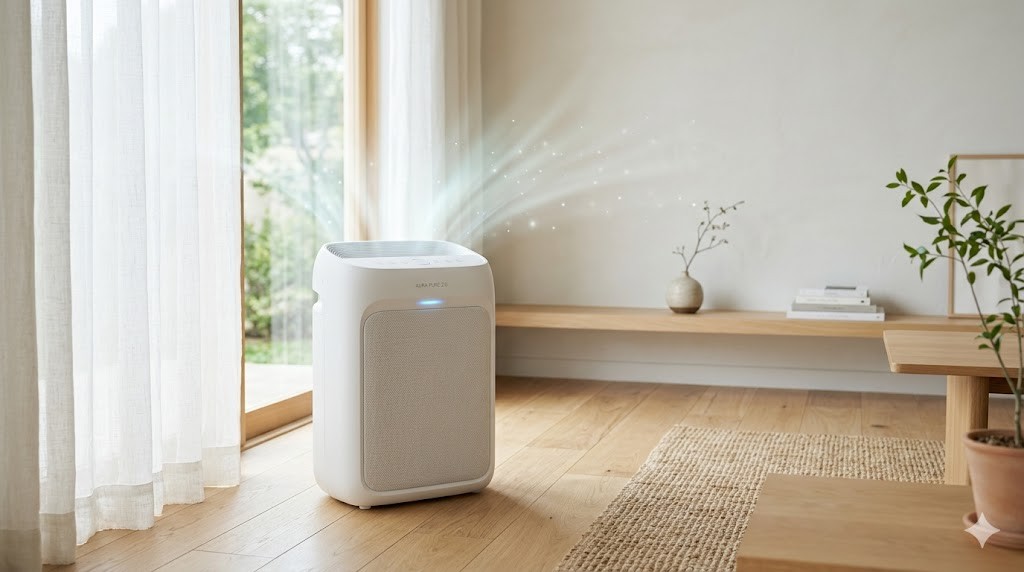
Why You Need an Air Purifier in Japan
If you live in Japan or are planning to stay for an extended period, you’ve probably noticed that air quality isn’t always perfect. Japan faces a unique combination of air quality challenges throughout the year: PM2.5 fine particles drifting over from the Asian continent, cedar pollen season (花粉, kafun) that affects millions of people from January through April, house dust mites, pet dander, and even volatile organic compounds (VOCs) from new building materials. For expats and long-term visitors, investing in a quality air purifier can genuinely transform your daily comfort.
Japan’s domestic air purifier market is one of the most advanced in the world. Japanese brands like Sharp, Panasonic, and Daikin have developed proprietary air purification technologies — Plasmacluster, nanoe X, and Streamer discharge — that go beyond simple HEPA filtration. This guide covers both top Japanese-brand models and internationally recognized brands available in Japan, so you can make the right choice for your needs and budget.
How to Choose the Best Air Purifier in Japan
1. Room Coverage (Tatami Standard)
Japanese air purifiers rate their coverage in tatami mats (畳, jo). One tatami mat equals approximately 1.65 m². Most products list two coverage ratings: one for “applying” (適用) and one for “cigarette smoke” (タバコ煙) — the latter is usually lower. As a rule of thumb, choose a model rated for about 1.5–2x your actual room size to get optimal performance during Japan’s pollen season. For a 6-tatami room (about 10 m²), look for a model rated at 10–12 tatami.
2. CADR Rating and Fan Speed
CADR (Clean Air Delivery Rate) measures how quickly the purifier removes pollutants. Higher CADR means faster cleaning. Japanese models often advertise “30-minute clean” specifications — look for models that can circulate your room’s air 4–6 times per hour. In sleep mode, noise level becomes the priority; the best Japanese models operate at just 20–22 dB, barely audible.
3. Filter Technology
True HEPA filters (capturing 99.97% of particles ≥0.3 μm) are the gold standard. Japanese models often combine HEPA with activated carbon filters for odor removal, and add their proprietary ion or plasma technology for additional antimicrobial effects. For pollen sufferers, look for models with dedicated pollen-capturing modes. Filter replacement costs in Japan typically run ¥4,000–¥12,000 every 2–10 years depending on the model.
4. Noise Level
Japanese apartments are often compact, making noise level critical. Premium models run at 20–23 dB on their lowest setting — similar to a library. Mid-range models run at 25–30 dB. Avoid models louder than 35 dB for bedroom use. Japanese air purifiers consistently outperform global competitors on quiet operation, which is a key reason locals prefer them.
5. Smart Features and Sensors
Modern Japanese air purifiers come with built-in PM2.5 and dust sensors that automatically adjust fan speed. Some support Wi-Fi connectivity and smartphone apps (though app interfaces are usually Japanese only). Look for models with “auto mode” — particularly useful during cedar pollen season (February–April) when you want the purifier to respond automatically to changing air quality without manual intervention.
Best Air Purifiers in Japan 2026: Our Top 5 Picks
1. Sharp FU-N50 Plasmacluster 25000 — Best Overall for Japan
Sharp’s Plasmacluster technology is arguably the most trusted air purification brand in Japan. The FU-N50 features Plasmacluster 25000, Sharp’s highest-density ion generation (25,000 ions/cm³), which actively neutralizes viruses, bacteria, allergens, and mold floating in the air — not just on the filter. For kafun (pollen) season, this makes a genuine difference. The unit covers up to 25 tatami mats (41 m²), making it suitable for Japanese living room + dining room (LDK) spaces.
The FU-N50 runs whisper-quiet at 20 dB on its lowest setting, and the auto mode uses a combination of dust, humidity, and odor sensors to maintain optimal air quality around the clock. The HEPA + deodorizing filter combo handles PM2.5, pollen, pet dander, cooking odors, and cigarette smoke effectively. Filter replacement is needed just once every 10 years for the HEPA filter — one of the longest in the industry — keeping running costs low.
One standout feature for expats: the FU-N50’s simple operation panel uses pictogram-based buttons that are easy to understand even without reading Japanese. It also has a child lock, useful for families with young children adjusting to life in Japan.
| Coverage | Up to 25 tatami (41 m²) |
|---|---|
| Technology | Plasmacluster 25000 + HEPA |
| Noise (Min) | 20 dB |
| Filter Life | 10 years (HEPA) |
| Dimensions | W265 × D265 × H599 mm |
| Weight | 7.5 kg |
| Power | Max 38W |
✅ Pros
- Plasmacluster 25000 actively kills airborne pathogens
- Extremely quiet at 20 dB (ideal for bedrooms)
- 10-year HEPA filter — very low running costs
- Reliable auto mode with multiple sensors
- Trusted brand with excellent after-sales support in Japan
- Simple operation, beginner-friendly
❌ Cons
- App is Japanese-only
- Pricier than basic competitors
- Bulkier than some competitors
🎯 Recommended for:
- Expats dealing with Japan’s cedar pollen season
- Families with babies or young children
- Anyone who wants set-and-forget operation
- Bedroom use requiring ultra-quiet operation
2. Panasonic F-VXR90 nanoe X — Best for Humidity + Air Quality
Panasonic’s nanoe X technology generates hydroxyl radicals (OH radicals) that are released into the room to deactivate viruses, bacteria, and allergens on surfaces and in the air — not just particles that pass through the filter. The F-VXR90 is one of Panasonic’s flagship models, combining air purification with humidification, which is particularly valuable in Japan’s dry winters (December–February).
The humidification function uses a vaporizing-type system that doesn’t generate steam, keeping the moisture level comfortable without the risk of mold that comes with ultrasonic humidifiers. This dual functionality means you get clean, properly humidified air in one device — eliminating the need to run two separate appliances in a small Japanese apartment. Coverage goes up to 40 tatami (66 m²) for purification, and 18 tatami (30 m²) for humidification, making it suitable for open-plan LDK spaces in modern Japanese condominiums.
For allergy sufferers, the F-VXR90’s pollen-block mode creates positive air pressure at the air intake to reduce the amount of pollen pulled into the unit and released back into the room. nanoe X has been tested against 99.99% reduction of specific viruses and bacteria, and Panasonic publishes detailed third-party test results in English on their global website.
| Coverage (Air) | Up to 40 tatami (66 m²) |
|---|---|
| Coverage (Humidify) | Up to 18 tatami (30 m²) |
| Technology | nanoe X Mark 2 + HEPA |
| Noise (Min) | 22 dB |
| Filter Life | 5 years |
| Weight | 11.2 kg |
| Power | Max 72W |
✅ Pros
- Combines purification + humidification in one unit
- nanoe X actively deactivates viruses and bacteria
- Excellent for dry Japanese winters
- Large room coverage (40 tatami for purification)
- Automatic humidity control prevents over-humidification
- Panasonic has strong service network across Japan
❌ Cons
- High initial cost
- Water tank needs regular refilling and cleaning
- Heavy at 11.2 kg
🎯 Recommended for:
- Expats in dry Japanese winter climates (Tokyo, Osaka)
- Those who want to replace both humidifier and purifier
- People sensitive to dry air (sore throat, dry skin)
- Larger LDK spaces in modern Japanese apartments
3. Daikin ACK55YF Streamer — Best for Tobacco & Pet Odors
Daikin’s Streamer discharge technology uses high-speed electrons to decompose collected pollutants on the filter itself — essentially self-cleaning and regenerating the filter’s deodorizing capability. This makes it particularly effective against persistent odors like tobacco smoke, cooking smells, and pet odors that other purifiers may merely trap rather than eliminate. If you’re renting a pre-owned Japanese apartment that had a smoking tenant, or if you have pets, the ACK55YF is the clear choice.
The ACK55YF covers 25 tatami mats (41 m²) for pollen and dust removal, and its three-layer filter system captures particles down to 0.1 μm — smaller than standard HEPA specifications. Daikin’s reputation in Japan primarily comes from their HVAC systems, and the same engineering quality carries over to their air purifiers. The unit is compact and tower-shaped, easy to place in corners of Japanese rooms.
The Smart Sensor function continuously monitors PM2.5 levels, humidity, odors, and even formaldehyde (VOCs from new furniture or building materials — important if you’re moving into a newly constructed Japanese home). This four-sensor monitoring system is more comprehensive than most competitors at this price point.
| Coverage | Up to 25 tatami (41 m²) |
|---|---|
| Technology | Streamer + HEPA (0.1 μm) |
| Noise (Min) | 21 dB |
| Sensors | PM2.5, humidity, odor, formaldehyde |
| Filter Life | 10 years (HEPA) |
| Weight | 5.6 kg |
| Power | Max 32W |
✅ Pros
- Streamer technology decomposes odors (not just traps them)
- Formaldehyde sensor — great for new Japanese homes
- Ultra-fine 0.1 μm filtration
- Compact and lightweight (5.6 kg)
- 10-year HEPA filter life
- Excellent for tobacco and pet odor elimination
❌ Cons
- No humidification function
- No Wi-Fi/app control
- Daikin’s brand recognition lower than Sharp/Panasonic for purifiers
🎯 Recommended for:
- Pet owners living in Japan
- Moving into an older Japanese apartment
- Families in newly built Japanese homes (VOC concerns)
- Anyone dealing with persistent cooking odors
4. Coway Airmega AP-1512HH — Best Budget Option (Available in Japan)
The Korean-made Coway Airmega AP-1512HH has earned a cult following globally for its excellent performance-to-price ratio, and it’s available through Amazon Japan. While it lacks the Japanese-specific ion technologies, it delivers solid HEPA + activated carbon filtration at roughly half the price of comparable Japanese models. For expats who don’t want to invest heavily in appliances they may not take home, or who are on a tighter budget, the AP-1512HH is the most sensible choice.
The unit covers up to about 20 tatami (33 m²) effectively — suitable for a standard Japanese 1LDK or 2LDK apartment living room. The four-stage filtration (pre-filter, odor filter, true HEPA, vital ion) handles PM2.5, pollen, pet dander, and household odors. The built-in air quality indicator shows three color levels so you can monitor air quality at a glance. Filter replacement runs approximately ¥4,000 every 6–12 months depending on use.
One practical advantage for Japan residents: the AP-1512HH runs on 100V (Japan’s standard voltage) and is available on Amazon Japan with domestic shipping. The operation panel is simple and intuitive even for those who can’t read Japanese. The auto mode and sleep mode work reliably, and it runs quietly enough for bedroom use at 24 dB on low.
| Coverage | Up to 20 tatami (33 m²) |
|---|---|
| Technology | True HEPA + Activated Carbon |
| Noise (Min) | 24 dB |
| Filter Life | 12 months (HEPA) |
| Dimensions | W325 × D225 × H488 mm |
| Weight | 5.4 kg |
| Power | Max 43W |
✅ Pros
- Excellent value for money
- True HEPA performance at budget price
- Available on Amazon Japan with fast domestic shipping
- Runs on Japan’s 100V — no transformer needed
- Simple intuitive controls (no Japanese reading required)
- Compact footprint for small Japanese apartments
❌ Cons
- No Japanese-specific ion/plasma technology
- Filter replacement every 12 months (higher running cost)
- Limited Japanese customer support
🎯 Recommended for:
- Short-term expats (1–2 years in Japan)
- Budget-conscious residents
- Those in smaller apartments (1K, 1LDK)
- First-time air purifier buyers in Japan
5. Blueair Blue Pure 211+ — Best for Large Spaces
Sweden-based Blueair is well-regarded internationally for high CADR ratings — and the Blue Pure 211+ lives up to its reputation in Japan. Delivering a CADR of 400 m³/h, it’s one of the most powerful purifiers available through Japanese retailers and Amazon Japan, covering spaces up to approximately 40 tatami (66 m²) effectively. If you’re living in a large family apartment, an open-plan office space, or a Japanese house (一戸建て), this is the model to consider.
The Blue Pure 211+ uses HEPASilent technology — a combination of electrostatic and mechanical filtration — that captures 99.97% of particles as small as 0.1 μm while maintaining low fan speeds (and thus low noise). The washable pre-filter comes in multiple colors and helps capture larger particles and pet hair before they reach the main filter. The unit has just one button, making it possibly the simplest air purifier to operate — a definite plus if you’re still learning Japanese.
Available through Amazon Japan (japangadgetla-20 affiliate link below), the Blue Pure 211+ requires filter replacement roughly every 6 months depending on air quality — this is the main trade-off versus Japanese models with longer filter life. However, Blueair publishes all its performance data in English and has an English-language customer support channel, which is valuable for expats.
| Coverage | Up to 40 tatami (66 m²) |
|---|---|
| Technology | HEPASilent (electrostatic + mechanical) |
| CADR | 400 m³/h |
| Noise (Min) | 31 dB |
| Filter Life | 6 months |
| Weight | 5.4 kg |
| Power | Max 30W |
✅ Pros
- Highest CADR rating of the group (400 m³/h)
- Covers large Japanese homes or open-plan spaces
- One-button operation — ultra simple
- English customer support available
- Colorful washable pre-filter options
- Energy efficient at just 30W max
❌ Cons
- Louder than Japanese models at low settings (31 dB)
- Filter needs replacing every 6 months
- No ion/plasma technology
🎯 Recommended for:
- Large apartments or Japanese houses
- Open-plan living/dining/kitchen spaces
- Expats preferring English-language support
- Those prioritizing raw air-cleaning speed
Comparison Table: Best Air Purifiers in Japan 2026
| Model | Coverage | Technology | Noise (Min) | Filter Life | Best For |
|---|---|---|---|---|---|
| Sharp FU-N50 | 25 tatami | Plasmacluster 25000 | 20 dB | 10 years | Overall Best / Pollen |
| Panasonic F-VXR90 | 40 tatami | nanoe X Mark 2 | 22 dB | 5 years | Humidity + Purification |
| Daikin ACK55YF | 25 tatami | Streamer | 21 dB | 10 years | Odor Elimination |
| Coway AP-1512HH | 20 tatami | HEPA + Carbon | 24 dB | 12 months | Budget Pick |
| Blueair 211+ | 40 tatami | HEPASilent | 31 dB | 6 months | Large Spaces |
Where to Buy Air Purifiers in Japan
The easiest way to buy an air purifier in Japan is through Amazon Japan — most major models ship within 1–2 days (or same-day with Prime), and you can read English reviews from other expats. Alternatively, large electronics retailers like Yodobashi Camera, Bic Camera, and Yamada Denki have dedicated air purifier sections where staff can assist you (though English support varies by store). If you’re looking for the best deals, wait for Amazon Japan’s sale events: Prime Day (July), Super Sale (December), and New Life season (March–April) typically offer 15–30% discounts on major Japanese brands.
Note on voltage: All models listed above run on Japan’s standard 100V/50-60Hz electrical supply — you won’t need a voltage converter. If you’re sending a unit home when your assignment ends, check your home country’s voltage requirements; Japanese air purifiers typically won’t work on 220–240V systems without a transformer.
Conclusion: Which Air Purifier Should You Choose?
For most expats living in Japan, the Sharp FU-N50 offers the best all-round combination of performance, running cost, quiet operation, and Japanese-specific air quality features — particularly during cedar pollen season. If you need humidification too (highly recommended for dry Japanese winters), the Panasonic F-VXR90 is worth the higher price. On a budget, the Coway AP-1512HH delivers reliable HEPA performance at an accessible price point. For large spaces, the Blueair Blue Pure 211+ is unbeatable on raw cleaning power.
Whichever model you choose, an air purifier is one of the best quality-of-life investments you can make for daily living in Japan — especially if you’re sensitive to pollen, dust mites, or simply want cleaner air in your Japanese home. Check the affiliate links below for the latest prices on Amazon Japan and Amazon.com.
Leave a Reply