Category: Uncategorized

  • Best Japanese Futon & Bedding 2026: Shikibuton, Pillows & Comforters Guide

    The Japanese futon (shikibuton) is one of Japan’s best space-saving inventions: a firm, roll-away mattress you lay directly on tatami or the floor, fold up in the morning, and tuck into a closet. Whether you’re furnishing a small apartment in Japan or want authentic Japanese bedding shipped home, this 2026 guide explains the pieces, the best products, and how to care for them.

    Japanese bedding explained

    A traditional Japanese bed set has three parts: the shikibuton (敷き布団) — the firm bottom mattress; the kakebuton (掛け布団) — the duvet/comforter on top; and the makura (枕) — the pillow, often filled with buckwheat hulls. The appeal: firm back support, easy storage, great airflow, and a minimalist aesthetic.

    Best Japanese bedding of 2026

    1. Nishikawa shikibuton — the heritage choice

    Nishikawa is a Japanese bedding maker founded in 1566, famous for premium craftsmanship and supportive, breathable shikibuton. If you want the real, long-lasting thing, this is the benchmark brand.

    Nishikawa premium shikibuton (heritage brand)

    2. EMOOR futon set — the easy all-in-one

    EMOOR offers complete, beginner-friendly futon sets (shikibuton + kakebuton + pillow) in practical, washable cotton — ideal for a new apartment or a guest set.

    EMOOR all-in-one futon set (washable, great value)

    3. J-Life traditional futon — popular overseas

    J-Life is a well-known maker of authentic Japanese futons and pillows, widely available internationally — a favorite for Japan fans who want the genuine floor-sleeping experience at home.

    J-Life authentic Japanese futons & toppers

    4. Buckwheat pillow (sobakawa makura) — cool & adjustable

    The traditional buckwheat-hull pillow contours to your neck, stays cool in summer, and lets you add or remove hulls for the perfect height. A small upgrade that transforms your sleep.

    Buckwheat-hull pillows (cooling, adjustable)

    5. Kakebuton comforter — light & warm

    A Japanese kakebuton is light yet warm, breathable, and easy to air out. Pair it with your shikibuton for a complete, authentic set you can fold away each morning.

    Japanese kakebuton comforters

    How to use & care for a futon

    • Air it out: hang or stand your futon in the sun regularly to prevent moisture and mold — crucial in humid Japan.
    • Use a mat underneath: on flooring (not tatami), add a moisture-wicking mat (sunamine/breathable mat) to stop condensation.
    • Fold and store: fold it into the closet (oshiire) each morning to free up your room.
    • Rotate & beat: use a futon dryer in the rainy season; lightly beat to fluff.

    FAQ

    Is a futon comfortable for back pain?
    Many people find the firm support good for the back, especially with a quality shikibuton. If the floor feels too hard, add a thin mattress topper.

    Can I ship Japanese bedding home?
    Yes — Amazon.com carries many sets, and Buyee can forward anything from Japan. Futons compress well for shipping.

    Futon on the floor or on a bed frame?
    Both work. On flooring, always use a moisture mat underneath; on tatami, you can lay it directly.

    Setting up life in Japan?

    Our Japan Expat Starter Kit covers housing, banking, hanko, My Number & daily life in one PDF.

    📥 Get the Guide — $19

    More Japan life guides

  • Having a Baby in Japan as a Foreigner (2026): Costs, Benefits, Hospitals & What to Buy

    Having a Baby in Japan as a Foreigner (2026): Costs, Benefits, Hospitals & What to Buy

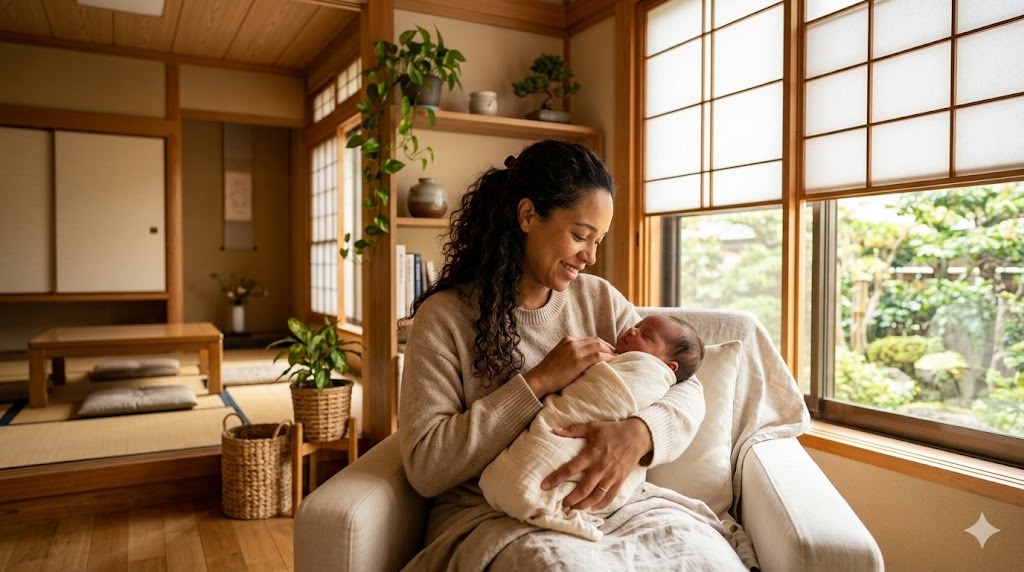
    Having a baby is a huge milestone — and doing it in a country where you may not speak the language fluently can feel overwhelming. The good news: Japan has one of the most affordable and well-organized maternity systems in the developed world, and as a registered resident you are entitled to the same support as Japanese citizens. This 2026 guide walks you through the real costs, the step-by-step process, every benefit you can claim, English-speaking hospitals, and exactly what to buy before your baby arrives.

    How much does it cost to have a baby in Japan?

    Pregnancy and childbirth are not covered by normal health insurance in Japan because they are not considered an illness. Instead, the government gives you a lump-sum childbirth allowance (shussan ikuji ichijikin / 出産育児一時金) of ¥500,000 per child (in place since April 2023). The national average cost of a normal delivery is now slightly above ¥500,000, so in many cases your out-of-pocket cost is small — sometimes close to zero in public hospitals, more in private clinics or for private rooms and pain-relief (epidural) options.

    Under the direct payment system (chokusetsu shiharai), the ¥500,000 is paid straight from your insurer to the hospital, so you only pay the difference at the counter. Note: from fiscal 2027 the government plans to move toward a standardized national price for delivery and aim for zero out-of-pocket cost for normal births, so the system is becoming even more generous.

    Step-by-step: the maternity process for foreigners

    1. Confirm your pregnancy at a clinic

    Visit an OB-GYN (sanfujinka / 産婦人科) to confirm the pregnancy. They will give you a certificate you need for the next step.

    2. Register at your city/ward office and get the Boshi Techo

    Take the certificate to your local city or ward office and register your pregnancy. You will receive the Mother and Child Health Handbook (Boshi Techo / 母子手帳) — a record of your pregnancy, the birth, and your child’s vaccinations. Many municipalities offer it in English, Chinese, and other languages, so ask.

    3. Collect your free prenatal checkup tickets

    Along with the handbook you receive subsidized checkup vouchers (around 14 visits) that cover most of the cost of prenatal exams. Keep them with your handbook and bring them to every appointment.

    4. Choose your hospital or clinic

    Decide where to give birth early — popular hospitals fill up fast. Options range from large university hospitals (more English support, good for high-risk) to private clinics and midwife-run birth houses. See the English-speaking options below.

    5. Register the birth within 14 days

    After the birth you must submit a birth notification (shussei todoke / 出生届) within 14 days at the city office. You will also need to report the birth to your home country’s embassy and add the baby to your health insurance and (if applicable) residence status.

    Financial support you can claim

    Beyond the ¥500,000 lump sum, several benefits are available to foreign residents. Don’t leave money on the table:

    • Childbirth lump sum (出産育児一時金): ¥500,000 per child, paid to all public-insurance members.
    • Pregnancy & childcare support grant (出産・子育て応援交付金): ¥100,000 total — typically ¥50,000 at pregnancy registration and ¥50,000 after birth (paid by your municipality).
    • Child allowance (jido teate / 児童手当): as of the 2024 expansion, roughly ¥15,000/month for ages 0–3 and ¥10,000/month from age 3 through high school (more for a third child), with the income cap removed. Paid every two months — apply at the city office.
    • Maternity allowance (出産手当金): if you are enrolled in employee health insurance (shakai hoken), you receive about two-thirds of your daily salary during maternity leave. (Not available to National Health Insurance / self-employed members.)
    • Childcare leave benefit (育児休業給付金): from employment insurance, around 67% of salary for the first 6 months, then 50%, while on parental leave.

    Amounts and rules vary slightly by municipality and your insurance type, so confirm at your ward office. Our guides on health insurance and the My Number card (needed for many of these applications) will help.

    English-speaking maternity hospitals

    Language support matters when you’re in labor. In Tokyo, well-known options with English support include St. Luke’s International Hospital, the Aiiku Hospital, and Sanno Hospital. Major cities like Osaka, Nagoya, Fukuoka and Yokohama have international or university hospitals with English-speaking OB-GYNs. Ask your embassy or check our guide to English-speaking hospitals in Japan for a fuller list, and book early.

    What to buy before the baby arrives

    Japanese baby products are famous for quality and clever design, and many are easy to order online. Here are the essentials — you can buy them on Amazon Japan, or ship them home via Amazon.com / Buyee.

    Diapers (omutsu)

    Japanese diapers like Merries and Moony are loved worldwide for softness and absorbency.

    Top-rated Japanese diaper brands (newborn to size L)

    Baby bottles & feeding

    Pigeon bottles and nipples are the Japanese standard, designed to mimic natural feeding.

    Pigeon bottles, nipples and feeding sets

    Baby monitor

    A video baby monitor gives peace of mind from day one.

    Video baby monitors with night vision

    Stroller & carrier

    Combi and Aprica make lightweight strollers built for Japan’s trains and narrow streets; a good carrier is essential for daily life.

    Japanese strollers and baby carriers

    FAQ

    Do I need to speak Japanese to give birth in Japan?
    It helps, but you can choose an English-speaking hospital, bring a bilingual friend, or use translation apps. The Boshi Techo is available in multiple languages.

    Will my baby get Japanese citizenship?
    Not automatically — Japan grants citizenship by descent, not by birthplace. Your child generally takes your nationality; register the birth with your embassy.

    Is the ¥500,000 lump sum available to foreigners?
    Yes, as long as you are enrolled in Japanese public health insurance (NHI or employee insurance).

    How soon should I register the pregnancy?
    As soon as it’s confirmed — that’s when you get the handbook, free checkup tickets, and the ¥50,000 early grant.

    Moving to or settling in Japan?

    Get our complete Japan Expat Starter Kit — banking, insurance, My Number, housing, taxes & daily life in one PDF.

    📥 Get the Guide — $19

    More Japan life guides

  • Best Japanese Bidet Toilet Seats 2026: 7 Washlets to Buy (TOTO, Panasonic & More)

    Best Japanese Bidet Toilet Seats 2026: 7 Washlets to Buy (TOTO, Panasonic & More)

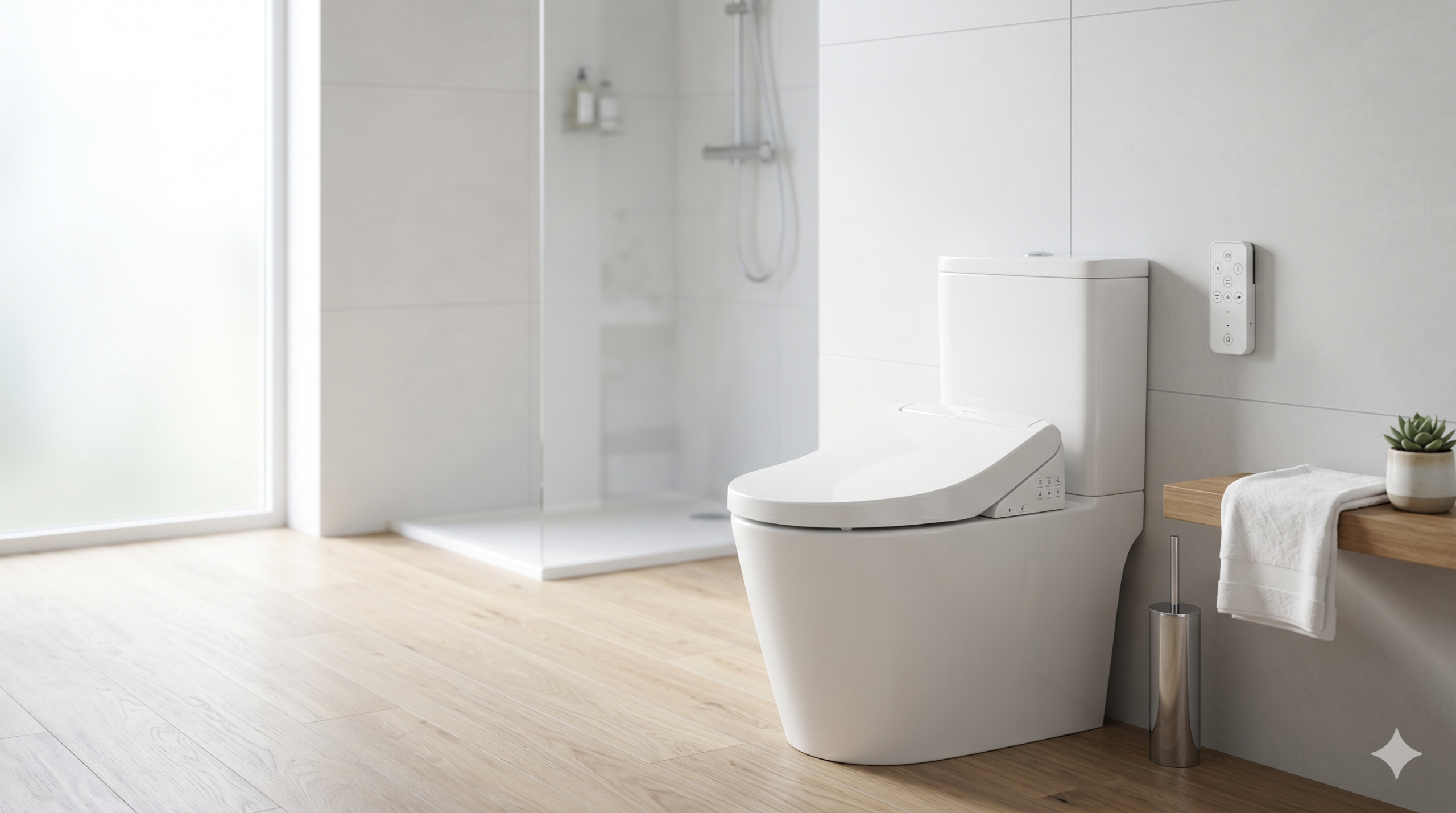
    Japan’s heated bidet toilet seats — famously known as washlets — are one of the things visitors love most and want to take home. Warm water cleansing, a heated seat, deodorizer and a dryer turn an everyday routine into pure comfort. This guide covers the 7 best Japanese bidet toilet seats in 2026, with links to buy from anywhere in the world.

    Why a Japanese bidet seat is worth it

    • Hygiene & comfort: warm-water cleansing is gentler and cleaner than paper alone.
    • Heated seat: no more cold winter mornings.
    • Eco & savings: less toilet paper over time.
    • Easy to install: most attach to your existing toilet in under an hour.

    Before you buy: will it fit?

    Most washlets fit standard elongated or round toilets, but check the shape and mounting-hole distance. Electric models need a nearby power outlet. Outside Japan, choose a model rated for your voltage (110V for North America) or a non-electric model. Renters: a non-electric attachment is easiest.

    The 7 best Japanese bidet toilet seats in 2026

    1. TOTO Washlet — The original and the benchmark

    TOTO invented the modern washlet and remains the gold standard, with adjustable warm water, heated seating, air dryer, deodorizer and premium build. The S-series and C-series are popular. For the authentic Japanese experience, start here.

    2. Panasonic Bidet Toilet Seat — Smart and hygienic

    Known for antibacterial nozzles, stain-resistant coatings and energy-saving modes. A reliable, tech-forward alternative to TOTO with excellent everyday usability.

    3. Brondell Swash — Best for North America (110V)

    Brings Japanese-style washlet comfort to North American bathrooms with 110V compatibility and easy installation: warm water, heated seat, dryer and remote. A top pick if you live outside Japan.

    4. Bio Bidet — Feature-rich value

    Feature-packed electric seats (warm water, heated seat, dryer, night light) at competitive prices, widely available internationally. Great value for full features without the premium price.

    5. Entry-level Japanese warm-water seats — Simple and affordable

    For a no-fuss warm-water seat with the essentials, entry-level electric models from trusted Japanese makers deliver the core experience at a friendlier price.

    6. TUSHY — Non-electric attachment for renters

    A non-electric bidet attachment clips onto your existing toilet and uses water pressure only — no outlet needed. Affordable and renter-friendly.

    7. Portable travel bidet — Warm-water cleansing anywhere

    A rechargeable handheld bidet lets you enjoy cleansing on trips, camping or at the office — a clever companion to a home washlet.

    Electric vs non-electric — which to choose?

    Electric seats offer the full experience but need an outlet and matching voltage. Non-electric attachments are cheaper, renter-friendly and need no power but lack heating. Homeowners: go electric; renters/travelers: non-electric or portable.

    FAQ

    Will a Japanese washlet work outside Japan?
    Japanese 100V models need a transformer abroad. For 110V/North America choose Brondell or Bio Bidet; elsewhere check voltage or use non-electric.

    Is it hard to install?
    No — most attach in under an hour with basic tools.

    Are they hygienic?
    Yes; many have self-cleaning nozzles and antibacterial materials.

📖 Uncategorized

3 guides available
📱
Uncategorized

Best Japanese Futon & Bedding 2026: Shikibuton, Pillows & Comforters Guide

The Japanese futon (shikibuton) is one of Japan’s best space-saving inventions: a firm, roll-away mattress you lay directly on tatami or the floor, fold up in the morning, and tuck into a closet. Whether you’re furnishing a small apartment in Japan or want authentic Japanese bedding shipped home, this 2026 guide explains the pieces, the […]

Read more →
Having a Baby in Japan as a Foreigner (2026): Costs, Benefits, Hospitals & What to Buy
Uncategorized

Having a Baby in Japan as a Foreigner (2026): Costs, Benefits, Hospitals & What to Buy

Having a baby is a huge milestone — and doing it in a country where you may not speak the language fluently can feel overwhelming. The good news: Japan has one of the most affordable and well-organized maternity systems in the developed world, and as a registered resident you are entitled to the same support […]

Read more →
Best Japanese Bidet Toilet Seats 2026: 7 Washlets to Buy (TOTO, Panasonic & More)
Uncategorized

Best Japanese Bidet Toilet Seats 2026: 7 Washlets to Buy (TOTO, Panasonic & More)

Japan’s heated bidet toilet seats — famously known as washlets — are one of the things visitors love most and want to take home. Warm water cleansing, a heated seat, deodorizer and a dryer turn an everyday routine into pure comfort. This guide covers the 7 best Japanese bidet toilet seats in 2026, with links […]

Read more →