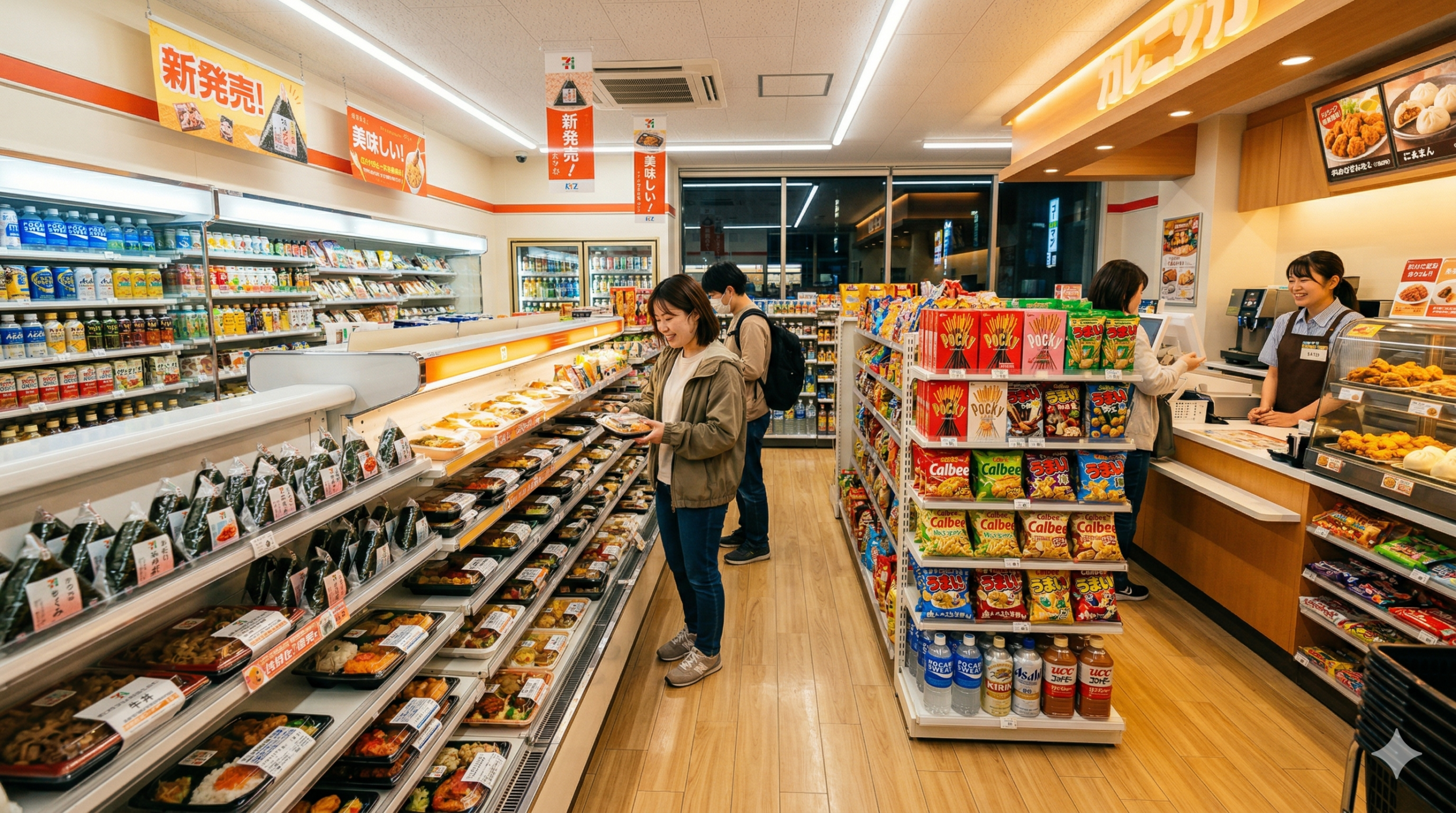
Why Japan’s Convenience Stores Will Change Your Life
If you’ve never set foot in a Japanese convenience store — locally called a konbini (コンビニ) — you’re in for a revelation. These aren’t the sad, fluorescent-lit gas station shops you might be picturing. Japan’s konbini are clean, warm, fully stocked havens open 24 hours a day, 365 days a year. Whether you’re a tourist, a newcomer to Japan, or a long-time resident, the konbini will become one of the most important places in your daily life.
There are over 55,000 convenience stores across Japan, meaning there’s almost always one within a few minutes’ walk. In Tokyo, you can barely go two blocks without passing one. In this guide, we cover everything you need to know — from the three major chains to the best things to buy, and all the surprisingly useful services they offer.
The Big Three: 7-Eleven, FamilyMart & Lawson
7-Eleven Japan (セブン-イレブン)
7-Eleven is the largest konbini chain in Japan with over 21,000 stores. Their Seven Premium private-label food line is outstanding. Their ATMs are the most foreigner-friendly, accepting international Visa, Mastercard, and UnionPay cards.
Best for: Food quality, ATM access, premium private-label products
FamilyMart (ファミリーマート)
FamilyMart is beloved for its Famichiki — a juicy, perfectly seasoned fried chicken with a near-religious following. Their hot food selection is widely considered the best among the big three. Their FamiPort terminal is one of the easiest to use for event tickets and bill payments.
Best for: Hot food, fried chicken, desserts, event tickets
Lawson (ローソン)
Lawson has carved out a niche as the “health-conscious” konbini. Their Uchi Café dessert line — particularly their cream puffs (シュークリーム) — is legendary. They tend to have better selection of fresh fruit and salads.
Best for: Healthy options, premium desserts, fresh produce
What to Buy: The Essential Konbini Shopping List
🍙 Onigiri (おにぎり) — Rice Balls
Arguably the most iconic konbini item. These triangular rice balls wrapped in crispy nori come in dozens of fillings — tuna mayo, salmon, pickled plum, mentaiko (spicy cod roe), and many more. They cost around ¥120–¥180 and make the perfect quick meal. The packaging is ingeniously designed to keep the nori crispy until you open it — follow the numbered steps on the wrapper!
☕ Hot Drinks & Coffee
Japan’s konbini coffee is genuinely excellent and ridiculously cheap. A freshly brewed cup from the machine costs around ¥110–¥150. 7-Eleven’s “Seven Café” is consistently rated among the best konbini coffees in Japan.
🍱 Ready-Made Meals
From bento boxes and pasta to curry rice and ramen bowls, the hot food section is a lifesaver. Most stores have a microwave you can use right in the store. Prices typically range from ¥300–¥700 for a full meal.
🍮 Desserts & Sweets
Japanese konbini desserts have become globally famous. Lawson’s cream puffs, 7-Eleven’s roll cake, and FamilyMart’s seasonal ice cream are must-tries. Prices are usually ¥150–¥400, and the quality is remarkably high.
🧴 Daily Essentials
Forgot your toothbrush? Need an umbrella? Konbini have you covered with medicines, skincare, phone chargers, socks, razors, and more.
Services You Didn’t Know Konbini Offer
🏧 ATM (International Cards Welcome)
7-Eleven ATMs are the most reliable for foreign-issued cards, accepting Visa, Mastercard, Maestro, Plus, and Cirrus. Always carry some cash in Japan — many smaller restaurants and shops are still cash-only.
📦 Package Delivery & Pickup
Japan’s major delivery services let you send or receive packages at any konbini. You can also use your konbini as a pickup address for online shopping — perfect for expats in apartments with limited mail access.
🎫 Event Tickets & Bills
Book concert tickets through Lawson Ticket or FamilyMart’s FamiPort. You can also pay utility bills, insurance premiums, and taxes at the konbini cashier — just bring the bill with the barcode.
📠 Printing & Copying
Every major konbini has a multi-function printer/copier. Print documents from USB, smartphone app, or cloud services. This is invaluable for official procedures and paperwork in Japan.
💳 Suica, IC Cards & Payments
Almost all konbini accept IC cards like Suica and PASMO. You can charge your Suica at the register. Most stores also accept PayPay, LINE Pay, and major credit cards.
Konbini Etiquette: Unspoken Rules for Foreigners
- Say “arigatou gozaimasu” when you receive your receipt — a small gesture appreciated by staff.
- Don’t eat while walking — most Japanese people eat at the small counters inside.
- The microwave is self-service — staff will ask “atatamemasu ka?” (shall I heat it?). Say “hai” (yes) or “ii desu” (no thanks).
- Dispose of trash properly — use designated bins near the entrance, not public rubbish bins.
Best Konbini Items to Try First
- 🍙 Tuna mayo onigiri (ツナマヨ) — the classic starter
- ☕ Hot black coffee from the machine (~¥110)
- 🍗 FamilyMart Famichiki fried chicken
- 🍮 Lawson cream puff (シュークリーム)
- 🍜 Cup ramen — Japan’s are on a completely different level
- 🍫 Any seasonal limited-edition candy or snack
- 🍵 Matcha latte from the hot drink corner
Final Thoughts
Japanese convenience stores are one of those things that sound mundane but end up being genuinely life-changing. Once you’ve experienced the quality, variety, and sheer usefulness of a Japanese konbini, it’s very hard to go back to convenience stores elsewhere in the world. They’re a perfect window into what makes everyday life in Japan so uniquely comfortable and well-organized.
Whether you’re visiting Japan for a week or planning to live here long-term, make the konbini part of your daily routine. You won’t regret it.
Leave a Reply