This article was created with AI writing assistance (ChatGPT, Claude, etc.). Product selection, specifications, and reviews are verified by the Japan Life Lab editorial team.
This article contains promotional / affiliate links.
Japan Summer 2026: What You Need to Know Before You Go
Japan in summer (June–August) is an experience like no other — but it’s also brutally hot, intensely humid, and crowded. Temperatures regularly hit 35–38°C (95–100°F) with humidity above 80%, making it feel like 40°C+. Typhoon season runs from August through October. Yet summer is also when Japan’s most spectacular festivals, fireworks shows, and natural wonders come alive.
This survival guide covers everything tourists and expats need to know to stay safe, comfortable, and happy during Japan’s summer months.
Japan Summer Weather: Month by Month
| Month | Avg Temp (Tokyo) | Rainfall | What to Expect |
|---|---|---|---|
| June | 22–27°C | High (rainy season) | Tsuyu (梅雨) rainy season, hydrangeas bloom |
| July | 26–32°C | Moderate | Peak summer, Tanabata Festival, fireworks begin |
| August | 27–35°C | Low–Moderate | Hottest month, Obon Festival, typhoon risk |
| September | 23–30°C | High (typhoon) | Typhoon peak season, starts to cool late Sept |
Heatstroke Warning: Japan’s Silent Summer Danger
Heatstroke (熱中症, netchuushou) hospitalizes tens of thousands of people in Japan every summer. Here’s how to stay safe:
Signs of heatstroke: Dizziness, nausea, confusion, hot/dry skin, headache, rapid heartbeat. If you or someone shows these signs, move to shade or AC immediately and call 119 (emergency services).
Prevention tips:
- Drink water or sports drinks (Pocari Sweat, Aquarius) every 20–30 minutes — even if you don’t feel thirsty
- Carry a portable neck cooler or cooling towel
- Avoid outdoor activities between 11am–3pm on hot days
- Wear light-colored, breathable clothing and a hat
- Take regular breaks in air-conditioned spaces (konbini, department stores, underground malls)
- Apply sunscreen SPF50+ every 2 hours
Essential Summer Gear to Buy in Japan
Japan’s convenience stores and pharmacies are stocked with summer survival products you won’t find elsewhere:
Cooling products: Neck cooler wearables (¥2,000–¥5,000), cooling towels, mentholated cooling spray, UV-cut parasols (日傷傘 — highly recommended, used by everyone)
Hydration: Pocari Sweat, Aquarius, and Kirin Supli electrolyte drinks are in every konbini. Electrolyte tablets for water bottles are sold at pharmacies.
Sun protection: Japanese sunscreen is world-class. Look for Anessa Perfect UV (SPF50+) or Biore UV Aqua Rich — both lightweight and water-resistant.
Portable fans: Handheld battery fans (¥500–¥3,000) are essential. Premium versions with misting functions are available at electronics stores.
Rainy Season (Tsuyu) Tips: June–Mid-July
Tsuyu (梅雨) is Japan’s rainy season — a 3–6 week stretch of overcast skies and daily rain from mid-June through mid-July. It’s not constant downpours, but expect 1–2 hours of rain each day.
- Pack a compact umbrella — or buy one at any konbini for ¥500–¥1,000
- Waterproof your bag — a simple rain cover (¥300–¥500) protects electronics
- Embrace it — hydrangeas (アジサイ) are at peak bloom in tsuyu; Kamakura and Hakone are stunning
- Check the “梅雨明け” (tsuyu明け) announcement — when rainy season officially ends, summer truly begins
Typhoon Season (August–October): What to Do
Japan experiences 5–10 typhoons annually, with August–September being the most active months. Most pass through quickly (12–24 hours), but can disrupt transportation significantly.
Before a typhoon: Stock 2–3 days of food and water. Know your nearest evacuation center (避難所). Download the NHK World app for English typhoon alerts. Keep your phone charged.
During a typhoon: Stay indoors. If you must go out, avoid rivers and drainage canals (flash flood risk). All trains, flights, and buses may be cancelled — this is normal and safe decisions by operators.
After a typhoon: Wait for official “all clear” before going out. Roads may be flooded. Check NHK or Japan Meteorological Agency (weather.yahoo.co.jp) for updates.
Must-See Summer Events in Japan 2026
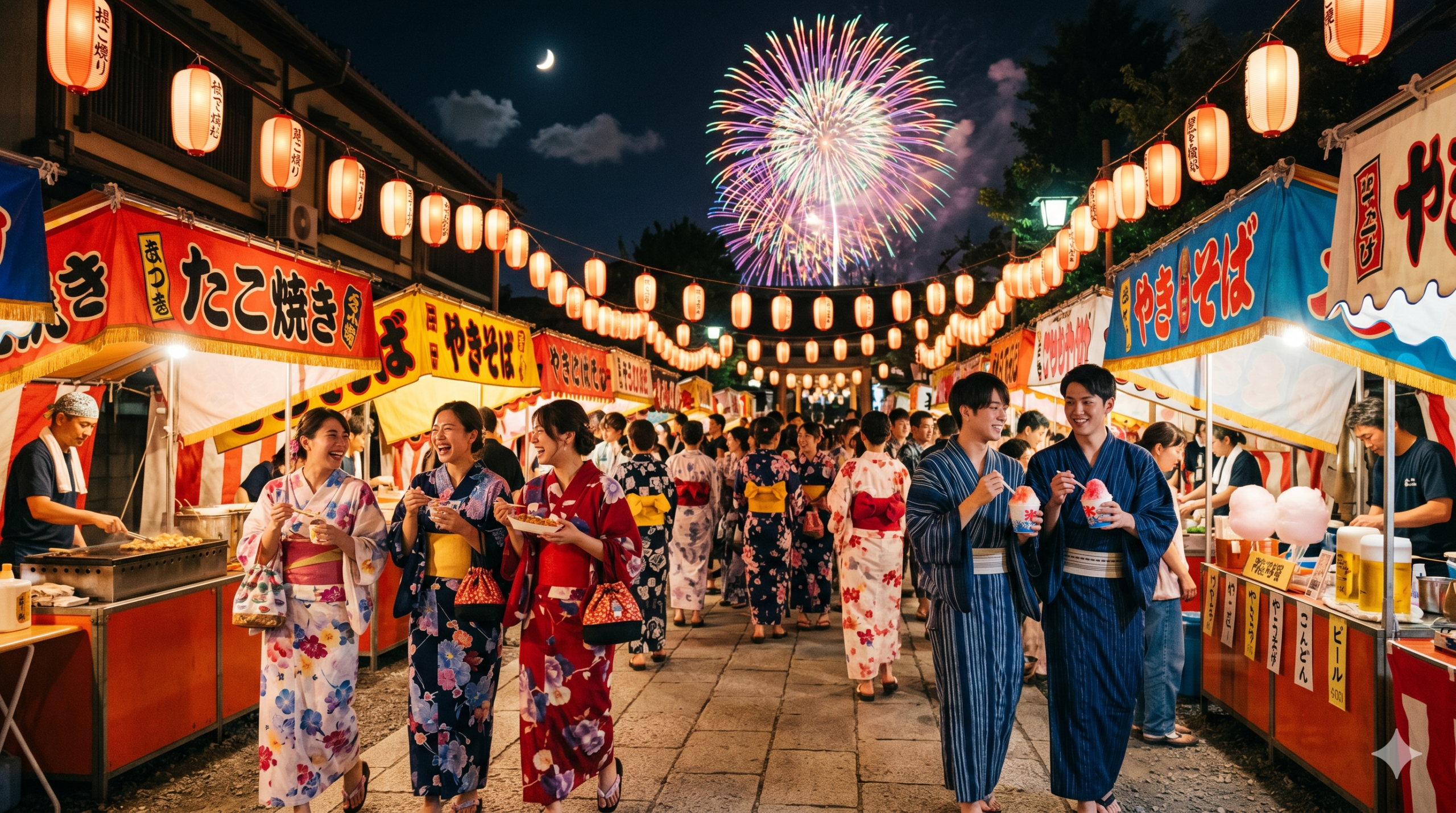
Tanabata (七夕) — July 7: The Star Festival. Celebrated nationwide with colorful streamers and wishes written on paper strips. Best in Sendai (one of Japan’s largest Tanabata festivals, August 6–8).
Sumida River Fireworks — Late July: Tokyo’s most famous hanabi taikai (fireworks festival). Over 20,000 fireworks in one evening. Book nearby restaurants and ryokan months in advance.
Obon Festival — August 13–16: Japan’s Buddhist festival of ancestors. Many businesses close, cities empty as residents return to hometowns. Expect packed Shinkansen and quiet city centers.
Awa Odori (阿波踊り) — August 12–15, Tokushima: Japan’s largest traditional dance festival with 1+ million attendees. One of the most visually spectacular events in Japan.
Gion Matsuri (祇園祭) — All of July, Kyoto: Kyoto’s famous summer festival, culminating in massive float processions on July 17 and 24.
Staying Cool: AC Culture in Japan
Japanese summer survival depends heavily on air conditioning (エアコン). Here’s how the AC culture works:
- Konbini are lifesavers: 7-Eleven, FamilyMart, and Lawson are air-conditioned refuges open 24/7. Grab a cold drink and cool down any time.
- Set temperature wars: Japanese offices are often set to 28°C (legally mandated “Cool Biz” policy to save energy). Carry a light cardigan for overly air-conditioned spaces (trains, malls, restaurants).
- Underground malls (地下街): Major cities like Osaka, Nagoya, and Tokyo have extensive underground shopping malls — cool, car-free, and perfect for hot days.
- Department store basement floors (デパ地下): Heavily air-conditioned, packed with food, and a cultural experience in themselves.
Summer Food & Drinks to Try
Kakigori (かき氷): Japanese shaved ice topped with flavored syrups, condensed milk, or matcha. The premium version at specialty shops (from ¥800) is a revelation.
Cold soba & hiyashi chuka: Cold noodle dishes are a summer staple. Hiyashi chuka (cold ramen with toppings) appears on restaurant menus only in summer.
Edamame & cold beer: Japanese beer culture peaks in summer. Asahi, Sapporo, and Kirin tap beers at outdoor beer gardens are a uniquely Japanese summer experience.
Natsu mikan & suika: Fresh seasonal fruits — summer mandarin oranges and watermelon — are sold at supermarkets and fruit stands at peak ripeness.
Japan Summer Survival: Quick Reference
| Situation | Solution |
|---|---|
| Feeling too hot outdoors | Enter nearest konbini, buy cold drink, rest 10 minutes |
| Sudden heavy rain | Konbini umbrella (¥500) or underpass/arcade |
| Typhoon approaching | Stay in hotel, NHK World app for English alerts |
| Heatstroke symptoms | Shade + cold water + electrolytes, call 119 if severe |
| Sunburn | Japanese aloe vera gel (pharmacies) + hydration |
📥 Japan Expat Starter Kit 2026
60+ page PDF: Banking, Housing, Suica, Taxes & daily life in Japan
Get the Guide — $9.99More Japan Guides
✈️ Traveling Across Japan This Summer?【エアトリプラス】
Whether you’re escaping to cooler mountains or exploring coastal towns, エアトリプラス lets you compare and book domestic flights + hotels together. Find deals and plan your Japan summer trip with ease.
Search Japan Flights & Hotels ▶ [AD] Affiliate link — we may earn a commission at no extra cost to you.
🔥 Editor’s Picks for Life & Travel in Japan
Practical guides for life and travel in Japan — free, about once a week. No spam, unsubscribe anytime.
🇯🇵 Travel & Life Essentials for Japan
Hand-picked gear to make your time in Japan easier. Available on Amazon US & Amazon Japan.
🔋 Portable charger
A must for long days of sightseeing and photos.
View on Amazon (US)View on Amazon Japan🔌 Travel plug adapter
Japan uses Type A outlets. Bring the right adapter.
View on Amazon (US)View on Amazon Japan🎧 Translation earbuds
Real-time translation to talk without barriers.
View on Amazon (US)View on Amazon JapanAs an Amazon Associate, Japan Life Lab earns from qualifying purchases.
Did this guide help you? 🍵
Japan Life Lab is a small independent blog, and every guide we publish is completely free — no paywalls, ever. If our work saved you time (or a headache), you can support us with a cup of Japanese tea. Every contribution, big or small, goes straight into keeping these guides free, accurate and up to date for everyone.
☕ Support Japan Life Lab
Leave a Reply