This article was created with AI writing assistance (ChatGPT, Claude, etc.). Product selection, specifications, and reviews are verified by the Japan Life Lab editorial team.
This article contains promotional / affiliate links.
📌 What you will learn
You do not have to read it all — jump to what you need.
- 🏚️ Japan’s Akiya Boom: Why Foreigners Are Buying Abandoned Houses in 2026
- What Is an Akiya? Japan’s Abandoned House Crisis Explained
- Can Foreigners Buy Akiya in Japan? The Legal Answer
- 2026: Rules for Foreign Buyers Under Review
- Step-by-Step: How to Buy an Akiya in Japan as a Foreigner
- Understanding the True Cost of Buying an Akiya
- Financing an Akiya as a Foreigner: Can You Get a Mortgage?
※ Start wherever fits your situation.
🏚️ Japan’s Akiya Boom: Why Foreigners Are Buying Abandoned Houses in 2026
Japan has nearly 10 million abandoned homes — roughly one in every seven houses across the country. And in 2026, the world has noticed. Search traffic for “houses for sale in Japan” has grown strongly, with buyers from the UK, Canada and the US leading the charge.
The reason? A perfect storm of factors: a historically weak yen making Japanese property 30–40% cheaper in dollar/pound/euro terms, a housing affordability crisis in Western countries, and a growing awareness that Japan actually welcomes foreign property buyers — with no restrictions on ownership.
This guide covers everything you need to know about buying an akiya in Japan as a foreigner in 2026 — from finding properties to navigating the paperwork, renovation costs, and the reporting rules to check before you buy.
✅ Foreigners CAN buy akiya in Japan — no restrictions
✅ Average akiya price: ¥500,000–¥5,000,000 (~$3,300–$33,000)
⚠️ 2026: reporting rules for foreign buyers are under review — check with your scrivener
🔨 Budget ¥1M–¥10M+ for renovation on top of purchase price
What Is an Akiya? Japan’s Abandoned House Crisis Explained
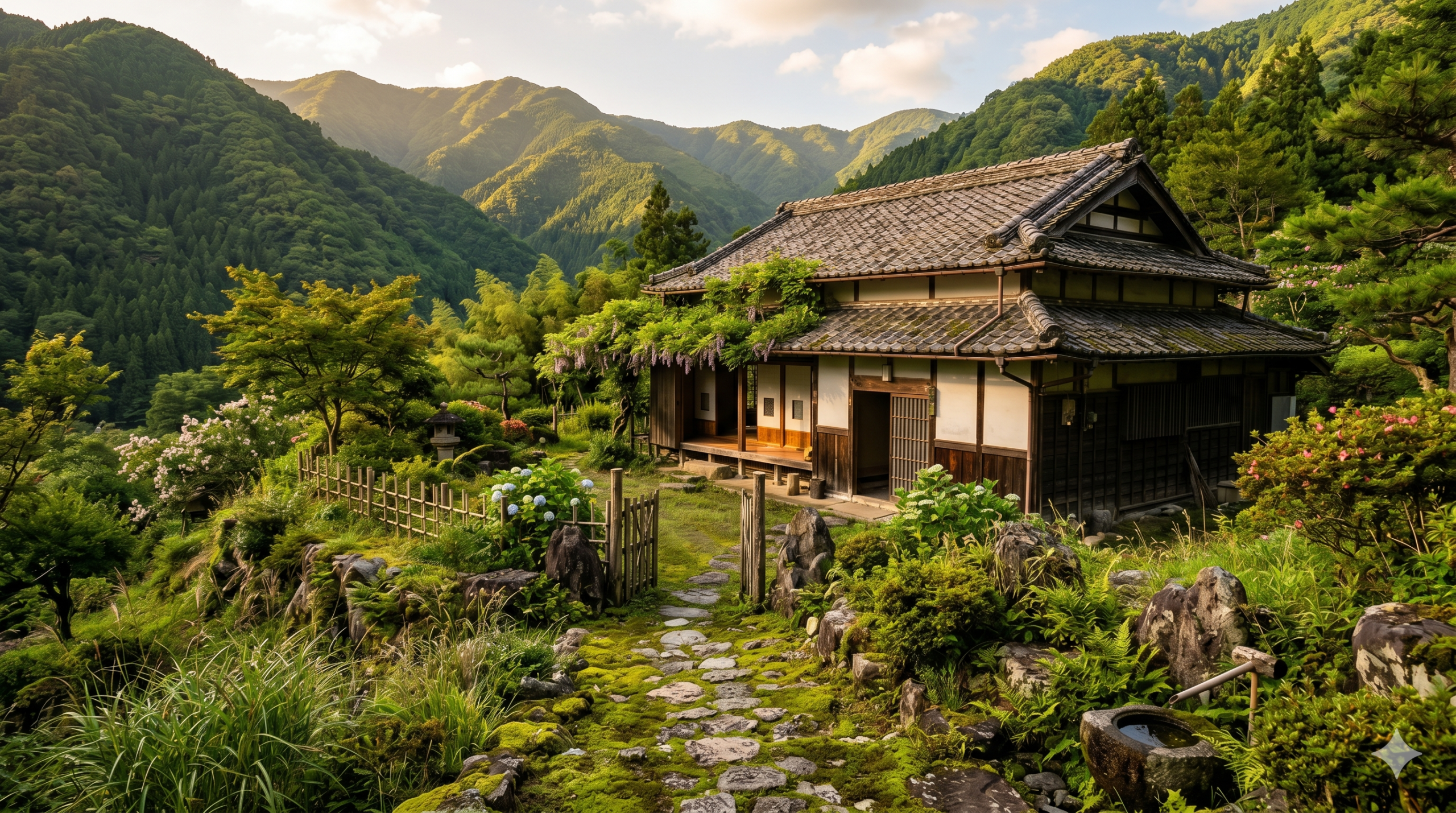
An akiya (空き家) literally means “empty house” in Japanese. These are residential properties — from countryside farmhouses to urban apartments — that have been abandoned, sometimes for decades. Japan’s population is shrinking and aging, leaving behind vast numbers of homes with no heirs willing to maintain them.
The numbers are staggering:
- Millions of akiya (Ministry of Internal Affairs housing survey)
- ~1 in 7 homes across Japan is now vacant
- Vacancy rates exceed 20% in rural prefectures like Tokushima and Kochi
- The government actively wants foreign buyers to revitalize these communities
Prices range from essentially free (some municipalities offer ¥0 akiya to buyers who commit to renovation) to a few million yen for structurally sound homes in desirable areas. The average listed akiya sells for ¥500,000–¥3,000,000 ($3,300–$20,000) — a fraction of what you’d pay anywhere in the Western world.
Can Foreigners Buy Akiya in Japan? The Legal Answer
Yes — and this is what surprises most people. Japan imposes no restrictions on foreign ownership of land or buildings. Unlike many Asian countries (China, Thailand, Vietnam) where foreigners cannot own land, Japan has an open policy:
- You can buy as a tourist, temporary visitor, resident, or even remotely from abroad
- No visa or residency requirement to purchase property
- No minimum investment amount
- No special permit or government approval needed
The practical challenge isn’t legal — it’s logistical. Most akiya banks (the databases where properties are listed) are in Japanese only, real estate agents rarely speak English, and the contracts require a certified judicial scrivener to transfer title.
2026: Rules for Foreign Buyers Under Review
As of April 2026, some sites reported new transparency measures for foreign property purchases. We could not confirm them in official sources; the government’s January 2026 policy package said land purchases by foreigners would be reviewed. These are not restrictions — you can still buy freely — but ask your judicial scrivener whether any of these reported steps apply:
- Disclose your nationality at the time of property registration (登記)
- File a residential use report (利用状況報告書) within 20 days of purchase
- Report any changes in use or ownership within 90 days
Your judicial scrivener (司法書士) handles the registration — just make sure they know you’re a foreign national so they include the disclosure. Confirm every reporting step with the professionals handling your purchase.
These measures were introduced after concerns about foreign ownership of land near defense facilities. Standard residential and rural akiya purchases are completely unaffected in practice.
Step-by-Step: How to Buy an Akiya in Japan as a Foreigner
Step 1: Find Your Property — Akiya Banks Explained
Akiya banks (空き家バンク) are municipal databases of properties registered for sale. Most are Japanese-only, but here are the best English-friendly options:
🏦 Best Akiya Banks for English Speakers
| Platform | Coverage | English? | Notes |
|---|---|---|---|
| Akiya Mart | Nationwide | ✅ Full English | Best for beginners, agent support |
| Akiya Japan | Nationwide | ✅ English | Large listing database |
| All Akiyas | Nationwide | ✅ English search | Free search, map-based |
| SUUMO / AtHome | Nationwide | ❌ Japanese only | Largest databases, use Google Translate |
| Local Municipal Banks | Specific area | ❌ Japanese only | Cheapest prices, most rural |
Step 2: Hire an English-Speaking Real Estate Agent
This is non-negotiable. You need an agent who:
- Speaks English and Japanese fluently
- Has experience with foreign buyers specifically
- Can coordinate with the judicial scrivener for title transfer
- Knows the current reporting requirements for foreign buyers
Agent commission is typically 3% + ¥60,000 + tax of the purchase price (capped by law). On a ¥3,000,000 property, that’s around ¥150,000 (~$1,000).
Step 3: Property Inspection (建物調査)
Many akiya have been empty for years or decades. Always get a professional inspection (建物調査) before purchasing. Key things to check:
- Termites (白アリ) — endemic in older Japanese wooden buildings
- Roof condition — Japanese tile roofs are durable but expensive to repair
- Foundation — post-1981 earthquake code is critical (homes built before 1981 may not meet modern standards)
- Plumbing and electrical — often need complete replacement in older akiya
- Asbestos — present in many pre-2000 Japanese buildings
Inspection costs: ¥50,000–¥100,000. Worth every yen.
Step 4: Make an Offer and Sign the Purchase Agreement
Once you’ve chosen a property:
- Submit a purchase offer (買付証明書) — usually verbal first through your agent
- Pay a deposit (手付金) of 5–10% of purchase price
- Sign the Purchase and Sale Agreement (売買契約書)
- Pay the remaining balance at closing
The entire process takes 2–4 months from offer to closing for a cash purchase. If financing is involved, add 1–2 months.
Step 5: Title Transfer and Registration
A judicial scrivener (司法書士) handles the title transfer. As a foreign buyer in 2026, you’ll need to provide:
- Valid passport
- Residency certificate or embassy letter confirming your address
- Personal seal (hanko) OR notarized signature
- Any nationality or reporting forms your scrivener says are required
Registration fees: approximately 0.4% of assessed property value for land + 2% for buildings.
Understanding the True Cost of Buying an Akiya
💰 Full Cost Breakdown (Example: ¥2,000,000 Akiya)
| Cost Item | Amount |
|---|---|
| Purchase price | ¥2,000,000 |
| Agent commission (3% + ¥60,000 + tax) | ¥126,000 |
| Registration & stamp duty | ¥80,000 |
| Judicial scrivener fee | ¥80,000 |
| Building inspection | ¥70,000 |
| Basic renovation (minimum) | ¥1,000,000–¥5,000,000 |
| Full renovation (livable) | ¥3,000,000–¥15,000,000 |
| Estimated Total (basic reno) | ¥3,356,000–¥7,356,000 ~$22,000–$49,000 |
The renovation reality: Even a “structurally sound” akiya often needs ¥1–5 million minimum for roof repairs, plumbing, electrical, and insulation. A full gut renovation to modern standards can cost ¥10–20 million or more. Budget conservatively — renovation surprises are common.
Financing an Akiya as a Foreigner: Can You Get a Mortgage?
This is where things get complicated. Most Japanese banks will only lend to permanent residents or Japanese citizens. However, there are options:
- Japan Housing Finance Agency (住宅金融支援機構 / Flat 35): Available to foreign nationals with permanent residence. Fixed 35-year mortgage at ~1.8% interest.
- Some regional banks: A few regional banks in rural areas actively court foreign buyers and may lend to long-term visa holders (work visa, spouse visa, etc.)
- Cash purchase: By far the most common route for foreign buyers. Given the low prices, many akiya are cash-feasible even for moderate budgets.
- Overseas financing: Borrow against assets in your home country and purchase cash in Japan.
If you’re serious about financing, consult with an expat-specialist mortgage broker before starting your property search.
Pros and Cons of Buying an Akiya in Japan
✅ Pros
- Incredibly low purchase prices
- No foreign ownership restrictions
- Yen at multi-decade lows = great exchange rate
- Subsidies available in some municipalities
- No stamp duty (印紙税) on very cheap properties
- Can become AirBnB / guesthouse (with permit)
- Government wants foreigners to revitalize rural towns
⚠️ Cons
- Renovation costs often exceed purchase price
- Language barrier in all paperwork
- Most are in rural areas far from cities
- Hard to resell (limited local market)
- Financing very difficult without PR
- Property tax still applies (固定資産税)
- Current reporting requirements (confirm with your scrivener)
Government Subsidies: Getting Paid to Buy an Akiya
This sounds too good to be true, but it isn’t. Many municipalities are so desperate to fill empty houses that they offer:
- Free properties: Some towns list akiya at ¥0 if the buyer commits to living there and renovating
- Renovation subsidies: Up to ¥2,000,000 in renovation cost reimbursements
- Move-in bonuses: Some rural municipalities offer ¥1,000,000+ cash bonuses for families who relocate
- Child subsidies: Families with children may receive additional monthly allowances
These subsidies are typically available to all residents regardless of nationality — including foreign buyers. Check the specific municipality’s official website or ask your real estate agent.
Remote Akiya Purchase: Can You Buy Without Visiting Japan?
Yes — but with caveats. A remote purchase is technically possible using:
- A Power of Attorney (委任状) granted to your agent or lawyer
- Video tours and professional inspection reports
- Notarized signature from a Japanese embassy in your country
In practice, most advisors strongly recommend at least one visit before purchasing. Renovation surprises are common, and Japanese countryside properties can look very different in person than in photos. A 1–2 week trip to view properties is worth the cost.
Best Prefectures for Akiya Hunters (2026)
| Prefecture | Vacancy Rate | Avg. Akiya Price | Pros |
|---|---|---|---|
| Tokushima | 21.2% | ¥300K–¥2M | Cheapest, nature, Awa Odori culture |
| Kochi | 20.8% | ¥200K–¥1.5M | Lowest prices, Pacific coast, warm climate |
| Wakayama | 18.9% | ¥500K–¥3M | Near Osaka, Kumano Kodo hiking |
| Nagano | 16.4% | ¥1M–¥5M | Mountains, ski resorts, expat community |
| Niigata | 15.8% | ¥500K–¥3M | Rice country, onsen, 2h to Tokyo by Shinkansen |
📥 Japan Expat Starter Kit 2026
Complete guide covering banking, health insurance, housing, Suica, taxes, PayPay & daily Japanese phrases — everything a foreigner needs to navigate life in Japan.
📥 Get the Guide — $9.9930-day money-back guarantee • Instant PDF download
Frequently Asked Questions
🗾 More Japan Life Guides
🇯🇵 Travel & Life Essentials for Japan
Hand-picked gear to make your time in Japan easier. Available on Amazon US & Amazon Japan.
🔋 Portable charger
A must for long days of sightseeing and photos.
View on Amazon (US)View on Amazon Japan🔌 Travel plug adapter
Japan uses Type A outlets. Bring the right adapter.
View on Amazon (US)View on Amazon Japan🎧 Translation earbuds
Real-time translation to talk without barriers.
View on Amazon (US)View on Amazon JapanAs an Amazon Associate, Japan Life Lab earns from qualifying purchases.
🔥 Editor’s Picks for Life & Travel in Japan
Practical guides for life and travel in Japan — free, about once a week. No spam, unsubscribe anytime.
☕ Enjoying our Japan guides?
If this article helped you, you can support our work with a coffee!
Did this guide help you? 🍵
Japan Life Lab is a small independent blog, and every guide we publish is completely free — no paywalls, ever. If our work saved you time (or a headache), you can support us with a cup of Japanese tea. Every contribution, big or small, goes straight into keeping these guides free, accurate and up to date for everyone.
☕ Support Japan Life Lab
Leave a Reply