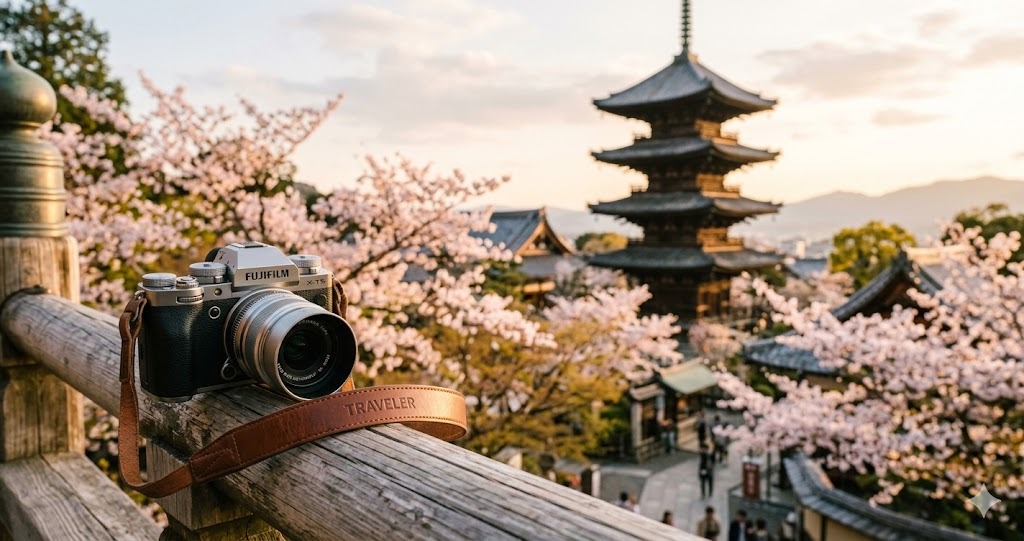
Planning a trip to Japan and want to capture every breathtaking moment — from the neon lights of Shinjuku to the serene bamboo groves of Arashiyama? Choosing the right camera can make all the difference. In 2026, the camera market offers incredible options for every type of traveler, whether you’re a seasoned photographer or a casual snap-shooter.
In this guide, we’ve tested and compared the top cameras for Japan travel, focusing on portability, image quality, low-light performance, and value for money. Japan’s diverse environments — bustling city streets, ancient temples, misty mountains — demand a camera that can handle it all.
What to Look for in a Travel Camera for Japan
1. Portability & Weight
You’ll be walking 20,000+ steps daily through Japan’s cities. A lightweight, compact camera is essential. Look for mirrorless cameras or premium compacts that won’t weigh down your daypack.
2. Low-Light Performance
Japan’s izakayas, night markets, and illumination events require strong low-light capability. A camera with a large sensor (APS-C or full-frame) and wide aperture lens handles nighttime shooting beautifully.
3. Autofocus Speed
Fast-paced scenes — street festivals, shinkansen passing by, busy Shibuya crossing — need snappy autofocus. Look for cameras with subject tracking and eye-detection AF.
4. Weather Sealing
Japan’s rainy season (June-July) and sudden mountain showers mean weather sealing is a valuable feature. It gives you peace of mind shooting in the rain.
5. Battery Life
Long sightseeing days mean you need a camera that won’t die mid-adventure. Check battery ratings and consider bringing a spare or a USB-C charging option.
Top 5 Best Cameras for Japan Travel 2026
1. Sony ZV-E10 II — Best Overall for Vloggers & Travelers
The Sony ZV-E10 II is the ultimate travel companion for content creators heading to Japan. With its 26MP APS-C sensor, real-time subject tracking, and AI-powered autofocus, it captures everything from the golden hour at Mount Fuji to fast-moving street scenes in Osaka with stunning clarity.
The built-in ND filter and excellent video stabilization make it ideal for walking vlogs through Kyoto’s geisha districts or filming cherry blossoms in Ueno Park. The compact body fits easily in any daypack, and the flip-out screen is perfect for selfies and low-angle shots at temple grounds.
Battery life is solid for a full day of shooting, and USB-C charging means you can top up via a portable power bank while on the go — a huge advantage during long Japan Rail Pass journeys.
| Spec | Details |
|---|---|
| Sensor | 26MP APS-C Exmor R CMOS |
| Video | 4K 60fps, 120fps slow motion |
| AF System | 693-point phase detection, AI subject recognition |
| Weight | 291g (body only) |
| Price | ~¥90,000 / ~$650 USD |
✅ Pros: Exceptional video quality, AI autofocus, compact, USB-C charging, great low-light
❌ Cons: No in-body stabilization, crop factor in 4K 60fps mode
🛒 Where to Buy Sony ZV-E10 II
2. Canon EOS R50 — Best for Beginners Visiting Japan
The Canon EOS R50 is the perfect camera for first-time Japan visitors who want great results without a steep learning curve. Canon’s renowned color science produces vivid, true-to-life photos of Japan’s vibrant festivals, stunning autumn foliage, and iconic architecture right out of the camera.
The camera’s Dual Pixel CMOS AF II system locks onto subjects instantly — ideal for capturing the blur of bullet trains or the graceful movements of a geisha in Gion. The compact RF mount body pairs with a growing lens ecosystem, giving you flexibility as your photography skills develop.
The 24.2MP sensor and DIGIC X processor handle the dynamic range of Japan’s contrasting scenes — bright torii gates against dark forest backdrops — with impressive detail. The vari-angle touchscreen makes shooting from unique angles at crowded temples a breeze.
| Spec | Details |
|---|---|
| Sensor | 24.2MP APS-C CMOS |
| Video | 4K 30fps (oversampled), 1080p 60fps |
| AF System | Dual Pixel CMOS AF II, subject/animal tracking |
| Weight | 375g (body only) |
| Price | ~¥85,000 / ~$600 USD |
✅ Pros: Beginner-friendly, excellent color, strong AF, compact RF body, great battery
❌ Cons: 4K crop, no weather sealing, limited IBIS
🛒 Where to Buy Canon EOS R50
3. Fujifilm X-T50 — Best for Aesthetic & Film Photography Fans
If you want your Japan travel photos to look like they belong in a photography magazine, the Fujifilm X-T50 is your camera. Fujifilm’s legendary film simulations — Velvia, Classic Chrome, Eterna — give your shots a distinctive, artistic quality that’s impossible to replicate in post-processing.
Japan and Fujifilm share a special connection — many Japanese photographers swear by Fujifilm’s color rendering for capturing the country’s unique aesthetic. From the soft pinks of sakura to the deep reds of maple leaves in autumn, the X-T50 renders Japan’s colors with unmatched accuracy and artistry.
The 40.2MP sensor provides extraordinary detail, and the in-body image stabilization (IBIS) keeps your shots sharp even in the dim light of traditional ryokan interiors. The retro-inspired design turns heads too — you’ll blend right in with Japan’s thriving film photography community.
| Spec | Details |
|---|---|
| Sensor | 40.2MP APS-C X-Trans CMOS 5 HR |
| Video | 6.2K 30fps, 4K 60fps |
| IBIS | 7-stop in-body stabilization |
| Weight | 438g (body only) |
| Price | ~¥175,000 / ~$1,300 USD |
✅ Pros: Stunning 40MP sensor, film simulations, IBIS, retro design, weather sealed
❌ Cons: Premium price, smaller lens selection than Sony/Canon
🛒 Where to Buy Fujifilm X-T50
4. Sony Cyber-shot RX100 VII — Best Pocket Camera for Japan
When you want maximum image quality in a shirt-pocket-sized package, the Sony RX100 VII is unbeatable. This tiny powerhouse features a 20.1MP 1-inch sensor, a fast 24-200mm equivalent zoom lens, and Sony’s most advanced autofocus system — all packed into a body smaller than some smartphones.
For Japan travel, the RX100 VII excels in versatility. The 24-200mm zoom covers everything from wide-angle shrine vistas to telephoto shots of distant Mount Fuji. Pop-up flash handles indoor temple photography, and the 4K HDR video capability captures the vibrant energy of Tokyo’s streets with cinema-quality results.
The titanium body feels premium and durable, and the retractable lens means it fits into tight pockets without snagging. If you’re the type who travels light but refuses to compromise on photo quality, this is your camera.
| Spec | Details |
|---|---|
| Sensor | 20.1MP 1-inch Exmor RS CMOS |
| Zoom | 24-200mm equivalent (8.3x optical) |
| AF | 357-point phase detection, 0.02s lock-on |
| Weight | 302g |
| Price | ~¥140,000 / ~$1,100 USD |
✅ Pros: Shirt-pocket size, incredible zoom range, best-in-class compact AF, premium build
❌ Cons: Premium price for a compact, small battery, no IBIS
🛒 Where to Buy Sony RX100 VII
5. Ricoh GR IIIx — Best for Street Photography in Japan
For Japan’s legendary street photography culture — Shinjuku Golden Gai, Shibuya scramble, Dotonbori at night — the Ricoh GR IIIx is the choice of professionals. This cult-classic compact features a 26.1MP APS-C sensor with a sharp 40mm equivalent lens, producing RAW files that rival much larger cameras.
The GR IIIx is the camera of choice for Tokyo street photography legends. Its discreet size means you can shoot candidly without drawing attention, and the snap focus mode lets you pre-set a focus distance for instant captures. The results are stunning — cinematic, gritty, honest — perfectly suited to Japan’s urban character.
The Ricoh app connects seamlessly, allowing remote shooting — great for capturing your own moments at Japan’s scenic spots without bothering passersby. It’s also popular among Japan’s camera rental shops, so you can try before you buy.
| Spec | Details |
|---|---|
| Sensor | 26.1MP APS-C CMOS |
| Lens | 40mm equivalent f/2.8 GR Lens |
| IBIS | 4-stop sensor-shift stabilization |
| Weight | 262g |
| Price | ~¥120,000 / ~$900 USD |
✅ Pros: Ultimate street camera, APS-C in compact body, sharp lens, discreet size
❌ Cons: Fixed lens only, no viewfinder, limited zoom
🛒 Where to Buy Ricoh GR IIIx
Comparison: Best Cameras for Japan Travel 2026
| Camera | Sensor | Best For | Price (USD) | Rating |
|---|---|---|---|---|
| Sony ZV-E10 II | 26MP APS-C | Vlogging & Travel | ~$650 | ⭐ 4.8 |
| Canon EOS R50 | 24MP APS-C | Beginners | ~$600 | ⭐ 4.6 |
| Fujifilm X-T50 | 40MP APS-C | Aesthetics & Film Look | ~$1,300 | ⭐ 4.9 |
| Sony RX100 VII | 20MP 1-inch | Pocket Travel | ~$1,100 | ⭐ 4.7 |
| Ricoh GR IIIx | 26MP APS-C | Street Photography | ~$900 | ⭐ 4.8 |
Tips for Photography in Japan
Respect photography rules: Many temples and shrines restrict photography inside. Always check signs and respect no-photography zones — Japanese culture values privacy and sacred spaces highly.
Buy memory cards locally: Japan’s electronics stores (Yodobashi Camera, Bic Camera) offer competitive prices on SD cards and camera accessories — often cheaper than back home.
Camera rental in Japan: Consider renting a lens or camera body in Japan. Companies like Rentio and camera shops in Akihabara offer daily rentals at reasonable rates.
Golden hour timing: Japan’s landscapes are spectacular at golden hour. Schedule sunrise visits to famous spots like Fushimi Inari or Hakone early to avoid crowds and catch the best light.
Conclusion: Which Camera Should You Bring to Japan?
For most travelers, the Sony ZV-E10 II offers the best balance of image quality, video capability, and portability. Beginners will love the Canon EOS R50 for its ease of use and beautiful colors. If you’re a serious photographer who wants the best results and that distinctive Japanese aesthetic, the Fujifilm X-T50 is worth every yen. Minimalists who refuse to carry a camera bag will find the Sony RX100 VII or Ricoh GR IIIx perfect.
Whatever camera you choose, Japan’s extraordinary beauty, unique culture, and stunning scenery guarantee unforgettable photos. Happy shooting!
Leave a Reply