Category: Transport & IC

Suica, IC cards, trains and transportation in Japan

  • Japan Cashless Payment Guide 2026: Which Apps Actually Work for Foreigners?

    Japan Cashless Payment Guide 2026: Which Apps Actually Work for Foreigners?

    ๐Ÿ“ฑ PayPay 2026 Update โ€” Check App for Current Promotions

    PayPay campaigns change frequently. Welcome bonuses and cashback rates are updated regularly โ€” always check the PayPay app’s Campaigns tab after registering for the latest offers. Regional cashback campaigns (typically 10โ€“30% back at local merchants) are often more valuable than signup bonuses and are available throughout Japan.

    ๐Ÿ’ณ Japan’s Cashless Revolution: A Foreigner’s Survival Guide

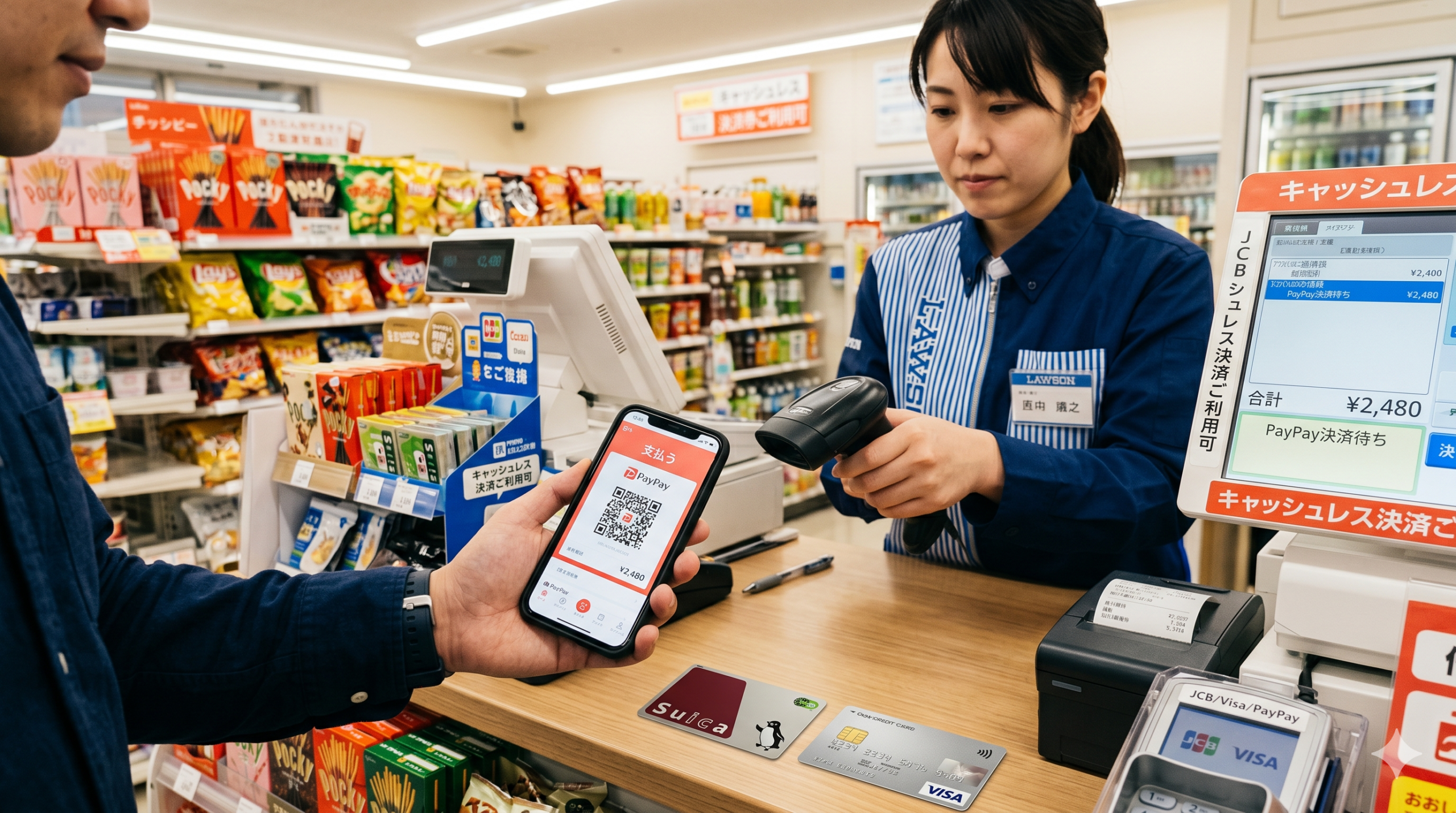
    Japan in 2026 is a cashless puzzle. PayPay QR codes everywhere, IC card readers at every station, credit card terminals that sometimes work and sometimes don’t, and some ramen shops that STILL only take cash. Confusing? Absolutely.

    This guide cuts through the noise. After testing every major payment method across Tokyo, Osaka, and rural Japan, here’s exactly which payment to use where โ€” so you never get stuck at a register again.

    ๐Ÿ† The Big 4 Payment Methods in Japan (Ranked)

    Rank Method Acceptance Rate Best For Setup Difficulty
    ๐Ÿฅ‡Cash (JPY)100%Small shops, temples, rural areasNone
    ๐ŸฅˆIC Card (Suica/PASMO)~85%Trains, convenience stores, vending machinesEasy
    ๐Ÿฅ‰Credit/Debit Card~70%Department stores, hotels, electronics shopsAlready have one
    4๏ธโƒฃPayPay (QR code)~60%Restaurants, izakaya, local shopsModerate

    ๐Ÿ“ฑ PayPay: Japan’s #1 QR Code Payment

    What is PayPay?

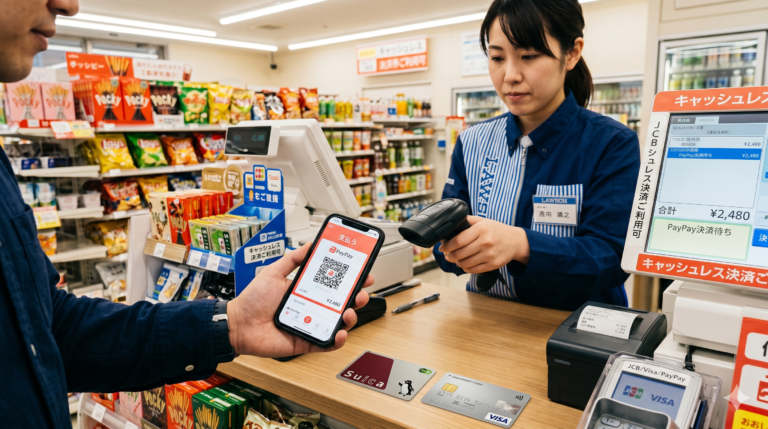
    PayPay is Japan’s most popular mobile payment app with 60+ million users. Think of it like Venmo or Alipay, but Japanese. You scan a QR code at the shop (or they scan yours), and money is deducted from your PayPay balance.

    Why foreigners should care

    • ๐Ÿ’ก Many small restaurants and izakaya accept PayPay but NOT credit cards
    • ๐Ÿ’ก Regular cashback campaigns (sometimes 10-30% back!)
    • ๐Ÿ’ก Free ยฅ1,000 welcome bonus (promotional โ€” verify in PayPay app) for new users (limited time)
    • ๐Ÿ’ก Split bills easily with friends who also use PayPay

    How to set up PayPay as a foreigner

    1. Download the PayPay app (iOS/Android)
    2. Register with your phone number (Japanese number required)
    3. Verify your identity with passport or residence card
    4. Add money via bank account, convenience store ATM, or credit card
    5. Start scanning QR codes!

    โš ๏ธ Tourist limitation: PayPay requires a Japanese phone number for registration. Tourists with eSIM/data-only SIM cannot use PayPay. It’s mainly for residents and long-term visitors.

    ๐Ÿšƒ IC Cards (Suica / PASMO): The Essential Payment

    IC cards are the single most useful payment method for anyone in Japan. They work for trains AND shopping, and you can set them up before landing.

    Key advantages

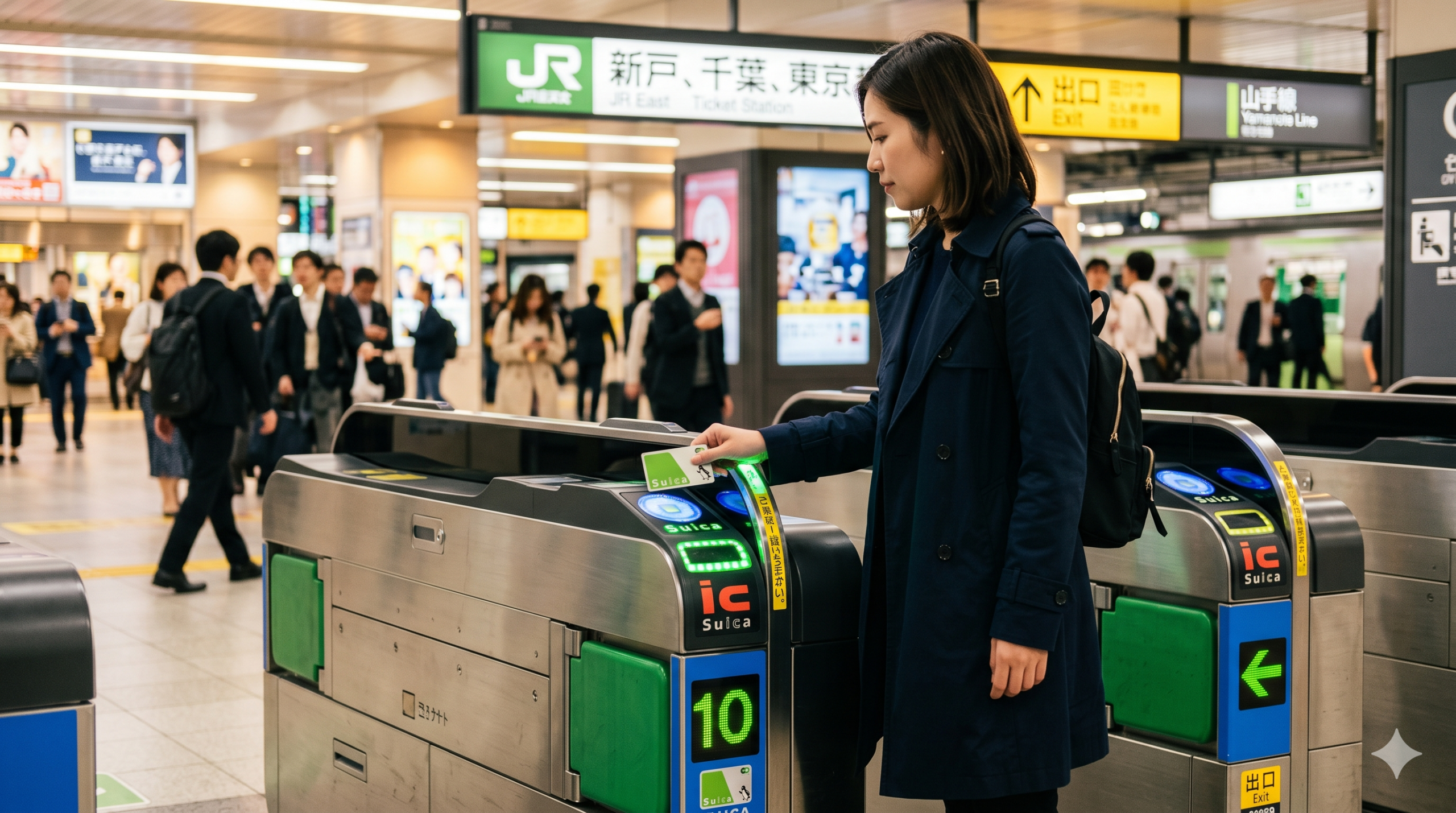
    • ๐Ÿšƒ Tap-and-go at every train gate in Japan
    • ๐Ÿช Works at 7-Eleven, FamilyMart, Lawson, and most chain stores
    • ๐Ÿค– Vending machines, coin lockers, some taxis
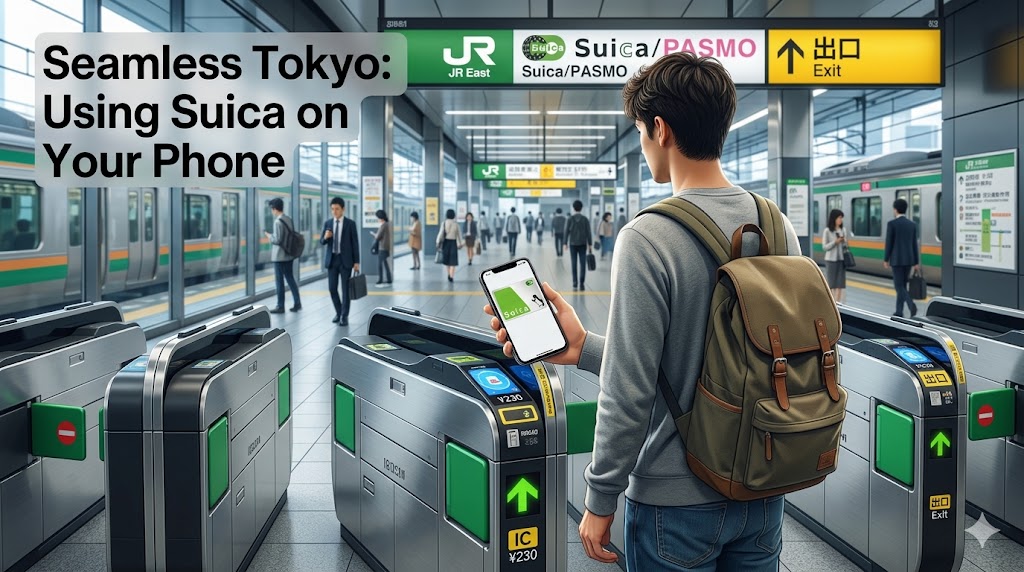
    • ๐Ÿ“ฑ Set up on iPhone/Android โ€” no physical card needed

    ๐Ÿ‘‰ Read our detailed guide: PASMO vs Suica: Which IC Card Should You Get?

    ๐Ÿ’ณ Credit Cards: What Works in Japan

    Acceptance by brand (best to worst)

    1. Visa โ€” Best overall acceptance (~70%)
    2. Mastercard โ€” Very close to Visa (~65%)
    3. JCB โ€” Japan’s domestic brand, great at Japanese shops but poor overseas
    4. American Express โ€” Limited to hotels, department stores, large chains (~40%)
    5. Discover/Diners โ€” Very limited (~20%)

    Pro tips for credit card users

    • ๐Ÿ’ก Always carry cash as backup โ€” Many restaurants still don’t take cards
    • ๐Ÿ’ก Choose “Without conversion” when the terminal asks โ€” This avoids DCC (Dynamic Currency Conversion) fees
    • ๐Ÿ’ก Contactless (tap-to-pay) is growing but not universal yet
    • ๐Ÿ’ก Wise or Revolut cards give the best exchange rates for foreigners

    ๐Ÿ‘‰ Read our guide: Best Credit Cards for Foreigners in Japan

    ๐Ÿ’ด Cash: Still King in Some Places

    Despite Japan’s cashless push, you’ll still need cash for:

    • ๐Ÿฏ Temples and shrines (admission fees, omamori charms)
    • ๐Ÿœ Small ramen shops and street food stalls
    • ๐Ÿ”๏ธ Rural areas (especially onsen towns)
    • ๐Ÿ…ฟ๏ธ Some parking lots and laundromats
    • ๐Ÿฅ Clinics and small hospitals

    Where to get Japanese yen

    • 7-Eleven ATMs (7Bank) โ€” Accept international cards, English UI, 24/7
    • Japan Post ATMs โ€” Good for Visa/Mastercard withdrawals
    • Wise card โ€” Withdraw JPY at interbank rates
    • Airport exchange โ€” Convenient but worst rates (avoid if possible)

    ๐Ÿ“Š Payment Method by Situation

    Situation Best Payment Why
    Taking the train๐ŸŸข Suica/PASMOOnly IC cards work at train gates
    Convenience store๐ŸŸข Suica/PASMOFastest checkout, no signature needed
    Department store๐Ÿ’ณ Credit cardTax-free processing + high amounts
    Izakaya / local restaurant๐Ÿ“ฑ PayPay or ๐Ÿ’ด CashMany don’t take credit cards
    Electronics (Yodobashi, BIC)๐Ÿ’ณ Credit cardTax-free + point cards stack
    Temple / shrine๐Ÿ’ด CashElectronic payments not accepted
    Splitting dinner bill๐Ÿ“ฑ PayPaySend money instantly to friends
    Don Quijote๐Ÿ’ณ Credit card + couponTax-free + 15% off coupon stacks

    ๐ŸŽฏ The Perfect Setup for Living in Japan

    Here’s what we recommend for expats and long-term residents:

    1. Mobile Suica on your iPhone/Android โ€” for daily transit and quick purchases
    2. Wise or Revolut card โ€” for credit card payments with zero forex fees
    3. PayPay โ€” for restaurants and local shops that only take QR
    4. ยฅ10,000-20,000 cash โ€” always have some on hand for emergencies

    With this combo, you’re covered for 99% of payment situations in Japan.

    ๐Ÿ”— Related Guides

  • Pasmo vs Suica 2026: Which IC Card Should You Get? (Definitive Answer)

    Pasmo vs Suica 2026: Which IC Card Should You Get? (Definitive Answer)

    ๐Ÿ“ฑ Critical Android Warning: Most Android Phones Cannot Use Mobile Suica or PASMO

    Mobile Suica and Mobile PASMO require a FeliCa (NFC-F) chip โ€” a Japanese NFC standard found in almost no non-Japanese Android phones. If you have a Samsung Galaxy, Google Pixel (international version), or any other non-Japan-market Android phone, Mobile Suica/PASMO will not work on your device.

    What to do if you have a non-Japanese Android: Purchase a physical Welcome Suica card (with Suica logo, valid 28 days) at Narita or Haneda airport upon arrival โ€” ยฅ500 deposit, works everywhere. iPhone users are unaffected โ€” Welcome Suica Mobile works on all iPhone 7 and later models.

    ๐Ÿšƒ PASMO vs Suica: The Great IC Card Debate

    If you’re moving to Japan or planning a visit, you’ve probably heard two names over and over: Suica and PASMO. Both are IC cards (Integrated Circuit cards) used for public transportation and cashless payments across Japan โ€” but which one should YOU get?

    After living in Japan and using both cards extensively, here’s the truth: they’re 99% identical in function. But that 1% difference matters depending on your situation. This guide breaks it all down so you can make the right choice in under 5 minutes.

    ๐Ÿ“Š PASMO vs Suica: Quick Comparison Table

    Feature Suica ๐ŸŸข PASMO ๐Ÿ”ต
    IssuerJR EastPrivate Railways (Tokyo Metro, etc.)
    Where to buy (physical)JR stationsMetro / private railway stations
    Mobile (iPhone)โœ… Apple Walletโœ… Apple Wallet
    Mobile (Android)โœ… Google Walletโœ… Google Wallet
    Depositยฅ500ยฅ500
    Max balanceยฅ20,000ยฅ20,000
    Use nationwide?โœ… Yes (10 IC card areas)โœ… Yes (10 IC card areas)
    Convenience storesโœ… All major chainsโœ… All major chains
    Auto-charge (commuter)โœ… View Card onlyโœ… Compatible credit cards
    JR commuter passโœ…โŒ (Metro pass only)
    Tourist-friendly?โญโญโญโญโญโญโญโญโญ

    ๐Ÿ† The Verdict: Which One Should You Get?

    Get Suica if…

    • โœ… You’re a tourist (Suica is available at all JR stations including Narita/Haneda airports)
    • โœ… You use JR lines for your daily commute
    • โœ… You want the most universally recognized IC card in Japan
    • โœ… You’re setting up Mobile Suica on your iPhone before arriving in Japan

    Get PASMO if…

    • โœ… Your daily commute is on Tokyo Metro or private railways (Odakyu, Keio, Tokyu, etc.)
    • โœ… You want a commuter pass that covers Metro + private railway routes
    • โœ… You already have a compatible credit card for auto-charge

    The honest answer?

    For 90% of people, Suica is the better choice. It’s easier to get (especially at airports), works identically to PASMO for payments, and has slightly better brand recognition. The only real reason to choose PASMO is if your commuter pass requires it.

    ๐Ÿ“ฑ Mobile Suica vs Mobile PASMO

    In 2026, most people should skip the physical card entirely and go straight to Mobile Suica or Mobile PASMO on their smartphone. Here’s why:

    • No ยฅ500 deposit โ€” Mobile versions are free to set up
    • Top up anytime โ€” Add money via Apple Pay or Google Pay, no ticket machine needed
    • Never lose it โ€” Your phone IS your train card
    • Works overseas โ€” Set up Mobile Suica before you even land in Japan

    โš ๏ธ Important for tourists: Physical Suica/PASMO cards were temporarily suspended for sale in 2023 due to chip shortages. As of 2026, limited “Welcome Suica” cards are available at airports, but Mobile Suica is the most reliable option.

    ๐Ÿ’ฐ How to Top Up (Charge) Your IC Card

    Physical Card

    1. Find a ticket machine at any train station (look for IC card logo)
    2. Insert your card
    3. Select charge amount (ยฅ1,000 / ยฅ3,000 / ยฅ5,000 / ยฅ10,000)
    4. Insert cash (credit cards NOT accepted at most machines)
    5. Take your charged card

    Mobile Suica / PASMO

    1. Open the Suica/PASMO app or Apple Wallet
    2. Tap “Add Money” or “Charge”
    3. Select amount
    4. Confirm payment via Apple Pay / Google Pay
    5. Balance updated instantly โ€” no machine needed!

    ๐Ÿช Where Can You Use Suica & PASMO?

    Both cards work at all the same places:

    • Trains & subways โ€” JR, Metro, private railways across Japan
    • Buses โ€” Most city buses nationwide
    • Convenience stores โ€” 7-Eleven, FamilyMart, Lawson, etc.
    • Vending machines โ€” Drinks, snacks, even some restaurant ticket machines
    • Drugstores โ€” Matsumoto Kiyoshi, Welcia, Sundrug
    • Supermarkets โ€” Aeon, Ito-Yokado, Life
    • Coin lockers โ€” At major stations
    • Taxis โ€” Many taxis in Tokyo accept IC cards

    โ“ Frequently Asked Questions

    Can I use Suica on Tokyo Metro?

    Yes! Suica works on ALL train lines in Tokyo, including Tokyo Metro, Toei Subway, and all private railways. The same is true for PASMO on JR lines.

    Can I use Suica outside Tokyo?

    Yes. Since 2013, all 10 major IC card systems in Japan are interoperable. Your Suica works in Osaka (ICOCA area), Nagoya (manaca area), Fukuoka (SUGOCA area), and everywhere else.

    Do I need both Suica AND PASMO?

    No. One card is enough. They work identically for payments and transportation. The only exception is if you need two different commuter passes.

    Can foreigners get Suica?

    Absolutely. Mobile Suica can be set up on any iPhone 8 or later with a non-Japanese Apple ID. Physical Welcome Suica cards are sold at major airports and JR stations.

    What happens if my IC card runs out of money on the train?

    Don’t worry! You can top up at the “fare adjustment machine” (็ฒพ็ฎ—ๆฉŸ) inside the station before exiting the gate. Just insert your card, add money, and tap out normally.

    ๐Ÿ”— Related Guides

  • Best eSIM for Japan 2026: 5 Options Tested โ€” Which One Actually Works?

    Best eSIM for Japan 2026: 5 Options Tested โ€” Which One Actually Works?

    ๐Ÿ“ก eSIM Prices Verified May 2026 โ€” Check Before You Buy

    eSIM prices update frequently. Prices in this guide were verified in May 2026. Airalo remains the most affordable option (from ~$4/1GB on SoftBank/KDDI networks). Always check the Airalo app for current pricing before your trip.

    ๐ŸŒ Also Recommended: JAPAN&GLOBAL eSIM

    Perfect for travelers visiting Japan โ€” seamless coverage with no physical SIM swap needed. Buy online before you leave home!

    ๐Ÿ“ฑ Get JAPAN&GLOBAL eSIM

    Why an eSIM is the Smartest Way to Stay Connected in Japan 2026

    If you’re planning a trip to Japan in 2026, getting connected the moment you land is no longer optional โ€” it’s essential. From navigating Tokyo’s labyrinthine subway system to translating menus in Osaka’s back-alley izakayas, your smartphone is your lifeline. And in a country where paper maps have been replaced by Google Maps and cash payments are rapidly giving way to IC cards, connectivity matters more than ever.

    The good news? Japan is one of the most eSIM-friendly countries in the world. Major carriers like NTT Docomo, au, and SoftBank all support eSIM natively, meaning you can get blazing-fast 5G data without ever swapping a physical SIM card. You can purchase your eSIM from anywhere in the world, activate it before you board your flight, and be online the second you touch down at Narita or Haneda.

    In this guide, Japan Life Lab’s editorial team breaks down the best eSIM cards for Japan in 2026 โ€” comparing data plans, prices, speeds, and ease of use so you can make the right choice for your trip.

    โšก Quick Answer: Best eSIM for Japan 2026
    โ€ข Best Overall: Airalo (affordable, reliable, easy app)
    โ€ข Best Unlimited: Holafly (no data cap worries)
    โ€ข Best Flexibility: Nomad (hotspot allowed, top-up anytime)
    โ€ข Best for Long Stays: IIJmio (real Japanese carrier, affordable monthly)
    โ€ข Best Local Quality: eConnect Japan (premium Japan-focused support)

    What is an eSIM? Quick Explainer for Japan Travelers

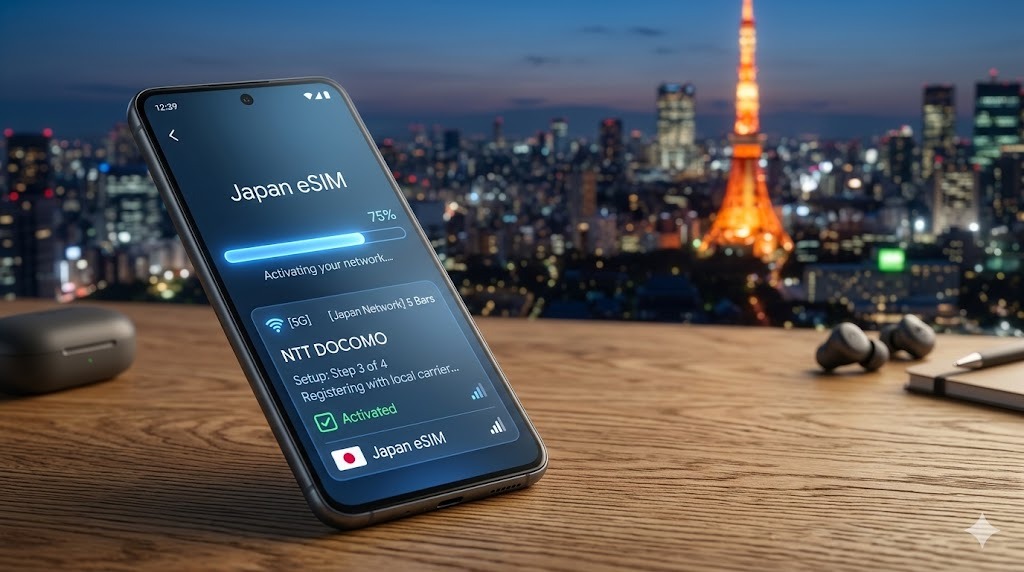
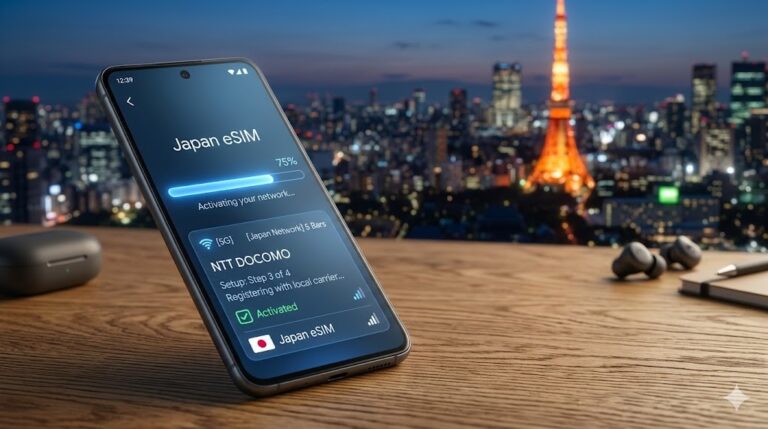
    An eSIM (embedded SIM) is a digital SIM card built directly into your phone. Unlike a physical nano SIM that you slot in and out, an eSIM is programmed virtually. You purchase a data plan online, receive a QR code by email, scan it with your phone, and you’re connected โ€” no trip to a carrier store, no waiting at the airport, no risk of losing a tiny plastic card.

    Key advantages of eSIM for Japan travel:

    • โœ… Instant activation: Set up your Japan data plan before you even leave home
    • โœ… Keep your home SIM: Use your regular number for calls/texts while Japan data routes through the eSIM
    • โœ… No SIM swapping: Your home SIM stays in your phone the whole trip
    • โœ… Multiple profiles: Store up to 5-8 eSIM profiles on most modern phones
    • โœ… Eco-friendly: No plastic packaging, no international shipping wait

    eSIM-compatible devices for Japan: iPhone XS and later, Samsung Galaxy S20 and later, Google Pixel 3 and later, and most flagship Android phones from 2021 onward. Note: Some phones purchased in mainland China do not support eSIM due to local regulations โ€” check your device specifications before purchasing.

    How to Set Up a Japan eSIM (Step-by-Step)

    1. Check eSIM compatibility: Go to Settings โ†’ General โ†’ About โ†’ look for an “EID” (Embedded Identity Document) number
    2. Verify your device is carrier-unlocked: eSIMs from foreign carriers require an unlocked device
    3. Choose your plan and purchase: Select a provider and plan from our list below
    4. Receive QR code by email: Usually delivered within minutes of purchase
    5. Scan the QR code: Settings โ†’ Cellular โ†’ Add eSIM โ†’ Use QR Code (iOS) or Settings โ†’ Connections โ†’ SIM Manager โ†’ Add eSIM (Android)
    6. Set data preference: Enable the Japan eSIM as your primary data SIM, keep home SIM active for calls/texts
    7. Confirm activation: Open Maps or a website to verify data is working

    ๐Ÿ’ก Pro tip: Activate your eSIM while still at home on WiFi. This ensures everything is configured correctly before you need data in Japan, and lets you troubleshoot any issues without time pressure at the airport.

    Top 5 Best eSIM Cards for Japan 2026

    1. Airalo โ€“ Best Overall Japan eSIM ๐Ÿ†

    Airalo is the world’s largest eSIM marketplace and our top pick for Japan travel in 2026. Their Japan eSIM plans โ€” branded as “Moshi Moshi” โ€” run on IIJ’s reliable network (which piggybacks on Docomo’s infrastructure), giving you solid 4G LTE and 5G coverage across the country, including rural areas and most mountain regions.

    What sets Airalo apart is the combination of competitive pricing, an excellent mobile app for monitoring data usage, and near-instant delivery. You can purchase, install, and activate your eSIM in under five minutes, all within the Airalo app. Customer support is available 24/7 via live chat โ€” a lifesaver if you run into activation issues at 2am before a red-eye flight to Tokyo.

    For most tourists visiting Japan for one to two weeks, the 3GB plan at around $10.50 hits the sweet spot between price and data. Heavy data users (streaming, constant navigation, or occasional tethering) should opt for the 10GB plan. Airalo also allows you to top up additional data through the app without purchasing an entirely new eSIM profile.

    PlanDataValidityPrice
    Starter1 GB7 days$5.50
    Standard3 GB30 days$10.50
    Plus5 GB30 days$14.50
    Pro10 GB30 days$22.00
    Mega20 GB30 days$36.00
    โœ… Pros
    • World’s most trusted eSIM marketplace โ€” 10M+ users globally
    • Instant QR code delivery, easy Airalo app with usage dashboard
    • Runs on IIJ/Docomo network โ€” excellent rural and mountain coverage
    • Top up additional data anytime without a new eSIM profile
    • 24/7 live chat customer support
    • eSIM profile stored in-app for easy reinstallation if needed
    โŒ Cons
    • Data-only (no voice calls or SMS)
    • Not truly unlimited โ€” high-speed data ends after your cap
    • Hotspot/tethering not available on all plans

    2. Holafly โ€“ Best Unlimited Data eSIM for Japan ๐Ÿ”„

    If you’re worried about burning through your data allowance โ€” streaming YouTube on the shinkansen, uploading Instagram reels from the summit of Mount Fuji, or video calling home every evening โ€” Holafly is your answer. Their Japan eSIM offers unlimited data with no hard cap on daily usage, making it the stress-free choice for data-hungry travelers.

    Holafly operates on Japan’s SoftBank network, which provides strong 4G LTE coverage across major cities, tourist hotspots, and most transportation routes. While they advertise unlimited data, speeds may be throttled during peak congestion โ€” in practice, most users report consistently fast speeds throughout their stay for normal activities.

    The pricing model is day-based rather than data-based, which simplifies decision-making enormously: choose how many days you’ll be in Japan, pay once, and use as much data as you need. For a 7-day trip, the $22 plan works out to just $3.14 per day โ€” comparable to a convenience store onigiri, but considerably more useful for navigation.

    DurationDataPricePer Day
    5 daysUnlimited$19$3.80
    7 daysUnlimited$22$3.14
    10 daysUnlimited$27$2.70
    15 daysUnlimited$33$2.20
    30 daysUnlimited$52$1.73
    โœ… Pros
    • Truly unlimited data โ€” zero worrying about hitting a data cap
    • Simple day-based pricing, not gigabyte-based
    • SoftBank network โ€” excellent urban and tourist area coverage
    • 24/7 customer support via live chat
    • eSIM delivery within 15 minutes of purchase
    โŒ Cons
    • Data-only โ€” no voice calls or SMS
    • Speeds may throttle during peak congestion periods
    • More expensive per GB than data-limited plans for light users
    • No hotspot/tethering allowed

    3. Nomad eSIM โ€“ Best Flexible Data Plans ๐Ÿ“ฑ

    Nomad has quietly become one of the most respected eSIM providers for Japan, particularly among travelers who want flexibility. Their Japan plans are powered by KDDI (au network) โ€” Japan’s second-largest carrier โ€” giving you reliable 4G LTE and expanding 5G coverage, with particularly strong signal across the Kansai region including Osaka, Kyoto, and Kobe.

    What makes Nomad stand out is hotspot/tethering support on most plans โ€” increasingly rare among tourist eSIM providers. If you’re traveling with a companion who doesn’t have their own data plan, or need to connect a tablet or laptop on the go, Nomad delivers that freedom. Their plans also support data rollover: unused data carries forward if you top up before your current plan expires, reducing waste.

    The Nomad app features clean data usage tracking and straightforward top-up options. Their prices are competitive with Airalo, and they frequently run promotional discounts โ€” always worth checking before you commit.

    PlanDataValidityPrice
    Light1 GB15 days$6
    Standard3 GB30 days$13
    Traveler10 GB30 days$28
    Power20 GB30 days$42
    โœ… Pros
    • Hotspot/tethering allowed โ€” share data with other devices
    • Runs on au/KDDI network โ€” strong Kansai region coverage
    • Data rollover when you top up before plan expires
    • Frequent promotional discounts available
    • Clean app with detailed real-time data tracking
    โŒ Cons
    • Less brand recognition than Airalo or Holafly
    • Data-only โ€” no voice calls or SMS included
    • Customer support hours are limited compared to competitors

    4. IIJmio eSIM โ€“ Best eSIM for Long-Term Stays in Japan ๐Ÿ“…

    IIJ (Internet Initiative Japan) is one of Japan’s oldest and most respected telecom companies, and their IIJmio brand has been a go-to choice for long-term residents, working holiday visa holders, and expats since eSIM launched commercially in Japan. Unlike tourist-focused providers, IIJmio offers monthly subscription plans that work like a proper local Japanese SIM โ€” because it essentially is one.

    IIJmio eSIM plans run on NTT Docomo’s network โ€” arguably Japan’s most comprehensive with the deepest rural penetration. If your itinerary includes off-the-beaten-path destinations like rural Tohoku, the Kii Peninsula, or remote mountain onsen towns where other networks struggle, IIJmio’s Docomo backbone gives you the best chance of maintaining signal.

    The main caveat: IIJmio requires a Japanese payment method (credit card with a Japanese billing address) or purchase through a Japanese convenience store. For long-stay expats and working holiday makers with a Japanese bank account, this is completely fine. For short-term tourists, the other providers in this guide are far more practical.

    PlanDataMonthly FeeVoice Calls
    Data 2GB2 GBยฅ850No
    Data 5GB5 GBยฅ990No
    Voice 2GB2 GBยฅ1,650โœ… Yes
    Voice 15GB15 GBยฅ2,310โœ… Yes
    โœ… Pros
    • Runs on Docomo โ€” Japan’s #1 network for rural and mountain coverage
    • Monthly subscription ideal for stays of 3+ months
    • Voice call plans available with a real Japanese phone number
    • One of Japan’s most established and trusted ISPs since 1992
    • Affordable yen-denominated pricing โ€” no currency fluctuation surprises
    • Data SIM plans support hotspot/tethering
    โŒ Cons
    • Requires Japanese credit card or convenience store payment
    • Application interface and support primarily in Japanese
    • Monthly contract โ€” not practical for short tourist visits
    • Initial setup may take 1โ€“3 business days to process

    5. eConnect Japan โ€“ Best Premium Local eSIM Experience ๐Ÿ‡ฏ๐Ÿ‡ต

    eConnect Japan is a specialist connectivity provider focused exclusively on Japan, operated by a Japan-based team with deep expertise in the local telecom landscape. Their eSIM plans run on SoftBank’s network infrastructure, and their customer support is distinctly Japan-focused โ€” you’re dealing with people who understand the nuances of connectivity across Japan’s varied geography, from Hokkaido ski resorts to Okinawan beach towns.

    eConnect Japan particularly shines for business travelers who need reliable connectivity and transparent pricing with no hidden fees. They also offer physical SIM card options and pocket WiFi rentals alongside eSIM, making them versatile for travelers with older devices or those needing to connect multiple devices. Invoice support for business expenses is another useful differentiator.

    While their per-GB pricing runs slightly higher than Airalo or Nomad, the peace of mind from Japan-focused support and guaranteed network quality makes eConnect Japan worth considering for trips where connectivity failure isn’t an option.

    PlanDataValidityPrice
    Starter1 GB15 days$7
    Standard3 GB30 days$14
    Traveler5 GB30 days$20
    Power10 GB30 days$35
    โœ… Pros
    • Japan-based team with expert local support in English and Japanese
    • SoftBank network โ€” consistently strong urban and tourist coverage
    • Transparent pricing with no hidden fees
    • Also offers physical SIM cards and pocket WiFi rentals
    • Business invoice support for expense claims
    • Hotspot/tethering supported
    โŒ Cons
    • Slightly higher per-GB cost vs. Airalo or Nomad
    • Less international brand recognition than larger competitors
    • Data-only eSIM plans โ€” no voice calling

    Japan eSIM Comparison Table 2026

    ProviderNetworkBest PlanPriceHotspotBest For
    ๐Ÿ† AiraloIIJ/Docomo3GB/30d$10.50โŒMost travelers
    HolaflySoftBankUnlimited/7d$22โŒHeavy data users
    Nomadau/KDDI3GB/30d$13โœ…Kansai / hotspot
    IIJmioDocomo5GB/monthยฅ990/moโœ…Long-term expats
    eConnect JPSoftBank5GB/30d$20โœ…Business travelers

    eSIM vs Physical SIM vs Pocket WiFi: Which is Right for You?

    FactoreSIMPhysical SIMPocket WiFi
    Setup speedโšก Instant (before landing)๐Ÿ›ฌ At airport kiosk๐Ÿ›ฌ Airport pickup/delivery
    Keep home numberโœ… Yes (dual SIM)โŒ Swap requiredโœ… Yes
    Multiple devicesโš ๏ธ Hotspot on some plansโš ๏ธ Hotspot onlyโœ… Up to 10 devices
    Cost (7 days, 3GB)~$11ยฅ2,000โ€“4,000ยฅ4,500โ€“8,000
    Extra hardwareโœ… None neededโœ… None neededโŒ Extra device to charge
    Lost/forgot riskโœ… Zero riskโš ๏ธ Small SIM can be lostโŒ Lose device = no WiFi
    Best forSolo travelers, couplesOlder eSIM-unsupported phonesFamilies, groups of 3+

    Our verdict: For solo travelers and couples with modern smartphones released after 2019, eSIM wins on every dimension โ€” cheaper, more convenient, no extra hardware to carry or charge. For families of 3+ or groups where everyone needs connectivity, a pocket WiFi rental may still be the most cost-effective choice despite the inconvenience of an extra device.

    Frequently Asked Questions About Japan eSIM

    Do I need to buy my Japan eSIM before arriving?

    We strongly recommend purchasing and activating your Japan eSIM before departure. While it’s technically possible to purchase one after arrival using airport free WiFi, having data connectivity the moment you land โ€” for navigation to your hotel, translation apps, and messaging โ€” makes an enormous practical difference. Most providers deliver QR codes within minutes of purchase, so there’s no reason to wait.

    Is my phone eSIM compatible for Japan?

    Most flagship smartphones released from 2018 onward support eSIM: iPhone XS/XR and later, Samsung Galaxy S20 and later, Google Pixel 3 and later, and most premium Android phones from 2021. The key exception: phones purchased in mainland China typically have eSIM disabled due to local regulations. To check your device, look for an “EID” (Embedded Identity Document) number in Settings โ†’ General โ†’ About (iOS) or Settings โ†’ About Phone โ†’ Status. If EID is listed, your phone supports eSIM.

    Will my Japan eSIM work on the shinkansen?

    Yes, with brief interruptions inside long tunnels. All major eSIM providers use Japan’s top three carrier networks (Docomo, au/KDDI, SoftBank), and these networks provide good coverage on most shinkansen routes. The longest interruption is the Hokuriku Shinkansen tunnel under the Japan Alps (about 20 minutes). The Tokaido Shinkansen (Tokyoโ€“Osaka) now offers in-tunnel 4G coverage on Docomo and au networks for most of the journey.

    Can I make phone calls with a Japan eSIM?

    Most tourist-focused eSIM plans (Airalo, Holafly, Nomad, eConnect) are data-only โ€” no traditional voice calls or SMS. This is fine for most travelers since you can make calls and send messages via WhatsApp, LINE, FaceTime, Google Meet, or Zoom over your data connection. If you need a local Japanese phone number for reservations, bank verification, or business purposes, IIJmio’s voice plans provide this โ€” though they require a Japanese payment method.

    What networks do Japan eSIMs use, and which is best?

    Japan has three major networks: NTT Docomo (~44% market share, best rural/mountain coverage), au/KDDI (~28%, particularly strong in Kansai), and SoftBank (~28%, excellent urban and tourist area coverage). For general Japan travel covering both cities and rural destinations, Docomo-based eSIMs (Airalo via IIJ, IIJmio) provide the most comprehensive coverage. For Osaka/Kyoto/Kobe-focused trips, au (Nomad) is excellent. All three networks are strong in Tokyo, Osaka, Kyoto, and major tourist areas.

    How much data do I need for a week in Japan?

    As a general guide: 1โ€“2GB suits light users who mainly use Maps for navigation and occasional messaging. 3โ€“5GB covers moderate users (Maps running continuously, social media browsing, some photo uploads). 10GB+ works for heavy users streaming video, video calling daily, or content creators uploading regularly. Unlimited is the stress-free choice if you don’t want to think about it at all. A typical sightseeing day in Japan with Google Maps navigation runs about 500MBโ€“1GB.

    Our Verdict: The Best eSIM for Japan in 2026

    For the vast majority of travelers visiting Japan in 2026, Airalo remains our top recommendation โ€” combining competitive pricing, an excellent app experience, and the reliability of Japan’s Docomo network via IIJ. Their 3GB 30-day plan at $10.50 comfortably covers most one-to-two week trips, and the ability to top up in-app removes any anxiety about running out of data mid-trip.

    If you’re a heavy data user who wants complete peace of mind about consumption, Holafly’s unlimited plans are worth the slight premium โ€” especially for trips of 10+ days where the per-day cost drops significantly. And if you’re planning a longer stay in Japan โ€” working holiday, extended business trip, or relocation โ€” IIJmio on Japan’s premier Docomo network is the clear professional’s choice.

    Whichever provider you choose, purchase your Japan eSIM before you board your flight. Future-you, stepping off the plane at Narita and immediately pulling up Google Maps to navigate to your hotel, will be profoundly grateful for this small act of preparation.

    ๐Ÿ† Quick Picks Summary

    • Best Overall: Airalo โ€” 3GB from $10.50, Docomo network, 24/7 support
    • Best Unlimited: Holafly โ€” from $19/5 days, SoftBank network
    • Best Hotspot: Nomad โ€” 3GB from $13, tethering allowed, au/KDDI network
    • Best Long-Term: IIJmio โ€” from ยฅ850/month, voice plans available, Docomo network
    • Best Business: eConnect Japan โ€” Japan-focused premium support, invoice available

    ๐Ÿ‡ฏ๐Ÿ‡ต Looking for Japanese Gadget Reviews?

    Check ใ‚ฌใ‚ธใ‚งใƒŠใƒ“ โ€” Japan’s #1 Japanese-language gadget comparison site

    175+ in-depth reviews of Japanese electronics, home appliances & smart devices. Amazon Japan links included.

    Visit ใ‚ฌใ‚ธใ‚งใƒŠใƒ“ (Japanese) โ†’
  • Japan Transportation Guide 2026: Trains, Buses & IC Cards Explained Simply

    Japan Transportation Guide 2026: Trains, Buses & IC Cards Explained Simply

    ๐Ÿš† Quick Summary: Japan has one of the world’s best public transportation systems โ€” but it can be confusing at first. This complete guide covers trains, buses, subways, IC cards, taxis, and domestic flights to help you get around Japan confidently.

    Getting around Japan is one of the greatest pleasures of visiting or living in the country. The public transportation network is famously punctual, clean, safe, and extensive โ€” connecting nearly every corner of the country. But with multiple train operators, IC card systems, reserved seating, and regional passes, it can feel overwhelming for newcomers.

    Whether you’re a tourist planning a trip or an expat settling into daily life in Japan, this guide covers everything you need to know about Japanese transportation in 2026.

    Overview: Japan’s Transportation System

    Japan’s transportation ecosystem is layered and multi-modal:

    • Shinkansen (ๆ–ฐๅนน็ทš) โ€” High-speed bullet trains connecting major cities
    • JR Trains โ€” Japan Railways Group, the primary intercity rail network
    • Private Railways โ€” Many urban areas served by private operators (Kintetsu, Tokyu, Odakyu, etc.)
    • Subways (ๅœฐไธ‹้‰„) โ€” Underground metro networks in major cities
    • Buses (ใƒใ‚น) โ€” Local, express, and overnight highway buses
    • Taxis (ใ‚ฟใ‚ฏใ‚ทใƒผ) โ€” Widely available, premium pricing
    • Domestic Flights (ๅ›ฝๅ†…็ทš) โ€” For longer journeys (Tokyoโ€“Okinawa, Hokkaido, etc.)
    • Ferries (ใƒ•ใ‚งใƒชใƒผ) โ€” Connecting islands and coastal cities

    IC Cards: The Foundation of Japanese Transit

    The most important thing to set up before exploring Japan is an IC card. These rechargeable smart cards let you tap in and out of trains, subways, and buses across Japan โ€” and pay at many convenience stores, vending machines, and shops.

    Major IC Cards in Japan

    IC Card Region Works Nationwide? Notes
    Suica Tokyo / JR East โœ… Yes Most versatile, works on iPhone/Android
    PASMO Tokyo / Private railways โœ… Yes Good for Tokyo subway/buses
    ICOCA Osaka / JR West โœ… Yes Best for Osaka/Kyoto/Kobe area
    Manaca Nagoya โœ… Yes Nagoya subway/Meitetsu
    Hayakaken Fukuoka โœ… Yes Fukuoka subway

    All major IC cards are interoperable โ€” a Suica from Tokyo works on Osaka subways and vice versa. Read our complete Suica guide for setup instructions.

    ๐Ÿ›’ Buy IC Card Readers/Accessories:
    Amazon Japan  |  Amazon.com

    Shinkansen (ๆ–ฐๅนน็ทš) โ€” Bullet Trains

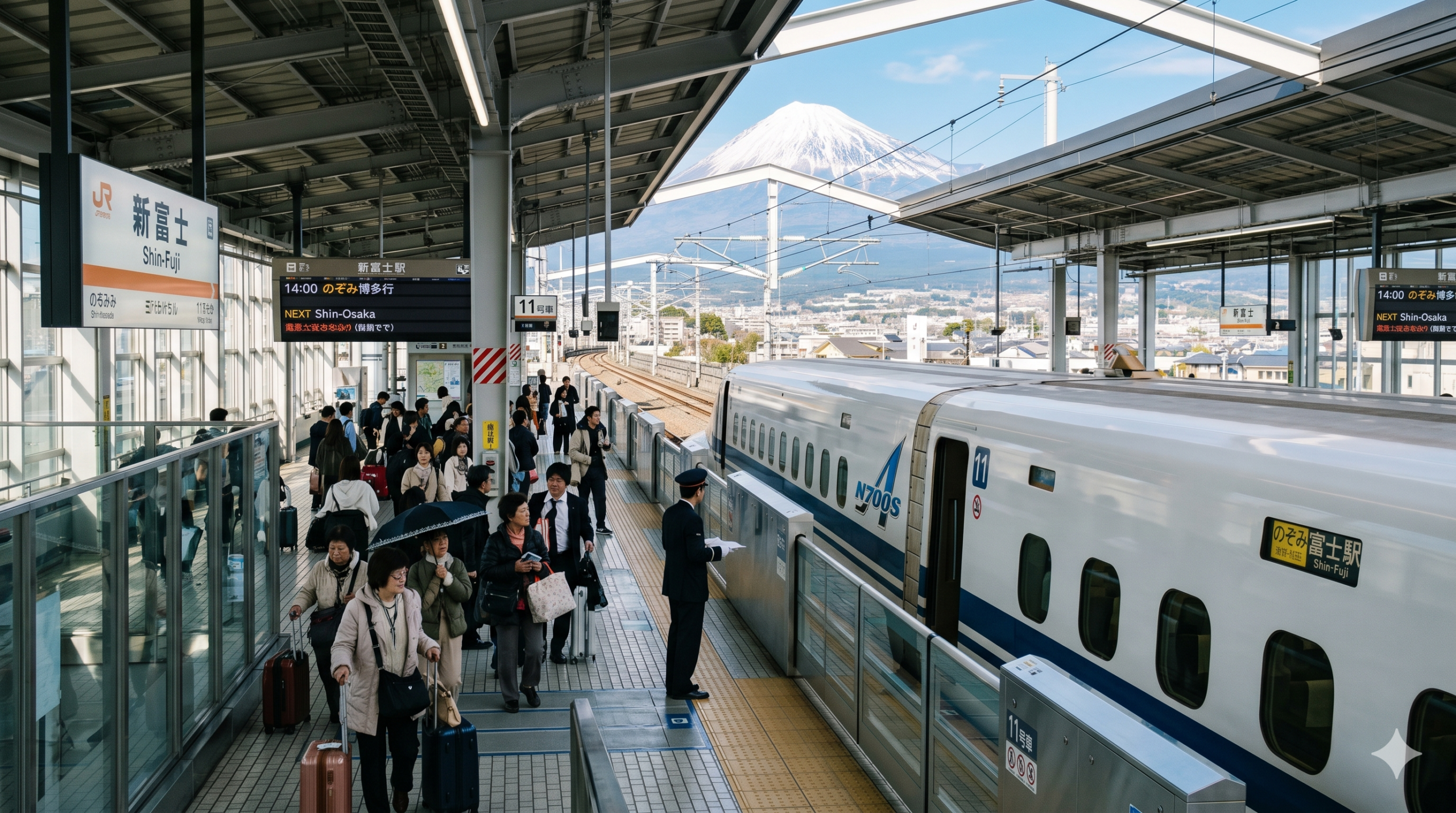
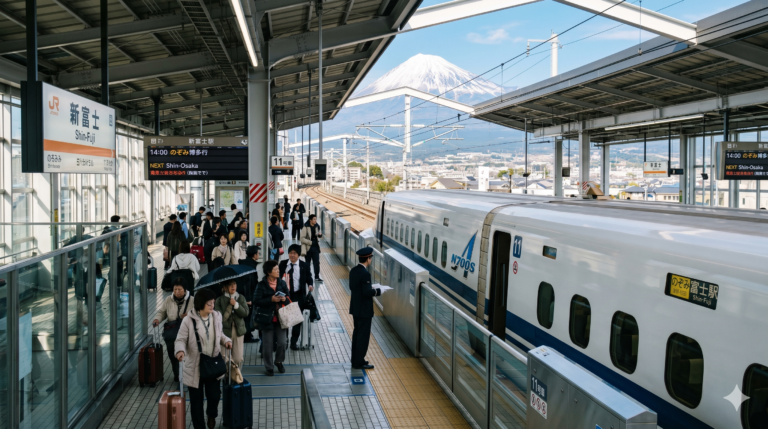
    The Shinkansen is Japan’s iconic high-speed rail network, operating at speeds up to 320 km/h. It connects all major cities from Hokkaido (Sapporo) in the north to Kagoshima in the south, making it the backbone of intercity travel.

    Main Shinkansen Lines

    Line Route Journey Time One-way Price
    Tokaido Tokyo โ†’ Osaka ~2h 30min (Nozomi) ~ยฅ14,720
    Tokaido Tokyo โ†’ Kyoto ~2h 15min ~ยฅ13,940
    Sanyo Osaka โ†’ Hiroshima ~1h 25min ~ยฅ10,690
    Tohoku Tokyo โ†’ Sendai ~1h 40min ~ยฅ11,410
    Hokuriku Tokyo โ†’ Kanazawa ~2h 30min ~ยฅ14,380

    Booking Shinkansen Tickets

    • At the station โ€” Ticket machines (English available) or Green Window (ใฟใฉใ‚Šใฎ็ช“ๅฃ) counter
    • Online โ€” JR-WEST Online Reservation, Shinkansen e-Ticket (JR East)
    • IC card โ€” Load Shinkansen tickets onto your Suica/ICOCA for seamless boarding
    • JR Pass โ€” Foreign visitors can use the Japan Rail Pass for unlimited Shinkansen rides (exceptions: Nozomi, Mizuho on Tokaido/Sanyo)

    Japan Rail Pass (JR Pass) โ€” Is It Worth It?

    The JR Pass is a special rail pass exclusively available to foreign visitors (tourist visa holders). It provides unlimited rides on most JR trains nationwide, including Shinkansen, for a fixed price over 7, 14, or 21 days.

    Pass Type Ordinary Green (First Class) Best For
    7-Day ยฅ50,000 ยฅ70,000 Tokyoโ€“Kyotoโ€“Osaka trip
    14-Day ยฅ80,000 ยฅ110,000 Multi-city Japan tour
    21-Day ยฅ100,000 ยฅ140,000 Extended Japan exploration

    The JR Pass breaks even if you travel Tokyo โ†’ Kyoto โ†’ Tokyo (two Nozomi-equivalent fares = ~ยฅ29,440 round trip). If you plan more journeys, the 7-day pass saves significant money. However, if you’re staying in one city, a local IC card is cheaper.

    Urban Rail: Navigating Tokyo, Osaka & Other Cities

    Tokyo’s Train Network

    Tokyo has the world’s most complex and extensive urban rail network. Key lines include:

    • JR Yamanote Line (ๅฑฑๆ‰‹็ทš) โ€” The circular line connecting major stations: Shinjuku, Shibuya, Harajuku, Ueno, Akihabara, Tokyo, Shinagawa
    • Tokyo Metro โ€” 9 subway lines covering central Tokyo
    • Toei Subway โ€” 4 additional lines operated by Tokyo Metropolitan Government
    • Private railways โ€” Tokyu, Odakyu, Keio, Seibu, Tobu for suburbs

    Recommended Apps for Navigation

    • Google Maps โ€” Best for foreigners; shows exact train lines, platforms, fares, and walking directions
    • HyperDia โ€” Detailed Japanese rail schedule app; essential for complex multi-line journeys
    • Jorudan โ€” Japanese transit app with English support
    • Navitime Japan โ€” Comprehensive navigation including buses and ferries

    Buses in Japan

    Local Buses

    Local city buses use IC cards (tap on, tap off) or cash. In most cities, you board from the rear and exit from the front, paying as you exit. Some rural buses require you to take a numbered ticket on entry and pay based on distance.

    Highway Buses (้ซ˜้€Ÿใƒใ‚น)

    Long-distance highway buses (้ซ˜้€Ÿใƒใ‚น/ๅคœ่กŒใƒใ‚น) are Japan’s budget travel option. Tokyoโ€“Osaka by overnight bus costs ยฅ3,000โ€“ยฅ8,000 (vs ยฅ14,720 for Shinkansen). Popular operators include Willer Express, JR Bus, and Meitetsu Bus. Book online at:

    Taxis in Japan

    Japanese taxis are safe, clean, and metered โ€” but expensive. Average fares:

    • Flag fall: ยฅ500โ€“ยฅ750 (first ~1 km)
    • Additional: ~ยฅ100 per 300m
    • Tokyo airport โ†’ central Tokyo: ยฅ5,000โ€“ยฅ8,000

    Taxi Apps

    • GO (ใ‚ดใƒผ) โ€” Japan’s leading taxi app, works across most cities
    • S.RIDE โ€” Tokyo taxi booking app
    • DiDi โ€” Ride-hailing available in major cities
    • Uber โ€” Available in some areas, but uses licensed taxi drivers (not rideshare)

    Domestic Flights

    For long distances (Tokyo to Okinawa, Hokkaido, or Kyushu), domestic flights are often faster and cheaper than Shinkansen. Japan has excellent low-cost carriers:

    Airline Type Key Routes Booking
    ANA Full service All major cities ana.co.jp
    JAL Full service All major cities jal.co.jp
    Peach LCC Osaka hub, Okinawa, Sapporo flypeach.com
    Jetstar Japan LCC Tokyo, Nagoya, Osaka jetstar.com/jp
    Skymark Midrange Tokyo, Kyushu, Okinawa skymark.co.jp

    Airport Access: Getting To/From Tokyo’s Airports

    Narita Airport (NRT) โ†’ Tokyo

    • Narita Express (N’EX) โ€” ยฅ3,070 to Shinjuku, ~1h 30min (JR Pass valid)
    • Keisei Skyliner โ€” ยฅ2,570 to Ueno, ~41min (fastest option)
    • Keisei Limited Express โ€” ยฅ1,050 to Ueno, ~1h 20min (budget option)
    • Airport Limousine Bus โ€” ยฅ3,200, convenient for hotels, no transfers
    • Taxi โ€” ยฅ20,000โ€“ยฅ25,000 (avoid for budget travelers)

    Haneda Airport (HND) โ†’ Tokyo

    • Tokyo Monorail โ€” ยฅ500โ€“ยฅ750 to Hamamatsucho, ~20min
    • Keikyu Line โ€” ยฅ330 to Shinagawa, ~13min
    • Airport Limousine Bus โ€” ยฅ1,000โ€“ยฅ1,500 to major hotels
    • Taxi โ€” ยฅ5,000โ€“ยฅ8,000 to central Tokyo

    Renting a Car in Japan

    Driving in Japan is surprisingly accessible for foreign visitors. You’ll need an International Driving Permit (IDP) from your home country (available before you leave). Key points:

    • Drive on the left side of the road
    • Toll roads (ๆœ‰ๆ–™้“่ทฏ) are common โ€” ETC cards are offered by rental agencies
    • Parking is expensive in cities (ยฅ300โ€“ยฅ600/hour) but cars are essential in rural areas
    • Car rental: Toyota Rent a Car, Times Car, Nippon Rent-A-Car, Budget
    • Gas is ~ยฅ170โ€“ยฅ180/liter (2026 prices)

    Frequently Asked Questions About Getting Around Japan

    What is the best way to get around Japan as a tourist?

    The best combination for most tourists is: Shinkansen for intercity travel + IC card (Suica/PASMO) for city transit + Google Maps for navigation. If you’re visiting 3+ cities in 7 days, the JR Pass often pays for itself.

    Can I use credit cards on Japanese trains?

    Most train gates in Japan do NOT accept credit cards directly. You need an IC card (Suica, PASMO, etc.) or a physical ticket. However, you can charge your IC card using a credit card at most vending machines, and Apple Pay/Google Pay with Suica linked works for contactless payment.

    How do I use the Shinkansen for the first time?

    Buy or reserve your ticket at a ticket machine or window. Go to the Shinkansen gate (separate from local trains), insert your ticket or tap your IC card, find your platform based on train name and direction, and board the correct car โ€” car number and seat number are on your ticket. Train staff walk through to check tickets.

    Is English signage available on Japanese trains?

    Yes โ€” most train stations in Tokyo, Osaka, Kyoto, and major tourist areas have English (and often Chinese/Korean) signage. Station names are displayed in both Japanese and Roman letters. Announcements on Shinkansen and major city trains are made in English. Rural areas may have less English signage, where Google Maps Translate can help.

    What is the cheapest way to travel between Tokyo and Osaka?

    The cheapest option is an overnight highway bus (ยฅ3,000โ€“ยฅ5,000 one way on services like Willer Express). Budget flights (Peach, Jetstar) can also be cheaper than Shinkansen when booked in advance (ยฅ5,000โ€“ยฅ10,000). The Shinkansen is most expensive but fastest and most convenient.

    Quick Reference: Japan Transportation Costs

    Journey Fastest Option Budget Option Time Difference
    Tokyo โ†’ Osaka Shinkansen ยฅ14,720 Night bus ยฅ3,000 2.5h vs 8h
    Tokyo โ†’ Kyoto Shinkansen ยฅ13,940 Night bus ยฅ3,000 2.2h vs 7h
    Tokyo โ†’ Sapporo Flight ยฅ8,000โ€“ยฅ20,000 Shinkansen ยฅ24,000 1.5h vs 5h+
    Tokyo โ†’ Okinawa Flight ยฅ10,000โ€“ยฅ30,000 LCC ยฅ7,000+ 2.5h (no alternatives)

    Tips for Navigating Japan’s Transit System

    • Always keep ยฅ2,000+ on your IC card โ€” running out mid-journey means using a fare adjustment machine
    • Stand on the left on escalators (Osaka: stand on the right) โ€” this is serious etiquette
    • No phone calls on trains โ€” set your phone to silent and speak quietly
    • Priority seats โ€” give up seats near doors to elderly, pregnant, or disabled passengers
    • Large luggage โ€” reserve a luggage space on Shinkansen when bringing large bags
    • Last train times โ€” check the last train schedule; missing it means a taxi or waiting until morning
    • IC card refund โ€” you can return your Suica/PASMO at JR stations when leaving Japan (ยฅ220 handling fee)
  • Suica Card 2026: The Complete Japan Travel Guide (Buy, Top Up & Use Everywhere)

    Suica Card 2026: The Complete Japan Travel Guide (Buy, Top Up & Use Everywhere)

    ๐Ÿšƒ Suica 2026 Updates

    • Welcome Suica Mobile (iPhone app): Valid 180 days, works with most international credit cards โ€” best option for iPhone users
    • Physical Welcome Suica (red card): Valid 28 days, buy at Narita/Haneda airport โ€” best for Android users whose phones lack FeliCa (NFC-F) chip
    • Android users: Most non-Japanese Android phones cannot use Mobile Suica โ€” buy a physical card at the airport instead
    • Suica works nationwide on all JR lines, subways, buses, and at convenience stores across Japan

    If you’re visiting Japan or moving there as an expat, Suica is the most useful tool you’ll carry. This IC card lets you hop on trains, buses, and pay at convenience stores โ€” all with a simple tap. In this complete 2026 guide, we cover everything about Suica from getting one at the airport to using it on your iPhone.

    What is Suica?

    Suica is a rechargeable contactless smart card issued by JR East (East Japan Railway Company). First introduced in 2001, it has become the most widely used IC card in Japan. The name comes from “Super Urban Intelligent Card” and also means watermelon in Japanese. Suica is accepted on trains, subways, buses, at convenience stores, restaurants, vending machines, coin lockers, and taxis โ€” over 900,000 locations nationwide.

    Types of Suica Available in 2026

    1. Physical Suica Card

    The classic green card with the penguin mascot. Available at JR East ticket machines at Narita Airport, Haneda Airport, and all major stations. Requires a refundable ยฅ500 deposit. Minimum purchase is ยฅ1,000 (ยฅ500 deposit + ยฅ500 balance).

    2. Mobile Suica (iPhone / Android) โ€” Recommended

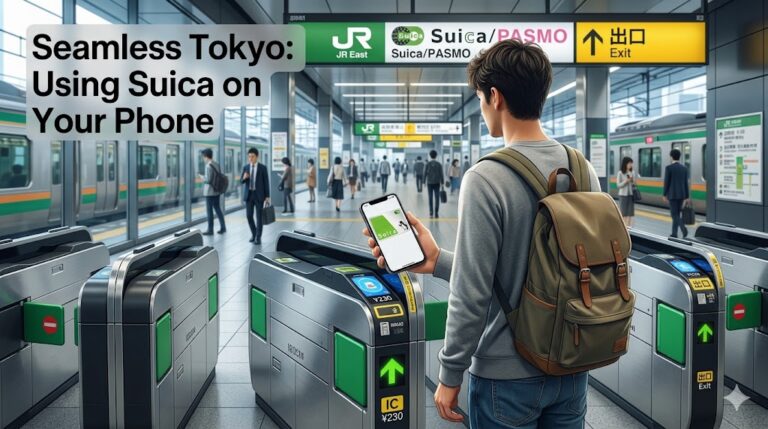
    Add Suica directly to Apple Wallet (iPhone 7 or later) or Google Pay. No physical card needed โ€” tap your phone at the gate. Charge your balance anytime via credit card. iPhone Mobile Suica even works with a completely dead battery thanks to a special emergency reserve. This is our top recommendation in 2026.

    3. Welcome Suica (Tourists)

    Available at airports and major tourist spots. No deposit required. Valid for 28 days only โ€” remaining balance cannot be refunded. Great for short-stay visitors who prefer a hassle-free setup.

    How to Get Suica: Step-by-Step Guide

    At the Airport (Physical Card)

    At Narita or Haneda Airport, look for JR East ticket machines with an English interface. Choose “Suica” then “New Suica”, add ยฅ1,000 or more (includes ยฅ500 deposit), and collect your card. Ready to use immediately at airport train gates.

    On iPhone (Apple Wallet)

    1. Open the Wallet app on your iPhone
    2. Tap the + icon in the top right corner
    3. Choose “Transit Card” from the list
    4. Pick Suica from available cards
    5. Choose the amount to add (minimum ยฅ1,000)
    6. Pay with Apple Pay โ€” your Suica is immediately ready!

    Works with iPhone 7 or later (including non-Japanese models) and Apple Watch Series 3 or later. The card works even if your battery hits 0% โ€” a special emergency reserve allows a few more taps.

    On Android (Google Pay)

    1. Download the Suica app from Google Play
    2. Open app and choose “New Suica”
    3. Enter your details and link a credit card
    4. Add the desired balance โ€” linked to Google Pay automatically

    How to Use Suica at Train Gates

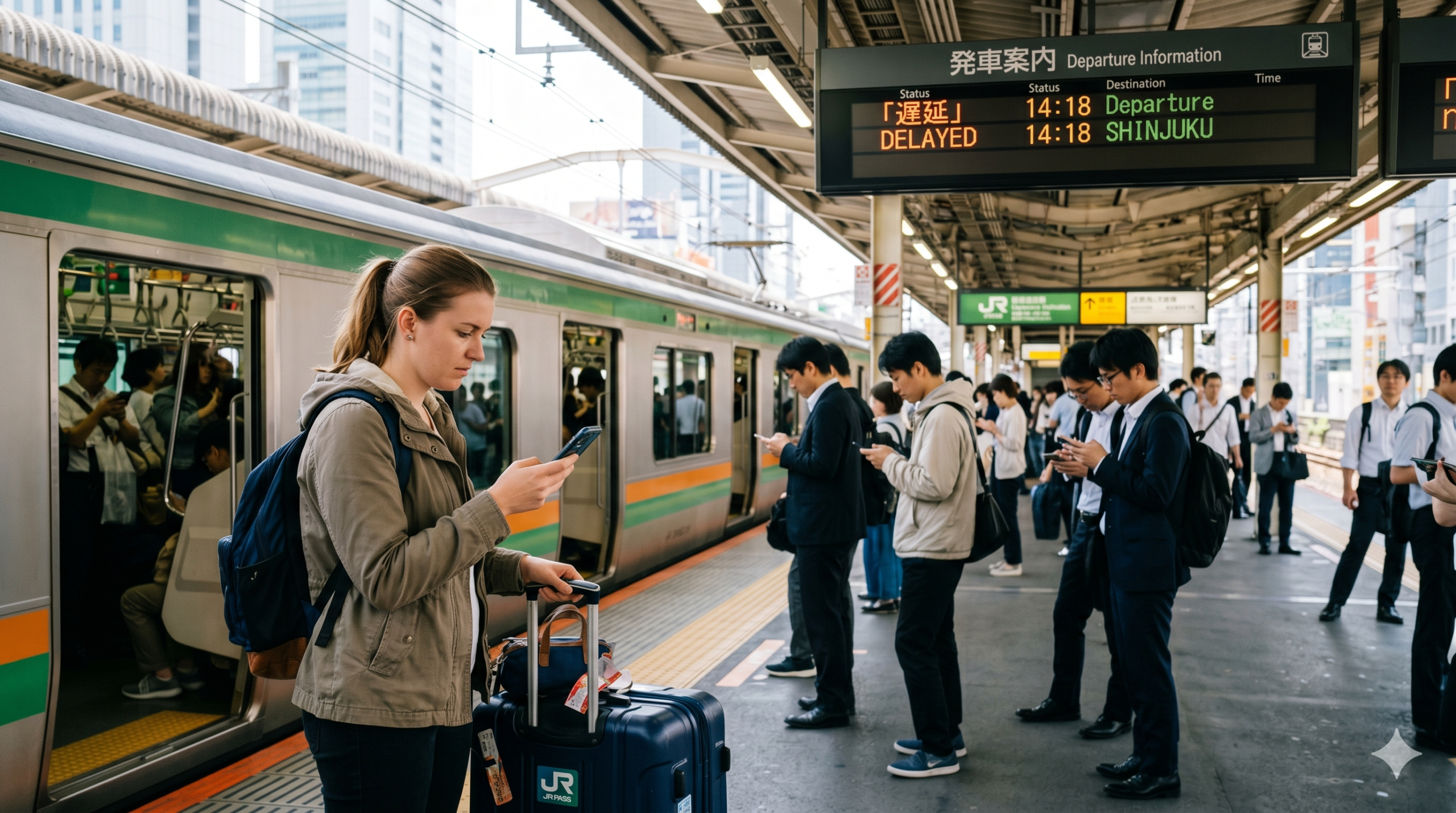
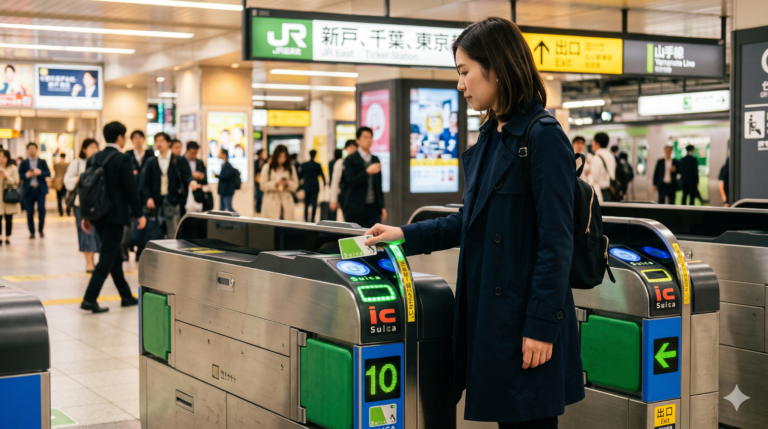
    Look for the IC card logo (a wave symbol) on fare gates. Hold your Suica card โ€” or your phone or watch โ€” flat against the reader for about 0.1 seconds. The gate opens and your fare is automatically deducted. Always tap both in AND out at every station. Forgetting to tap out will lock the gate on your next use and may charge the maximum fare.

    Your balance is displayed on the gate screen when you tap. If your balance is too low, find a Fare Adjustment Machine (็ฒพ็ฎ—ๆฉŸ) near the exit โ€” put your card in, pay the difference in cash, and proceed through the gates.

    How to Charge (Top Up) Your Suica

    • Station ticket machines โ€” put in your card, choose “Charge” (ใƒใƒฃใƒผใ‚ธ), add cash in increments of ยฅ500 to ยฅ10,000
    • Convenience stores โ€” hand your physical card and cash to the cashier; say “Suica ni chaji onegaishimasu” (ใƒใƒฃใƒผใ‚ธใŠ้ก˜ใ„ใ—ใพใ™)
    • Apple Wallet / Google Pay โ€” charge via credit card from anywhere, anytime

    Maximum Suica balance: ยฅ20,000. Recommended minimum for a day of commuting: ยฅ1,000โ€“ยฅ2,000.

    Using Suica for Shopping and Payments

    Beyond transit, Suica is accepted at thousands of shops across Japan. Look for the IC card logo at checkout. Simply tap โ€” no PIN or signature needed. Works at 7-Eleven, FamilyMart, Lawson, Ministop, McDonald’s, Yoshinoya, Starbucks (most locations), station kiosks and NewDays shops, and vending machines with IC readers (very common inside stations).

    Suica vs. PASMO vs. ICOCA: Which Should You Get?

    Japan has 10 interoperable IC cards, all accepted on the same trains and buses nationwide. Bottom line: get Suica. It works everywhere, is available on iPhone and Android, and is the most internationally recognized IC card.

    Card Issuer Best For On iPhone
    Suica JR East Tokyo and all of Japan Yes
    PASMO PASMO Association Tokyo Metro users Yes
    ICOCA JR West Osaka / Kyoto visitors Yes
    Kitaca JR Hokkaido Hokkaido visitors Yes

    Pro Tips for Using Suica Like a Local

    • Keep at least ยฅ1,000 on your card โ€” Tokyo fares range from ยฅ140 to ยฅ400 per ride
    • Use Mobile Suica: charge it from your hotel room at midnight before a full day of sightseeing
    • Suica works on some Shinkansen (e.g. Tokyo to Shin-Yokohama) but not for long-distance reserved seats
    • Returning home? Visit a JR East staffed counter to get the ยฅ500 deposit back (minus ยฅ220 processing fee)
    • Lost your physical Suica? Visit JR East to reissue it with the remaining balance if registered (ยฅ510 fee)

    Frequently Asked Questions

    Can foreigners use Suica?

    Yes, absolutely. Any person โ€” tourist, expat, or business traveler โ€” can get a Suica card. No Japanese ID, bank account, or residence status required.

    Does Suica work in Osaka and Kyoto?

    Yes! Suica is accepted on trains, subways, and buses throughout all of Japan โ€” Tokyo, Osaka, Kyoto, Sapporo, Fukuoka, and everywhere in between.

    Can I charge Suica with a foreign credit card?

    Yes, on Mobile Suica (iPhone/Android). Station machines require cash in JPY.

    Get Japan Travel Ready: Recommended Products

    Check out these Japan travel essentials on Amazon:

    More Guides from Japan Life Lab

    Useful Products for Using Suica in Japan

    These accessories make your Suica experience even smoother โ€” whether you’re a tourist or long-term resident:

    IC Card Holder / Suica Wallet Case

    A dedicated IC card holder lets you tap through gates without taking your card out of your bag. Many attach to your phone case or bag strap.

    Travel Wallet / RFID-Blocking Card Holder

    Keep your Suica, credit cards, and cash organized in a slim travel wallet. RFID-blocking models protect against contactless skimming.

    Mobile Suica Compatible Smartphones

    Mobile Suica works on iPhone (iPhone 7+) and Android phones with FeliCa. If you need an unlocked Japan-compatible phone, here are options available on Amazon:

    ๐Ÿ‡ฏ๐Ÿ‡ต

    Japan Expat Starter Kit 2026

    Banking ยท Health Insurance ยท Housing ยท Mobile Plans ยท Suica ยท Taxes ยท 50+ Japanese Phrases โ€” everything in one 60-page PDF guide.

    ๐Ÿ“ฅ Get the Guide โ€” $19

    โœ… Instant download ยท 30-day money-back guarantee

  • Best Pocket WiFi for Japan 2026: 5 Rentals Compared (Speed, Price & Coverage)

    Best Pocket WiFi for Japan 2026: 5 Rentals Compared (Speed, Price & Coverage)

    Why You Need Pocket WiFi in Japan

    Japan has some of the fastest mobile internet in the world, but accessing it as a visitor isn’t always straightforward. Roaming fees are expensive, and local SIMs require an unlocked phone. A pocket WiFi device solves everything instantly โ€” one device, up to 15 connections, working across all of Japan.

    ๐Ÿค–
    Navigator

    What’s the easiest way to get internet in Japan as a visitor?

    ๐Ÿฃ
    Japan Guide

    For short visits, pocket WiFi rental is the most convenient. Pick up at the airport, return before you fly home. For stays over 2 weeks, an eSIM or SIM card becomes better value.

    Pocket WiFi vs eSIM vs SIM Card

    Pocket WiFi Rental: Best for tourists and short trips. Pick up at Narita/Haneda/Kansai airport on arrival. Connect multiple devices. ยฅ400โ€“ยฅ800/day.

    eSIM: Instant activation via QR code. No device to carry. Perfect for modern smartphones (iPhone XS+, recent Android). Plans from $10โ€“$30 for 7โ€“30 days.

    Physical SIM: Best for 1+ month stays. Cheapest per day. Requires unlocked phone. IIJmio and Sakura Mobile offer English support.

    How to Choose

    1. Network Coverage

    Look for Docomo, SoftBank, or au networks โ€” covering 99%+ of Japan. Docomo has the best rural coverage for travel off the beaten path.

    2. Data Limits

    Some plans throttle after 1โ€“3GB daily. For video streaming and navigation, choose truly unlimited or high-cap plans.

    3. Battery Life

    Full-day sightseeing needs 8โ€“10 hours minimum. Premium devices offer 12 hours; some rental companies include a portable charger.

    4. Simultaneous Connections

    Solo travelers need 2โ€“3 connections. Groups need 10โ€“15. Check the device limit before booking.

    5. Pickup Convenience

    Airport pickup is the gold standard. Look for counters at Narita T1/T2, Haneda, Kansai, and Fukuoka. Some offer hotel delivery and prepaid return envelopes.

    Top 5 Japan Internet Options 2026

    1. IIJmio Travel eSIM | Best for Solo Travelers

    IIJmio’s travel eSIM runs on Docomo โ€” Japan’s best network โ€” with plans from ยฅ1,500 (~$10) for 3GB to ยฅ2,000 for 15GB. Activate instantly via QR code, no device to carry, no return required. The English setup guide is clear and the connection is fast even in rural areas.

    Works on all eSIM-compatible phones (iPhone XS and newer, most 2020+ Android flagships). For digital nomads and solo travelers, this is the slickest Japan internet solution available.

    Spec Details
    Network Docomo LTE/5G
    Data 3GB / 10GB / 20GB options
    Validity 15โ€“30 days
    Price From ยฅ1,500 (~$10)

    โœ… Pros: Best network | Instant QR activation | No device to carry | Great value | English support
    โŒ Cons: eSIM phone required | Single device only

    ๐Ÿฃ
    Japan Guide

    If your phone supports eSIM, IIJmio is the obvious choice. Activate in 5 minutes at the airport and you’re connected instantly โ€” no queues, no counters!

    2. Sakura Mobile Pocket WiFi | Best for Groups & Families

    Sakura Mobile is built specifically for foreigners in Japan. Devices run on SoftBank’s network, connect up to 10 devices simultaneously, and come with English customer support 7 days a week โ€” extremely rare in Japan’s market. Plans from ยฅ550/day with airport pickup at all major international airports.

    The genuinely unlimited plan (ยฅ660/day) has no throttling whatsoever โ€” ideal for streaming, video calls, and heavy data users. Return is simple: drop in any Japan Post mailbox before your flight.

    โœ… Pros: English support | True unlimited option | 10-device sharing | Airport pickup | Easy mailbox return
    โŒ Cons: Costs add up for long stays | Device to carry

    ๐Ÿฃ
    Japan Guide

    Best for families and groups. English support, airport pickup, and true unlimited data โ€” they’ve thought of everything for non-Japanese visitors!

    3. Mobal Japan SIM | Best for Longer Stays

    Mobal ships internationally before you arrive in Japan, activates on landing with zero setup, and runs on Docomo’s network. Monthly plans from $9.95 with no contract. English 24/7 customer service. Perfect for expats and digital nomads staying 2+ weeks.

    โœ… Pros: Ships internationally before arrival | Docomo network | No contract | 24/7 English support | Monthly pricing
    โŒ Cons: Single device only | Requires unlocked phone

    ๐Ÿฃ
    Japan Guide

    Staying a month or working remotely from Japan? Order Mobal before you leave home, activate when you land. Done!

    4. TP-Link M7350 | Best Own-It Pocket WiFi

    For frequent visitors to Japan, buying a TP-Link M7350 (~$80 on Amazon) once and pairing it with a local prepaid SIM (available at 7-Eleven, Lawson, or FamilyMart) beats rental costs after just 2โ€“3 trips. Supports all Japan carrier bands (Docomo B1/B3/B19), connects 10 devices, and runs 12 hours on a charge.

    โœ… Pros: One-time purchase | 12-hour battery | 10 connections | All Japan bands | Pairs with convenience store SIMs
    โŒ Cons: Upfront cost | Must buy Japan SIM separately

    ๐Ÿฃ
    Japan Guide

    Visit Japan more than once a year? Buy the TP-Link M7350 and grab a prepaid SIM at a convenience store. After 2 trips it pays for itself!

    5. IODATA WN-CS300FR | Best Japan-Made Mobile Router

    The IODATA WN-CS300FR is a Japan-made mobile WiFi router that works seamlessly with Japanese carrier SIM cards. Its compact body fits in a jacket pocket, battery life reaches 13 hours, and it supports up to 10 simultaneous connections. Available via Buyee or directly on Amazon.co.jp.

    โœ… Pros: Made in Japan | 13-hour battery | Compact design | 10 connections | Works with all Japanese SIMs
    โŒ Cons: Japan-market product | Requires separate SIM purchase

    ๐Ÿฃ
    Japan Guide

    A genuinely Japanese mobile router paired with a local SIM gives you the most authentic, reliable Japan internet experience possible!

    Quick Comparison

    Option Type Daily Cost Best For
    IIJmio eSIM eSIM ~ยฅ100/day Solo travelers, eSIM phones
    Sakura Mobile Rental WiFi ยฅ550โ€“ยฅ660/day Groups, families
    Mobal SIM SIM Card ~ยฅ300/day Long stays (2+ weeks)
    TP-Link M7350 Own device ~ยฅ100/day (amortized) Frequent visitors
    IODATA WN-CS300FR Japan router ~ยฅ100/day + SIM Japan residents

    Final Verdict

    For most tourists: if your phone supports eSIM, IIJmio is the best value. Traveling with family or a group? Sakura Mobile’s true unlimited rental with English support wins. Frequent visitors should buy a TP-Link M7350 once and pair it with convenience store SIMs โ€” cheaper than renting after just 2 trips.

๐Ÿ“– Transport & IC

Suica, IC cards, trains and transportation in Japan

6 guides available
Japan Cashless Payment Guide 2026: Which Apps Actually Work for Foreigners?
Life in Japan

Japan Cashless Payment Guide 2026: Which Apps Actually Work for Foreigners?

๐Ÿ“ฑ PayPay 2026 Update โ€” Check App for Current Promotions PayPay campaigns change frequently. Welcome bonuses and cashback rates are updated regularly โ€” always check the PayPay app’s Campaigns tab after registering for the latest offers. Regional cashback campaigns (typically 10โ€“30% back at local merchants) are often more valuable than signup bonuses and are available […]

Read more โ†’
Pasmo vs Suica 2026: Which IC Card Should You Get? (Definitive Answer)
Tech & Gadgets

Pasmo vs Suica 2026: Which IC Card Should You Get? (Definitive Answer)

๐Ÿ“ฑ Critical Android Warning: Most Android Phones Cannot Use Mobile Suica or PASMO Mobile Suica and Mobile PASMO require a FeliCa (NFC-F) chip โ€” a Japanese NFC standard found in almost no non-Japanese Android phones. If you have a Samsung Galaxy, Google Pixel (international version), or any other non-Japan-market Android phone, Mobile Suica/PASMO will not […]

Read more โ†’
Best eSIM for Japan 2026: 5 Options Tested โ€” Which One Actually Works?
Tech & Gadgets

Best eSIM for Japan 2026: 5 Options Tested โ€” Which One Actually Works?

Find the best eSIM cards for Japan travel in 2026. Compare Airalo, Holafly, Nomad, IIJmio and eConnect Japan for fast, affordable data. Instant activation, no SIM swapping needed.

Read more โ†’
Japan Transportation Guide 2026: Trains, Buses & IC Cards Explained Simply
Transport & IC

Japan Transportation Guide 2026: Trains, Buses & IC Cards Explained Simply

๐Ÿš† Quick Summary: Japan has one of the world’s best public transportation systems โ€” but it can be confusing at first. This complete guide covers trains, buses, subways, IC cards, taxis, and domestic flights to help you get around Japan confidently. Getting around Japan is one of the greatest pleasures of visiting or living in […]

Read more โ†’
Suica Card 2026: The Complete Japan Travel Guide (Buy, Top Up & Use Everywhere)
Transport & IC

Suica Card 2026: The Complete Japan Travel Guide (Buy, Top Up & Use Everywhere)

๐Ÿšƒ Suica 2026 Updates Welcome Suica Mobile (iPhone app): Valid 180 days, works with most international credit cards โ€” best option for iPhone users Physical Welcome Suica (red card): Valid 28 days, buy at Narita/Haneda airport โ€” best for Android users whose phones lack FeliCa (NFC-F) chip Android users: Most non-Japanese Android phones cannot use […]

Read more โ†’
Best Pocket WiFi for Japan 2026: 5 Rentals Compared (Speed, Price & Coverage)
Tech & Gadgets

Best Pocket WiFi for Japan 2026: 5 Rentals Compared (Speed, Price & Coverage)

<p>Why You Need Pocket WiFi in Japan Japan has some of the fastest mobile internet in the world, but accessing it as a visitor isn’t always straightforward. Roaming fees are expensive, and local SIMs require an unlocked phone. A pocket WiFi device solves everything instantly โ€” one device, up to 15 connections, working across all […]</p>

Read more โ†’