This article was created with AI writing assistance (ChatGPT, Claude, etc.). Product selection, specifications, and reviews are verified by the Japan Life Lab editorial team.
This article contains promotional / affiliate links.
📡 eSIM Prices Verified May 2026 — Check Before You Buy
eSIM prices update frequently. Prices in this guide were verified in May 2026. Airalo remains the most affordable option (from ~$4/1GB on SoftBank/KDDI networks). Always check the Airalo app for current pricing before your trip.
🌏 Also Recommended: JAPAN&GLOBAL eSIM
Perfect for travelers visiting Japan — seamless coverage with no physical SIM swap needed. Buy online before you leave home!
📱 Get JAPAN&GLOBAL eSIM
⏱ The short answer (30 seconds)
In a hurry? The full reasons and prices are right below.
- AiraloBest Overall Japan eSIM 🏆
- HolaflyBest Unlimited Data eSIM for Japan 🔄
- Nomad eSIMBest Flexible Data Plans 📱
- IIJmio eSIMBest eSIM for Long-Term Stays in Japan 📅
- eConnect JapanBest Premium Local eSIM Experience 🇯🇵
※ If in doubt, go with #1. Budget picks are further down the page.
Prime members get fast, free delivery on millions of items, Prime Video and members-only deals. Eligible new members can try it free for 30 days.
Start your free 30-day Prime trial →Ages 18–24? See Prime for Young Adults
Paid links. As an Amazon Associate, Japan Life Lab earns from qualifying purchases. Trial eligibility and terms are set by Amazon.
Why an eSIM is the Smartest Way to Stay Connected in Japan 2026
If you’re planning a trip to Japan in 2026, getting connected the moment you land is no longer optional — it’s essential. From navigating Tokyo’s labyrinthine subway system to translating menus in Osaka’s back-alley izakayas, your smartphone is your lifeline. And in a country where paper maps have been replaced by Google Maps and cash payments are rapidly giving way to IC cards, connectivity matters more than ever.
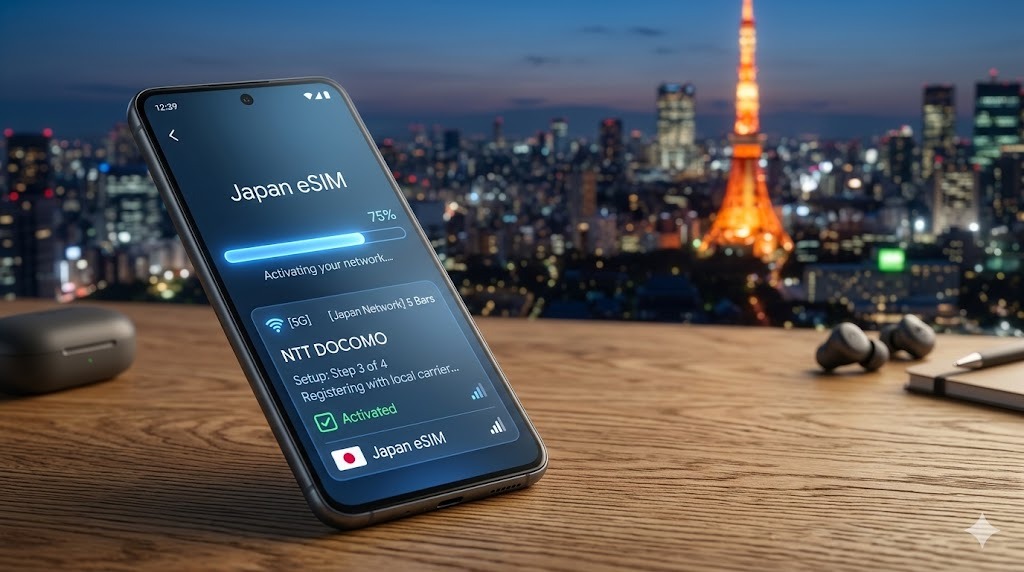
The good news? Japan is one of the most eSIM-friendly countries in the world. Major carriers like NTT Docomo, au, and SoftBank all support eSIM natively, meaning you can get blazing-fast 5G data without ever swapping a physical SIM card. You can purchase your eSIM from anywhere in the world, activate it before you board your flight, and be online the second you touch down at Narita or Haneda.
In this guide, Japan Life Lab’s editorial team breaks down the best eSIM cards for Japan in 2026 — comparing data plans, prices, speeds, and ease of use so you can make the right choice for your trip.
• Best Overall: Airalo (affordable, reliable, easy app)
• Best Unlimited: Holafly (no data cap worries)
• Best Flexibility: Nomad (hotspot allowed, top-up anytime)
• Best for Long Stays: IIJmio (real Japanese carrier, affordable monthly)
• Best Local Quality: eConnect Japan (premium Japan-focused support)
What is an eSIM? Quick Explainer for Japan Travelers
An eSIM (embedded SIM) is a digital SIM card built directly into your phone. Unlike a physical nano SIM that you slot in and out, an eSIM is programmed virtually. You purchase a data plan online, receive a QR code by email, scan it with your phone, and you’re connected — no trip to a carrier store, no waiting at the airport, no risk of losing a tiny plastic card.
Key advantages of eSIM for Japan travel:
- ✅ Instant activation: Set up your Japan data plan before you even leave home
- ✅ Keep your home SIM: Use your regular number for calls/texts while Japan data routes through the eSIM
- ✅ No SIM swapping: Your home SIM stays in your phone the whole trip
- ✅ Multiple profiles: Store up to 5-8 eSIM profiles on most modern phones
- ✅ Eco-friendly: No plastic packaging, no international shipping wait
eSIM-compatible devices for Japan: iPhone XS and later, Samsung Galaxy S20 and later, Google Pixel 3 and later, and most flagship Android phones from 2021 onward. Note: Some phones purchased in mainland China do not support eSIM due to local regulations — check your device specifications before purchasing.
How to Set Up a Japan eSIM (Step-by-Step)
- Check eSIM compatibility: Go to Settings → General → About → look for an “EID” (Embedded Identity Document) number
- Verify your device is carrier-unlocked: eSIMs from foreign carriers require an unlocked device
- Choose your plan and purchase: Select a provider and plan from our list below
- Receive QR code by email: Usually delivered within minutes of purchase
- Scan the QR code: Settings → Cellular → Add eSIM → Use QR Code (iOS) or Settings → Connections → SIM Manager → Add eSIM (Android)
- Set data preference: Enable the Japan eSIM as your primary data SIM, keep home SIM active for calls/texts
- Confirm activation: Open Maps or a website to verify data is working
💡 Pro tip: Activate your eSIM while still at home on WiFi. This ensures everything is configured correctly before you need data in Japan, and lets you troubleshoot any issues without time pressure at the airport.
🧮 Related tool: Japan Travel Data Calculator 2026
Enter your trip length and daily hours of maps, social media, streaming and video calls to see how many GB you need and which plan size to buy.
Top 5 Best eSIM Cards for Japan 2026
1. Airalo – Best Overall Japan eSIM 🏆
Airalo is one of the best-known eSIM marketplaces and our top pick for Japan travel in 2026. Their Japan eSIM plans — branded as “Moshi Moshi” — run on IIJ’s reliable network (which piggybacks on Docomo’s infrastructure), giving you solid 4G LTE and 5G coverage across the country, including rural areas and most mountain regions.
What sets Airalo apart is the combination of competitive pricing, an excellent mobile app for monitoring data usage, and near-instant delivery. You can purchase, install, and activate your eSIM in under five minutes, all within the Airalo app. Customer support is available 24/7 via live chat — a lifesaver if you run into activation issues at 2am before a red-eye flight to Tokyo.
For most tourists visiting Japan for one to two weeks, the 3GB plan at around $10.50 hits the sweet spot between price and data. Heavy data users (streaming, constant navigation, or occasional tethering) should opt for the 10GB plan. Airalo also allows you to top up additional data through the app without purchasing an entirely new eSIM profile.
| Plan | Data | Validity | Price |
|---|---|---|---|
| Starter | 1 GB | 7 days | $5.50 |
| Standard | 3 GB | 30 days | $10.50 |
| Plus | 5 GB | 30 days | $14.50 |
| Pro | 10 GB | 30 days | $22.00 |
| Mega | 20 GB | 30 days | $36.00 |
- Widely used eSIM marketplace with millions of users
- Instant QR code delivery, easy Airalo app with usage dashboard
- Runs on IIJ/Docomo network — excellent rural and mountain coverage
- Top up additional data anytime without a new eSIM profile
- 24/7 live chat customer support
- eSIM profile stored in-app for easy reinstallation if needed
- Data-only (no voice calls or SMS)
- Not truly unlimited — high-speed data ends after your cap
- Hotspot/tethering not available on all plans
2. Holafly – Best Unlimited Data eSIM for Japan 🔄
If you’re worried about burning through your data allowance — streaming YouTube on the shinkansen, uploading Instagram reels from the summit of Mount Fuji, or video calling home every evening — Holafly is your answer. Their Japan eSIM offers unlimited data with no hard cap on daily usage, making it the stress-free choice for data-hungry travelers.
Holafly operates on Japan’s SoftBank network, which provides strong 4G LTE coverage across major cities, tourist hotspots, and most transportation routes. While they advertise unlimited data, speeds may be throttled during peak congestion — in practice, most users report consistently fast speeds throughout their stay for normal activities.
The pricing model is day-based rather than data-based, which simplifies decision-making enormously: choose how many days you’ll be in Japan, pay once, and use as much data as you need. For a 7-day trip, the $22 plan works out to just $3.14 per day — comparable to a convenience store onigiri, but considerably more useful for navigation.
| Duration | Data | Price | Per Day |
|---|---|---|---|
| 5 days | Unlimited | $19 | $3.80 |
| 7 days | Unlimited | $22 | $3.14 |
| 10 days | Unlimited | $27 | $2.70 |
| 15 days | Unlimited | $33 | $2.20 |
| 30 days | Unlimited | $52 | $1.73 |
- Truly unlimited data — zero worrying about hitting a data cap
- Simple day-based pricing, not gigabyte-based
- SoftBank network — excellent urban and tourist area coverage
- 24/7 customer support via live chat
- eSIM delivery within 15 minutes of purchase
- Data-only — no voice calls or SMS
- Speeds may throttle during peak congestion periods
- More expensive per GB than data-limited plans for light users
- No hotspot/tethering allowed
3. Nomad eSIM – Best Flexible Data Plans 📱
Nomad has quietly become one of the most respected eSIM providers for Japan, particularly among travelers who want flexibility. Their Japan plans are powered by KDDI (au network) — Japan’s second-largest carrier — giving you reliable 4G LTE and expanding 5G coverage, with particularly strong signal across the Kansai region including Osaka, Kyoto, and Kobe.
What makes Nomad stand out is hotspot/tethering support on most plans — increasingly rare among tourist eSIM providers. If you’re traveling with a companion who doesn’t have their own data plan, or need to connect a tablet or laptop on the go, Nomad delivers that freedom. Their plans also support data rollover: unused data carries forward if you top up before your current plan expires, reducing waste.
The Nomad app features clean data usage tracking and straightforward top-up options. Their prices are competitive with Airalo, and they frequently run promotional discounts — always worth checking before you commit.
| Plan | Data | Validity | Price |
|---|---|---|---|
| Light | 1 GB | 15 days | $6 |
| Standard | 3 GB | 30 days | $13 |
| Traveler | 10 GB | 30 days | $28 |
| Power | 20 GB | 30 days | $42 |
- Hotspot/tethering allowed — share data with other devices
- Runs on au/KDDI network — strong Kansai region coverage
- Data rollover when you top up before plan expires
- Frequent promotional discounts available
- Clean app with detailed real-time data tracking
- Less brand recognition than Airalo or Holafly
- Data-only — no voice calls or SMS included
- Customer support hours are limited compared to competitors
4. IIJmio eSIM – Best eSIM for Long-Term Stays in Japan 📅
IIJ (Internet Initiative Japan) is one of Japan’s oldest and most respected telecom companies, and their IIJmio brand has been a go-to choice for long-term residents, working holiday visa holders, and expats since eSIM launched commercially in Japan. Unlike tourist-focused providers, IIJmio offers monthly subscription plans that work like a proper local Japanese SIM — because it essentially is one.
IIJmio eSIM plans run on NTT Docomo’s network — arguably Japan’s most comprehensive with the deepest rural penetration. If your itinerary includes off-the-beaten-path destinations like rural Tohoku, the Kii Peninsula, or remote mountain onsen towns where other networks struggle, IIJmio’s Docomo backbone gives you the best chance of maintaining signal.
The main caveat: IIJmio requires a Japanese payment method (credit card with a Japanese billing address) or purchase through a Japanese convenience store. For long-stay expats and working holiday makers with a Japanese bank account, this is completely fine. For short-term tourists, the other providers in this guide are far more practical.
| Plan | Data | Monthly Fee | Voice Calls |
|---|---|---|---|
| Data 2GB | 2 GB | ¥850 | No |
| Data 5GB | 5 GB | ¥990 | No |
| Voice 2GB | 2 GB | ¥1,650 | ✅ Yes |
| Voice 15GB | 15 GB | ¥2,310 | ✅ Yes |
- Runs on Docomo — known for strong rural and mountain coverage
- Monthly subscription ideal for stays of 3+ months
- Voice call plans available with a real Japanese phone number
- One of Japan’s most established and trusted ISPs since 1992
- Affordable yen-denominated pricing — no currency fluctuation surprises
- Data SIM plans support hotspot/tethering
- Requires Japanese credit card or convenience store payment
- Application interface and support primarily in Japanese
- Monthly contract — not practical for short tourist visits
- Initial setup may take 1–3 business days to process
5. eConnect Japan – Best Premium Local eSIM Experience 🇯🇵
eConnect Japan is a specialist connectivity provider focused exclusively on Japan, operated by a Japan-based team with deep expertise in the local telecom landscape. Their eSIM plans run on SoftBank’s network infrastructure, and their customer support is distinctly Japan-focused — you’re dealing with people who understand the nuances of connectivity across Japan’s varied geography, from Hokkaido ski resorts to Okinawan beach towns.
eConnect Japan particularly shines for business travelers who need reliable connectivity and transparent pricing with no hidden fees. They also offer physical SIM card options and pocket WiFi rentals alongside eSIM, making them versatile for travelers with older devices or those needing to connect multiple devices. Invoice support for business expenses is another useful differentiator.
While their per-GB pricing runs slightly higher than Airalo or Nomad, the peace of mind from Japan-focused support and guaranteed network quality makes eConnect Japan worth considering for trips where connectivity failure isn’t an option.
| Plan | Data | Validity | Price |
|---|---|---|---|
| Starter | 1 GB | 15 days | $7 |
| Standard | 3 GB | 30 days | $14 |
| Traveler | 5 GB | 30 days | $20 |
| Power | 10 GB | 30 days | $35 |
- Japan-based team with expert local support in English and Japanese
- SoftBank network — consistently strong urban and tourist coverage
- Transparent pricing with no hidden fees
- Also offers physical SIM cards and pocket WiFi rentals
- Business invoice support for expense claims
- Hotspot/tethering supported
- Slightly higher per-GB cost vs. Airalo or Nomad
- Less international brand recognition than larger competitors
- Data-only eSIM plans — no voice calling
Japan eSIM Comparison Table 2026
| Provider | Network | Best Plan | Price | Hotspot | Best For |
|---|---|---|---|---|---|
| 🏆 Airalo | IIJ/Docomo | 3GB/30d | $10.50 | ❌ | Most travelers |
| Holafly | SoftBank | Unlimited/7d | $22 | ❌ | Heavy data users |
| Nomad | au/KDDI | 3GB/30d | $13 | ✅ | Kansai / hotspot |
| IIJmio | Docomo | 5GB/month | ¥990/mo | ✅ | Long-term expats |
| eConnect JP | SoftBank | 5GB/30d | $20 | ✅ | Business travelers |
Staying 30+ Days? Unlimited-Data eSIMs for Long Stays
A 1–3GB travel eSIM is fine for a week, but for a month-long stay, a temporary return home, or daily tethering for work, you want an unlimited or high-cap plan. These are the five that hold up over 30 days (this section absorbs our former long-stay guide).
1. JAPAN & GLOBAL eSIM — Best Overall for Long Stays
Run by Japanese inbound-tourism company In-Plus, this service is built specifically for Japan. Truly unlimited data with 8, 15, 16, 20 and 30-day plans, starting from around ¥900. Setup is a simple QR code, tethering is allowed (great for laptops), and support includes 24/7 chat plus LINE support — with a full refund guarantee if you can’t connect. The 30-day unlimited plan is their best seller, and it’s one of the cheapest ways to get a month of unlimited data in Japan without a contract.
2. Holafly — Unlimited Specialist with Simple Pricing
The Spanish brand that made “unlimited only” its whole identity. Pick your number of days, pay, done — pricing scales day by day, so odd trip lengths (say, 23 days) are easy. Solid app, multilingual support. Tethering allowances have historically been limited on some plans, so check terms if hotspot use is critical.
3. Airalo — Best App Ecosystem & Budget Options
The world’s biggest eSIM store. Japan plans (Moshi Moshi) are cheap for light-to-moderate use, and the app makes managing multiple country eSIMs painless — ideal if Japan is one stop on a longer Asia trip. Unlimited-style options are newer here; data-capped bundles remain its sweet spot.
4. Ubigi — Most Stable Network for Work Calls
Operated by NTT-group company Transatel, Ubigi rides a premium Japanese network with consistently strong speeds — a favorite among business travelers. Monthly recurring plans suit repeat visitors; one-off plans cover single trips. If video meetings are non-negotiable, Ubigi’s stability is worth it.
5. Saily — Newcomer from the NordVPN Team
Built by Nord Security (NordVPN), Saily bundles security features like virtual location and ad blocking into its eSIM app. Japan plans are competitively priced, and the security angle is a genuine bonus on hotel and cafe Wi-Fi-heavy trips.
30-day unlimited plans at a glance:
| Service | Unlimited? | Max days | Tethering | Best for |
|---|---|---|---|---|
| JAPAN & GLOBAL eSIM | Yes (all plans) | 30 | Yes | Long stays, temporary returns |
| Holafly | Yes (specialist) | 90 | Limited | Odd-length trips |
| Airalo | Partly | 30 | Yes | Budget, multi-country trips |
| Ubigi | Some plans | Monthly | Yes | Business & video calls |
| Saily | Some plans | 30 | Yes | Security-conscious users |
eSIM vs Physical SIM vs Pocket WiFi: Which is Right for You?
| Factor | eSIM | Physical SIM | Pocket WiFi |
|---|---|---|---|
| Setup speed | ⚡ Instant (before landing) | 🛬 At airport kiosk | 🛬 Airport pickup/delivery |
| Keep home number | ✅ Yes (dual SIM) | ❌ Swap required | ✅ Yes |
| Multiple devices | ⚠️ Hotspot on some plans | ⚠️ Hotspot only | ✅ Up to 10 devices |
| Cost (7 days, 3GB) | ~$11 | ¥2,000–4,000 | ¥4,500–8,000 |
| Extra hardware | ✅ None needed | ✅ None needed | ❌ Extra device to charge |
| Lost/forgot risk | ✅ Zero risk | ⚠️ Small SIM can be lost | ❌ Lose device = no WiFi |
| Best for | Solo travelers, couples | Older eSIM-unsupported phones | Families, groups of 3+ |
Our verdict: For solo travelers and couples with modern smartphones released after 2019, eSIM wins on every dimension — cheaper, more convenient, no extra hardware to carry or charge. For families of 3+ or groups where everyone needs connectivity, a pocket WiFi rental may still be the most cost-effective choice despite the inconvenience of an extra device.
Frequently Asked Questions About Japan eSIM
Do I need to buy my Japan eSIM before arriving?
We strongly recommend purchasing and activating your Japan eSIM before departure. While it’s technically possible to purchase one after arrival using airport free WiFi, having data connectivity the moment you land — for navigation to your hotel, translation apps, and messaging — makes an enormous practical difference. Most providers deliver QR codes within minutes of purchase, so there’s no reason to wait.
Is my phone eSIM compatible for Japan?
Most flagship smartphones released from 2018 onward support eSIM: iPhone XS/XR and later, Samsung Galaxy S20 and later, Google Pixel 3 and later, and most premium Android phones from 2021. The key exception: phones purchased in mainland China typically have eSIM disabled due to local regulations. To check your device, look for an “EID” (Embedded Identity Document) number in Settings → General → About (iOS) or Settings → About Phone → Status. If EID is listed, your phone supports eSIM.
Will my Japan eSIM work on the shinkansen?
Yes, with brief interruptions inside long tunnels. All major eSIM providers use Japan’s top three carrier networks (Docomo, au/KDDI, SoftBank), and these networks provide good coverage on most shinkansen routes. The longest interruption is the Hokuriku Shinkansen tunnel under the Japan Alps (about 20 minutes). The Tokaido Shinkansen (Tokyo–Osaka) now offers in-tunnel 4G coverage on Docomo and au networks for most of the journey.
Can I make phone calls with a Japan eSIM?
Most tourist-focused eSIM plans (Airalo, Holafly, Nomad, eConnect) are data-only — no traditional voice calls or SMS. This is fine for most travelers since you can make calls and send messages via WhatsApp, LINE, FaceTime, Google Meet, or Zoom over your data connection. If you need a local Japanese phone number for reservations, bank verification, or business purposes, IIJmio’s voice plans provide this — though they require a Japanese payment method.
What networks do Japan eSIMs use, and which is best?
Japan has three long-established networks (plus the newer Rakuten Mobile): NTT Docomo (the largest; known for rural/mountain coverage), au/KDDI (second largest), and SoftBank (third largest; strong in cities). For general Japan travel covering both cities and rural destinations, Docomo-based eSIMs (Airalo via IIJ, IIJmio) provide the most comprehensive coverage. For Osaka/Kyoto/Kobe-focused trips, au (Nomad) is excellent. All three networks are strong in Tokyo, Osaka, Kyoto, and major tourist areas.
How much data do I need for a week in Japan?
As a general guide: 1–2GB suits light users who mainly use Maps for navigation and occasional messaging. 3–5GB covers moderate users (Maps running continuously, social media browsing, some photo uploads). 10GB+ works for heavy users streaming video, video calling daily, or content creators uploading regularly. Unlimited is the stress-free choice if you don’t want to think about it at all. A typical sightseeing day in Japan with Google Maps navigation runs about 500MB–1GB.
📶 Top pick: Voye Global eSIM for Japan
A strong all-rounder: Voye Global offers Japan eSIMs with nationwide 4G/5G, transparent pricing, instant QR activation and 24/7 multilingual support. Delivered by email in minutes — and it works in 130+ countries if you travel beyond Japan.
See Voye eSIM Plans →Our Verdict: The Best eSIM for Japan in 2026
For the vast majority of travelers visiting Japan in 2026, Airalo remains our top recommendation — combining competitive pricing, an excellent app experience, and the reliability of Japan’s Docomo network via IIJ. Their 3GB 30-day plan at $10.50 comfortably covers most one-to-two week trips, and the ability to top up in-app removes any anxiety about running out of data mid-trip.
If you’re a heavy data user who wants complete peace of mind about consumption, Holafly’s unlimited plans are worth the slight premium — especially for trips of 10+ days where the per-day cost drops significantly. And if you’re planning a longer stay in Japan — working holiday, extended business trip, or relocation — IIJmio on Japan’s premier Docomo network is the clear professional’s choice.
Whichever provider you choose, purchase your Japan eSIM before you board your flight. Future-you, stepping off the plane at Narita and immediately pulling up Google Maps to navigate to your hotel, will be profoundly grateful for this small act of preparation.
🏆 Quick Picks Summary
- Best Overall: Airalo — 3GB from $10.50, Docomo network, 24/7 support
- Best Unlimited: Holafly — from $19/5 days, SoftBank network
- Best Hotspot: Nomad — 3GB from $13, tethering allowed, au/KDDI network
- Best Long-Term: IIJmio — from ¥850/month, voice plans available, Docomo network
- Best Business: eConnect Japan — Japan-focused premium support, invoice available
🗾 More Japan Life Guides
🇯🇵 Looking for Japanese Gadget Reviews?
Check ガジェナビ — a Japanese-language gadget comparison site
175+ in-depth reviews of Japanese electronics, home appliances & smart devices. Amazon Japan links included.
Visit ガジェナビ (Japanese) →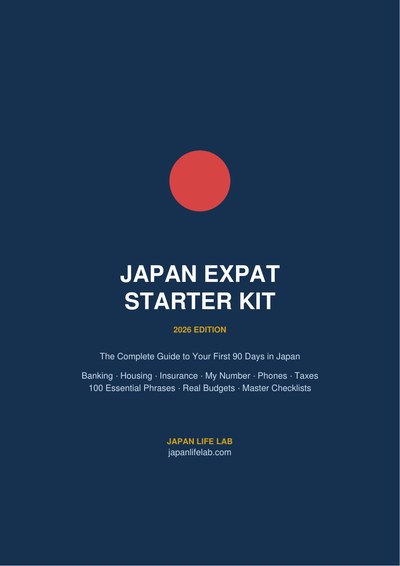
Japan Expat Starter Kit 2026 PDF guide
Your first 90 days in Japan, step by step: 17 chapters · 24 pages · 100 phrases in Japanese script · 40 kanji · printable checklists. Bank account, My Number, health insurance, apartment, phone, taxes & pension.
$9.99 $4.99 current price
📥 Get the kit →📄 Read 5 pages free: contents + Chapter 2
⚡ Instant PDF download · 🛡️ 30-day money-back guarantee · 🔄 Free 2026 updates
🛒 Ready to Buy? Shop These in Japan!
Get fast delivery across Japan — including same-day in major cities
Practical guides for life and travel in Japan — free, about once a week. No spam, unsubscribe anytime.
☕ Enjoying our Japan guides?
If this article helped you, you can support our work with a coffee!
Leave a Reply