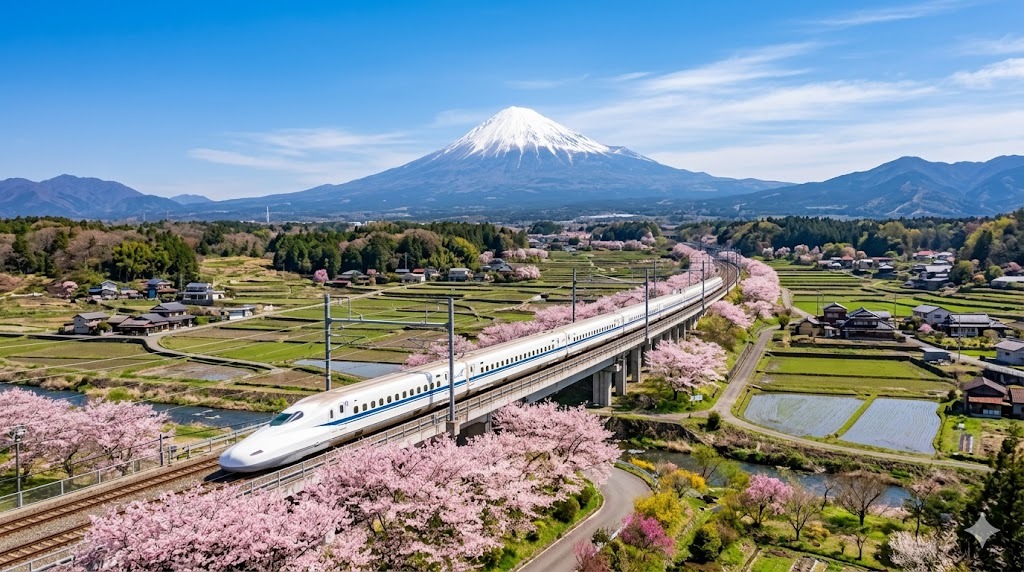
What Is the Japan Rail Pass?
The Japan Rail Pass (JR Pass) is an unlimited travel pass for foreign tourists visiting Japan. It covers most JR (Japan Railways) trains nationwide, including the iconic Shinkansen bullet trains, local JR lines, some JR buses, and even the JR Ferry to Miyajima. For travelers planning to visit multiple cities, it can save you a significant amount of money compared to buying individual tickets.
However, the JR Pass is not always the best option. Depending on your itinerary, a combination of regional passes or IC card payments may actually be cheaper. In this guide, we break down everything you need to know to decide if the JR Pass is right for your trip in 2026.
Types of Japan Rail Pass
1. Nationwide JR Pass
The most popular option for travelers seeing multiple regions of Japan. The nationwide pass covers JR trains across the entire country, including Shinkansen (except Nozomi and Mizuho on Tokaido/Sanyo lines), JR buses, and some JR ferries.
| Duration | Ordinary (Adult) | Green Car (Adult) | Child (6–11) |
|---|---|---|---|
| 7 Days | ¥50,000 | ¥70,000 | ¥25,000 |
| 14 Days | ¥80,000 | ¥110,000 | ¥40,000 |
| 21 Days | ¥100,000 | ¥140,000 | ¥50,000 |
Note: Prices as of 2026. The JR Pass cannot be used on Nozomi or Mizuho Shinkansen — you must take the Hikari or Sakura instead, which are slightly slower but still very fast.
2. Regional JR Passes
If you are focusing on one area of Japan, a regional pass offers better value. Popular regional passes include:
- JR East Pass (Tohoku area) — Great for Tokyo, Nikko, and Tohoku region trips.
- Kansai Area Pass — Covers Osaka, Kyoto, Nara, and Kobe.
- JR West Sanyo-San’in Area Pass — Ideal for Hiroshima, Miyajima, and western Honshu.
- Kyushu Rail Pass — Perfect for exploring Fukuoka, Nagasaki, and Kagoshima.
- Hokkaido Rail Pass — For Sapporo, Hakodate, and Hokkaido adventures.
Is the JR Pass Worth It? Cost Comparison
The best way to know if the JR Pass is worth it is to add up the cost of your planned rail journeys. Here are some popular routes and their standard single-trip prices:
| Route | Single Ticket (one way) | Round Trip |
|---|---|---|
| Tokyo → Kyoto (Hikari Shinkansen) | ¥13,920 | ¥27,840 |
| Kyoto → Hiroshima | ¥10,560 | ¥21,120 |
| Hiroshima → Fukuoka (Hakata) | ¥5,940 | ¥11,880 |
| Tokyo → Osaka (Hikari) | ¥14,720 | ¥29,440 |
| Tokyo → Sapporo (Hokkaido Shinkansen) | ¥22,690 | ¥45,380 |
Example: If you plan to travel Tokyo → Kyoto → Hiroshima → Fukuoka and back to Tokyo, your total without a pass would be around ¥70,000–¥80,000 — which already exceeds the 7-day JR Pass price of ¥50,000. In this case, the pass is absolutely worth it.
On the other hand, if you are staying in only one city (like only Tokyo or only Osaka), the JR Pass is unlikely to be cost-effective. Use an IC card like Suica instead.
How to Buy the Japan Rail Pass
Option 1: Buy Online Before Your Trip (Recommended)
The easiest and most cost-effective method is to purchase your JR Pass online before leaving your home country. You will receive an Exchange Order or a physical pass by mail, which you then activate at a JR ticket office upon arrival in Japan.
Official and authorized sellers include:
- JR Pass Official Website (japanrailpass.net)
- Japan Experience (japan-experience.com)
- Klook and KKday (often offer discounts)
Option 2: Buy in Japan
Since 2023, it is possible to purchase the JR Pass at major JR ticket offices inside Japan (Narita Airport, Haneda Airport, Tokyo Station, Shin-Osaka, etc.). However, the price is the same as online, and the convenience of having it ready before you land makes the online route preferable for most travelers.
How to Activate and Use Your JR Pass
Step 1: Activation at a JR Ticket Office
Upon arriving in Japan, bring your Exchange Order and passport to any major JR ticket office (Midori no Madoguchi). Tell the staff your desired activation date — you can start it up to 30 days after purchase, so plan wisely. They will hand you the actual JR Pass card.
Step 2: Passing Through the Gates
Do not use the automatic IC card gates. Instead, always use the staffed gate (有人改札, yūjin kaisatsu) and show your pass to the station staff. They will wave you through after checking the expiry date.
Step 3: Reserving Shinkansen Seats
Most Shinkansen trains offer both reserved and unreserved cars. With the JR Pass, you can ride unreserved cars for free, or make free seat reservations at a JR ticket office or at a green ticket machine (みどりの券売機). During peak seasons (Golden Week, Obon, New Year), it is strongly recommended to reserve your seats in advance.
Top 5 Routes to Use with Your JR Pass
1. The Classic Golden Route: Tokyo → Kyoto → Osaka
The most popular itinerary in Japan. Tokyo to Kyoto takes about 2 hours 15 minutes on the Hikari Shinkansen. Add Nara and Hiroshima as day trips, and you have a fantastic 7-day trip fully covered by the JR Pass.
2. Tokyo to Hiroshima and Miyajima
Travel from Tokyo to Hiroshima (about 4 hours on Hikari), then take the JR Sanyo Line to Miyajimaguchi and the JR Ferry to Miyajima Island. The floating torii gate of Itsukushima Shrine is a must-see, and the JR Ferry is included in your pass.
3. Osaka to Kyushu: Fukuoka, Nagasaki, Kumamoto
From Osaka or Hiroshima, the Shinkansen takes you to Hakata Station in Fukuoka. From there, explore Nagasaki (by JR Nagasaki Line), Kumamoto, and Kagoshima with the Kyushu Shinkansen — all included in the nationwide JR Pass.
4. Tokyo to Hokkaido via Hokkaido Shinkansen
Since 2016, the Hokkaido Shinkansen connects Shin-Hakodate-Hokuto to the main Tohoku Shinkansen network. Travel from Tokyo to Hakodate in about 4 hours. Note: Sapporo is only accessible by limited express train from Hakodate (about 3.5 hours), also covered by the JR Pass.
5. The Scenic Sanin Coast and San’in Loop
A lesser-known gem: travel through Tottori (sand dunes), Matsue (castle town), and Izumo (one of Japan’s oldest shrines) along the scenic San’in coast. All reachable by JR trains and ideal for off-the-beaten-path explorers.
JR Pass Tips and Frequently Asked Questions
Can I use the JR Pass on the Tokyo Metro or Osaka Subway?
No. The JR Pass only covers JR-operated trains. Tokyo Metro, Toei Subway, Osaka Metro, and other private rail lines are not included. Use an IC card (Suica or ICOCA) for these.
Can I use the JR Pass on the Nozomi or Mizuho Shinkansen?
No. The fastest Shinkansen trains — Nozomi (on Tokaido/Sanyo line) and Mizuho — are not covered. Take the Hikari or Sakura instead, which are only slightly slower.
Can I use the JR Pass on airport trains?
Partially. The JR Narita Express (N’EX) from Narita Airport to Tokyo is fully covered. However, Haneda Airport’s Tokyo Monorail is also JR-operated and covered. The Kansai Airport Haruka express to Kyoto and Osaka is also included for JR Pass holders.
Is the JR Pass available for expats living in Japan?
Unfortunately, no. The JR Pass is only available to foreign tourists visiting Japan on a “Temporary Visitor” visa stamp. If you are living in Japan on a work, student, or residence visa, you are not eligible. Consider regional passes or standard rail pricing instead.
What happens if I lose my JR Pass?
Lost passes cannot be replaced or refunded. Keep your pass in a safe place, and consider photographing the pass details as a backup record.
Summary: Should You Buy the JR Pass in 2026?
The JR Pass is an excellent investment if your trip covers multiple regions — especially if you plan to ride the Shinkansen between major cities. For a classic 7-day Tokyo-Kyoto-Hiroshima itinerary, the pass pays for itself easily. For single-city trips or short urban stays, skip it and use an IC card instead.
Plan your route first, add up the individual ticket prices, and compare. If the total exceeds ¥50,000, the 7-day pass is your best bet. Happy travels in Japan!
Leave a Reply