This article was created with AI writing assistance (ChatGPT, Claude, etc.). Product selection, specifications, and reviews are verified by the Japan Life Lab editorial team.
This article contains promotional / affiliate links.
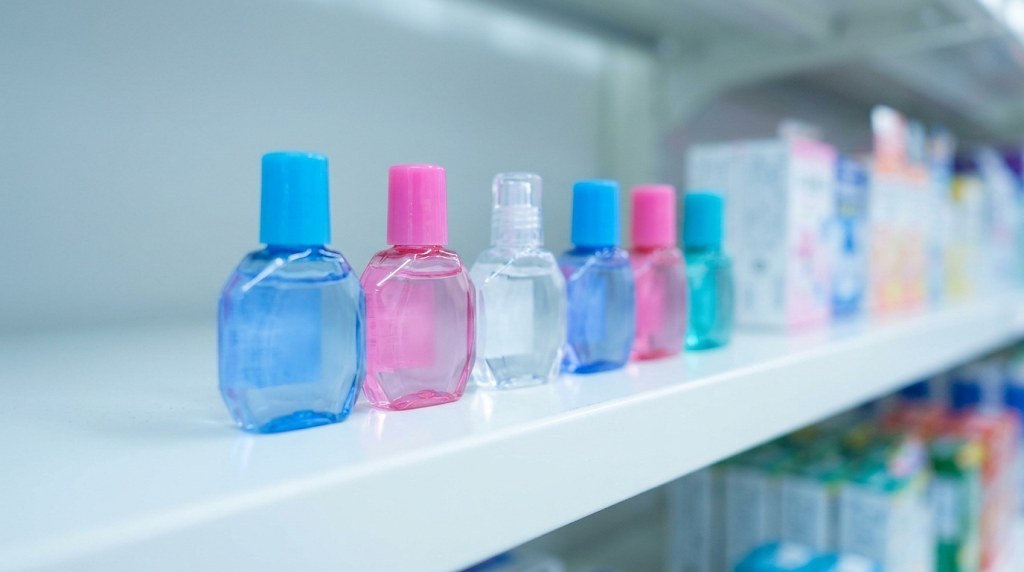
Japanese drugstores have a whole wall of eye drops (目薬, megusuri). Some give a strong icy “kick”. Some are made for contact lenses. Some fight pollen. The boxes are almost all in Japanese, so choosing is hard.
This guide helps you read the box. Then we show 6 picks and one eye wash, with ingredients and prices. We also cover safety, flights and the new tax-free system from 1 November 2026. We checked maker pages, inserts and prices on 29 October 2026.
📌 What you will learn
In a hurry? For tired or red eyes, サンテFXネオ (from ¥272) is the classic. For soft contact lenses, choose ロートCキューブ プレミアムクリア or ソフトサンティア. For pollen itch, ロートアルガード クリアブロックZ. Check three words on the box: 清涼感 (cooling), コンタクト (lenses) and 第2類/第3類 (risk class). Use red-eye drops only now and then.
- How to read a Japanese eye-drop box
- Our 6 picks + 1 eye wash
- Comparison table: cooling, lenses, price
- Safety: use them the right way
- Flights and tax-free shopping (new from 1 Nov 2026)
- Frequently asked questions
- The short version
※ Prices are the lowest shop prices on 価格.com (kakaku.com) on 29 October 2026; shipping may be extra. Facts from maker pages, package inserts and government pages. This is not medical advice: ask a pharmacist or doctor if you are unsure.
Prime members get fast, free delivery on millions of items, Prime Video and members-only deals. Eligible new members can try it free for 30 days.
Start your free 30-day Prime trial →Ages 18–24? See Prime for Young Adults
Paid links. As an Amazon Associate, Japan Life Lab earns from qualifying purchases. Trial eligibility and terms are set by Amazon.
How to read a Japanese eye-drop box
Start with your symptom: tired or red eyes, itchy eyes, dry eyes, or contact lenses. Each needs a different type of drop. If you are not sure, ask the pharmacist or registered seller in the store. Then check these points on the box.
1. Risk class: 第2類 or 第3類
Japan sorts over-the-counter (OTC) medicines by risk, and the class is printed on the box. According to the Ministry of Health, Labour and Welfare (厚生労働省):
- 第2類医薬品 (Class 2): relatively high risk. A pharmacist or registered seller (登録販売者) sells it and should explain it.
- 第3類医薬品 (Class 3): relatively low risk.
- 第1類 and 要指導医薬品 are stricter classes. A pharmacist must be involved.
Most eye drops are Class 2 or 3. In the makers’ lists, drops with a redness reliever or an antihistamine are usually Class 2. Contact-lens drops and artificial tears are usually Class 3. For a Class 2 drop, read the 相談すること (“consult before use”) section, or ask staff.
2. Cooling level: 清涼感
Many boxes show a 清涼感 (seiryōkan) number with stars. It shows how cool and “stingy” the drop feels. A bigger number means a stronger feeling. A low number means a gentle drop.
- Santen (参天製薬): scale 0–5. Some drops are “5+”.
- Rohto (ロート製薬): 0–5 for most drops, but 0–8 for the ロートジー (Rohto Zi) and ロートCキューブ (C Cube) lines and a few others.
The scales are different, so compare cooling only within one brand. First-timers and people with sensitive eyes should choose 0–3. People who love a strong kick can choose Santen 5 or Rohto Zi 8.
3. Contact lenses: コンタクト, ソフト, ハード
If you wear lenses, this is the most important check. すべてのコンタクトレンズ means all lens types. ソフト is soft and ハード is hard. ハード対応 means hard lenses only, not soft. 装着したまま means you can use it while wearing lenses. Colored lenses (カラーコンタクト) are often excluded.
Many popular drops are for hard lenses only. Santen says: after a drop not made for lenses, wait at least 5 minutes before you put your lenses back in.
4. Preservatives: 防腐剤
Most bottles contain a preservative, such as ベンザルコニウム塩化物 (benzalkonium chloride) or クロロブタノール (chlorobutanol). If you use drops often or have sensitive eyes, look for 防腐剤無添加 or 防腐剤フリー (preservative-free).
5. Red eyes: 充血
Drops for red eyes often contain 塩酸テトラヒドロゾリン (tetrahydrozoline). It reduces redness in the white of the eye. Use these drops only now and then. The サンテFXネオ insert warns that excessive use may cause abnormal glare or even more redness.
6. Dry eyes: ドライアイ and 人工涙液
For dry eyes, look for 人工涙液 (artificial tears). These are simple salt solutions close to natural tears, with no cooling.
Label words: a quick glossary
| Japanese on the box | English meaning |
|---|---|
| 清涼感 | Cooling / sting strength |
| 目の疲れ / 疲れ目 | Eye fatigue |
| 結膜充血 / 充血 | Red eyes |
| 目のかゆみ / 花粉 | Itchy eyes / pollen |
| ドライアイ / 人工涙液 | Dry eye / artificial tears |
| コンタクト / ソフト / ハード | Contact lenses / soft / hard |
| ハード対応 | Hard lenses only |
| 装着したまま | While wearing lenses |
| 防腐剤無添加 / 防腐剤フリー | Preservative-free |
| 用法・用量 | How to use / dose (e.g. 1回2~3滴、1日5~6回 = 2–3 drops, 5–6 times a day) |
| 洗眼薬 | Eye wash (cup type) |
| 相談すること | Consult before use |
| 使用期限 | Expiry date |
| 第2類 / 第3類医薬品 | Risk class 2 / 3 |
※ From Santen, Rohto and Kobayashi product pages and inserts.
Tip: Santen publishes product information in English, Korean and Chinese for most of its OTC eye drops, including サンテFXネオ and ソフトサンティア.
Our 6 picks + 1 eye wash
These drops cover tired eyes, red eyes, contact lenses, dry eyes and pollen. All are current products on the makers’ websites. Prices are the lowest on 価格.com on 29 October 2026. Show the Japanese name to staff if you cannot find one.
1. サンテFXネオ (Sante FX Neo): the classic for tired eyes
A classic all-round drop from Santen with strong cooling. Its uses include eye fatigue, redness, itching, UV or snow glare, and discomfort with hard lenses. In a tourist ranking by 訪日ラボ (Payke scan data, September 2026), it was #1 among all items at the Welpark drugstore chain. The insert says not to use it with soft lenses in. Use it as soon as possible after opening.
| Japanese name | サンテFXネオ |
|---|---|
| Class | 第2類医薬品 |
| Cooling | 5 (Santen 0–5) |
| Contact lenses | Hard only. Not with soft lenses in |
| Key ingredients | ネオスチグミンメチル硫酸塩 0.005%, タウリン 1.0%, L-アスパラギン酸カリウム 1.0%, 塩酸テトラヒドロゾリン 0.05%, クロルフェニラミンマレイン酸塩 0.03%, イプシロン-アミノカプロン酸 1.0% |
| Volume | 12 mL |
| Price | from ¥272 (価格.com) |
| Best for | A “wake-up” feel, without soft lenses |
✅ Pros
- Very cheap and easy to find
- Redness reliever and antihistamine
- English leaflet from Santen
⚠️ Cons
- Strong sting for first-timers
- Two preservatives
- Overuse can cause glare or more redness
2. ロートジーb (Rohto Zi b): maximum cooling
Rohto’s drop with the top cooling level, 8 out of 8. It is very intense, so it is not a good first purchase. It also has a redness reliever. Hard-lens discomfort is listed; soft lenses are not mentioned, so do not assume it is safe with them.
| Japanese name | ロートジーb |
|---|---|
| Class | 第2類医薬品 |
| Cooling | 8 (Rohto 0–8) |
| Contact lenses | Hard listed; soft not stated |
| Key ingredients | 塩酸テトラヒドロゾリン 0.05%, ネオスチグミンメチル硫酸塩 0.003%, 硫酸亜鉛水和物 0.05%, クロルフェニラミンマレイン酸塩 0.03%, ビタミンB6 0.1%, L-アスパラギン酸カリウム 1% |
| Volume | 12 mL |
| Price | from ¥305 (価格.com); suggested ¥605 |
| Best for | Experienced users who love an icy kick |
✅ Pros
- The strongest Rohto cooling
- Low price
⚠️ Cons
- Very intense
- Redness reliever: occasional use only
3. ロートリセb (Rohto Lycée b): small bottle for red eyes
A small 8 mL bottle for red, tired eyes that fits in a handbag. Cooling is medium. The box says ハード対応 (hard lenses only). A similar option is サンテ ボーティエ (Santen, Class 2, cooling 3, 12 mL, same redness reliever).
| Japanese name | ロートリセb |
|---|---|
| Class | 第2類医薬品 |
| Cooling | 3 (Rohto 0–5) |
| Contact lenses | ハード対応 (hard only) |
| Key ingredients | 塩酸テトラヒドロゾリン 0.05%, 硫酸亜鉛水和物 0.1%, ビタミンB12 0.006%, クロルフェニラミンマレイン酸塩 0.01%, コンドロイチン硫酸エステルナトリウム 0.5%, L-アスパラギン酸カリウム 1% |
| Volume | 8 mL |
| Price | from ¥449 (価格.com); suggested ¥770 |
| Best for | Occasional redness at the office or on a trip |
✅ Pros
- Compact for a bag
- Mild to medium sting
⚠️ Cons
- High price per mL
- Redness reliever: occasional use only
4. ロートCキューブ プレミアムクリア (Rohto C Cube Premium Clear): for soft lenses
A drop for lens wearers. It works with all contact lenses except colored lenses, and also without lenses. It has no redness reliever, and cooling is light. The same line goes from cooling 0 to 8+. The additive list includes 塩酸ポリヘキサニド, which Rohto does not label as a preservative.
| Japanese name | ロートCキューブ プレミアムクリア |
|---|---|
| Class | 第3類医薬品 |
| Cooling | 3 (Rohto 0–8) |
| Contact lenses | All types except colored |
| Key ingredients | ネオスチグミンメチル硫酸塩 0.005%, ビタミンA 30,000 units/100 mL, 天然型ビタミンE 0.05%, タウリン 1%, コンドロイチン硫酸エステルナトリウム 0.1% |
| Volume | 18 mL |
| Price | from ¥498 (価格.com); suggested ¥825 |
| Best for | Daily soft-lens wearers |
✅ Pros
- Soft and hard lenses
- Large bottle, good value
⚠️ Cons
- Not for colored lenses
5. ソフトサンティア (Soft Santear): preservative-free artificial tears
Artificial tears from Santen, close to natural tears. It is preservative-free and does not sting. You can use it with all lens types while wearing them. It does nothing for itching or redness. Use each small bottle within about 10 days of opening. Children may use it under a parent’s supervision.
| Japanese name | ソフトサンティア |
|---|---|
| Class | 第3類医薬品 |
| Cooling | 0 (Santen) |
| Contact lenses | All types (soft, O2, hard, disposable), while wearing |
| Ingredients | 塩化カリウム 0.1%, 塩化ナトリウム 0.4%. 防腐剤無添加 |
| Volume | 5 mL × 4 bottles |
| Price | from ¥482 (価格.com) |
| Best for | Dry eyes, long flights, sensitive eyes |
✅ Pros
- Preservative-free
- All lens types
- English leaflet from Santen
⚠️ Cons
- No effect on itch or redness
- About 10 days per bottle after opening
6. ロートアルガード クリアブロックZ (Rohto Alguard Clear Block Z): pollen itch
A drop for itchy eyes from pollen; Japan’s cedar pollen season is in spring. It combines an anti-allergy ingredient, an antihistamine and an anti-inflammatory. Not for children under 7. Stop and ask a doctor or pharmacist if it does not help after 2 days. Contact-lens use is not stated; for lens wearers, Rohto sells アルガード コンタクトa (Class 3).
| Japanese name | ロートアルガード クリアブロックZ |
|---|---|
| Class | 第2類医薬品 |
| Cooling | 4 (Rohto 0–5) |
| Contact lenses | Not stated |
| Key ingredients | クロモグリク酸ナトリウム 1%, クロルフェニラミンマレイン酸塩 0.03%, プラノプロフェン 0.05%, コンドロイチン硫酸エステルナトリウム 0.5% |
| Volume | 13 mL |
| Price | from ¥980 (価格.com); suggested ¥1,980 |
| Best for | Pollen allergy in spring |
✅ Pros
- Three ingredient types for pollen itch
⚠️ Cons
- Most expensive pick
- Age 7 and over only
Extra: アイボン (Eyebon), an eye wash
An eye wash (洗眼薬) is not an eye drop. You fill a small cup, hold it to your eye and blink. Kobayashi’s アイボン is Class 3 and preservative-free. Use 5 mL per wash, 3–6 times a day. Kobayashi says overdoing it is not good. Remove contact lenses first and wait about 10–15 minutes before putting them back. Do not share the cup. If a doctor has diagnosed dry eye, ask first.
| Japanese name | アイボン (アイボンd) |
|---|---|
| Class | 第3類医薬品 |
| Contact lenses | Remove before use |
| Price | 500 mL from ¥602; 100 mL from ¥478 (価格.com) |
Comparison table: cooling, lenses, price
| Product | Class | Cooling | Contact lenses | Red-eye ingredient | Price from |
|---|---|---|---|---|---|
| サンテFXネオ | 第2類 | 5 / 5 | Hard only | Yes | ¥272 |
| ロートジーb | 第2類 | 8 / 8 | Hard; soft not stated | Yes | ¥305 |
| ロートリセb | 第2類 | 3 / 5 | Hard only | Yes | ¥449 |
| Cキューブ プレミアムクリア | 第3類 | 3 / 8 | All except colored | No | ¥498 |
| ソフトサンティア | 第3類 | 0 | All types | No | ¥482 |
| アルガード クリアブロックZ | 第2類 | 4 / 5 | Not stated | No | ¥980 |
| アイボン (eye wash) | 第3類 | — | Remove first | No | ¥602 |
※ Santen and Rohto use different cooling scales. Prices: lowest on 価格.com on 29 October 2026; shipping may be extra.
Safety: use them the right way
Eye drops are medicines. Read the insert (添付文書) in the box.
⚠️ Ask a pharmacist or doctor first if…
- You are under a doctor’s treatment, including other eye medicines
- You have had an allergy to a medicine
- You have severe eye pain
- You have been diagnosed with glaucoma (緑内障)
- You are pregnant (the maker pages we checked do not mention pregnancy)
When to stop
Stop at once and consult a doctor or pharmacist if you get a rash, or if your eyes become red, itchy, swollen or painful after use. Also stop if there is no improvement after the days on the label: 5–6 days for most general drops, 2 days for アルガード クリアブロックZ, and about 2 weeks for ソフトサンティア.
✅ Good habits
- Do not share your bottle with anyone
- Do not touch the tip to your eye or lashes. Do not use cloudy liquid
- Use red-eye drops only now and then
- ソフトサンティア: use within about 10 days of opening. Respect the expiry date (使用期限)
- Keep away from sun and heat. Do not leave drops in a car
- Children: use under a parent’s supervision. アルガード クリアブロックZ is not for under-7s
How to put drops in: Santen says one drop is enough. Then close your eyes for 1–5 minutes, or press lightly on the inner corner of the eye.
Flights and tax-free shopping (new from 1 Nov 2026)
Taking eye drops on a plane
On international flights from Japan, cabin liquids must be in containers of 100 mL or less, in one clear bag of 1 L or less. Medicines are exempt for the amount you need on board. Japan’s transport ministry lists OTC eye drops as medicines, and contact-lens solutions too. You must tell the security officer about them.
Eye-drop bottles are only 5–18 mL. A 500 mL アイボン bottle is too big, so put it in checked baggage. Your destination has its own rules. Keep drops in the original box with the leaflet, carry personal-use amounts, and check that country’s customs or health authority.
The new tax-free system from 1 November 2026
From 1 November 2026, tax-free shopping becomes a refund system. You pay the price with tax at the shop. When you leave Japan, customs confirms the goods are leaving. Then the shop refunds the tax.
⚠️ Tax-free points
- Minimum spend: ¥5,000 (before tax, combined) at one shop
- No more sealed bags for consumables
- Customs must confirm the goods within 90 days of purchase, before you check in your bags
- If one item on a purchase record is missing, no item on that record is tax-free
- Do not open tax-free eye drops before you leave Japan. Buy drops for your trip separately
Frequently asked questions
What do 第2類医薬品 and 第3類医薬品 mean?
They are risk classes for OTC medicines. Class 2 means relatively high risk; a pharmacist or registered seller should explain it. Class 3 means relatively low risk. Drops with a redness reliever or antihistamine are usually Class 2.
What does the 清涼感 number mean?
It shows how cool and “stingy” the drop feels. Santen uses 0–5. Rohto uses 0–5 for most drops, but 0–8 for ロートジー and Cキューブ. 0 means no sting. Compare only within one brand.
Can I use Japanese eye drops with soft contact lenses?
Only if the box says ソフト or すべてのコンタクトレンズ, like ソフトサンティア or Cキューブ プレミアムクリア. The サンテFXネオ insert says not to use it with soft lenses in. After a non-lens drop, wait at least 5 minutes before putting lenses back in.
Are red-eye drops safe to use every day?
They are for occasional use. Santen’s insert warns that overuse can cause abnormal glare or even more redness. If there is no improvement after 5–6 days, stop and see a doctor or pharmacist.
Can I take eye drops on a plane?
Yes. On international flights from Japan, medicines, including OTC eye drops, are exempt from the 100 mL rule for the amount you need, but you must declare them at security. Check the rules of your destination too.
Can I buy eye drops tax-free?
Yes, if you are eligible and spend at least ¥5,000 (before tax) at one shop. From 1 November 2026, you get the tax back after customs confirms the goods leave Japan. Keep the drops unopened, or you may lose the refund for the whole receipt.
The short version
Choose by symptom, then check 清涼感 (cooling), コンタクト (lenses) and the risk class. Tired eyes: サンテFXネオ (not with soft lenses). Extreme cooling: ロートジーb. Occasional redness: ロートリセb. Soft lenses: Cキューブ プレミアムクリア or ソフトサンティア, also best for dry eyes. Pollen: アルガード クリアブロックZ (age 7+). Do not overuse red-eye drops or share bottles. Ask a pharmacist if you have glaucoma. Declare drops at airport security, and keep tax-free items unopened.
🔥 Editor’s Picks for Life & Travel in Japan
Japan Expat Starter Kit 2026 PDF guide
Your first 90 days in Japan, step by step: 17 chapters · 24 pages · 100 phrases in Japanese script · 40 kanji · printable checklists. Bank account, My Number, health insurance, apartment, phone, taxes & pension.
$9.99 $4.99 current price
📥 Get the kit →📄 Read 5 pages free: contents + Chapter 2
⚡ Instant PDF download · 🛡️ 30-day money-back guarantee · 🔄 Free 2026 updates
🛒 Ready to Buy? Shop These in Japan!
Get fast delivery across Japan — including same-day in major cities
Practical guides for life and travel in Japan — free, about once a week. No spam, unsubscribe anytime.
☕ Enjoying our Japan guides?
If this article helped you, you can support our work with a coffee!
Leave a Reply