This article was created with AI writing assistance (ChatGPT, Claude, etc.). Product selection, specifications, and reviews are verified by the Japan Life Lab editorial team.
This article contains promotional / affiliate links.
This article was created with AI writing assistance (ChatGPT, Claude, etc.). Product selection, specifications, and reviews are verified by the Japan Life Lab editorial team.
📌 What you will learn
You do not have to read it all — jump to what you need.
- The Truth About Japan’s Costs in 2026
- Japan Cost of Living 2026: The Quick Verdict
- Food Costs in Japan 2026
- Accommodation Costs in Japan 2026
- Transport Costs in Japan 2026
- Entertainment & Activities in Japan 2026
- Monthly Living Costs in Japan 2026 (Expat Budgets)
※ Start wherever fits your situation.
The Truth About Japan’s Costs in 2026
✅ Updated for July 2026 — prices and product information refreshed.
Japan has a reputation as an expensive destination — ryokan stays, omakase sushi, bullet trains — but that’s only half the story. The reality in 2026 is far more nuanced. After years of currency fluctuation that made Japan remarkably affordable for foreign visitors (the yen hit record lows in 2024), the pendulum has swung somewhat — but Japan remains one of the best-value developed countries for travelers and expats who know where to spend and where to save.
This guide breaks down exactly what things cost in Japan in 2026, across every major category: accommodation, food, transport, entertainment, and daily living. Whether you’re planning a 2-week trip, a gap year, or a permanent move, these real numbers will help you budget accurately — and stop you from either over-panicking or under-preparing.
Japan Cost of Living 2026: The Quick Verdict
| Category | Budget Level | Verdict |
|---|---|---|
| Food | ¥500–¥3,000/meal | ✅ Very cheap if you eat local |
| Accommodation | ¥2,000–¥15,000/night | ⚠️ Mid-range, wide variation |
| Transport | ¥200–¥30,000 | ✅ Affordable for daily, pricier long-distance |
| Entertainment | ¥0–¥5,000 | ✅ Lots of free/cheap options |
| Monthly rent (Tokyo) | ¥60,000–¥150,000 | ⚠️ Reasonable vs. global cities |
| Mobile/Internet | ¥1,000–¥3,000/month | ✅ Extremely cheap |
Food Costs in Japan 2026
Budget Eating (¥500–¥1,000 per meal)
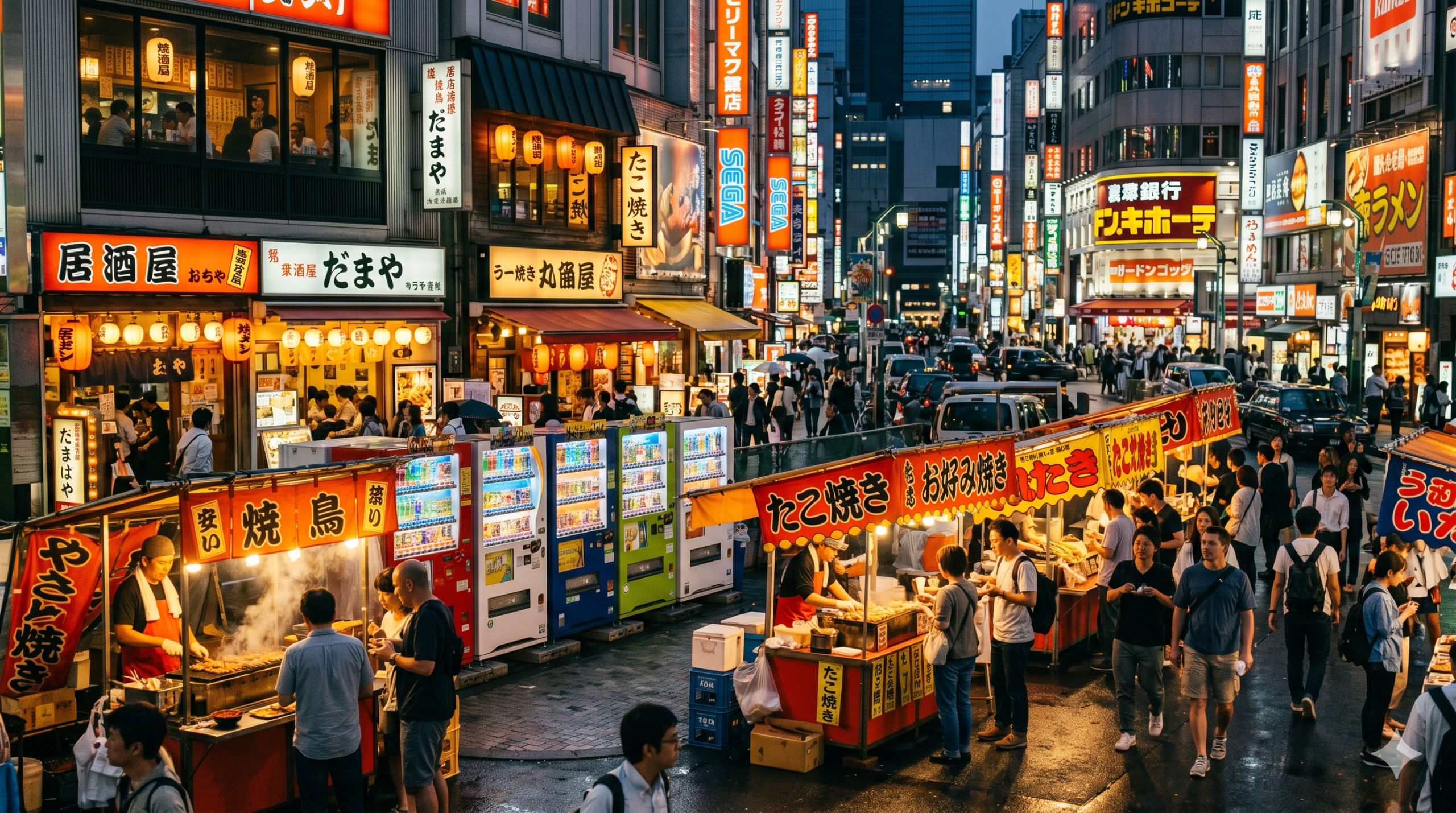
Japan’s convenience stores — 7-Eleven, FamilyMart, Lawson — are a traveler’s secret weapon. A full meal of onigiri + hot food + drink costs ¥600–¥900 and is genuinely delicious. Ramen shops run ¥700–¥1,200 for a generous bowl. Gyudon (beef bowl) chains like Yoshinoya and Sukiya serve filling meals from ¥450. Soba and udon shops offer lunch sets from ¥600. Budget travelers can easily eat well for ¥1,500–¥2,000 per day on food alone.
Mid-Range Eating (¥1,000–¥3,000 per meal)
This is where Japan shines. A sit-down sushi lunch at a rotating conveyor belt (kaiten-zushi) costs ¥1,500–¥3,000 and the quality is outstanding. Teishoku (Japanese set meals) at family restaurants run ¥900–¥1,800 with miso soup, rice, and multiple dishes. Ramen specialty shops charge ¥1,000–¥1,500. Even at this level, you’re getting excellent value compared to equivalent restaurants in London, New York, or Sydney.
Fine Dining (¥5,000–¥50,000+)
Yes, Japan has world-class expensive restaurants — but that’s true everywhere. An omakase sushi dinner can run ¥15,000–¥50,000 per person. Michelin-starred kaiseki experiences start around ¥20,000. But unlike in many Western cities, you are never forced to spend big to eat extraordinarily well.
Accommodation Costs in Japan 2026
Budget Options (¥2,000–¥5,000/night)
Capsule hotels in Tokyo’s Shinjuku or Asakusa areas run ¥2,500–¥4,500 per night for a clean, surprisingly comfortable sleep. Hostels in major cities start around ¥2,000 for a dorm bed. Guesthouses outside Tokyo can be found for ¥3,000–¥5,000 with breakfast. For solo travelers, Japan’s budget accommodation is genuinely excellent.
Mid-Range Hotels (¥6,000–¥15,000/night)
Business hotels (Toyoko Inn, APA Hotel, Dormy Inn) offer clean, reliable rooms with en-suite bathrooms and often breakfast included for ¥6,000–¥10,000 in most cities. Tokyo and Kyoto are pricier — expect ¥9,000–¥15,000 for a decent double room. These are comparable to 3-star Western hotels but often cleaner and better located.
Ryokan & Luxury (¥15,000–¥80,000/night)
Traditional ryokan (Japanese inn) experiences with kaiseki dinner and breakfast start around ¥15,000 per person and go up dramatically for premium properties. Hakone and Kyoto’s finest ryokan run ¥50,000–¥80,000 per person per night — worth it for a special occasion, but not a daily expense.
Transport Costs in Japan 2026
City Transport
Tokyo’s subway is world-class and very affordable. A single ride costs ¥170–¥320. A day pass for unlimited travel runs ¥600–¥1,000 depending on the network. Using Suica or PASMO IC cards gives slight discounts and eliminates the need to buy individual tickets. Getting around Tokyo for a full day typically costs ¥600–¥1,500 total — remarkable for a megacity.
Bullet Train (Shinkansen)
The shinkansen is comfortable and fast but not cheap: Tokyo–Osaka costs ¥14,720 one-way (Nozomi, reserved seat) (about 2.5 hours). Tokyo–Kyoto is ¥14,170. For multiple long-distance journeys, the JR Pass (from ¥50,000 for 7 days) can save significant money — though with the price rise on 1 October 2026 (to ¥53,000 for most purchases), it’s worth calculating carefully for your specific route.
Budget Transport Tricks
- Highway buses: Tokyo–Osaka from ¥3,000–¥5,000 (overnight saves a hotel night too)
- LCC flights: Peach or Jetstar domestic flights from ¥2,000–¥8,000
- Rental bicycles: ¥300–¥1,500/day in most tourist cities
Entertainment & Activities in Japan 2026
Japan has an astounding range of free and low-cost entertainment. Most Shinto shrines and many temples are free to enter. City parks, cherry blossom viewing, beach days — all free. Museums typically charge ¥500–¥1,500. Karaoke runs ¥400–¥800/hour per person. A movie ticket costs ¥1,800–¥2,000. Theme parks like Universal Studios Japan or Disneyland are expensive (¥9,400–¥12,000) but comparable globally.
Monthly Living Costs in Japan 2026 (Expat Budgets)
| Expense | Budget | Comfortable | Premium |
|---|---|---|---|
| Rent (Tokyo, 1BR) | ¥60,000 | ¥100,000 | ¥180,000+ |
| Food | ¥25,000 | ¥45,000 | ¥80,000+ |
| Transport | ¥8,000 | ¥12,000 | ¥20,000 |
| Utilities | ¥8,000 | ¥12,000 | ¥20,000 |
| Mobile | ¥1,500 | ¥2,500 | ¥4,000 |
| Entertainment | ¥10,000 | ¥25,000 | ¥60,000+ |
| Total | ¥112,500/mo | ¥196,500/mo | ¥364,000+/mo |
In USD terms (at ¥150/USD): Budget ≈ $750/month, Comfortable ≈ $1,310/month, Premium ≈ $2,430+/month. Compared to Singapore, Hong Kong, London, or New York, Tokyo is dramatically more affordable for equivalent lifestyle.
Is Japan Cheap or Expensive? The Honest Verdict
Japan is cheap where it matters most (food, transport, mobile) and reasonable everywhere else (rent, utilities, entertainment). Where Japan can bite you is accommodation in prime tourist areas during peak season, and long-distance train travel if you’re not strategic.
For travelers: Japan is one of the best-value developed countries in the world. Budget ¥8,000–¥15,000/day (about $55–$100) and you’ll eat well, sleep comfortably, and do plenty of activities. Flash travelers can go higher — the ceiling is unlimited — but the floor is impressively accessible.
For expats: Tokyo is cheaper than you’d expect for a world-class capital. With a salary of ¥300,000+/month (roughly $2,000), you can live comfortably — a benchmark many English-teaching or remote-working expats meet or exceed.
Money-Saving Tips for Japan 2026
- Get a Suica card — use it for trains, buses, convenience stores, and vending machines everywhere
- Eat at convenience stores — seriously, they’re genuinely good and very cheap
- Use IC card for transit — marginally cheaper than single tickets, massively more convenient
- Book accommodation early — especially Kyoto, Tokyo Golden Week/cherry blossom season
- Take overnight buses — save on transport AND accommodation in one trip
- Get an MVNO SIM — ¥1,000–¥2,000/month vs ¥5,000–¥8,000 for major carriers
- Use PayPay — frequent cashback campaigns can save 5–20% on everyday purchases
- Shop at 100-yen stores — Daiso and Seria sell genuinely useful items at ¥110 each
📥 Japan Expat Starter Kit 2026
Your complete PDF guide to banking, housing, mobile plans, taxes & daily life in Japan
Get the Guide — $9.99 →🗾 More Japan Life Guides
🇯🇵 Travel & Life Essentials for Japan
Hand-picked gear to make your time in Japan easier. Available on Amazon US & Amazon Japan.
🔋 Portable charger
A must for long days of sightseeing and photos.
View on Amazon (US)View on Amazon Japan🔌 Travel plug adapter
Japan uses Type A outlets. Bring the right adapter.
View on Amazon (US)View on Amazon Japan🎧 Translation earbuds
Real-time translation to talk without barriers.
View on Amazon (US)View on Amazon JapanAs an Amazon Associate, Japan Life Lab earns from qualifying purchases.
🔥 Editor’s Picks for Life & Travel in Japan
Practical guides for life and travel in Japan — free, about once a week. No spam, unsubscribe anytime.
☕ Enjoying our Japan guides?
If this article helped you, you can support our work with a coffee!
Did this guide help you? 🍵
Japan Life Lab is a small independent blog, and every guide we publish is completely free — no paywalls, ever. If our work saved you time (or a headache), you can support us with a cup of Japanese tea. Every contribution, big or small, goes straight into keeping these guides free, accurate and up to date for everyone.
☕ Support Japan Life Lab
Leave a Reply