This article was created with AI writing assistance (ChatGPT, Claude, etc.). Product selection, specifications, and reviews are verified by the Japan Life Lab editorial team.
This article contains promotional / affiliate links.
📌 What you will learn
You do not have to read it all — jump to what you need.
- Japan Just Made PR 20x More Expensive — Here’s Everything You Need to Know
- Why Did Japan Raise PR Fees So Dramatically?
- Who Is Affected by the Fee Hike?
- The Standard PR Requirements (Still Apply)
- 5 Strategies to Navigate the Fee Hike
- Is PR in Japan Still Worth It in 2026?
- The Political Backlash: Will the Fee Be Reduced?
※ Start wherever fits your situation.
Japan Just Made PR 20x More Expensive — Here’s Everything You Need to Know
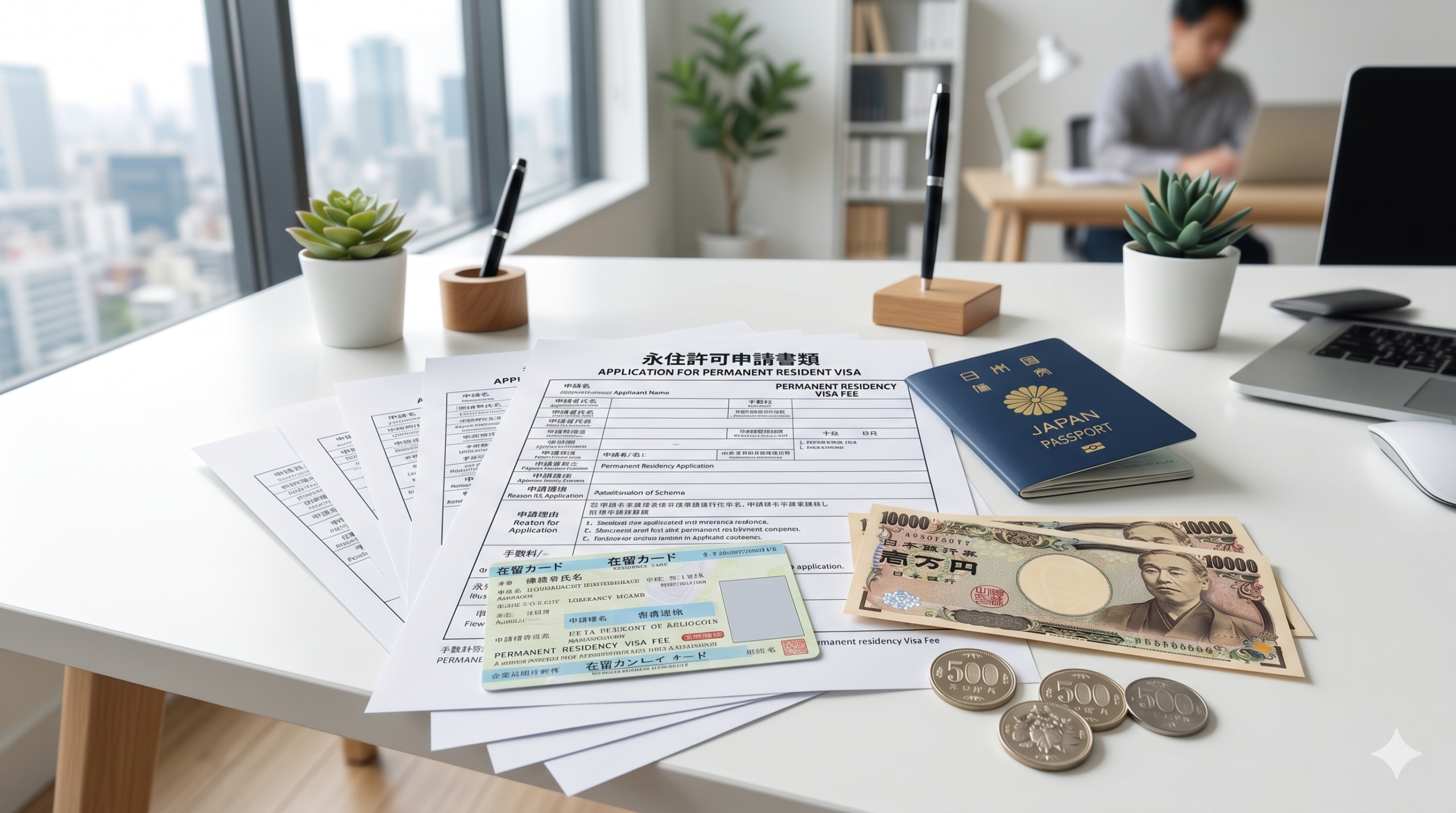
In 2026, Japan dropped a bombshell on the expat community: the fee for applying for Permanent Residency (永住者, eijuusha) is rising from ¥10,000 to ¥200,000 for applications received from 1 October 2026 — a staggering 20x increase.
Reddit’s r/japanlife exploded. Facebook expat groups went into meltdown. Long-term residents who had been planning their PR application suddenly found themselves facing a fee equivalent to one to two months’ average salary.
This guide covers everything: why it happened, who’s affected, what your options are, and whether PR in Japan is still worth pursuing in 2026.
Old fee: ¥10,000 → New fee: ¥200,000 (20x increase; the legal ceiling is ¥300,000)
Effective: applications received from 1 October 2026
Who’s affected: All new PR applicants
Processing time: Still 6–12 months (unchanged)
Good news: Existing PR holders are NOT affected
Why Did Japan Raise PR Fees So Dramatically?
Japan’s Immigration Services Agency cited several reasons for the dramatic increase:
1. Record-Breaking Immigration Numbers
Japan reached 4.12 million foreign residents in 2025 — a historic high. The government argues that processing costs have exploded alongside application volumes, and that fees should reflect “real administrative costs” rather than symbolic amounts.
2. PR as a “Premium” Pathway
Officials framed the fee hike as distinguishing PR from lesser statuses — positioning Japanese PR as a “premium” document comparable to other developed nations. The UK charges £2,885, the US charges $1,440, and Canada charges $515 CAD for permanent residency. Japan’s new fees, while shocking, now sit within a similar range.
3. Government Revenue Diversification
With an aging population and shrinking tax base, immigration fees have become a meaningful revenue stream. Critics point out that this effectively means Japan is monetizing its attractiveness as a destination — charging more precisely because so many people want to stay.
4. “Quality Over Quantity” Immigration Policy
Behind the scenes, some analysts believe the fee hike is designed to reduce PR applications from lower-income foreign workers while still welcoming high-earning professionals. This aligns with Japan’s Highly Skilled Professional (HSP) visa track, which comes with a fast-tracked PR after just 1–3 years — — although HSP holders pay the same ¥200,000 PR fee.
Who Is Affected by the Fee Hike?
| Situation | Impact | Fee |
|---|---|---|
| New PR applicants (standard route) | 🔴 Heavily affected | ¥200,000 |
| Existing PR holders (renewal) | 🟢 Not affected | ¥0 (PR doesn’t expire) |
| HSP visa holders (fast track) | 🟡 Affected | ¥200,000 (same fee) |
| Spouses of Japanese nationals | 🟡 Affected | ¥200,000 (no spouse exemption) |
| Special Permanent Residents (Zainichi) | 🟢 Exempt | ¥0 |
The Standard PR Requirements (Still Apply)
The fee hike didn’t change who qualifies for PR — just how much you pay. The standard requirements remain:
- 10 years continuous residence in Japan (for spouses of Japanese nationals or PR holders: 3 years of marriage and 1 year in Japan; 1–3 years on the HSP track)
- 5+ years of legal working status within that period
- Stable income sufficient to support yourself and dependents
- Good conduct (no criminal record, consistent tax/social insurance payments)
- Holding the longest period of stay for your status (a 3-year permit is accepted until 31 March 2027)
- Japanese-level financial stability (savings, employment history)
5 Strategies to Navigate the Fee Hike
Strategy 1: Apply for Highly Skilled Professional (HSP) Status First
The HSP points-based visa is Japan’s best immigration deal in 2026. Score 70+ points and you qualify for PR after 3 years. Score 80+ points and it drops to 1 year. HSP applicants pay the same ¥200,000 PR fee — the saving is the shorter waiting time.
HSP points are earned from: age (under 35 gets max points), education (PhD/Master’s adds points), salary (higher = more points), and employer type (listed companies, academia, etc.).
Use the official HSP points calculator on the Immigration Services Agency website.
Strategy 2: Start a Business / Get a Business Manager Visa
If you set up and run a company in Japan that meets the current capital and staffing requirements (check the Immigration Services Agency website before planning) and create employment for Japanese nationals, you qualify for the Business Manager visa. After 5 years, this pathway leads to PR. The fee hike applies, but the overall pathway may be favorable for entrepreneurs.
Strategy 3: Time Your Application Strategically
If you were already close to qualifying (8–9 years in Japan), consider whether you should accelerate or optimize your application. A well-prepared application with a strong employment record, perfect tax compliance, and a thick supporting document package dramatically improves approval odds — making the ¥200,000+ fee a one-time expense rather than a repeated one.
Strategy 4: Check Long-Term Resident Visa Eligibility
The Long-Term Resident (定住者, teijuusha) visa is often confused with PR but is actually different. It doesn’t grant permanent rights but is renewable and offers similar freedoms. Spouses of Japanese nationals and refugees may qualify. Its extensions also follow the new period-based fees from 1 October 2026 (for example ¥33,000 for a 1-year permit at the window).
Strategy 5: Hire an Immigration Lawyer (Gyoseishoshi)
With fees this high, a gyoseishoshi (行政書士, administrative scrivener) or immigration lawyer isn’t just a luxury — it’s insurance. A rejected application means you’re ¥200,000+ poorer with nothing to show. Lawyer fees range from ¥80,000 to ¥200,000 but can be the difference between approval and rejection. Look for lawyers who specialize in immigration (入管専門) and speak English.
Is PR in Japan Still Worth It in 2026?
Despite the fee shock, the answer for most long-term expats remains yes — here’s why:
- No more visa renewals — ever. One application, done.
- Work anywhere, in any industry, for any employer
- Start a business without special permissions
- Qualify for better mortgage rates (some banks offer PR-exclusive rates)
- Easier to rent apartments without guarantors
- Family members may qualify for Dependent visa more easily
- Path to naturalization (if desired) stays open
- You’re planning to leave Japan within 3–5 years
- Your current visa (spouse, HSP) already gives you equivalent freedoms
- The ¥200,000 would cause significant financial hardship
- You’re eligible for naturalization and prefer full citizenship
The Political Backlash: Will the Fee Be Reduced?
There is significant political pressure to reverse or reduce the fee. Multiple foreign resident advocacy groups, expat organizations, and even some Japanese opposition politicians have spoken out. The Japan Times, NHK World, and international outlets covered the backlash extensively.
However, the government has shown no signs of reversal as of May 2026. If you’re planning to apply, budget for the current fees. If the fee is reduced, you’ll have a pleasant surprise — but don’t count on it.
FAQ: Japan PR Fee Hike 2026
What exactly is the new PR application fee in Japan?
For applications received on or after 1 October 2026 the fee is ¥200,000, compared to the previous ¥10,000. It is the same for every visa category (PR cannot be applied for online); only people in severe financial hardship can have it reduced to ¥20,000. Confirm the current fee directly with the Immigration Services Agency or your regional immigration office before applying.
Does the fee increase affect existing PR holders?
No. Japanese Permanent Residency does not expire and does not require renewal fees. Existing PR holders are completely unaffected by the 2026 fee hike.
Can I get my PR fee refunded if my application is rejected?
No. Like most government application fees, the PR application fee is non-refundable regardless of the outcome. This is one of the strongest arguments for using a professional immigration lawyer to maximize your approval odds before submitting.
Is there a payment plan option for the PR fee?
As of 2026, no official payment plan exists for PR application fees. The full amount must be paid at the time of application, typically via revenue stamp (収入印紙) purchased at post offices or designated outlets.
How long does the PR application take after paying the fee?
Processing times remain 6–12 months and have not changed with the fee increase. Some complex cases take longer. You’ll receive a written notification once a decision is made.
Bottom Line: Plan Now, Save Later
Japan’s PR fee hike is painful, but it doesn’t change the fundamental value proposition of permanent residency for serious long-term residents. If you’re 5+ years into your Japan life and plan to stay for decades, the ¥200,000 fee amortizes to about ¥10,000 per year over 20 years — less than a nice dinner in Tokyo.
The real lesson: start building your PR case now. Track your tax records, maintain continuous residence, optimize your HSP points, and consult with a qualified immigration professional before submitting. A rejected application is money gone — a well-prepared one is an investment in your future in Japan.
🗾 More Japan Life Guides
📥 Japan Expat Starter Kit 2026
The complete guide: banking, health insurance, housing, taxes, Suica, PayPay + daily Japanese phrases — 60+ pages PDF
📥 Get the Guide — $9.9930-day money-back guarantee · Instant download
🇯🇵 Travel & Life Essentials for Japan
Hand-picked gear to make your time in Japan easier. Available on Amazon US & Amazon Japan.
🔋 Portable charger
A must for long days of sightseeing and photos.
View on Amazon (US)View on Amazon Japan🔌 Travel plug adapter
Japan uses Type A outlets. Bring the right adapter.
View on Amazon (US)View on Amazon Japan🎧 Translation earbuds
Real-time translation to talk without barriers.
View on Amazon (US)View on Amazon JapanAs an Amazon Associate, Japan Life Lab earns from qualifying purchases.
🔥 Editor’s Picks for Life & Travel in Japan
Practical guides for life and travel in Japan — free, about once a week. No spam, unsubscribe anytime.
☕ Enjoying our Japan guides?
If this article helped you, you can support our work with a coffee!
Did this guide help you? 🍵
Japan Life Lab is a small independent blog, and every guide we publish is completely free — no paywalls, ever. If our work saved you time (or a headache), you can support us with a cup of Japanese tea. Every contribution, big or small, goes straight into keeping these guides free, accurate and up to date for everyone.
☕ Support Japan Life Lab
Leave a Reply