This article was created with AI writing assistance (ChatGPT, Claude, etc.). Product selection, specifications, and reviews are verified by the Japan Life Lab editorial team.
This article contains promotional / affiliate links.
📌 What you will learn
You do not have to read it all — jump to what you need.
- Japan’s Most Popular Work Visa Just Got Harder to Get
- What Is the Engineer/Humanities Visa?
- The New Japanese Language Requirement (April 15, 2026)
- In-Demand Fields (No Official Fast Track)
- Other Key Changes in 2026
- How to Apply: Step-by-Step Guide
- N2 Requirement: What If You Don’t Have It?
※ Start wherever fits your situation.
Japan’s Most Popular Work Visa Just Got Harder to Get
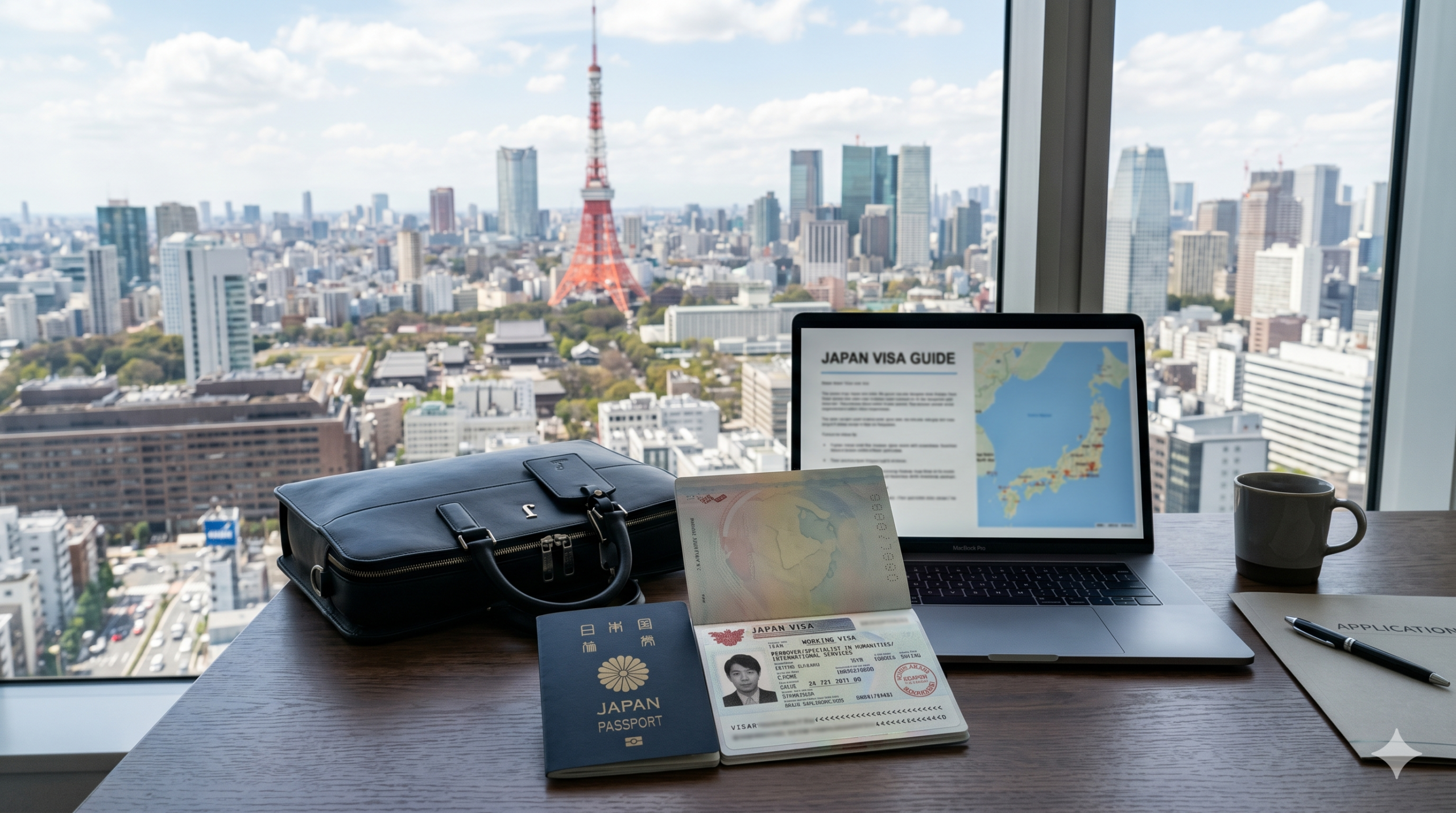
If you’re planning to work in Japan as an engineer, IT professional, marketer, or humanities specialist, 2026 brought major changes you need to know about. Effective April 15, 2026, Japan’s Ministry of Justice implemented new rules for the “Engineer/Specialist in Humanities/International Services” (技術・人文知識・国際業務) visa — the most commonly issued work visa for foreign professionals.
The headline change: proof of CEFR B2-level ability in the language used on the job (for Japanese, e.g. JLPT N2) is now required for many roles under this visa category. But there are important exceptions and nuances that could significantly affect your application.
What Is the Engineer/Humanities Visa?
The “Engineer/Specialist in Humanities/International Services” visa (通称: 技人国ビザ) covers the broadest range of white-collar work in Japan. It includes:
- Engineers: Software developers, IT engineers, mechanical engineers, system architects
- Humanities specialists: Marketers, HR professionals, accountants, planners, designers
- International services: Translators, interpreters, foreign language teachers at private companies, international sales representatives
About 476,000 foreign residents held this status at the end of 2025 (ISA) and is the primary pathway for non-Japanese graduates of Japanese universities and international hires at Japanese companies.
The New Japanese Language Requirement (April 15, 2026)
Who Is Affected?
The new N2/B2 requirement applies to applicants at Category 3 and 4 employers (smaller or less-established companies) whose roles involve significant interpersonal, client-facing, or language-heavy work. Specifically:
- Roles that require regular communication with Japanese clients or colleagues
- Roles involving written Japanese content (reports, emails, documentation)
- Roles where language skills are integral to job performance
Who Is Exempt?
Not everyone needs N2. The following are exempt from the new language requirement:
- Category 1 employers: Listed companies, government bodies and similar organisations
- Category 2 employers: Organisations that withheld ¥10 million or more in employee income tax in the previous year
- High-demand technical roles: Jobs that are not mainly customer-facing (e.g. in-house engineering) — even at smaller companies — need no language proof
- International services roles: Not exempt: customer-facing roles where English (or another foreign language) is the working language need CEFR B2 proof in that language instead of Japanese
In-Demand Fields (No Official Fast Track)
Some sites claim a 2026 introduction of “Priority Sectors”. However, the Immigration Services Agency has not announced any fast-track system for them — these fields are simply in demand:
- AI & Data Science: Prompt engineers, machine learning researchers, AI product managers, data scientists
- Green Technology: Renewable energy specialists, carbon neutrality experts, ESG consultants
- Semiconductor Engineering: Hardware design specialists, fab process engineers — aligned with Japan’s growing chip industry (TSMC Kumamoto, Rapidus Hokkaido)
Choosing one of these fields does not change how your application is processed.
Other Key Changes in 2026
Job and Degree Still Need to Match
Previously, visa applications were strictly checked for “role match” — your job description had to align perfectly with your degree or work experience. No 2026 rule change relaxes this for hybrid roles — the main duties still have to match your field of study or work experience. For example, a Marketing Manager who also handles front-end web updates should make sure the main duties match to avoid visa “mismatch” risks. Bootcamp certificates are not an official substitute for a degree; without a relevant degree you generally need about 10 years of relevant work experience.
online residence application system
The Immigration Services Agency offers an online residence application system for applications such as extensions and changes of status, as an alternative to visiting an office. Applying in person at a regional immigration office is still possible. You’ll need a My Number Card and a Japanese address to access the portal fully.
90-Day Job Gap Rule (Clarified)
The 90-day job gap rule — where your visa status is reviewed if you are unemployed for more than 90 days — is a long-standing rule rather than a 2026 change. If you lose your job in Japan, notify immigration within 14 days and actively document your job search to avoid complications at renewal.
How to Apply: Step-by-Step Guide
If You’re Applying From Outside Japan
- Receive a Certificate of Eligibility (COE) from your Japanese employer (they apply on your behalf at a regional immigration office)
- Bring the COE to the Japanese embassy or consulate in your home country
- Submit: passport, COE, application form, degree certificate, employment contract, company registration documents
- If N2 is required for your role: include JLPT N2 certificate or equivalent
- Wait 5–10 business days for processing
If You’re Already in Japan (Changing Jobs or Renewing)
- Apply online via the online residence application system or visit your regional Immigration Services Bureau
- Submit: current residence card, new employment contract, company documents, degree certificate
- If changing to a new employer in a different field, include a career change explanation letter
- For N2-required roles: include your JLPT certificate
- Processing time: 2–8 weeks
N2 Requirement: What If You Don’t Have It?
If your role requires N2 but you don’t have the certificate yet, you have several options:
- Target a Category 1/2 employer: Large companies are exempt from the language requirement
- Apply for a technical-only role: Pure engineering/coding roles at any company size are generally exempt
- Study for JLPT N2: The exam is held twice a year (July and December). Many online platforms like Migaku, WaniKani, and Bunpro offer structured N2 preparation
- Use a visa agent: An experienced immigration attorney (行政書士) can advise on whether your specific role triggers the requirement
Document Checklist for 2026 Applications
| Document | Required For |
|---|---|
| Valid passport | All applicants |
| Visa application form | All applicants |
| University degree certificate | Most applicants (or 10 years work experience) |
| Employment contract | All applicants |
| Company registration / financial docs | Employer submits for COE |
| JLPT N2 certificate | Cat. 3/4 employers, language-heavy roles |
| Resume / career history | All applicants (especially career changers) |
| Declaration about the company representative | Category 3/4 employers (from 15 April 2026) |
Frequently Asked Questions
Does the N2 requirement apply to visa renewals, not just new applications?
Yes. If your role at renewal is one that requires N2 under the new rules (Category 3/4 employer, language-heavy role), immigration may request Japanese language proof at renewal. However, long-term residents with clean records generally face more flexibility.
My company is Category 1 — do I still need N2?
No. Category 1 employers (listed companies, government bodies and similar) and category 2 employers do not have to submit the language proof, although immigration can still ask for it. Your employer should be able to confirm their category status.
What is CEFR B2 equivalent to?
CEFR B2 is roughly equivalent to JLPT N2 in Japanese proficiency. It represents the ability to understand complex technical and abstract texts, communicate fluently with native speakers, and express ideas clearly on a wide range of topics.
Can I appeal if my visa application is rejected?
There is no simple objection procedure for a refused work-visa application: ask the immigration office to explain the reasons and reapply, or consult a lawyer about legal action. It is strongly recommended to work with a registered immigration lawyer (弁護士) or administrative scrivener (行政書士) for appeals.
What’s the difference between this visa and the Highly Skilled Professional (HSP) visa?
The HSP visa (高度専門職) is for highly paid, highly qualified professionals and offers faster permanent residency pathways. The Engineer/Humanities visa is more broadly accessible but offers fewer long-term benefits. The HSP point system rewards high salaries, advanced degrees, and research publications.
Japan Expat Starter Kit 2026 PDF guide
Your first 90 days in Japan, step by step: 17 chapters · 24 pages · 100 phrases in Japanese script · 40 kanji · printable checklists. Bank account, My Number, health insurance, apartment, phone, taxes & pension.
$9.99 $4.99 current price
📥 Get the kit →📄 Read 5 pages free: contents + Chapter 2
⚡ Instant PDF download · 🛡️ 30-day money-back guarantee · 🔄 Free 2026 updates
More Japan Life Guides
🇯🇵 Travel & Life Essentials for Japan
Hand-picked gear to make your time in Japan easier. Available on Amazon US & Amazon Japan.
🔋 Portable charger
A must for long days of sightseeing and photos.
View on Amazon (US)View on Amazon Japan🔌 Travel plug adapter
Japan uses Type A outlets. Bring the right adapter.
View on Amazon (US)View on Amazon Japan🎧 Translation earbuds
Real-time translation to talk without barriers.
View on Amazon (US)View on Amazon JapanAs an Amazon Associate, Japan Life Lab earns from qualifying purchases.
🔥 Editor’s Picks for Life & Travel in Japan
Practical guides for life and travel in Japan — free, about once a week. No spam, unsubscribe anytime.
☕ Enjoying our Japan guides?
If this article helped you, you can support our work with a coffee!
Did this guide help you? 🍵
Japan Life Lab is a small independent blog, and every guide we publish is completely free — no paywalls, ever. If our work saved you time (or a headache), you can support us with a cup of Japanese tea. Every contribution, big or small, goes straight into keeping these guides free, accurate and up to date for everyone.
☕ Support Japan Life Lab
Leave a Reply