This article was created with AI writing assistance (ChatGPT, Claude, etc.). Product selection, specifications, and reviews are verified by the Japan Life Lab editorial team.
This article contains promotional / affiliate links.
⏱ The short answer (30 seconds)
In a hurry? The full reasons and prices are right below.
- HakoneEasy Day Trip from Tokyo
- Beppu & YufuinKyushu’s Hot Spring Paradise
- Kinosaki OnsenThe Classic Onsen Town
- NoboribetsuHokkaido’s Volcanic Onsen
- Kusatsu OnsenJapan’s Top-Ranked Hot Spring
※ If in doubt, go with #1. Budget picks are further down the page.
What Is Onsen? Japan’s Hot Spring Culture Explained
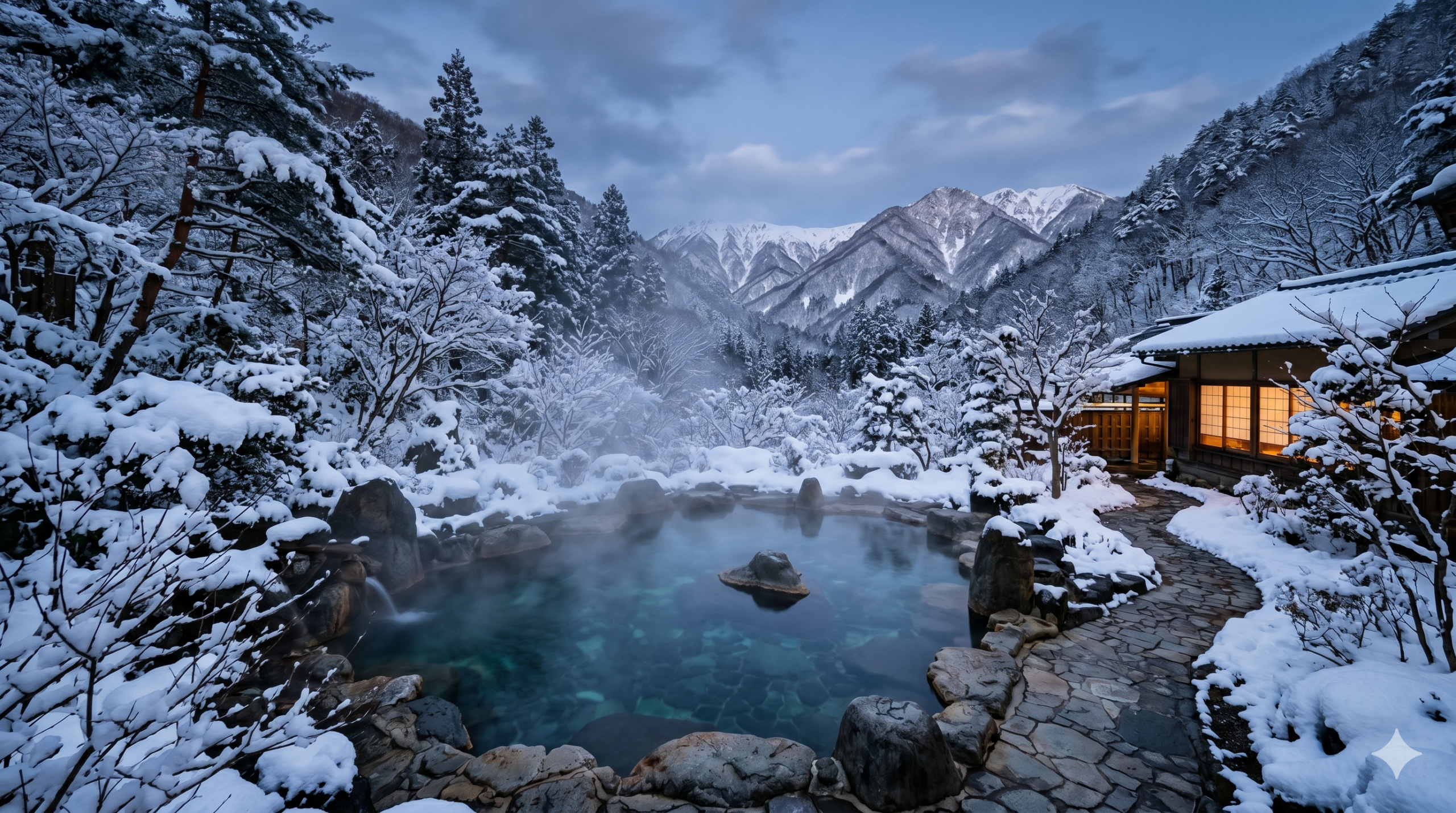
Onsen (温泉) are natural hot spring baths fed by geothermally heated water — and they’re one of Japan’s most beloved cultural experiences. With over 3,000 onsen resorts and 27,000 individual hot spring sources nationwide, Japan takes its bathing culture very seriously. From luxurious ryokan retreats to humble neighborhood sento bathhouses, there’s an onsen experience for every budget and travel style.
This complete guide covers everything you need to know before taking your first onsen dip — etiquette, rules, recommended destinations, and tips for first-timers.
Onsen vs. Sento: What’s the Difference?
| Feature | Onsen (温泉) | Sento (銭湯) |
|---|---|---|
| Water source | Natural hot spring | Heated tap water |
| Minerals | Rich in minerals (sulfur, iron, etc.) | Plain water, sometimes added |
| Location | Often rural, resort areas | City neighborhoods |
| Price | ¥500–¥3,000 (day use) | ¥500–¥800 |
| Experience | Nature views, multiple baths | Local neighborhood feel |
Essential Onsen Etiquette (Rules You Must Follow)
Onsen have specific rules that must be followed. Breaking etiquette is considered very rude and may get you asked to leave.
🚫 Do NOT:
- Enter with a towel in the water (small towels go on your head or poolside)
- Swim or splash
- Enter without washing your body first at the shower stations
- Bring food or drinks into the bathing area
- Take photos in the bathing area (strictly prohibited)
- Shave in the bath
✅ DO:
- Shower thoroughly at the shower stations before entering
- Keep your small towel folded on your head or poolside (not in the water)
- Enter quietly and move calmly
- Hydrate before and after bathing
- Respect other bathers’ privacy and silence
- Tie long hair up before entering
The Tattoo Policy: What You Need to Know
Many traditional onsen in Japan prohibit tattoos due to historical associations with organized crime. This is changing, but slowly. Here’s the 2026 reality:
- Most traditional onsen: No tattoos policy (visible or covered)
- Modern “tattoo-friendly” onsen: Growing in number, especially in cities and tourist areas
- Private baths (貸切風呂, kashikiri-buro): Available at most ryokan for extra fee (¥1,000–¥5,000/hour) — no restrictions
- Resources: Use the “Tattoo Friendly Onsen in Japan” maps on Google Maps or the “Sento & Onsen” app
If you have tattoos, book ryokan with private onsen baths in advance. Most can accommodate you without issue.
Best Onsen Destinations in Japan 2026
1. Hakone — Easy Day Trip from Tokyo
Just 90 minutes from Tokyo by Romancecar from Shinjuku (covered by Hakone Free Pass from ¥6,100). Hakone offers stunning views of Mt. Fuji with your onsen, plus the open-air Hakone Sculpture Museum, Lake Ashi, and the Owakudani volcanic valley. Best onsen: Hakone Yunessun (water park onsen, tattoo-friendly), Tenzan Tohji-kyo (traditional, no tattoos).
2. Beppu & Yufuin — Kyushu’s Hot Spring Paradise
Beppu (別府) has more hot spring sources than anywhere else in Japan. The famous “Beppu Hells” (地獄) are boiling spring pools of vivid colors — a unique sightseeing experience. Nearby Yufuin is a quieter, more upscale resort town. Accessible by Shinkansen to Hakata + limited express.
3. Kinosaki Onsen — The Classic Onsen Town
Located in Hyogo Prefecture, Kinosaki is the quintessential Japanese onsen town. Guests wear yukata (summer kimono) and wooden geta sandals to stroll between 7 public bathhouses. Highly recommended for first-time onsen experiences. Accessible by JR Limited Express from Osaka (~2.5 hours).
4. Noboribetsu — Hokkaido’s Volcanic Onsen
Famous for Jigokudani (Hell Valley) — a steaming volcanic crater surrounded by sulfurous hot springs. The mineral-rich waters here are some of the most therapeutic in Japan. Best in winter (snow + onsen = heaven) but excellent year-round.
5. Kusatsu Onsen — Japan’s Top-Ranked Hot Spring
Consistently rated Japan’s #1 onsen town in domestic rankings. Located in Gunma Prefecture (2.5 hours from Tokyo). Famous for its “Yumomi” traditional water cooling ceremony and the Yubatake (hot spring field) at the town center. The highly acidic water is said to heal skin conditions.
Day-Use Onsen vs. Ryokan Stay
| Option | Cost | Best For |
|---|---|---|
| Public sento | ¥500–¥800 | Budget, local experience |
| Day-use (日帰り) onsen | ¥800–¥3,000 | Half-day experience, tourists |
| Budget ryokan with onsen | ¥8,000–¥15,000/person | Overnight, dinner + breakfast |
| Mid-range ryokan | ¥15,000–¥30,000/person | Special occasion, private bath |
| Luxury ryokan | ¥30,000–¥100,000+/person | Ultimate Japan experience |
Health Benefits of Onsen
Japanese onsen waters contain various minerals with different health benefits recognized by the Japanese government:
- Sulfur onsen: Skin conditions, arthritis, hypertension
- Sodium chloride (salt) onsen: Muscle pain, fatigue recovery, keeps you warm longer
- Sodium bicarbonate onsen: Softens and beautifies skin (called “bijin-no-yu” — beautiful woman’s bath)
- Acidic onsen: Antibacterial, skin conditions (Kusatsu is famous for this)
- Iron onsen: Anemia, women’s health (water turns red/brown when oxidized)
Onsen in Tokyo: Where to Go Without Leaving the City
Can’t make it to the countryside? These Tokyo onsen facilities are excellent:
- Ooedo Onsen Monogatari (Odaiba): Large theme park-style onsen, yukata included (¥2,750–¥3,300)
- Spa LaQua (Bunkyo): Natural onsen in central Tokyo with high-tech facilities (¥2,900+)
- Shimizu-yu (Minami-Aoyama): Stylish neighborhood sento with excellent facilities (¥700)
- Koganeyu (Koenji): Retro-renovated sento, beloved by locals (¥700)
♨️ Book an onsen ryokan
Ready to soak? Ikyu (一休.com) specialises in carefully selected onsen ryokan and quality hotels across Japan — from luxury hot-spring inns to city stays, often at member rates. (Japanese booking site; a browser translator makes it easy.)
Find an onsen ryokan on Ikyu →What to Bring to an Onsen
Most ryokan provide towels, yukata, and amenities. For public day-use facilities, bring:
- Small towel (for washing and covering at poolside)
- Large towel (for drying off)
- Shampoo, conditioner, body soap (often provided at nicer facilities)
- Waterproof bag for valuables
- Hair tie if you have long hair
📥 Japan Expat Starter Kit 2026
60+ page PDF covering banking, housing, Suica, taxes and daily life in Japan
Get the Guide — $9.99More Japan Guides
👘 Make your onsen trip special — rent a kimono
Stroll an onsen town or temple in a traditional kimono. wargo offers easy online booking at locations across Japan (Kyoto, Tokyo, Asakusa & more).
Book a kimono rental →🏨 Book Premium Ryokan & Onsen Hotels at Ikyu.com
Ikyu.com (一休.com) specializes in Japan’s finest ryokan, onsen hotels, and luxury resorts. English-friendly booking with exclusive member deals.
Browse Ryokan & Onsen at Ikyu.com →AD: This link contains affiliate advertising
✈️ Book Ryokan & Onsen Trips Across Japan【エアトリプラス】
Planning an onsen trip? エアトリプラス lets you book domestic flights + hotels (including ryokan) in one place. Compare prices across Japan’s hot spring destinations and find the best deals for your stay.
Search Flights & Ryokan in Japan ▶ [AD] Affiliate link — we may earn a commission at no extra cost to you.
🎌 Book Japan experiences before prices go up
KKday offers Shinkansen & rail passes, USJ and Disney tickets, ski packages, onsen day trips and 10,000+ activities across Japan — often cheaper than buying at the gate, with instant e-vouchers in English.
🔥 Editor’s Picks for Life & Travel in Japan
Practical guides for life and travel in Japan — free, about once a week. No spam, unsubscribe anytime.
☕ Enjoying our Japan guides?
If this article helped you, you can support our work with a coffee!
🇯🇵 Travel & Life Essentials for Japan
Hand-picked gear to make your time in Japan easier. Available on Amazon US & Amazon Japan.
🔋 Portable charger
A must for long days of sightseeing and photos.
View on Amazon (US)View on Amazon Japan🔌 Travel plug adapter
Japan uses Type A outlets. Bring the right adapter.
View on Amazon (US)View on Amazon Japan🎧 Translation earbuds
Real-time translation to talk without barriers.
View on Amazon (US)View on Amazon JapanAs an Amazon Associate, Japan Life Lab earns from qualifying purchases.
Did this guide help you? 🍵
Japan Life Lab is a small independent blog, and every guide we publish is completely free — no paywalls, ever. If our work saved you time (or a headache), you can support us with a cup of Japanese tea. Every contribution, big or small, goes straight into keeping these guides free, accurate and up to date for everyone.
☕ Support Japan Life Lab
Leave a Reply