This article was created with AI writing assistance (ChatGPT, Claude, etc.). Product selection, specifications, and reviews are verified by the Japan Life Lab editorial team.
This article contains promotional / affiliate links.
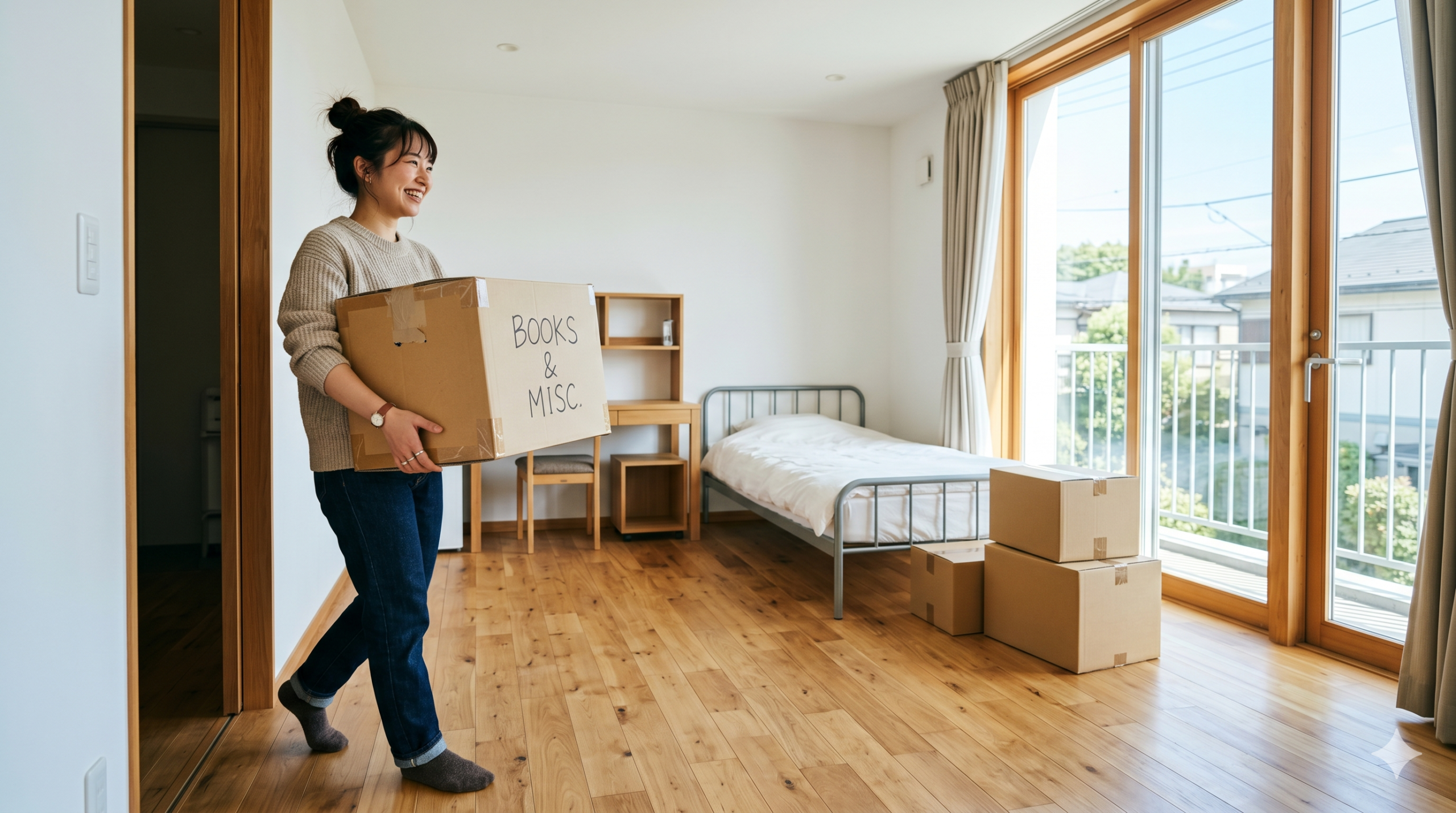
Moving in Japan can feel intimidating when you don’t speak fluent Japanese: confusing contracts, guarantor requirements, and surprise fees. This guide breaks down what moving in Japan actually costs, the step-by-step process, and the cheapest, foreigner-friendly options — so you can relocate without overpaying or getting stuck on paperwork.
📌 What you will learn
You do not have to read it all — jump to what you need.
- The Real Cost of Moving in Japan
- The Cheapest, Easiest Option for Foreigners: Share Houses
- Step-by-Step: How to Move in Japan
- Movers vs Doing It Yourself
※ Start wherever fits your situation.
The Real Cost of Moving in Japan
For a standard apartment, the upfront cost is the shocker. On top of the moving company fee (often ¥30,000–¥100,000 depending on distance and volume), a new rental typically demands deposit (shikikin), key money (reikin), agency fee, guarantor company fee, and the first month’s rent — frequently 4–6 months’ rent all at once. For many foreigners, the guarantor requirement is the hardest wall.
The Cheapest, Easiest Option for Foreigners: Share Houses
If you want to avoid deposit, key money, and guarantor headaches entirely, a share house is the single most foreigner-friendly way to move in Japan. Most have no deposit, no key money, no guarantor, come fully furnished (so you barely need movers), and include utilities and Wi-Fi in one monthly fee. You can often move in within days.
Two of the largest, most foreigner-friendly operators are Cross House (some of the lowest initial costs in Tokyo, English support) and Oak House (furnished rooms nationwide, strong international community). Both let you sign up online before you even arrive in Japan. For a full comparison, see our guide on Oak House vs Cross House.
Step-by-Step: How to Move in Japan
- Decide your housing type — share house (cheapest, fastest) vs private apartment (more privacy, higher upfront cost). See cheapest ways to live in Japan.
- Apply & sign — share houses are online; apartments need a guarantor company and screening.
- Book a mover (if needed) — furnished share houses need almost nothing; apartments may need a moving company.
- Transfer utilities & internet — set up electricity, gas, water, and Wi-Fi. See our Japan internet guide and best eSIMs.
- Change your address — update your residence card at city hall within 14 days.
Movers vs Doing It Yourself
If you’re moving a furnished apartment’s worth of belongings, a moving company saves your back and your time. For a single person with few items — especially moving into a furnished share house — a takkyubin (parcel) service or a small van rental is far cheaper. Get multiple quotes; prices vary widely by season (avoid March, the peak moving month).
FAQ
Do I need a guarantor to move in Japan?
For most private apartments, yes — usually a guarantor company you pay a fee to. Share houses like Cross House and Oak House typically require no guarantor, which is why they’re popular with newcomers.
What’s the cheapest way to move to Japan?
A furnished share house with no deposit/key money/guarantor, combined with a parcel service for your belongings, is usually the cheapest and fastest route.
🔥 Editor’s Picks for Life & Travel in Japan
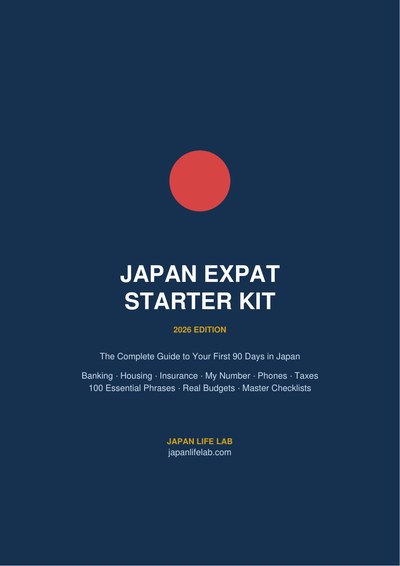
Japan Expat Starter Kit 2026 PDF guide
Your first 90 days in Japan, step by step: 17 chapters · 24 pages · 100 phrases in Japanese script · 40 kanji · printable checklists. Bank account, My Number, health insurance, apartment, phone, taxes & pension.
$9.99 $4.99 current price
📥 Get the kit →📄 Read 5 pages free: contents + Chapter 2
⚡ Instant PDF download · 🛡️ 30-day money-back guarantee · 🔄 Free 2026 updates
Practical guides for life and travel in Japan — free, about once a week. No spam, unsubscribe anytime.
☕ Enjoying our Japan guides?
If this article helped you, you can support our work with a coffee!
🇯🇵 Travel & Life Essentials for Japan
Hand-picked gear to make your time in Japan easier. Available on Amazon US & Amazon Japan.
🔋 Portable charger
A must for long days of sightseeing and photos.
View on Amazon (US)View on Amazon Japan🔌 Travel plug adapter
Japan uses Type A outlets. Bring the right adapter.
View on Amazon (US)View on Amazon Japan🎧 Translation earbuds
Real-time translation to talk without barriers.
View on Amazon (US)View on Amazon JapanAs an Amazon Associate, Japan Life Lab earns from qualifying purchases.
Did this guide help you? 🍵
Japan Life Lab is a small independent blog, and every guide we publish is completely free — no paywalls, ever. If our work saved you time (or a headache), you can support us with a cup of Japanese tea. Every contribution, big or small, goes straight into keeping these guides free, accurate and up to date for everyone.
☕ Support Japan Life Lab
Leave a Reply