This article was created with AI writing assistance (ChatGPT, Claude, etc.). Product selection, specifications, and reviews are verified by the Japan Life Lab editorial team.
This article contains promotional / affiliate links.
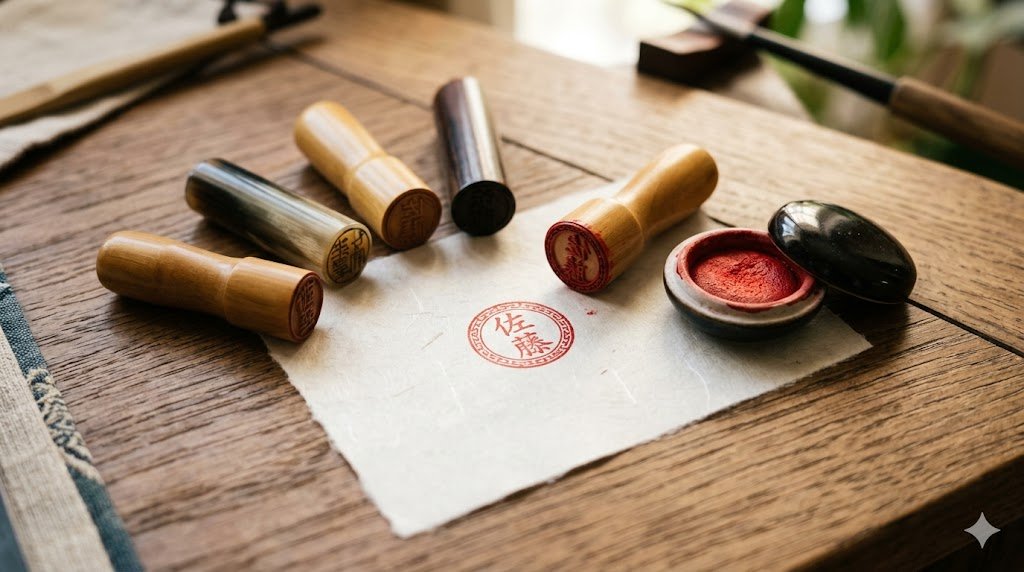
If you are living in Japan as a foreigner, sooner or later someone will ask for your hanko (はんこ) — a personal seal stamped in red ink that works like your signature. Despite Japan’s push to go digital, a hanko is still needed to open many bank accounts, sign apartment leases, and finalize official paperwork. This 2026 guide explains the three types of seal, whether you can use your foreign name, how to register an official one, where to buy it, and what it costs.
📌 What you will learn
You do not have to read it all — jump to what you need.
- What is a hanko (inkan)?
- The 3 types of hanko you should know
- Can foreigners use their own name?
- How to register a jitsu-in (step by step)
- Materials: what counts (and what doesn’t)
- Where to buy a hanko (and what to buy)
- More Japan life guides
※ Start wherever fits your situation.
What is a hanko (inkan)?
A hanko (the stamp) makes an inkan (the imprint) — in practice the words are used interchangeably. It is a small cylindrical seal carved with your name; you press it into red paste and stamp documents. In Japan a registered seal can carry the same legal weight as a signature, which is why getting the right one matters.
The 3 types of hanko you should know
1. Mitome-in (認印) — the everyday seal
A general-purpose, unregistered seal for daily life: receiving parcel deliveries, signing for packages, internal company documents, and simple forms. Cheap and convenient — most people own one even if they never register a seal.
2. Ginko-in (銀行印) — the bank seal
The seal you register with your bank when opening an account. The bank keeps an impression on file and may ask for it when withdrawing or transferring large amounts (often ¥500,000+) or closing the account. Keep this one separate from your everyday seal for security.
3. Jitsu-in (実印) — the registered official seal
Your most formal seal, officially registered at your city/ward office. Required for legally binding acts like buying property, car purchases, and major contracts. After registering, you can obtain an inkan shomeisho (印鑑証明書) — a certificate proving the seal is officially yours.
Can foreigners use their own name?
Yes. As a foreigner you can have a hanko made with katakana (the usual choice for foreign names), kanji, or even romaji (English letters). For a registered jitsu-in, the name on the seal generally needs to match how your name appears on your residence record, so check with your city office first — many accept katakana or your full/family name in romaji.
How to register a jitsu-in (step by step)
- Buy a solid, good-quality hanko (see materials below).
- Bring it with your residence card (zairyu card) to your local city/ward office.
- Fill out the seal registration form and submit it. A small fee of around ¥100–300 usually applies.
- You receive a seal registration card, which lets you print the inkan shomeisho certificate whenever a contract requires it.
Tip: you will likely need a My Number card and your residence record for many of these procedures.
Materials: what counts (and what doesn’t)
For registration, the seal must be hard and solid — typically wood (boxwood), titanium, buffalo horn, or acrylic. Rubber stamps and self-inking (“Shachihata”) stamps cannot be registered because they distort over time. A self-inking mitome-in is fine for everyday use, but get a carved seal for your ginko-in and jitsu-in.
Where to buy a hanko (and what to buy)
You have three main options:
- ¥100 shops (Daiso, Seria): ultra-cheap pre-made seals — but only common Japanese surnames, so they rarely have foreign names.
- Local hanko shops: custom-carved seals, often same-day; staff can advise on katakana vs romaji.
- Online (including English-friendly international shops): the easiest route for foreigners — order a custom katakana or romaji seal and have it delivered, even overseas before you arrive.
A basic custom seal costs around ¥1,000, while premium materials like titanium can run ¥10,000–40,000. A good starter is a custom seal set (jitsu-in + ginko-in + mitome-in) with a case.
Recommended: custom name hanko & seal sets
Order a personalized hanko in katakana, kanji or romaji — many sellers ship worldwide, so you can have it ready before opening your bank account.
Custom katakana/romaji hanko, seal sets & inkan cases
FAQ
Do I really need a hanko in 2026?
Less than before — many forms now accept a signature, and government paperwork is going digital. But banks, landlords, and big contracts still commonly require one, so having a mitome-in and a ginko-in is wise.
Katakana or romaji — which should I choose?
Katakana is the traditional choice and widely accepted. Romaji is fine for everyday seals; for a jitsu-in, confirm your city office accepts it and that it matches your residence record.
Can I register more than one seal?
You can only register one jitsu-in per person per municipality. Keep your ginko-in and mitome-in as separate seals.
What if I lose my registered seal?
Report it to your city office immediately to cancel the registration, then register a new one.
New to life in Japan?
Our Japan Expat Starter Kit covers banking, hanko, My Number, housing, taxes & daily life in one PDF.
More Japan life guides
- How to Open a Bank Account in Japan
- How to Get a My Number Card
- How to Rent an Apartment in Japan
- Having a Baby in Japan as a Foreigner
🔥 Editor’s Picks for Life & Travel in Japan
Practical guides for life and travel in Japan — free, about once a week. No spam, unsubscribe anytime.
☕ Enjoying our Japan guides?
If this article helped you, you can support our work with a coffee!
Did this guide help you? 🍵
Japan Life Lab is a small independent blog, and every guide we publish is completely free — no paywalls, ever. If our work saved you time (or a headache), you can support us with a cup of Japanese tea. Every contribution, big or small, goes straight into keeping these guides free, accurate and up to date for everyone.
☕ Support Japan Life Lab
Leave a Reply