This article was created with AI writing assistance (ChatGPT, Claude, etc.). Product selection, specifications, and reviews are verified by the Japan Life Lab editorial team.
This article contains promotional / affiliate links.
📌 What you will learn
You do not have to read it all — jump to what you need.
- What Is an Izakaya? Japan’s Ultimate Social Dining Experience
- How to Find a Great Izakaya
- Entering an Izakaya: Step by Step
- How to Order at an Izakaya
- Must-Try Izakaya Dishes 2026
- Izakaya Drinks: What to Order
- Izakaya Etiquette for Foreigners
※ Start wherever fits your situation.
Prime members get fast, free delivery on millions of items, Prime Video and members-only deals. Eligible new members can try it free for 30 days.
Start your free 30-day Prime trial →Ages 18–24? See Prime for Young Adults
Paid links. As an Amazon Associate, Japan Life Lab earns from qualifying purchases. Trial eligibility and terms are set by Amazon.
What Is an Izakaya? Japan’s Ultimate Social Dining Experience
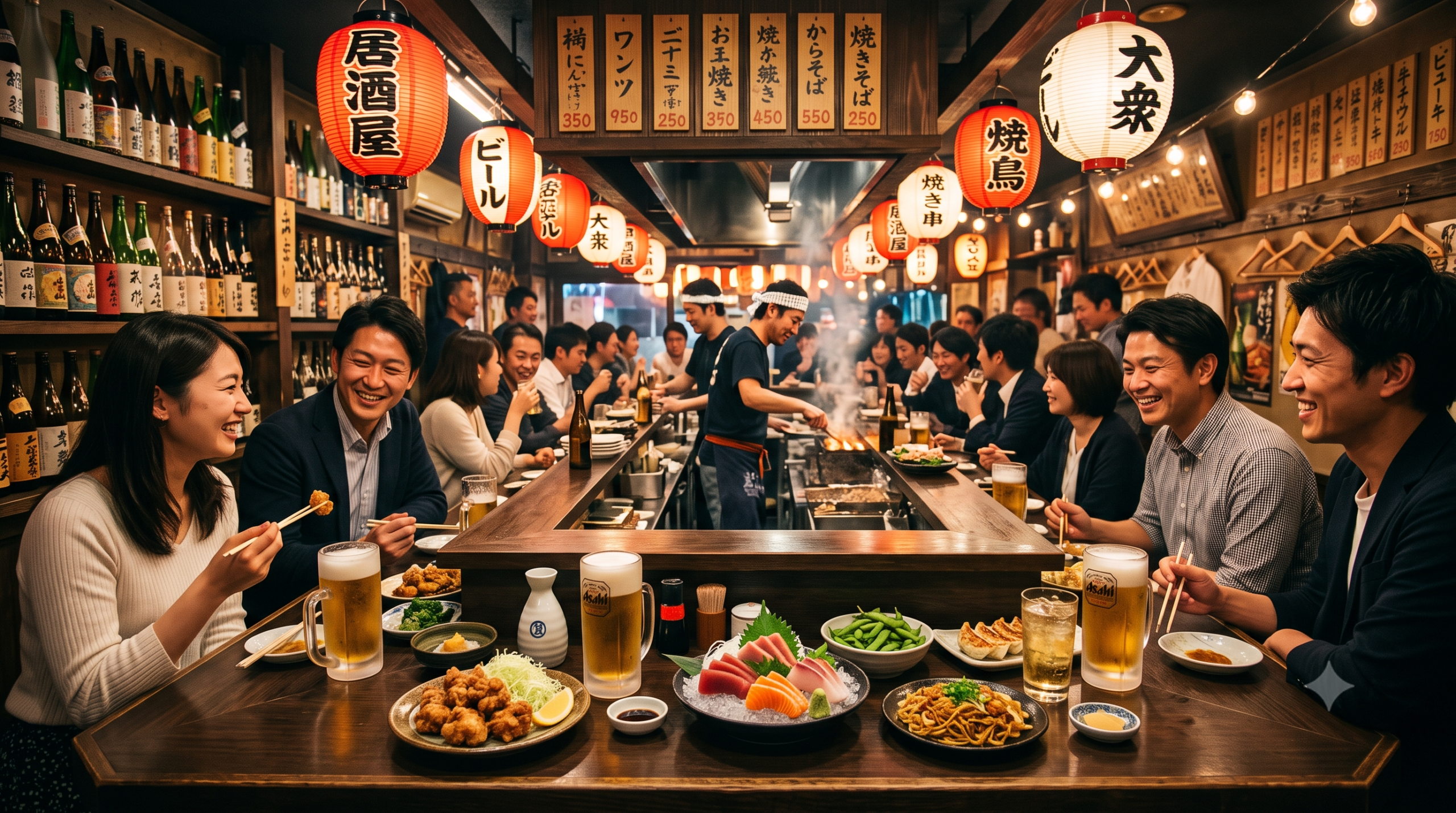
If you’ve ever wandered through Japan’s glowing city streets at night and spotted warm, lively restaurants with red lanterns and the sound of clinking glasses and laughter spilling out — you’ve found an izakaya (居酒屋). Literally translating to “stay-sake-shop,” an izakaya is Japan’s answer to the gastropub: a casual, convivial spot where you eat, drink, and linger for hours with friends, family, or colleagues.
Unlike a regular restaurant where you order one main dish and leave, izakaya dining is designed for sharing. You order multiple small dishes, keep the drinks flowing, and enjoy the laid-back atmosphere. It’s one of the most authentic Japanese social experiences you can have — and as a tourist or expat, stepping into an izakaya is stepping into the real everyday life of Japan.
This guide covers everything you need to know: how to find a great izakaya, what to order, how to behave, and which chains are most beginner-friendly for non-Japanese speakers.
- Average cost: ¥2,000–¥5,000 per person (including drinks)
- Typical hours: 5pm–midnight (some open for lunch)
- Minimum age: 20 years old for alcohol
- Reservation: Usually not required, but recommended for groups of 5+
- Smoking rules: Most modern izakaya are non-smoking or have separate sections
How to Find a Great Izakaya
Great izakaya are everywhere in Japan — inside train stations, on basement floors of office buildings, in small alleyways known as yokochō (横丁). Here’s how to find one worth visiting:
Tabelog (食べログ) is the Japanese equivalent of Yelp and is the gold standard for finding restaurants. Filter by “居酒屋” (izakaya) and sort by rating. Anything above 3.5 stars is excellent. Google Maps also works well — just search “izakaya” near your location, filter by rating, and check the photos. HotPepper (ホットペッパー) is great for reservations, especially if you want a private room (個室, koshitsu) for a group.
Look for these signs of a good izakaya: a chalkboard menu out front with seasonal specials, a slightly worn exterior (too polished often means tourist trap), locals eating inside, and the unmistakable smell of grilled yakitori.
Entering an Izakaya: Step by Step
Walking into an izakaya for the first time can feel daunting, but the process is straightforward once you know it.
Step 1 — Irasshaimase! When you enter, staff will shout “いらっしゃいませ” (welcome). You don’t need to respond — just smile and hold up fingers to indicate your group size (futari = 2, san-nin = 3, etc.).
Step 2 — Choose your seating type. Most izakaya offer counter seats (カウンター), table seats (テーブル), and tatami floor seating (座敷, zashiki). If you want a private room, ask for 個室 (koshitsu). Note: tatami seating requires removing shoes.
Step 3 — The otoshi arrives. Almost every izakaya will bring a small appetizer called otoshi (お通し) or tsukidashi automatically. This is NOT free — it’s a standard table charge of ¥300–¥500 per person. Don’t try to return it; it’s just how izakaya work.
Step 4 — Drinks first, then food. A server will immediately take your drink order. It’s standard to order drinks right away. The classic first drink is toriaezu biru (とりあえずビール) — “a beer for now” — while you look at the food menu.
How to Order at an Izakaya
Modern izakaya increasingly use tablet ordering systems, especially the big chains. You simply browse the touchscreen menu (often with photos and sometimes English), select your items, and confirm. Your food and drinks arrive at the table without needing to flag down staff.
At smaller, traditional izakaya, you’ll order from a paper menu or chalkboard by calling “すみません” (sumimasen — excuse me) to get a server’s attention. Point at menu items if you don’t speak Japanese — staff are generally patient and accustomed to foreigners.
Useful ordering phrases:
- これをください (kore wo kudasai) — I’ll have this one, please
- おすすめは何ですか (osusume wa nan desu ka) — What do you recommend?
- もう一杯 (mō ippai) — One more drink
- お会計お願いします (okaikei onegaishimasu) — Check, please
- 辛くないもの (karakunai mono) — Something not spicy
Must-Try Izakaya Dishes 2026
Izakaya menus are vast. Here are the dishes you absolutely cannot miss:
1. Yakitori (焼き鳥) — Grilled Chicken Skewers
The cornerstone of izakaya cuisine. Chicken parts (thigh, breast, skin, cartilage, heart, liver) are skewered and grilled over charcoal. Order tare (sweet soy sauce glaze) or shio (salt). At a dedicated yakitori izakaya, you can easily order 10+ skewers between two people. Price: ¥80–¥200 per skewer.
2. Edamame (枝豆) — Salted Soybeans
The quintessential drinking snack. Boiled soybeans in the pod, salted and served warm or cold. Order these first — they arrive quickly and pair perfectly with beer. A classic izakaya staple at ¥250–¥400 per plate.
3. Karaage (唐揚げ) — Japanese Fried Chicken
Japan’s version of fried chicken is legendary. Marinated in soy sauce, sake, and ginger, then deep-fried to golden perfection. Served with lemon and sometimes Japanese mayo. Almost every izakaya has this — it’s universally loved and usually priced around ¥500–¥700 per plate.
4. Gyoza (餃子) — Pan-Fried Dumplings
Crispy on the bottom, juicy inside, packed with pork and cabbage. Dip in a mix of soy sauce, rice vinegar, and chili oil. Izakaya gyoza are different from ramen-shop gyoza — they tend to be larger and more indulgent. ¥350–¥600 per plate of 5–6 pieces.
5. Sashimi Moriawase (刺身盛り合わせ) — Sashimi Platter
A selection of fresh raw fish — typically tuna, salmon, yellowtail, squid, and seasonal specials. The quality at a good izakaya rivals sushi restaurants at a fraction of the price. A solid platter for 2 people runs ¥800–¥1,500.
6. Tamagoyaki (だし巻き玉子) — Japanese Rolled Omelette
A simple but revelatory dish. Layers of thin, sweet-savory egg rolled into a rectangular shape and served with grated daikon. It’s a good dish to gauge the quality of an izakaya — if the tamagoyaki is excellent, everything else will be too.
7. Agedashi Tofu (揚げ出し豆腐) — Deep-Fried Tofu in Dashi Broth
Silky tofu coated in a light starch, deep-fried, then served in a delicate dashi broth topped with grated daikon and bonito flakes. Perfect for vegetarians (though check if the dashi is fish-based). Light, elegant, and warming.
8. Potato Salad (ポテサラ) — Japanese Potato Salad
This might sound boring, but Japanese potato salad is a deeply beloved izakaya staple. Creamy, slightly sweet, with Japanese mayo, carrots, cucumber, and sometimes ham or corn. Once you try it at a great izakaya, you’ll understand why.
Izakaya Drinks: What to Order
Drinks are as important as food at an izakaya. Here’s your complete guide:
Beer (ビール)
The most popular izakaya drink. Major brands are Sapporo, Kirin Ichiban, Asahi Super Dry, and Suntory Premium Malt’s. Draft beer (生ビール, nama biru) is always the best choice. First-round beers are often on special promotions.
Nihonshu / Sake (日本酒)
Japan’s iconic rice wine. At a good izakaya, you’ll find local sake (地酒, jizake) from various prefectures. Drink it hiya (cold), nurukan (warm), or atsukan (hot). Ask the staff for their recommendation — they’ll often suggest something seasonal or local. A carafe (お猪口 with tokkuri) runs ¥600–¥1,200.
Shochu (焼酎)
A distilled spirit made from barley, sweet potato, or rice. Lower in calories than sake, higher in alcohol. Served on the rocks, straight, or mixed with water (お湯割り, oyuwari, with hot water — highly recommended in winter). Very popular with Japanese regulars.
Chu-Hi / Sour (チューハイ・サワー)
Shochu mixed with soda and flavored with lemon, grape, yuzu, or peach. Refreshing, low in cost (¥300–¥500), and beginner-friendly. The lemon sour (レモンサワー) is currently having a major moment in Japan — order one at least once.
Highball (ハイボール)
Japanese whisky (usually Suntory Kakubin) mixed with soda water over ice. Crisp, refreshing, and pairs beautifully with fried foods. One of the most ordered drinks at chain izakaya.
Non-Alcoholic Options
Oolong tea (ウーロン茶, ūron cha), green tea, soft drinks, and juice are always available. Don’t be embarrassed to order non-alcoholic drinks — it’s completely normal, especially for drivers or pregnant women.
Izakaya Etiquette for Foreigners
Izakaya are casual, but a few cultural norms will make your experience smoother:
Toast properly: When your drinks arrive, wait until everyone has theirs, then raise your glass and say “乾杯!” (kanpai!). Make eye contact as you clink glasses — looking away during a kanpai is considered rude.
Don’t pour your own drink: It’s customary to pour for others and let them pour for you. Keep an eye on your companions’ glasses and refill them when empty.
Nomihodai rules (飲み放題, all-you-can-drink): Many izakaya offer nomihodai packages for ¥1,000–¥2,000 per person for a set time (usually 90–120 minutes). Order as much as you want within the time — but be aware the timer starts when you order, and you must stop drinking when it ends.
Tipping: There is no tipping in Japan. It can actually cause embarrassment. The service charge (if any) is already on the bill.
Splitting the bill: “Betsu-betsu” (別々) means split the bill. “Warikan” (割り勘) means split equally. At a casual izakaya, equally splitting is most common unless someone insists on treating the group.
Volume: Izakaya are lively and loud — feel free to talk, laugh, and enjoy yourself. Unlike restaurants, there’s no pressure to be quiet.
Best Izakaya Chains for Beginners 2026
If you’re nervous about navigating a local izakaya alone, these well-known chains offer English menus, tablet ordering, and foreigner-friendly service:
Torikizoku (鳥貴族) — The best value izakaya chain in Japan. Every item on the menu is ¥370 (including drinks). Yakitori-focused, no-frills, always packed with locals. Perfect for solo diners.
Watami (和民) — A nationwide chain with extensive menus and English support at major tourist locations. Great for groups. Wide variety of food and drink options.
Shirokiya (白木屋) — A Monteroza group chain with tablet ordering and a huge menu. Popular with young Japanese, often has nomihodai promotions.
Uotami (魚民) — Seafood-focused chain by the same Monteroza group. Excellent sashimi and seafood dishes at mid-range prices.
Tengu (天狗) — Known for its generous portions and strong nomihodai deals. Traditional wooden interior atmosphere.
Kushikatsu Tanaka (串カツ田中) — Specializes in kushikatsu (skewered, deep-fried meats and vegetables, Osaka style). Famous rule: no double-dipping the shared sauce. Excellent chain for a unique izakaya experience.
Tips for Vegetarians & Special Diets
Being vegetarian at an izakaya is challenging but not impossible. The following are usually safe bets: edamame, agedashi tofu (confirm dashi broth is not fish-based), french fries, vegetable tempura, salads, and some grilled vegetable dishes (野菜焼き, yasai yaki).
For allergies, the phrase “〇〇アレルギーがあります” ([allergen] arerugi ga arimasu) — “I have a [allergen] allergy” — is essential. Carry an allergy card in Japanese if you have severe allergies. The allergy kitchen card from the FARE organization is available in Japanese.
Essential Sake & Japanese Drinks to Bring Home
After falling in love with Japanese drinks at izakaya, you’ll want to bring some home. These are top picks available internationally:
🍶 Hakutsuru Junmai Sake
One of Japan’s best-selling sake brands for over 260 years. Hakutsuru Junmai has a clean, dry finish that pairs perfectly with any izakaya dish. Available in the US and internationally through Amazon.
🥃 Suntory Toki Japanese Whisky
The whisky used in Japan’s iconic highball. Suntory Toki is a blended whisky with hints of green apple, honey, and oak — light enough to enjoy with soda water, complex enough to sip neat. Perfect for recreating the izakaya highball at home.
🍺 Sapporo Premium Beer Gift Set
If you want to gift someone the izakaya beer experience, a Japanese beer gift set is the way to go. Sapporo, Kirin, and Asahi sets are available internationally and make excellent souvenirs or party gifts.
Frequently Asked Questions
Most izakaya charge an otoshi (seat/cover charge) of ¥300–¥500 per person. It comes as a small appetizer. Some modern izakaya don’t charge this, but it’s standard practice — don’t be surprised when it appears on your bill.
Absolutely. Solo dining (一人飲み, hitori nomi) is completely normal and even celebrated. Counter seating is ideal for solo diners. Torikizoku and small neighborhood izakaya are especially welcoming to solo visitors.
Not at all. Non-alcoholic drinks are available everywhere. The social experience of izakaya is about being together, not about how much alcohol you consume. Simply order oolong tea, juice, or a soft drink — no explanation needed.
Most izakaya open around 5pm and close between midnight and 2am on weekdays, later on weekends. Some open for lunch (11:30am–2pm) as well, offering set meal deals. Last order is typically 30–60 minutes before closing time.
¥2,000–¥3,000 per person for a casual outing with 2–3 drinks and shared dishes. ¥4,000–¥6,000 for a more elaborate evening with premium sake and multiple courses. Nomihodai (all-you-can-drink) packages can be very good value if you plan to drink more than 2–3 drinks.
Conclusion
The izakaya is more than just a restaurant — it’s the heartbeat of Japanese social life. Whether you’re a tourist experiencing Japan for the first time or an expat settling into a new life, making izakaya a regular part of your evenings will open doors to the warmest, most authentic side of Japanese culture. Go early, order freely, drink at your pace, and let the night unfold. 乾杯!
🗾 More Japan Life Guides
🔥 Editor’s Picks for Life & Travel in Japan

Japan Expat Starter Kit 2026 PDF guide
Your first 90 days in Japan, step by step: 17 chapters · 24 pages · 100 phrases in Japanese script · 40 kanji · printable checklists. Bank account, My Number, health insurance, apartment, phone, taxes & pension.
$9.99 $4.99 current price
📥 Get the kit →📄 Read 5 pages free: contents + Chapter 2
⚡ Instant PDF download · 🛡️ 30-day money-back guarantee · 🔄 Free 2026 updates
🛒 Ready to Buy? Shop These in Japan!
Get fast delivery across Japan — including same-day in major cities
Practical guides for life and travel in Japan — free, about once a week. No spam, unsubscribe anytime.
☕ Enjoying our Japan guides?
If this article helped you, you can support our work with a coffee!
Leave a Reply