This article was created with AI writing assistance (ChatGPT, Claude, etc.). Product selection, specifications, and reviews are verified by the Japan Life Lab editorial team.
This article contains promotional / affiliate links.
⏱ The short answer (30 seconds)
In a hurry? The full reasons and prices are right below.
- HakoneMt. Fuji Views & Hot Springs
- KamakuraGiant Buddha & Coastal Temples
- NikkoUNESCO World Heritage Temples in the Mountains
- YokohamaJapan’s Most International Port City
- KawaguchikoThe Ultimate Mt. Fuji Photo Destination
※ If in doubt, go with #1. Budget picks are further down the page.
Use the Japan Rail Pass calculator — enter your journeys and it tells you instantly whether the pass beats individual tickets.
Prime members get fast, free delivery on millions of items, Prime Video and members-only deals. Eligible new members can try it free for 30 days.
Start your free 30-day Prime trial →Ages 18–24? See Prime for Young Adults
Paid links. As an Amazon Associate, Japan Life Lab earns from qualifying purchases. Trial eligibility and terms are set by Amazon.
Why Day Trips from Tokyo Are a Must-Do in 2026
Tokyo is endlessly fascinating — but Japan’s exceptional rail network means you can escape the city, explore somewhere completely different, and be back in your hotel before midnight. In 2026, day trips from Tokyo remain one of the most searched activities for tourists and long-term expats alike. Most top destinations are 30 minutes to 2 hours away, and with a Suica IC card or the right rail pass, getting there is seamless.
Whether you crave Mt. Fuji views, ancient UNESCO temples, coastal seafood towns, or the most atmospheric Chinatown in Asia, there’s a perfect day trip waiting just outside Tokyo’s borders. This guide covers the five best options with practical 2026 transport details, costs, and tips.
How to Choose the Right Day Trip
1. Know Your Travel Time
Yokohama is 30–40 minutes from Shibuya. Kamakura takes about an hour. Hakone or Kawaguchiko need 90 minutes each way. Nikko is 2+ hours. Plan your whole day around transit so you’re not rushing at either end.
2. Check the Season
Mt. Fuji is most visible October through February. Kamakura’s cherry blossoms peak in late March. Autumn leaves at Nikko (late October to mid-November) are world-class. Summer is beach season at Kamakura — arrive before 9am or expect massive crowds.
3. Match Your Interests
History lovers should prioritize Nikko or Kamakura. Nature seekers will love Hakone’s volcanic landscapes or Kawaguchiko’s Fuji views. Foodies and cosmopolitan vibes → Yokohama Chinatown. Thrill-seekers → Fujikyu Highland near Kawaguchiko.
4. Factor in Budget
Kamakura is extremely budget-friendly — most temples are ¥200–¥500, and you can walk between sites for free. Nikko’s shrine complex entrance, Hakone Free Pass, or Kawaguchiko buses add up to ¥5,000–¥12,000 before food. Build in extra for day passes that cover local transport.
5. Avoid Peak Crowds
Weekdays are dramatically calmer at every destination. On weekends, arriving before 9am gives you 2–3 golden hours before tour buses arrive. The Chureito Pagoda at Kawaguchiko and Kamakura’s Great Buddha fill up fast after 10am.
Top 5 Day Trips from Tokyo 2026
1. Hakone — Mt. Fuji Views & Hot Springs
Hakone is the quintessential Tokyo day trip: volcanic scenery, traditional hot spring culture, and — on clear days — jaw-dropping Mt. Fuji views across Lake Ashi. The Romancecar express from Shinjuku arrives in about 85 minutes. The Hakone Free Pass (around ¥6,100 from Shinjuku, ¥4,600 from Odawara) covers the mountain cog railway, ropeway over the volcanic crater at Owakudani, and the Lake Ashi cruise — exceptional value for a day’s transport.
The Hakone Open-Air Museum is one of Japan’s finest outdoor sculpture parks, with a full Picasso pavilion alongside massive international sculptures in a mountain setting. Day-use onsen bathing is available at dozens of ryokan from around ¥1,500. The “kuro tamago” (black eggs hard-boiled in volcanic steam at Owakudani) and fresh soba noodles are must-try local foods.
In 2026, the Hakone Ropeway continues running with updated cars, giving spectacular views over the active volcanic crater. Book Romancecar tickets in advance on weekends and golden week — they sell out weeks ahead.
| Details | Info |
|---|---|
| From Tokyo | Shinjuku → Odawara (Romancecar 70 min) → Hakone-Yumoto |
| Total transit | ~90 minutes each way |
| Best season | Oct–Feb (Fuji views), all year for onsen |
| Daily budget | ¥8,000–¥18,000 per person |
| Top sights | Lake Ashi, Ropeway, Open-Air Museum, Onsen |
✅ Why Hakone is Worth It
- Japan’s most famous and easiest scenic day trip
- Hakone Free Pass covers nearly all transport
- Mt. Fuji reflections on Lake Ashi are iconic
- Multiple onsen for day-use bathing
- World-class outdoor art museum
- Excellent food and souvenir scene
⚠️ Watch Out For
- Mt. Fuji hidden by clouds more often than not
- Extremely crowded weekends and holidays
- Ropeway sometimes closes for volcanic activity checks
Best for: First-timers, couples, onsen fans, families with older kids
- 🗻 Iconic Mt. Fuji photo opportunities
- ♨️ Day-use onsen bathing from ¥1,500
- 🎨 Hakone Open-Air Museum
- 🚠 Active volcanic crater ropeway ride
2. Kamakura — Giant Buddha & Coastal Temples
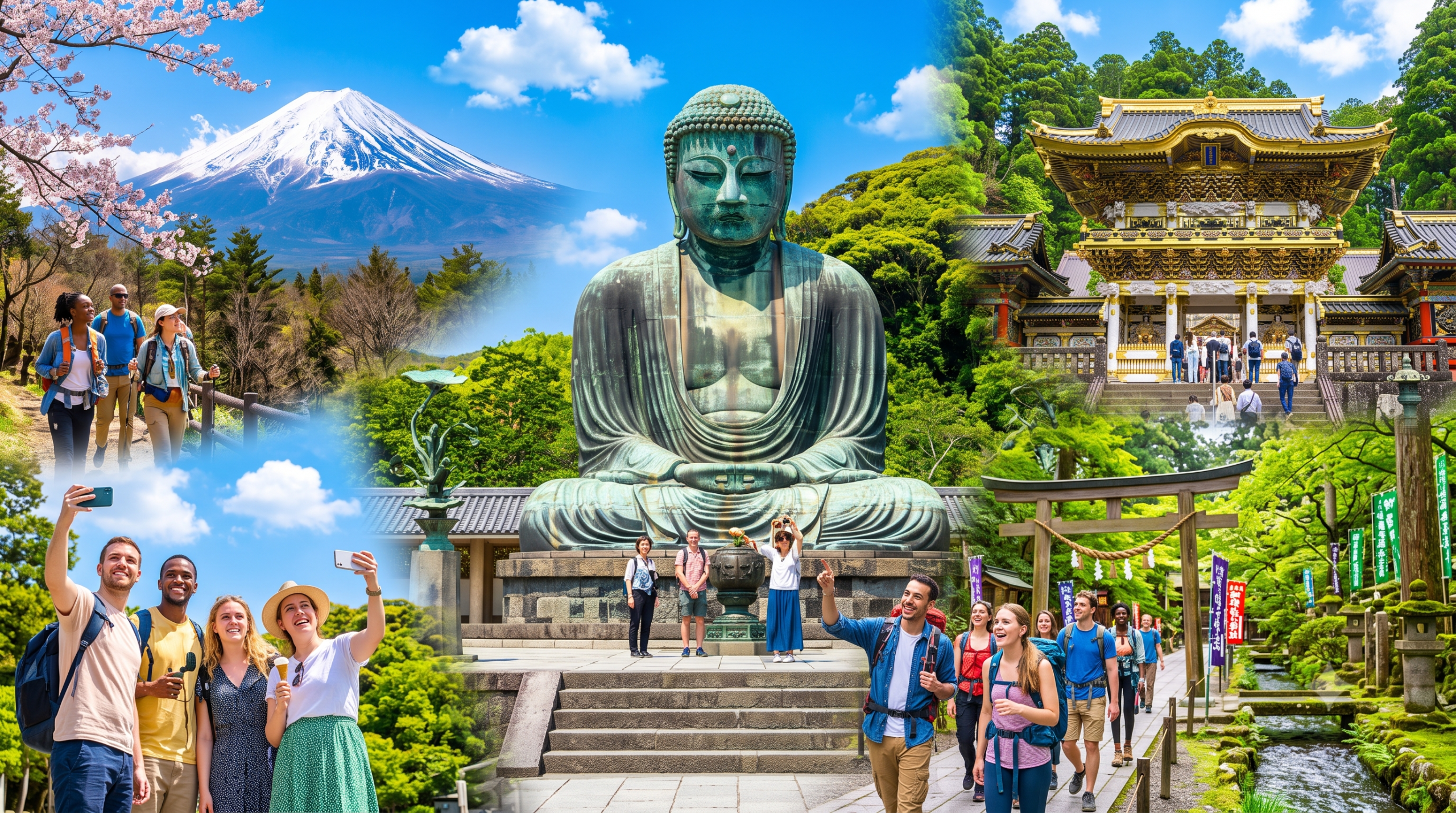
Kamakura is Tokyo’s most accessible historical escape — just 60 minutes south by the Shonan-Shinjuku Line. This former 12th-century capital still feels sacred, with 70+ temples and shrines tucked into forested hills that meet the Pacific Ocean. The iconic Great Buddha (Kotoku-in) at 13.35 meters tall is a UNESCO-registered treasure you can walk inside for just ¥20 extra.
The bamboo grove at Hokokuji temple is one of Japan’s most photographed spots — arrive at opening (9am) to get shots without crowds. Hase-dera temple offers sweeping ocean views from its hillside garden. The retro Enoshima Electric Railway (Enoden) connects Kamakura to the beach towns and Enoshima Island, where fresh seafood and a lighthouse tower await.
In 2026, Kamakura remains the best budget-value day trip from Tokyo. The “Great Buddha Hiking Course” between temples is free and runs through forested valleys. Shirasu (whitebait) rice bowls are the local specialty — don’t leave without trying one at a restaurant near Kamakura Station.
| Details | Info |
|---|---|
| From Tokyo | Shibuya → Kamakura, Shonan-Shinjuku Line (60 min) |
| Total transit | ~60 minutes each way |
| Best season | Spring (cherry blossoms), Autumn (foliage) |
| Daily budget | ¥3,000–¥8,000 per person |
| Top sights | Great Buddha, Hokokuji Bamboo, Hase-dera, Enoshima |
✅ Why Kamakura is Worth It
- Closest major historical day trip (60 min)
- Most budget-friendly option — temples from ¥200
- Beautiful coastal scenery alongside history
- Fresh shirasu seafood bowls are unique
- Walkable between most major sights
- Enoshima Island adds a beach element
⚠️ Watch Out For
- Extremely crowded on weekends year-round
- Hilly terrain — wear comfortable shoes
- Narrow streets get gridlocked with tourists on peak days
Best for: History buffs, photographers, budget travelers, anyone wanting a beach element
- 🗿 Iconic 13m Great Buddha statue
- 🎋 Hokokuji bamboo grove (arrive early)
- 🌊 Pacific coast views and fresh seafood
- 🚃 Enoshima Electric Railway ride
3. Nikko — UNESCO World Heritage Temples in the Mountains
Nikko takes the most commitment of the five trips here — about 2 hours from Asakusa by the Tobu Nikko Line — but delivers something no other day trip can: a UNESCO World Heritage shrine complex that feels almost fairytale-elaborate, set in a cedar forest. The Tosho-gu Shrine is encrusted with gold leaf carvings, painted in vivid colors, and surrounded by 400-year-old trees. The famous “see no evil, hear no evil, speak no evil” monkey carvings live here.
Beyond the main shrine area, Nikko National Park offers Kegon Falls (97 meters — one of Japan’s three great waterfalls), crystal-clear Lake Chuzenji at 1,269m altitude, and in autumn, some of the most spectacular fall foliage anywhere in Japan. The Nikko Pass (¥4,520 from Tobu Asakusa, 2 days) covers all trains and buses in the area.
In 2026, Nikko’s autumn leaf season (late October to early November) remains one of Japan’s most memorable experiences. Book transport and any accommodation early — the town fills weeks in advance during peak koyo season. Even as a day trip, arrive by 9am to see Tosho-gu before tour groups arrive.
| Details | Info |
|---|---|
| From Tokyo | Asakusa → Nikko, Tobu Nikko Line (120–140 min) |
| Total transit | ~2 hours each way |
| Best season | Late Oct–Nov (autumn leaves), April–May (spring) |
| Daily budget | ¥7,000–¥15,000 per person |
| Top sights | Tosho-gu Shrine, Kegon Falls, Lake Chuzenji |
✅ Why Nikko is Worth It
- UNESCO World Heritage status — truly unique
- Tosho-gu Shrine is among Japan’s most spectacular
- Stunning national park with waterfalls and lakes
- World-famous autumn foliage season
- Less visited on weekdays than Hakone or Kamakura
- Excellent for a full day — lots to see
⚠️ Watch Out For
- Farthest trip — 2+ hours each way is tiring
- Shrine entrance fees add up (~¥2,100 total)
- Autumn season is extremely crowded
Best for: History enthusiasts, nature lovers, photographers, repeat Tokyo visitors
- ⛩️ Tosho-gu Shrine’s elaborate gold carvings
- 🍁 World-class autumn foliage (Oct–Nov)
- 💧 Kegon Falls — Japan’s top waterfall
- 🏔️ Alpine scenery at Lake Chuzenji
4. Yokohama — Japan’s Most International Port City
Yokohama is just 30 minutes from Shibuya by the Tokyu Toyoko Line, making it the easiest dramatic change-of-scene from Tokyo. Japan’s second-largest city has a completely different personality from the capital — a cosmopolitan port with the best Chinatown in Asia, a stunning modern waterfront, and world-class museums clustered around Minato Mirai 21.
Yokohama Chinatown (Chukagai) spans 600 restaurants and shops: steamed buns from doorway vendors, Cantonese roasted meats, and red-and-gold temple gates create a vivid atmosphere unlike anything else in Japan. Walk five minutes to the Minato Mirai waterfront for the iconic Cosmo Clock 21 Ferris wheel, the Red Brick Warehouse shopping complex, and sweeping harbor views. The Cup Noodles Museum (¥500 entry) lets you design your own custom instant noodle cup — a uniquely Japanese experience.
In 2026, Yokohama continues to develop the Minato Mirai area with new restaurants, event spaces, and seasonal festivals. It’s an excellent half-day trip combined with an afternoon in a different part of Tokyo, or a full-day exploration that covers Chinatown, the waterfront, and the Sankeien traditional garden.
| Details | Info |
|---|---|
| From Tokyo | Shibuya → Yokohama, Tokyu Toyoko Line (30–40 min) |
| Total transit | ~35 minutes each way |
| Best season | All year, especially for festivals (summer/winter) |
| Daily budget | ¥3,000–¥8,000 per person |
| Top sights | Chinatown, Minato Mirai, Red Brick Warehouse, Cup Noodles Museum |
✅ Why Yokohama is Worth It
- Closest major day trip — just 30–40 minutes
- Asia’s best Chinatown
- Stunning harbor waterfront and architecture
- Rich food scene: Chinese, craft beer, fresh seafood
- Great for families, couples, and groups
- Easy to add to a Tokyo itinerary without a full day
⚠️ Watch Out For
- Feels more urban than a “nature escape”
- Chinatown extremely crowded on weekends
- Might feel similar to Tokyo for some visitors
Best for: Food lovers, families, first-time visitors, shoppers, half-day trippers
- 🥟 Asia’s most famous Chinatown
- 🎡 Minato Mirai Ferris wheel views
- 🍜 Custom Cup Noodles Museum experience
- ⚓ Scenic harbor waterfront walk
5. Kawaguchiko — The Ultimate Mt. Fuji Photo Destination
If your number-one goal is a postcard-perfect photo of Mt. Fuji, Kawaguchiko (Lake Kawaguchi) is your destination. One of the famous Fuji Five Lakes, Kawaguchi offers the iconic mirror reflection of Japan’s sacred mountain on calm mornings, and multiple world-famous viewpoints including the Chureito Pagoda — a 398-step climb repaid by arguably the most iconic view in Japan.
Getting there takes about 1.5 hours from Shinjuku by Fuji Express or Keio Highway Bus (around ¥1,750 each way). In summer (early July to mid-September), this is the gateway to Mt. Fuji climbing via the 5th Station buses, while year-round, cycling around the lake (rental bikes ~¥500/hour) is a highlight. Fujikyu Highland amusement park nearby is famous for some of the world’s most extreme roller coasters.
In 2026, overtourism management is in place at the most crowded viewpoints. The famous Lawson convenience store view has a permanent barrier, but the Chureito Pagoda and the northern lake shore remain open and rewarding — just arrive by 7am on weekends for the best light and fewest people. Visibility is best October through February on clear days.
| Details | Info |
|---|---|
| From Tokyo | Shinjuku → Kawaguchiko, Keio Bus (90–100 min) |
| Total transit | ~90 minutes each way |
| Best season | Oct–Feb (best Fuji visibility), Jul–Aug (climbing season) |
| Daily budget | ¥5,000–¥12,000 per person |
| Top sights | Chureito Pagoda, Lake Kawaguchi, Fujikyu Highland |
✅ Why Kawaguchiko is Worth It
- Best place for iconic Mt. Fuji photography
- Mirror lake reflections are breathtaking
- Chureito Pagoda view is bucket-list level
- Cycling around the lake is a highlight activity
- Gateway to Fuji climbing in summer
- Fujikyu Highland for thrill-seekers
⚠️ Watch Out For
- Fuji frequently hidden by clouds (especially summer)
- New overtourism restrictions at some viewpoints
- Highway buses sell out fast during peak season
Best for: Mt. Fuji fans, photographers, hikers, thrill-seekers, bucket-list travelers
- 🗻 Japan’s most iconic Mt. Fuji photography
- 🚲 Lake Kawaguchi cycling route
- ⛩️ Chureito Pagoda sunrise shots
- 🎢 Fujikyu Highland extreme rides
Comparison: Which Day Trip is Right for You?
| Destination | Transit Time | Best For | Est. Cost | Crowd Level |
|---|---|---|---|---|
| Hakone | 90 min | Mt. Fuji views + Onsen | ¥8,000–¥18,000 | High (weekends) |
| Kamakura | 60 min | History + Coast | ¥3,000–¥8,000 | Very High (weekends) |
| Nikko | 120 min | UNESCO Temples | ¥7,000–¥15,000 | Moderate–High |
| Yokohama | 35 min | Food + Harbor | ¥3,000–¥8,000 | High (Chinatown) |
| Kawaguchiko | 90 min | Mt. Fuji Photos | ¥5,000–¥12,000 | High (weekends) |
Essential Tips for Day Trips from Tokyo
Always load your Suica IC card before leaving — it works on local trains and buses at all five destinations. For Nikko and Hakone, dedicated day passes cover all local transport and are worth buying. Keep your Suica topped up to at least ¥3,000 before departing Tokyo.
Carry cash: rural areas near Kawaguchiko and some Nikko eateries have limited card acceptance. 7-Eleven and Lawson ATMs accept most international cards. Download Google Maps offline before departure — signal can be patchy in mountain areas. Pack a small rain poncho (available at any convenience store for ¥500) as mountain weather shifts quickly.
Book weekend transport early: Hakone Romancecar and Kawaguchiko buses fill up 1–2 weeks in advance during golden week, cherry blossom season, and autumn leaf season. Apps like Japan Bus Online and Odakyu’s website let you reserve seats in advance. Departing before 8am on weekends gives you golden hours at every destination before the day-tripping crowds arrive.
Ad / PR: This section contains affiliate links
🎫 Book Day Tours & Activities in Advance
Popular day trips (Hakone, Nikko, Mt. Fuji, Kamakura) sell out fast in peak season. Compare guided tours and skip-the-line tickets on these booking platforms.
VELTRA — Day Tours from TokyoKKday — Tickets & Activities🎌 Book Japan experiences before prices go up
KKday offers Shinkansen & rail passes, USJ and Disney tickets, ski packages, onsen day trips and 10,000+ activities across Japan — often cheaper than buying at the gate, with instant e-vouchers in English.
🔥 Editor’s Picks for Life & Travel in Japan

Japan Expat Starter Kit 2026 PDF guide
Your first 90 days in Japan, step by step: 17 chapters · 24 pages · 100 phrases in Japanese script · 40 kanji · printable checklists. Bank account, My Number, health insurance, apartment, phone, taxes & pension.
$9.99 $4.99 current price
📥 Get the kit →📄 Read 5 pages free: contents + Chapter 2
⚡ Instant PDF download · 🛡️ 30-day money-back guarantee · 🔄 Free 2026 updates
🛒 Ready to Buy? Shop These in Japan!
Get fast delivery across Japan — including same-day in major cities
Practical guides for life and travel in Japan — free, about once a week. No spam, unsubscribe anytime.
☕ Enjoying our Japan guides?
If this article helped you, you can support our work with a coffee!
Leave a Reply