This article was created with AI writing assistance (ChatGPT, Claude, etc.). Product selection, specifications, and reviews are verified by the Japan Life Lab editorial team.
This article contains promotional / affiliate links.
Japan has rules. Lots of them. Most aren’t written anywhere. And most Japanese people will never tell you when you’ve broken one — they’ll just quietly cringe and move on. This guide covers the specific rules that matter, why they exist, and exactly what foreigners get wrong.
📌 What you will learn
You do not have to read it all — jump to what you need.
- Restaurant & Dining Etiquette
- Public Transport Etiquette
- Onsen (Hot Spring) Etiquette
- Shrines & Temples
- Modern & 2026-Specific Etiquette
- Common Myths vs. Reality (2026)
※ Start wherever fits your situation.
Restaurant & Dining Etiquette
Slurping noodles — yes, please
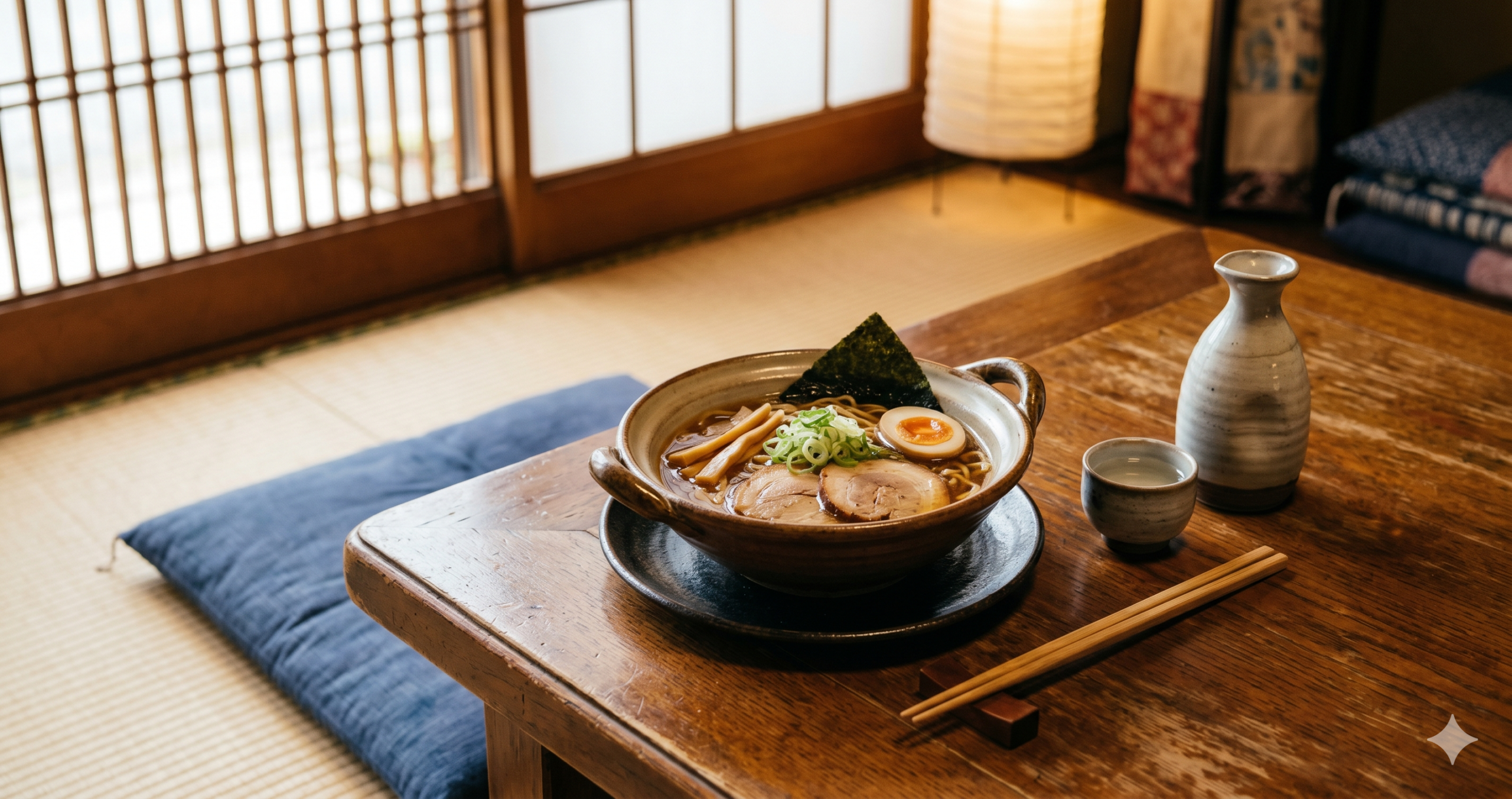
Slurping ramen, udon, and soba loudly is not just acceptable — it’s a compliment to the chef. It’s also how the Japanese enhance flavor (aerating the noodles as you eat). However, this rule applies only to noodles. Slurping other foods, soup from a spoon, or drinks is still considered rude. The boundary is precise: noodles, yes. Everything else, no.
Chopstick taboos — these are serious
Two things that will genuinely disturb Japanese people at the dinner table:
- Sticking chopsticks vertically in rice. This directly mimics the way rice is offered to the dead at funerals. Never do this.
- Passing food chopstick-to-chopstick. This replicates the solemn ceremony of passing cremated bones between family members after a cremation. It’s a deep cultural taboo.
Also: don’t rub disposable chopsticks together (implies they’re low quality and insulting to the restaurant), and when finished, lay them horizontally across your bowl — never pointing at anyone.
Soy sauce — there’s a wrong way
At a sushi restaurant, dip only the fish (not the rice) into soy sauce. Don’t mix wasabi into your soy sauce dish — apply it directly to the fish. And don’t pour soy sauce over white rice at a Japanese restaurant; it signals you don’t appreciate the rice’s natural flavor. These are noticed, even if nothing is said.
Say this after every meal
“Gochisousama deshita” (ごちそうさまでした) — said when finishing a meal. This single phrase, directed to the staff or host, carries more weight than any tip. It’s deeply appreciated and instantly marks you as someone who understands Japanese culture. Learn it. Use it every time.
No tipping — ever
Japan has zero tipping culture, and this is not a guideline — it’s a fact of daily life. If you leave money on the table, a server will often chase you to return it. Staff who accept tips can face disciplinary action from management. Tipping in Japan implies the service was below standard and needs monetary improvement — the opposite of the intended message. Just say gochisousama deshita and walk out.
Public Transport Etiquette
No phone calls on urban trains
This is one of Japan’s most strictly observed rules. Talking on your phone on Tokyo, Osaka, or Kyoto metro lines is genuinely taboo — you’ll feel the silent hostility of an entire train car. The exception: long-distance bullet trains (Shinkansen), where the space between cars allows calls. On urban trains, keep your phone on silent, keep your voice low, and keep conversations to texting.
The escalator side rule
In Tokyo: stand on the left, walk on the right. In Osaka: stand on the right, walk on the left. Yes, it’s different. Yes, locals follow this religiously. Getting it wrong in a crowded station during rush hour will create a minor but real problem behind you.
Eating on trains
Don’t eat on urban trains (subways, city lines). This is fine on Shinkansen, which have fold-down trays, cup holders, and food cart service. On city lines, even if no one says anything, eating is considered selfish behavior in a shared space.
Onsen (Hot Spring) Etiquette
Wash first — non-negotiable
Before entering any onsen pool, you must thoroughly wash your entire body with soap and shampoo at the individual shower stations provided. This isn’t optional and isn’t just a suggestion. You’re about to share water with strangers; entering unwashed is genuinely unsanitary and deeply disrespectful in Japanese culture.
The small towel rule
You’ll receive a small towel (or bring your own). It goes on top of your head or folded at the poolside. Under no circumstances should it touch the water. Submerging the towel contaminates the shared bath — a serious offense.
Tattoos: the situation in 2026
Many traditional onsen still refuse entry to people with visible tattoos due to historical associations with yakuza (organized crime). The policy is gradually liberalizing — especially at urban facilities and tourist-oriented hot springs — but you should always check before arriving. Options: some facilities offer private baths, some allow waterproof sticker coverage, and some have completely changed their policy. Check the website or call ahead.
Shrines & Temples
The torii gate ritual
When you walk through a torii gate (the red/orange archways at Shinto shrines), give a small bow. The gate marks the boundary between everyday and sacred space; acknowledging it as you cross matters to locals who observe you. At the main altar: toss a coin, bow twice, clap twice, pause to pray, then bow once more. At Buddhist temples, press palms together instead of clapping — the rituals are different, and mixing them up is like accidentally mixing up two different religions’ ceremonies.
Photography rules
Outdoor shrine and temple grounds are generally fine to photograph. The interiors of main halls, prayer areas, and rooms containing sacred objects are almost always off-limits. Look for signs. When in doubt, don’t. And always ask permission before photographing people at worship.
Modern & 2026-Specific Etiquette
Selfie sticks are banned
All JR train platforms, most major shrines and temples, and many tourist hotspots now prohibit selfie sticks. The bans are expanding. Look for signs showing “jidoribo kinshi” (自撮り棒禁止) or a stick-and-camera with a red X. Using one where banned will attract attention — and not the kind you want.
Walking while on your phone
Several train stations have officially banned walking while using your smartphone. More importantly, it’s considered extremely inconsiderate behavior in Japanese pedestrian culture. If you need to look at your phone, stop, step to the side, check, then keep moving.
Photographing people
Japan has legal protections called “portrait rights” (肖像権). Photographing identifiable people without consent — even in public — can create legal issues. This applies especially to photos that will be published online or used commercially. When in doubt, ask. When someone waves you off, delete it.
Common Myths vs. Reality (2026)
| The Myth | The Reality |
|---|---|
| “You must eat dishes in a specific order” | Only at formal kaiseki; casual dining has no required order |
| “Blowing your nose is always rude” | Do it quietly in a restroom; loud honking in public IS rude |
| “All eye contact is disrespectful” | Normal eye contact is fine; aggressive staring is rude |
| “Tattoos are banned everywhere” | Outdated — policies vary; urban/tourist facilities increasingly accepting |
| “You can’t photograph anything” | Most public outdoor areas are fine; interiors of sacred buildings are not |
🗾 More Japan Life Guides
🇯🇵 Travel & Life Essentials for Japan
Hand-picked gear to make your time in Japan easier. Available on Amazon US & Amazon Japan.
🔋 Portable charger
A must for long days of sightseeing and photos.
View on Amazon (US)View on Amazon Japan🔌 Travel plug adapter
Japan uses Type A outlets. Bring the right adapter.
View on Amazon (US)View on Amazon Japan🎧 Translation earbuds
Real-time translation to talk without barriers.
View on Amazon (US)View on Amazon JapanAs an Amazon Associate, Japan Life Lab earns from qualifying purchases.
🔥 Editor’s Picks for Life & Travel in Japan
📘 The Japan Expat Starter Kit 2026
Banking, housing, My Number, taxes, 100 phrases and a 40-kanji cheat sheet — everything from this site in one 17-chapter PDF field manual. Free lifetime 2026 updates.
Reader price: $9.99 $6.99 with code JLL30 at checkout
30-day money-back guarantee · Instant download · PR
Practical guides for life and travel in Japan — free, about once a week. No spam, unsubscribe anytime.
☕ Enjoying our Japan guides?
If this article helped you, you can support our work with a coffee!
Did this guide help you? 🍵
Japan Life Lab is a small independent blog, and every guide we publish is completely free — no paywalls, ever. If our work saved you time (or a headache), you can support us with a cup of Japanese tea. Every contribution, big or small, goes straight into keeping these guides free, accurate and up to date for everyone.
☕ Support Japan Life Lab
Leave a Reply