This article was created with AI writing assistance (ChatGPT, Claude, etc.). Product selection, specifications, and reviews are verified by the Japan Life Lab editorial team.
This article contains promotional / affiliate links.
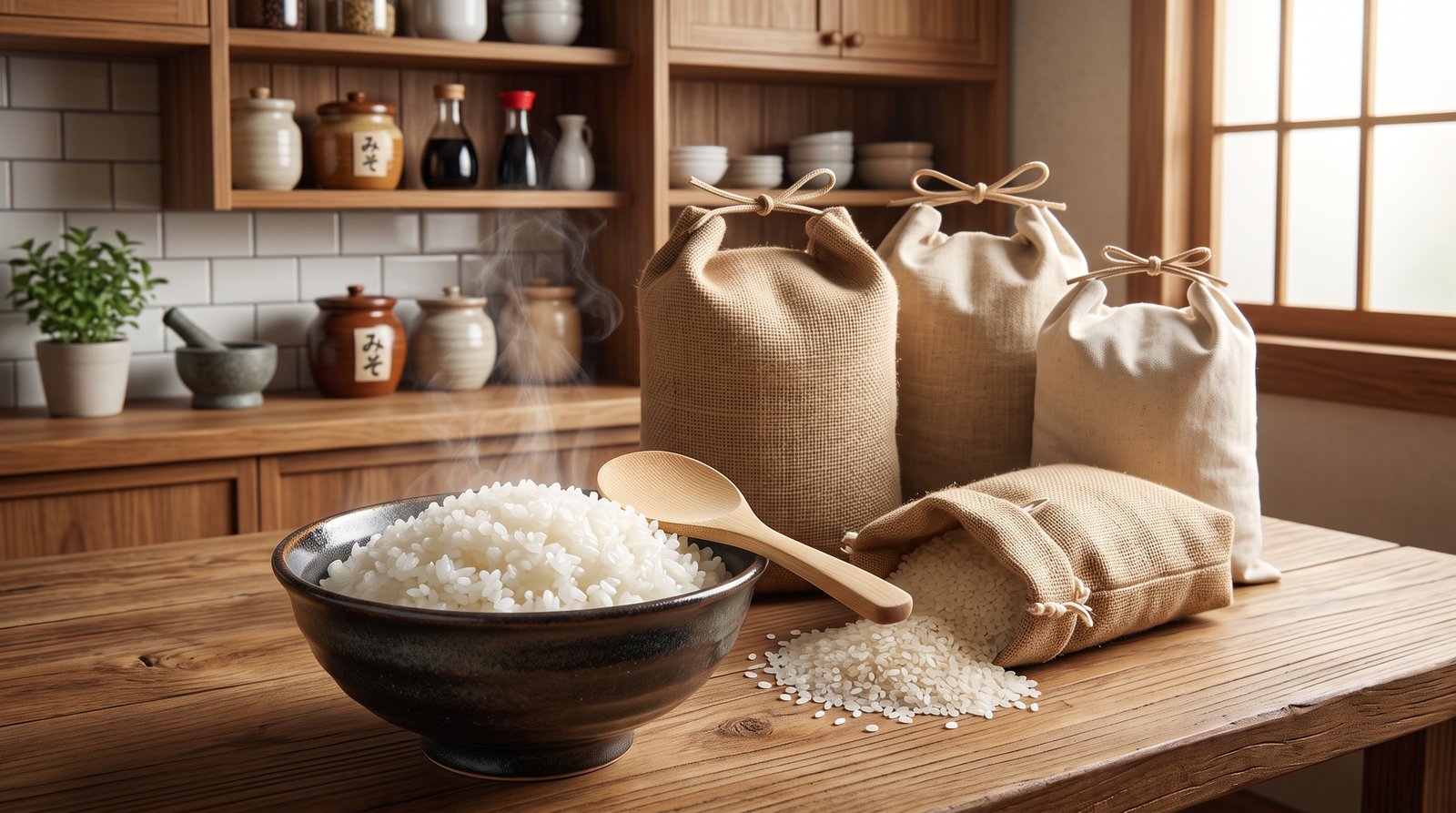
Ask any Japanese person what makes a meal “Japanese” and the answer isn’t sushi or ramen — it’s rice. Perfectly cooked short-grain rice is glossy, slightly sweet, and just sticky enough to pick up with chopsticks. And right now is the best time of year to buy it: September to November is shinmai (new rice) season, when the freshly harvested crop hits supermarket shelves with a fragrance and moisture that older rice simply can’t match.
This guide covers the best Japanese rice brands and varieties in 2026 — both the famous varieties you’ll find in Japanese supermarkets (Koshihikari, Akitakomachi, Yumepirika and more) and the brands you can actually buy on Amazon.com if you live abroad. Plus how to read a Japanese rice label, and the simple cooking method that makes the difference.
⏱ The short answer (30 seconds)
In a hurry? The full reasons and prices are right below.
- Koshihikari (コシヒカリ)The Gold Standard
- Akitakomachi (あきたこまち)Balanced & Versatile
- Yumepirika (ゆめぴりか)Hokkaido’s Premium
- Tsuyahime (つや姫)Yamagata’s Glossy Star
- Hitomebore (ひとめぼれ)Miyagi’s Everyday Favorite
- Nanatsuboshi (ななつぼし)Best for Bento & Sushi
※ If in doubt, go with #1. Budget picks are further down the page.
Prime members get fast, free delivery on millions of items, Prime Video and members-only deals. Eligible new members can try it free for 30 days.
Start your free 30-day Prime trial →Ages 18–24? See Prime for Young Adults
Paid links. As an Amazon Associate, Japan Life Lab earns from qualifying purchases. Trial eligibility and terms are set by Amazon.
Why Japanese Rice Tastes Different
Japanese rice is japonica short-grain rice, higher in amylopectin than the long-grain jasmine or basmati common elsewhere. That’s why it clumps gently, stays moist when cold (perfect for onigiri and bento), and has a natural sweetness without any seasoning. Japan grows over 300 varieties, but a handful dominate: Koshihikari alone accounts for roughly a third of all rice grown in the country.
Two other things matter as much as the variety: freshness (rice is best within a month of milling — look for the 精米日 milling date on the bag) and region. Niigata’s Uonuma, Hokkaido, Akita and Yamagata are the prestige growing areas, and prices reflect it.
How to Read a Japanese Rice Bag
Every bag in a Japanese supermarket carries the same key information. Here’s what to look for:
- 品種 (Variety) — Koshihikari, Akitakomachi, etc.
- 産地 (Origin) — Prefecture, e.g. 新潟県 (Niigata), 北海道 (Hokkaido)
- 精米年月日 (Milling date) — Fresher is better; aim for within 4 weeks
- 新米 (Shinmai) — New-crop rice from this year’s harvest (Sept–Dec)
- 無洗米 (Musenmai) — Pre-washed rice that needs no rinsing; ideal for beginners and busy households
- 単一原料米 (Single origin) — 100% one variety from one region, vs. ブレンド (blend)
Standard bags are 2kg, 5kg and 10kg. A 5kg bag of good Koshihikari costs around ¥2,500–3,500 in 2026 (prices rose sharply in 2024–25 and remain high), while premium Uonuma Koshihikari can exceed ¥5,000.
The 6 Best Japanese Rice Varieties (for Readers in Japan)
1. Koshihikari (コシヒカリ) — The Gold Standard
Grown everywhere from Niigata to Kyushu, Koshihikari is the benchmark: rich sweetness, strong aroma, and a soft-yet-firm texture that holds up in everything from plain rice to sushi. Uonuma Koshihikari from Niigata is the most famous (and expensive) rice in Japan. If you only try one variety, make it this one.
2. Akitakomachi (あきたこまち) — Balanced & Versatile
From Akita prefecture, Akitakomachi is slightly firmer and less sticky than Koshihikari, with a clean, refreshing flavor. It pairs beautifully with strongly flavored dishes (curry, donburi) and is usually a little cheaper — a favorite of Japanese families for everyday meals.
3. Yumepirika (ゆめぴりか) — Hokkaido’s Premium
Hokkaido’s flagship variety has won top ratings for over a decade. Very sticky, very sweet, with a glossy sheen — many people rate it above Koshihikari. It’s excellent plain, and the moisture makes exceptional onigiri.
4. Tsuyahime (つや姫) — Yamagata’s Glossy Star
The name means “shiny princess,” and it lives up to it: brilliant white, glossy grains with a pronounced umami. Tsuyahime is slightly less sticky than Yumepirika, making it a great all-rounder that never gets mushy.
5. Hitomebore (ひとめぼれ) — Miyagi’s Everyday Favorite
“Love at first sight” rice from Miyagi. Mild, soft and reliably good, Hitomebore is one of the best-value varieties in Japan and is used widely in restaurants. A safe, affordable choice for large households.
6. Nanatsuboshi (ななつぼし) — Best for Bento & Sushi
Another Hokkaido variety, Nanatsuboshi is less sticky and holds its shape when cooled, which is exactly what you want for bento boxes and sushi rice. Light, clean and easy to cook — the choice of many sushi shops.
The 5 Best Japanese Rice Brands on Amazon.com (for Readers Abroad)
Outside Japan, most “Japanese” rice is actually grown in California from Japanese seed varieties — and the best of it is excellent. Genuine Japan-grown imports exist but cost 50–100% more. Here are the brands worth buying in 2026:
1. Tamaki Gold — Best Overall
California-grown Koshihikari that’s milled to order and nitrogen-flushed for freshness. Glossy, subtly sweet, and consistent bag to bag. This is the rice most Japanese restaurants in the US use. About $40 for 15 lb.
2. Tamanishiki Super Premium — Best Flavor
A blend of Koshihikari and Yumegokochi grown in California. Aromatic, soft and complex — many reviewers call it the closest thing to Japan-grown rice available at a normal price. Around $38 for 15 lb.
3. Shirakiku Koshihikari — Restaurant Grade
Firm-but-tender grains that hold their shape, making it the sushi chef’s choice. Reliable and widely available. Around $35 for 15 lb.
4. Okusama Jirushi Fukui Koshihikari (JFC) — Genuine Japan-Grown
If you want the real thing, look for rice grown in Japan itself. JFC International imports Okusama Jirushi Fukui Koshihikari: Koshihikari grown in Fukui Prefecture, sold in 11.02 lb (5 kg) bags. Expect to pay more than for the California-grown brands above, so check the current price at your Japanese grocery store — a treat for special occasions.
5. Nishiki Premium — Best Budget
A medium-grain Calrose-style rice that’s been the everyday standard in Asian-American kitchens for decades. Not as refined as the Koshihikari brands, but at around $22 for 15 lb it’s perfectly serviceable for fried rice, donburi and daily meals.
How to Cook Japanese Rice Perfectly (Even Without a Rice Cooker)
- Measure with the rice cup (180ml), not a US cup.
- Rinse 3–4 times in cold water, swirling gently, until the water runs mostly clear. Skip this step for musenmai.
- Soak for 30 minutes (summer) to 60 minutes (winter). This is the step most people skip — and the one that makes rice fluffy instead of hard-centered.
- Water ratio: 1:1.1 to 1:1.2 by volume (a little more for older rice, a little less for shinmai).
- Cook in a rice cooker, or on the stove: bring to a boil, cover, simmer on the lowest heat for 12–13 minutes, then turn off the heat.
- Rest 10 minutes with the lid on, then fluff gently with a paddle from the bottom up.
Storage tip: Keep rice in an airtight container in a cool, dark place — or the refrigerator in humid Japanese summers. Buy only what you’ll use within a month for the best flavor.
FAQ
What is the best Japanese rice brand?
In Japan, Uonuma Koshihikari from Niigata is considered the gold standard, with Hokkaido’s Yumepirika a close rival. On Amazon.com, Tamaki Gold and Tamanishiki are the top-rated brands.
What does “shinmai” mean?
Shinmai (新米) means new-crop rice harvested this year, sold from September to December. It has more moisture and aroma, so use slightly less water when cooking.
Is California Koshihikari as good as Japanese?
The best California brands (Tamaki Gold, Tamanishiki) are excellent and used by most Japanese restaurants in the US. Japan-grown rice has a more complex, terroir-driven flavor but costs significantly more.
What is musenmai?
Musenmai (無洗米) is pre-washed rice that doesn’t need rinsing. It’s slightly more expensive but saves time and water — ideal for beginners.
🔥 Editor’s Picks for Life & Travel in Japan

Japan Expat Starter Kit 2026 PDF guide
Your first 90 days in Japan, step by step: 17 chapters · 24 pages · 100 phrases in Japanese script · 40 kanji · printable checklists. Bank account, My Number, health insurance, apartment, phone, taxes & pension.
$9.99 $4.99 current price
📥 Get the kit →📄 Read 5 pages free: contents + Chapter 2
⚡ Instant PDF download · 🛡️ 30-day money-back guarantee · 🔄 Free 2026 updates
🛒 Ready to Buy? Shop These in Japan!
Get fast delivery across Japan — including same-day in major cities
Practical guides for life and travel in Japan — free, about once a week. No spam, unsubscribe anytime.
☕ Enjoying our Japan guides?
If this article helped you, you can support our work with a coffee!
Leave a Reply