This article was created with AI writing assistance (ChatGPT, Claude, etc.). Product selection, specifications, and reviews are verified by the Japan Life Lab editorial team.
This article contains promotional / affiliate links.
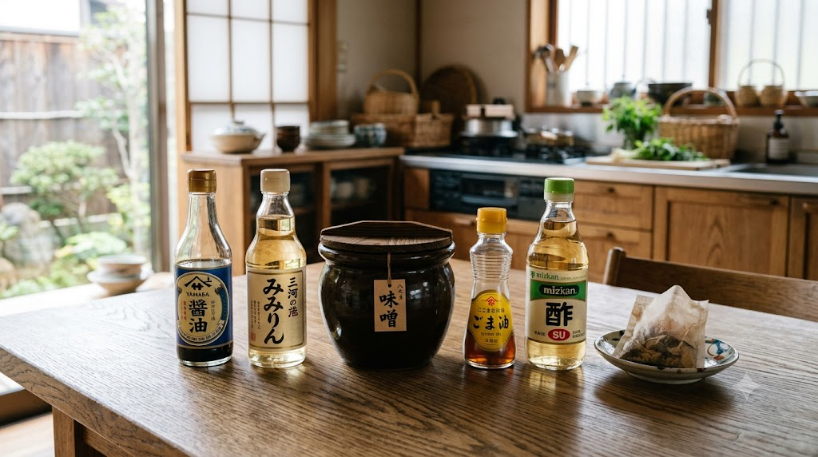
You can buy a rice cooker, master a curry roux, and still find your homemade Japanese food tastes… off. The missing piece is almost never technique — it’s the pantry. Japanese home cooking runs on seven core seasonings, and once they’re on your shelf, dishes like teriyaki, gyudon, miso soup, and restaurant-style dressing become 10-minute weeknight meals.
This guide covers the seven essentials — what each one does, which brands Japanese home cooks actually buy, and how to combine them into the “mother sauces” of Japanese cuisine.
📌 What you will learn
You do not have to read it all — jump to what you need.
- 1. Soy Sauce (Shoyu) — The Backbone
- 2. Mirin — The Sweet Shine
- 3. Miso — The Soul
- 4. Dashi — The Umami Engine
- 5. Rice Vinegar (Komezu) — The Gentle Acid
- 6. Toasted Sesame Oil — The Finisher
- 7. Ponzu — The Cheat Code
※ Start wherever fits your situation.
Prime members get fast, free delivery on millions of items, Prime Video and members-only deals. Eligible new members can try it free for 30 days.
Start your free 30-day Prime trial →Ages 18–24? See Prime for Young Adults
Paid links. As an Amazon Associate, Japan Life Lab earns from qualifying purchases. Trial eligibility and terms are set by Amazon.
1. Soy Sauce (Shoyu) — The Backbone
The workhorse of the pantry. For all-purpose use, pick a Japanese koikuchi (dark) soy sauce — Kikkoman’s red-cap bottle is the global standard for a reason, and their airtight dispenser bottles keep it fresh for months. Chinese-style dark soy behaves differently in Japanese recipes; the flavor profile is not the same.
2. Mirin — The Sweet Shine
Sweet rice wine that gives teriyaki its glossy sheen and balances saltiness. Look for hon-mirin (“true mirin”, like Takara or Hinode brands) rather than “mirin-style seasoning” — the real thing has depth the imitation lacks. The golden ratio to memorize: soy sauce 1 : mirin 1 is the base of teriyaki.
3. Miso — The Soul
Fermented soybean paste for the daily soup, marinades, and dressings. Start with awase miso (mixed red and white — Hikari Miso and Marukome are reliable brands). White miso is sweeter and great for dressings; red is punchier for hearty soups. Keep it in the fridge; it lasts for many months.
4. Dashi — The Umami Engine
The stock that makes miso soup taste like Japan. Making it from scratch with kombu and katsuobushi is a lovely weekend project, but weeknights call for dashi packets or granules — Kayanoya dashi packets are the gift-grade gold standard, while Ajinomoto Hondashi granules are the everyday workhorse in most Japanese kitchens.
5. Rice Vinegar (Komezu) — The Gentle Acid
Milder and rounder than Western vinegar. Essential for sushi rice, quick pickles, and sunomono salads. Mizkan rice vinegar is the household default; Marukan is the common US-market alternative. Mix with soy sauce and a little sesame oil for an instant Japanese dressing.
6. Toasted Sesame Oil — The Finisher
A few drops at the end of cooking transforms stir-fries, ramen, and dressings. Kadoya — the gold bottle with the red cap — has been Japan’s favorite for over a century. Buy small bottles; the aroma fades once opened.
7. Ponzu — The Cheat Code
Citrus-soy sauce that needs no cooking skill whatsoever: pour it over grilled fish, cold tofu, dumplings, shabu-shabu, or salad and dinner instantly tastes deliberate. Yamasa and Mizkan Ajipon are the classics. If you buy only one “secret weapon” from this list, make it ponzu.
The 3 Mother Sauces You Can Now Make
| Sauce | Ratio | Use for |
|---|---|---|
| Teriyaki | Soy 1 : Mirin 1 (+ a little sugar) | Chicken, salmon, meatballs |
| Simmering base (nimono) | Dashi 4 : Soy 1 : Mirin 1 | Gyudon, oyakodon, simmered vegetables |
| Sesame dressing | Miso 1 : Vinegar 1 : Sesame oil 0.5 (+ sugar) | Salads, cold noodles, blanched greens |
Storage Tips
Soy sauce and mirin: cool, dark cupboard (fridge after opening extends aroma). Miso and dashi packets: fridge. Sesame oil: dark cupboard, small bottles. Ponzu: fridge after opening. A full starter pantry costs around $40–60 and pays for itself within a few home-cooked meals.
Final Thoughts
Seven bottles, three ratios, infinite weeknight dinners. Start with soy sauce, mirin, and dashi — the teriyaki-and-donburi trio — then add the rest as recipes call for them. Your Japanese cooking is about to stop tasting “close” and start tasting right.
🍜 More Japanese Food Guides
🔥 Editor’s Picks for Life & Travel in Japan

Japan Expat Starter Kit 2026 PDF guide
Your first 90 days in Japan, step by step: 17 chapters · 24 pages · 100 phrases in Japanese script · 40 kanji · printable checklists. Bank account, My Number, health insurance, apartment, phone, taxes & pension.
$9.99 $4.99 current price
📥 Get the kit →📄 Read 5 pages free: contents + Chapter 2
⚡ Instant PDF download · 🛡️ 30-day money-back guarantee · 🔄 Free 2026 updates
Practical guides for life and travel in Japan — free, about once a week. No spam, unsubscribe anytime.
☕ Enjoying our Japan guides?
If this article helped you, you can support our work with a coffee!
Did this guide help you? 🍵
Japan Life Lab is a small independent blog, and every guide we publish is completely free — no paywalls, ever. If our work saved you time (or a headache), you can support us with a cup of Japanese tea. Every contribution, big or small, goes straight into keeping these guides free, accurate and up to date for everyone.
☕ Support Japan Life Lab
Leave a Reply