This article was created with AI writing assistance (ChatGPT, Claude, etc.). Product selection, specifications, and reviews are verified by the Japan Life Lab editorial team.
This article contains promotional / affiliate links.
Tax-free shopping in Japan changes on 1 November 2026
Until 31 October you show your passport at the till and simply pay without the 10% consumption tax. From 1 November you pay the full tax-included price in the shop and claim the tax back at the airport — at a customs kiosk or through Visit Japan Web — before you check in.
- The ¥5,000 minimum per shop, per day stays the same.
- The general-goods / consumables split is abolished, and so is the ¥500,000 cap on consumables.
- Sealed packaging is abolished — but consumables still have to leave Japan unused.
- Everything on the receipt has to be with you at departure. Customs can ask to see it.
Shopping before 1 November? Nothing changes for you yet.
Ask anyone who cares about denim where the best jeans in the world are made, and the answer will not be America. It will be a small town in Okayama Prefecture called Kojima.
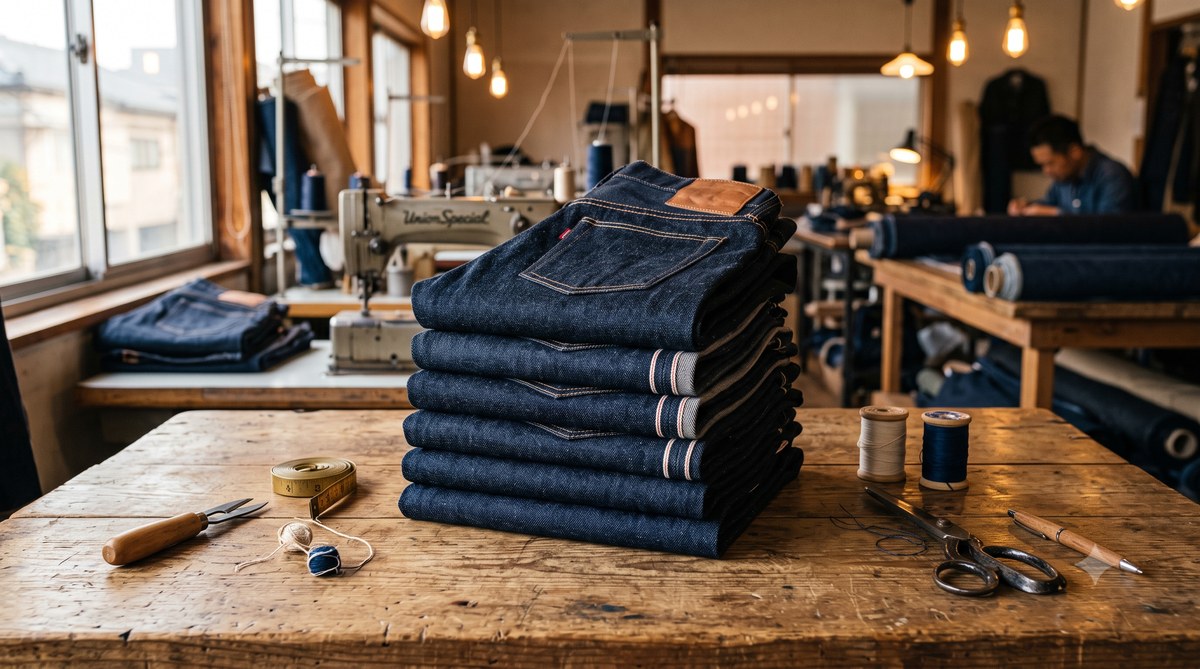
When American mills abandoned slow shuttle looms in the 1950s for faster projectile looms, Japanese manufacturers bought the old machines — and never stopped using them. The result is denim woven at a fraction of modern speed, with a self-finished edge (the “selvedge”), an irregular texture, and a depth of indigo that mass-market jeans cannot reproduce.
Here are the Japanese denim brands worth your money in 2026, what the jargon actually means, and how to buy from outside Japan.
Quick answer
First pair? Japan Blue (¥15,000–¥20,000). The classic choice? Momotaro. Want dramatic fades fast? Samurai. Want the heaviest denim on earth? Iron Heart.
Prime members get fast, free delivery on millions of items, Prime Video and members-only deals. Eligible new members can try it free for 30 days.
Start your free 30-day Prime trial →Ages 18–24? See Prime for Young Adults
Paid links. As an Amazon Associate, Japan Life Lab earns from qualifying purchases. Trial eligibility and terms are set by Amazon.
The jargon, decoded
Selvedge (selvage): denim woven on a narrow shuttle loom, producing a clean, self-finished edge — the white line with a coloured thread you see when you cuff your jeans. It is not decoration; it is evidence of how the fabric was made.
Unsanforized (“raw” / “shrink-to-fit”): the fabric has not been pre-shrunk. It will shrink — often 5–10% — the first time it gets wet. Size up, or soak before wearing.
Sanforized: pre-shrunk. What you measure is what you get. Easier, and what most beginners should buy.
Weight (oz): the weight of a square yard of fabric. 12–14oz is comfortable and everyday. 16–18oz is heavy. 21oz and above is a commitment, not a purchase.
Rope dyeing: the yarn is dipped repeatedly in indigo, leaving a white core. That white core is why Japanese denim fades so beautifully — as the surface wears away, the white underneath shows through.
The 5 best Japanese denim brands in 2026
1. Momotaro Jeans
If Japanese denim has a poster child, it is Momotaro. Based in Kojima, Okayama — the town that has been the centre of Japanese denim since the 1960s — Momotaro is famous for the two white “battle stripes” painted on the back of some models, and for denim so heavy and so densely woven that it feels closer to canvas than to a pair of jeans.
The house cut, the 0705SP, is a mid-weight tapered fit that suits most people. The heavyweight models (15.7oz and up) are the ones enthusiasts talk about: they are stiff for the first month, and then they slowly mould to your body and begin to fade in a way no pre-distressed jean ever will.
Prices start around ¥25,000 and go well past ¥40,000 for the flagship weaves. That is the real cost of buying denim woven on old shuttle looms at a fraction of modern production speed.
| Details | |
|---|---|
| Based in | Kojima, Okayama |
| Signature | Battle stripes, heavyweight selvedge |
| Best-known cut | 0705SP tapered |
| Price | From around ¥25,000 |
| Best for | A first serious pair of Japanese jeans |
Buy on Amazon.comBuy on Amazon Japan
2. Studio D’Artisan
Founded in 1979, Studio D’Artisan is one of the “Osaka Five” — the small group of brands that started the Japanese repro-denim movement by studying vintage American jeans obsessively and rebuilding them, thread by thread, with better materials.
The house style is playful (the pig logo is unmistakable) but the construction is serious: natural indigo dyeing, heavy fabrics, chain-stitched hems. If you want denim with character rather than restraint, this is the brand.
Expect ¥25,000–¥45,000. Sizing runs small and many models are unsanforized, meaning they will shrink on first soak. Buy accordingly.
| Details | |
|---|---|
| Founded | 1979 (one of the Osaka Five) |
| Signature | Pig logo, natural indigo |
| Character | Bold, characterful fades |
| Price | ¥25,000–¥45,000 |
| Note | Many models unsanforized — size up |
Buy on Amazon.comBuy on Amazon Japan
3. Iron Heart
Iron Heart makes the heaviest denim most people will ever wear. The brand was born to serve motorcyclists, and it shows: 21oz and 25oz fabrics that are genuinely difficult to sit down in for the first week, reinforced stitching, and hardware built to survive a fall.
This is not a beginner’s purchase. A 21oz pair takes months to break in, and if you work at a desk all day you may simply find them uncomfortable. But for those who commit, the fades are unlike anything else on the market — deep, high-contrast, and almost architectural.
Prices start around ¥30,000 and climb quickly.
| Details | |
|---|---|
| Known for | Ultra-heavyweight denim (21oz, 25oz) |
| Origin story | Built for motorcyclists |
| Break-in | Long and demanding |
| Price | From around ¥30,000 |
| Best for | Experienced denim wearers |
Buy on Amazon.comBuy on Amazon Japan
4. Japan Blue Jeans (Kojima)
Japan Blue is the value entry point into real Japanese selvedge. Made in Kojima by the same group behind Momotaro, it offers proper shuttle-loom selvedge denim at prices that start around ¥15,000–¥20,000 — roughly half what the flagship brands charge.
The compromise is subtle: fabrics are lighter (12–14oz), finishing is a little less obsessive, and the fits are more contemporary. For 90% of buyers, that is not a compromise at all — it is exactly what they want.
If you are curious about Japanese denim but not ready to spend ¥40,000 to find out whether you like it, start here.
| Details | |
|---|---|
| Based in | Kojima, Okayama |
| Weight | 12–14oz (approachable) |
| Price | From around ¥15,000 |
| Fits | Contemporary, wearable |
| Best for | First-time buyers of Japanese selvedge |
Buy on Amazon.comBuy on Amazon Japan
5. Samurai Jeans
Another of the Osaka Five, Samurai is known for extremely dense, rope-dyed indigo and for fades that come in fast and hard. The brand leans into its samurai motif — the arcuates on the back pockets echo a katana — and the denim itself is often woven from a custom cotton blend that produces a rough, hairy texture.
The result is a jean that ages aggressively. Where some Japanese denim fades gently over years, Samurai rewards heavy wear with sharp, high-contrast whiskers and honeycombs within months.
Prices sit around ¥25,000–¥40,000.
| Details | |
|---|---|
| Founded | 1997 (Osaka Five) |
| Signature | Rope-dyed indigo, katana arcuates |
| Fading | Fast and high-contrast |
| Price | ¥25,000–¥40,000 |
| Best for | People who want visible fades quickly |
Buy on Amazon.comBuy on Amazon Japan
Which pair should you buy?
| You are… | Buy |
|---|---|
| New to Japanese denim | Japan Blue (12–14oz, sanforized) |
| Ready for the real thing | Momotaro 0705SP |
| Chasing dramatic fades | Samurai |
| A collector of heavy fabric | Iron Heart 21oz |
| Looking for character and flair | Studio D’Artisan |
How to break them in (and what not to do)
Wear them. There is no shortcut. Fades come from your body, your movements, and your pockets — that is the entire point.
Wash them. The old advice to never wash raw denim for six months is a myth that ruins jeans and offends everyone around you. Wash when they are dirty, inside out, cold, with mild detergent, and hang to dry. Fades will still develop; they will just be less filthy.
Do not tumble dry. Heat destroys the fabric and shrinks it unevenly.
Size correctly. Unsanforized denim shrinks. Sanforized does not. Check the label before you order — this is the single most common mistake buyers make.
Buying from outside Japan
Some brands ship internationally; many do not. Three practical routes:
1. Amazon Japan. Carries a surprising number of Japanese denim brands and ships abroad on many items.
2. Proxy services (Buyee, ZenMarket). They buy on your behalf from Japanese sites and forward the parcel. This is how most collectors buy the rarer models.
3. Visit Kojima. If you are travelling in Japan, the Kojima Jeans Street in Okayama is a genuine pilgrimage — dozens of denim makers on a single street, most with factory shops, and tax-free shopping for tourists.
FAQ
Why is Japanese denim so expensive?
Shuttle looms weave roughly one-sixth as fast as modern looms and require constant human attention. Rope dyeing is slower than modern dyeing. You are paying for time, not marketing.
Will they really fade differently?
Yes — and visibly. The white core of rope-dyed yarn is what produces the high contrast. Mass-market jeans are dyed all the way through, so they simply get pale.
Is heavier always better?
No. 21oz denim is impressive and uncomfortable. Most people are happier, and wear their jeans far more, in 13–15oz.
Final word
Japanese denim is one of the last places where “expensive” genuinely means “made slowly by people who care”. Start with Japan Blue if you are testing the water, and Momotaro if you already know you will keep them for a decade. Then wear them until they look like they belong to you.
Related guides
🔥 Editor’s Picks for Life & Travel in Japan

Japan Expat Starter Kit 2026 PDF guide
Your first 90 days in Japan, step by step: 17 chapters · 24 pages · 100 phrases in Japanese script · 40 kanji · printable checklists. Bank account, My Number, health insurance, apartment, phone, taxes & pension.
$9.99 $4.99 current price
📥 Get the kit →📄 Read 5 pages free: contents + Chapter 2
⚡ Instant PDF download · 🛡️ 30-day money-back guarantee · 🔄 Free 2026 updates
🛒 Ready to Buy? Shop These in Japan!
Get fast delivery across Japan — including same-day in major cities
Practical guides for life and travel in Japan — free, about once a week. No spam, unsubscribe anytime.
☕ Enjoying our Japan guides?
If this article helped you, you can support our work with a coffee!
Leave a Reply