This article was created with AI writing assistance (ChatGPT, Claude, etc.). Product selection, specifications, and reviews are verified by the Japan Life Lab editorial team.
This article contains promotional / affiliate links.
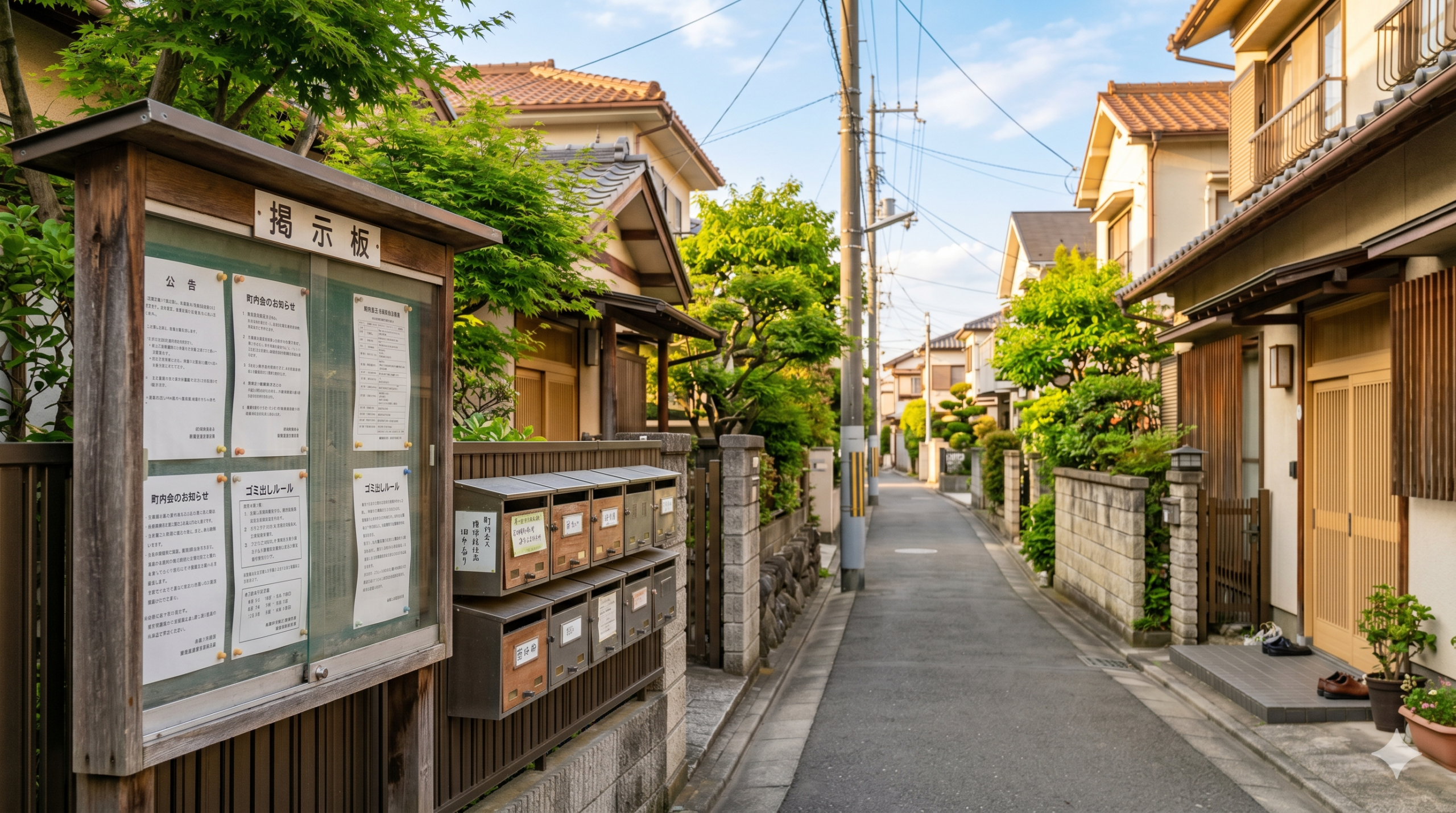
You moved into your new Japanese apartment, everything felt fine — and then a neighbor knocked on your door and handed you an envelope. Inside: a handwritten note about garbage rules, a schedule for cleaning the shared hallway, and an invitation to join the local neighborhood association.
Welcome to Japan’s invisible social contract.
This guide covers everything foreigners need to know about Japan’s neighborhood rules in 2026 — from the jichikai (自治会) to garbage day politics to what actually happens if you break the rules.
📋 Quick Navigation
📌 What you will learn
You do not have to read it all — jump to what you need.
- What Is a Jichikai (自治会)? Your Neighborhood Association Explained
- Should You Join the Jichikai as a Foreigner?
- The Garbage Rules: Japan’s Most Serious Neighborhood Issue
- Noise Rules in Japan: What’s Acceptable and What Isn’t
- Shared Spaces & Cleaning Duties
- Unwritten Rules Nobody Tells You (But Everyone Knows)
- What Happens When You Break the Rules (And How to Handle It)
※ Start wherever fits your situation.
What Is a Jichikai (自治会)? Your Neighborhood Association Explained
✅ Updated for July 2026 — prices and product information refreshed.
A jichikai (自治会) or chonaikai (町内会) is a voluntary neighborhood association that manages community affairs in your local area. Think of it as a hyperlocal HOA meets town council meets community WhatsApp group — but much more formalized and socially significant.
Every neighborhood in Japan has one (or several). They typically handle:
- 📦 Garbage collection coordination — managing the local garbage spot schedule
- 🧹 Communal cleaning days — organized cleanups of shared areas and streets
- 🚨 Disaster preparedness — distributing emergency supply maps, organizing drills
- 📢 Local announcements — passing along city notices, event information
- 🎆 Community events — summer festivals, sports days, children’s activities
- 💰 Fee collection — monthly dues of ¥200–¥500 that fund activities
Membership is technically voluntary in Japan. But in practice, especially in residential neighborhoods and rural areas, not joining — or never participating — can create real social friction.
Should You Join the Jichikai as a Foreigner?
Short answer: If you’re staying more than a year, yes — or at least acknowledge it.
Benefits of Joining
- ✅ You receive all local announcements (garbage schedule changes, water shutoffs, emergency alerts)
- ✅ Neighbors are more tolerant of inevitable “foreigner mistakes” if they know you
- ✅ Access to community emergency supplies and evacuation information
- ✅ Reduces the chance of noise complaints or garbage issues escalating
- ✅ In some buildings, it’s expected — your landlord may have told them a foreigner is moving in
What Membership Usually Involves
- Monthly fee: ¥200–¥500/month
- Occasional communal cleaning duty (typically one weekend per season)
- Some associations hold monthly or quarterly meetings (Japanese language)
- You may be asked to distribute flyers to your floor or section of the building
What To Do If You Can’t Speak Japanese
Language shouldn’t stop you. When the jichikai representative knocks, a few key phrases go a long way:
- 「よろしくお願いします」(yoroshiku onegaishimasu) — “I’m in your care / pleased to meet you”
- 「参加します」(sanka shimasu) — “I’ll participate”
- 「日本語があまり上手くありません」(Nihongo ga amari umaku arimasen) — “My Japanese isn’t very good”
Most jichikai members appreciate the effort. Many associations now have multilingual materials thanks to city government support.
The Garbage Rules: Japan’s Most Serious Neighborhood Issue
If there’s one thing that will cause immediate neighborhood conflict in Japan, it’s garbage. Japan has some of the most detailed waste sorting systems in the world, and your local garbage spot (ゴミ置き場, gomi okiba) is shared, managed by the neighborhood association, and closely watched.
The Golden Rules of Japanese Garbage
- 🗓️ Put garbage out only on collection day — never the night before
- 🕗 Before 8am on collection day — not after the truck has already passed
- 🗂️ Sort correctly — burnable (燃えるゴミ), non-burnable (燃えないゴミ), recycling (資源ゴミ), bulky items (粗大ゴミ)
- 🧹 Use the correct designated bags — many cities require you to buy specific colored bags for different waste types
- 🐦 Use the net — cover your garbage with the communal crow net (カラスネット) to prevent birds from scattering it
- 📋 Your name/apartment number may be required — some areas ask you to write your address on bags
Where to Get Your Garbage Schedule
Your garbage collection schedule is set by your ward/city government, not the national government. Pick up the schedule (ゴミカレンダー) at:
- Your ward office (区役所/市役所) when you register your address
- The jichikai welcome packet (if you join)
- Your city’s official website (search “[city name] ゴミ収集 カレンダー”)
- Google Maps — many garbage collection spots are now listed with schedules
Oversized Items (粗大ゴミ, Sodai Gomi)
Furniture, appliances, bicycles — these require a special disposal process. You generally need to:
- Call or visit your ward office to schedule collection
- Pay a small fee (¥200–¥2,000 depending on item size)
- Put a sticker on the item on the scheduled pickup day
Never leave large items at the regular garbage spot without scheduling pickup — this is a serious violation that can result in warnings from the ward office.
Noise Rules in Japan: What’s Acceptable and What Isn’t
Japan has strict norms around noise in residential areas, and many apartments have paper-thin walls. Here’s what you need to know:
Legal Quiet Hours vs. Social Norms
Most Japanese cities have noise ordinances that restrict loud activities between 10pm–7am. But social norms kick in much earlier:
- Before 8am: No vacuuming, washing machine (especially with spin cycle), or loud music
- After 9-10pm: Keep music/TV very low, no instrument playing, no stomping footsteps
- All day: Don’t slam doors or windows; Japanese buildings amplify this more than you’d expect
The Washing Machine Rule
Running a washing machine late at night is one of the most common sources of complaints in Japanese apartments. The vibration travels through floors and walls. Many building rules explicitly prohibit using the washing machine after 10pm.
What Happens If a Neighbor Complains
Complaints in Japan rarely go directly person-to-person. The usual chain is:
- Neighbor complains to the building management company (管理会社)
- Management company sends a written notice to all residents
- If the problem continues, a direct warning is issued to the specific apartment
- Serious or repeated violations can be escalated to the landlord, potentially leading to lease termination
Noise complaints are taken very seriously. A single serious complaint can affect your lease renewal.
Shared Spaces & Cleaning Duties
In Japan, the shared spaces of an apartment building — corridors, staircases, mailbox areas, bicycle parking — are community property, and keeping them clean is a collective responsibility.
Building Cleaning Rotations
Many apartment buildings have a cleaning rotation schedule (当番表, toban-hyo) where each apartment takes a turn cleaning the common areas. You’ll usually be informed of this when you move in. Ignoring your turn is considered very rude.
Bicycle Parking Rules
Park only in the designated bicycle area and only your registered bicycle. Many buildings require you to register your bicycle with the management company. Unregistered bicycles may be tagged and eventually removed.
Entryway Shoes and Shared Corridors
Never leave shoes, umbrellas, or personal items in the shared corridor. In Japan, the corridor is considered common space that must remain clear — both for aesthetics and fire safety regulations.
Unwritten Rules Nobody Tells You (But Everyone Knows)
These aren’t in any welcome packet, but breaking them will mark you as a “problematic” resident:
- 🎵 Greet your neighbors — When you move in, a short introduction visit (引越し挨拶, hikkoshi aisatsu) with a small gift (usually towels or sweets around ¥500–¥1,000) is standard. Not doing this is noticed.
- 📪 Don’t let junk mail pile up — A stuffed mailbox signals “this apartment may be empty” and can attract unwanted attention. Clear it regularly.
- 🌿 Control your plants — Balcony plants should not drop leaves or water onto the unit below. In formal buildings, this can lead to complaints.
- 🚬 No smoking in shared areas — Even if you smoke, never smoke in shared corridors, staircases, or near the building entrance.
- 🐾 Pet rules are strict — Many Japanese apartments are “no pets” even if they don’t say so explicitly. If pets are allowed, keep them quiet and clean up in all shared areas immediately.
- 🚗 Assigned parking only — Never park in another resident’s spot, even briefly. This causes disproportionately large disputes.
- 💡 Common area lights — Don’t waste electricity in shared areas. Turn off lights in storage rooms and other common areas when you leave.
What Happens When You Break the Rules (And How to Handle It)
Conflict in Japanese neighborhoods rarely escalates to confrontation — it goes through intermediaries. Here’s what the typical escalation looks like and how to respond:
Stage 1: A Posted Notice
A general notice posted in the shared area (「ゴミの分別にご協力ください」— “Please cooperate with garbage sorting”). This isn’t directed at you specifically, but it’s a signal that someone in the building has been flagged.
Response: Review your habits. Is it you? Fix it immediately, silently.
Stage 2: A Direct Note in Your Mailbox
A handwritten or printed note placed directly in your mailbox. This means someone has identified your specific apartment as the source of the issue.
Response: Take it seriously. Correct the behavior immediately. If there’s been a misunderstanding, you can write a polite note back, but avoid confrontation.
Stage 3: Management Company Contact
The management company calls or sends a formal written warning. This is serious.
Response: Call the management company and apologize sincerely. Acknowledge the issue. Show you’ve corrected it. Being proactive here usually resolves things.
Stage 4: Jichikai Involvement
In serious cases, the neighborhood association may get involved directly. This is rare for foreigners but happens in dense residential areas with garbage violations.
Response: If you’re a jichikai member, attend the next meeting and address it directly. If not, consider joining — it signals goodwill.
The “Foreigner Exception”
Many Japanese neighbors will give foreigners extra leeway for mistakes, especially early on. “They probably didn’t know” is a genuine attitude. But this goodwill runs out after 6–12 months. After that, you’re expected to know the rules.
Summary: The Foreigner’s Neighborhood Survival Checklist
- ✅ Do the hikkoshi aisatsu introduction visit when you move in
- ✅ Get your garbage schedule from the ward office and follow it exactly
- ✅ Sort your garbage correctly — use the jichikai’s guide or city website
- ✅ Keep noise down after 9pm — washing machine especially
- ✅ Keep shared spaces clean and clear
- ✅ Consider joining the jichikai if you’re staying 1+ years
- ✅ If you make a mistake, acknowledge it and correct it quickly
Japan’s neighborhood culture can seem intimidating at first, but once you understand the underlying logic — collective responsibility, quiet consideration for others, and clean shared spaces — it becomes second nature. Most neighbors will appreciate any effort you make, even imperfect Japanese.
🗾 More Japan Life Guides
🇯🇵 Travel & Life Essentials for Japan
Hand-picked gear to make your time in Japan easier. Available on Amazon US & Amazon Japan.
🔋 Portable charger
A must for long days of sightseeing and photos.
View on Amazon (US)View on Amazon Japan🔌 Travel plug adapter
Japan uses Type A outlets. Bring the right adapter.
View on Amazon (US)View on Amazon Japan🎧 Translation earbuds
Real-time translation to talk without barriers.
View on Amazon (US)View on Amazon JapanAs an Amazon Associate, Japan Life Lab earns from qualifying purchases.
🔥 Editor’s Picks for Life & Travel in Japan
📘 The Japan Expat Starter Kit 2026
Banking, housing, My Number, taxes, 100 phrases and a 40-kanji cheat sheet — everything from this site in one 17-chapter PDF field manual. Free lifetime 2026 updates.
Reader price: $9.99 $6.99 with code JLL30 at checkout
30-day money-back guarantee · Instant download · PR
Practical guides for life and travel in Japan — free, about once a week. No spam, unsubscribe anytime.
☕ Enjoying our Japan guides?
If this article helped you, you can support our work with a coffee!
Did this guide help you? 🍵
Japan Life Lab is a small independent blog, and every guide we publish is completely free — no paywalls, ever. If our work saved you time (or a headache), you can support us with a cup of Japanese tea. Every contribution, big or small, goes straight into keeping these guides free, accurate and up to date for everyone.
☕ Support Japan Life Lab
Leave a Reply