This article was created with AI writing assistance (ChatGPT, Claude, etc.). Product selection, specifications, and reviews are verified by the Japan Life Lab editorial team.
This article contains promotional / affiliate links.
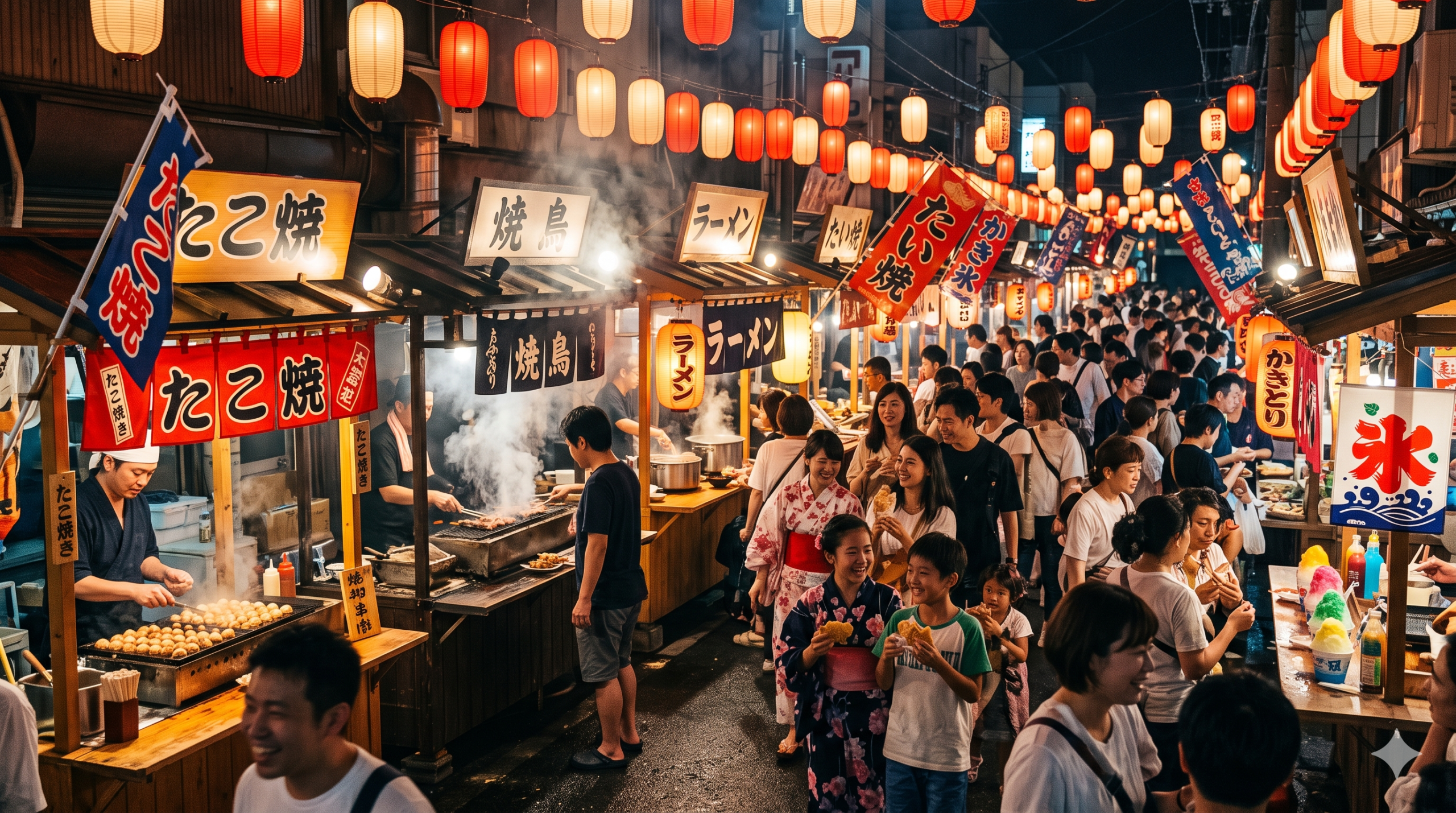
Japan’s street food scene is one of the most exciting and delicious in the world. From Osaka’s takoyaki-lined alleys to Tokyo’s shrine festival stalls, discovering Japan one bite at a time is an essential part of any trip. This guide covers 20 must-try Japanese street foods, where to find them, what they cost, and exactly how to order — even if you don’t speak Japanese.
📌 What you will learn
You do not have to read it all — jump to what you need.
- Tokyo Street Food: Best Spots & Must-Try Bites
- Osaka Street Food: Japan’s Kitchen Capital
- Kyoto Street Food: Traditional Flavors
- The 20 Must-Try Japanese Street Foods (Complete List)
- How to Order Street Food in Japan (Even Without Japanese)
- Street Food Etiquette in Japan
※ Start wherever fits your situation.
Tokyo Street Food: Best Spots & Must-Try Bites
Asakusa & Nakamise Shopping Street
Nakamise Shopping Street leading to Senso-ji Temple is one of Tokyo’s best street food corridors. Look for:
- Ningyo-yaki (人形焼き) — small sponge cakes filled with red bean paste, shaped like traditional figures. ¥300–¥600 for 5 pieces
- Kibidango (きびだんご) — sticky millet dumplings on a skewer, a Nakamise classic. ¥400–¥500
- Melon Pan (メロンパン) — round sweet bun with a crispy cookie crust, often freshly baked. ¥200–¥350
Tsukiji Outer Market
The outer market (still open to visitors after the inner market moved to Toyosu) remains Tokyo’s best destination for fresh seafood street food:
- Tamagoyaki (玉子焼き) — thick, slightly sweet rolled omelette on a stick. ¥300–¥400
- Grilled scallops (ホタテ) — fresh scallops grilled on the shell with soy butter. ¥400–¥600
- Tuna skewers — fresh maguro (tuna) on a skewer, simply seasoned. ¥500–¥800
Osaka Street Food: Japan’s Kitchen Capital
Osaka is nicknamed “Japan’s Kitchen” (天下の台所) and rightfully so — the city takes eating seriously at every price point. The Dotonbori area and Kuromon Ichiba market are ground zero for street food.
The Big 3 Osaka Street Foods
Takoyaki (たこ焼き) — Osaka’s signature street food: ball-shaped wheat batter pockets filled with octopus, pickled ginger, and green onion, cooked in a special cast-iron pan. Topped with takoyaki sauce, mayo, dried bonito flakes, and aonori (seaweed powder). Price: ¥500–¥800 for 6-8 pieces. The gold standard is Aizuya (established 1933) near Namba.
Okonomiyaki (お好み焼き) — Osaka-style “as you like it” savory pancake packed with cabbage, meat, or seafood, topped with okonomi sauce and mayo. Though usually eaten sit-down, many Dotonbori spots have takeaway options. Price: ¥800–¥1,500.
Kushikatsu (串カツ) — skewered and deep-fried meats, vegetables, and seafood. The iron rule: no double-dipping in the shared communal sauce. Shinsekai district is the home of kushikatsu. Price: ¥100–¥300 per skewer.
Kyoto Street Food: Traditional Flavors
Kyoto street food tends toward the elegant and traditional, reflecting the city’s role as Japan’s former imperial capital. Nishiki Market (“Kyoto’s Kitchen”) is the essential destination.
- Yudoufu (湯豆腐) — soft tofu gently simmered in kombu broth, a Kyoto staple. Available at market stalls. ¥300–¥600
- Kyo Tsukemono (京漬物) — Kyoto-style pickles in dozens of varieties; Nishiki Market vendors offer free samples. ¥500–¥2,000 per pack
- Nama Yatsuhashi (生八橋) — raw cinnamon-flavored triangular mochi wrapped around sweet red bean paste. The definitive Kyoto souvenir snack. ¥600–¥800 for 8 pieces
- Mitarashi Dango (みたらし団子) — sweet soy sauce-glazed rice flour dumplings near Shimogamo Shrine, where the dish originated. ¥150–¥250 per skewer
The 20 Must-Try Japanese Street Foods (Complete List)
| Food | Japanese | Price | Best Place |
|---|---|---|---|
| Takoyaki | たこ焼き | ¥500–800 | Osaka (Dotonbori) |
| Yakitori | 焼き鳥 | ¥150–300/skewer | Festival stalls, Yurakucho (Tokyo) |
| Taiyaki | たい焼き | ¥200–350 | Nationwide |
| Karaage | 唐揚げ | ¥300–500 | Festival stalls, Nakatsu (Oita) |
| Ikayaki | イカ焼き | ¥400–700 | Festival stalls, Osaka |
| Kakigori | かき氷 | ¥300–800 | Summer festivals nationwide |
| Tamagoyaki | 玉子焼き | ¥300–400 | Tsukiji (Tokyo) |
| Nikuman | 肉まん | ¥150–250 | 7-Eleven / convenience stores! |
| Crepes | クレープ | ¥400–700 | Harajuku Takeshita Street |
| Gyoza | 餃子 | ¥300–500 | Utsunomiya, Hamamatsu |
| Kushikatsu | 串カツ | ¥100–300/skewer | Osaka (Shinsekai) |
| Mitarashi Dango | みたらし団子 | ¥150–250 | Kyoto, festivals nationwide |
| Yatai Ramen | 屋台ラーメン | ¥700–1,000 | Fukuoka (Nakasu) |
| Ningyo-yaki | 人形焼き | ¥300–600 | Asakusa (Tokyo) |
| Nama Yatsuhashi | 生八橋 | ¥600–800 | Kyoto |
| Potato Tornado | 竜巻ポテト | ¥400–600 | Theme parks, festivals |
| Choco Banana | チョコバナナ | ¥200–400 | Summer festivals |
| Yakiimo | 焼き芋 | ¥300–500 | Autumn/winter street trucks |
| Ramune | ラムネ | ¥200–300 | Festivals, convenience stores |
| Soft Serve (Soft Cream) | ソフトクリーム | ¥300–600 | Hokkaido (best in Japan!) |
How to Order Street Food in Japan (Even Without Japanese)
Don’t let the language barrier stop you — Japanese street food vendors are used to international customers, especially in tourist areas. Here’s how to navigate ordering:
- Point and smile: Most stalls have visual menus or the food on display. Simply point at what you want.
- “Kore kudasai” (これください) — “This one, please.” Works for anything you can point at.
- Hold up fingers for quantity: Japanese people universally understand finger counting.
- Cash is king: Most yatai stalls are cash-only. Keep ¥500–¥1,000 in small coins and bills.
- Google Translate camera: Point your phone at Japanese menus for instant translation.
Street Food Etiquette in Japan
Japanese street food culture comes with a few unwritten rules worth knowing:
- Eat while standing near the stall, not while walking around. Walking and eating is considered impolite in Japan (though tolerated at festivals).
- Dispose of packaging responsibly. There are very few public trash cans in Japan — bring your own bag, or return packaging to the stall.
- Don’t eat on trains. Even takeaway street food should be consumed before boarding trains.
- Ask before photographing stall owners and their preparations.
🗾 More Japan Food & Travel Guides
🔥 Editor’s Picks for Life & Travel in Japan
📘 The Japan Expat Starter Kit 2026
Banking, housing, My Number, taxes, 100 phrases and a 40-kanji cheat sheet — everything from this site in one 17-chapter PDF field manual. Free lifetime 2026 updates.
Reader price: $9.99 $6.99 with code JLL30 at checkout
30-day money-back guarantee · Instant download · PR
Practical guides for life and travel in Japan — free, about once a week. No spam, unsubscribe anytime.
☕ Enjoying our Japan guides?
If this article helped you, you can support our work with a coffee!
🇯🇵 Travel & Life Essentials for Japan
Hand-picked gear to make your time in Japan easier. Available on Amazon US & Amazon Japan.
🔋 Portable charger
A must for long days of sightseeing and photos.
View on Amazon (US)View on Amazon Japan🔌 Travel plug adapter
Japan uses Type A outlets. Bring the right adapter.
View on Amazon (US)View on Amazon Japan🎧 Translation earbuds
Real-time translation to talk without barriers.
View on Amazon (US)View on Amazon JapanAs an Amazon Associate, Japan Life Lab earns from qualifying purchases.
Did this guide help you? 🍵
Japan Life Lab is a small independent blog, and every guide we publish is completely free — no paywalls, ever. If our work saved you time (or a headache), you can support us with a cup of Japanese tea. Every contribution, big or small, goes straight into keeping these guides free, accurate and up to date for everyone.
☕ Support Japan Life Lab
Leave a Reply