This article was created with AI writing assistance (ChatGPT, Claude, etc.). Product selection, specifications, and reviews are verified by the Japan Life Lab editorial team.
This article contains promotional / affiliate links.
Summer in Japan is festival season! From spectacular fireworks shows to ancient Obon traditions, Japanese summer festivals (matsuri) offer some of the most authentic cultural experiences you can have as a visitor or expat. In 2026, thousands of festivals are taking place across Japan between July and August — here is your complete guide to the best ones.
Why Japanese Summer Festivals Are So Special
✅ Updated for July 2026 — prices and product information refreshed.
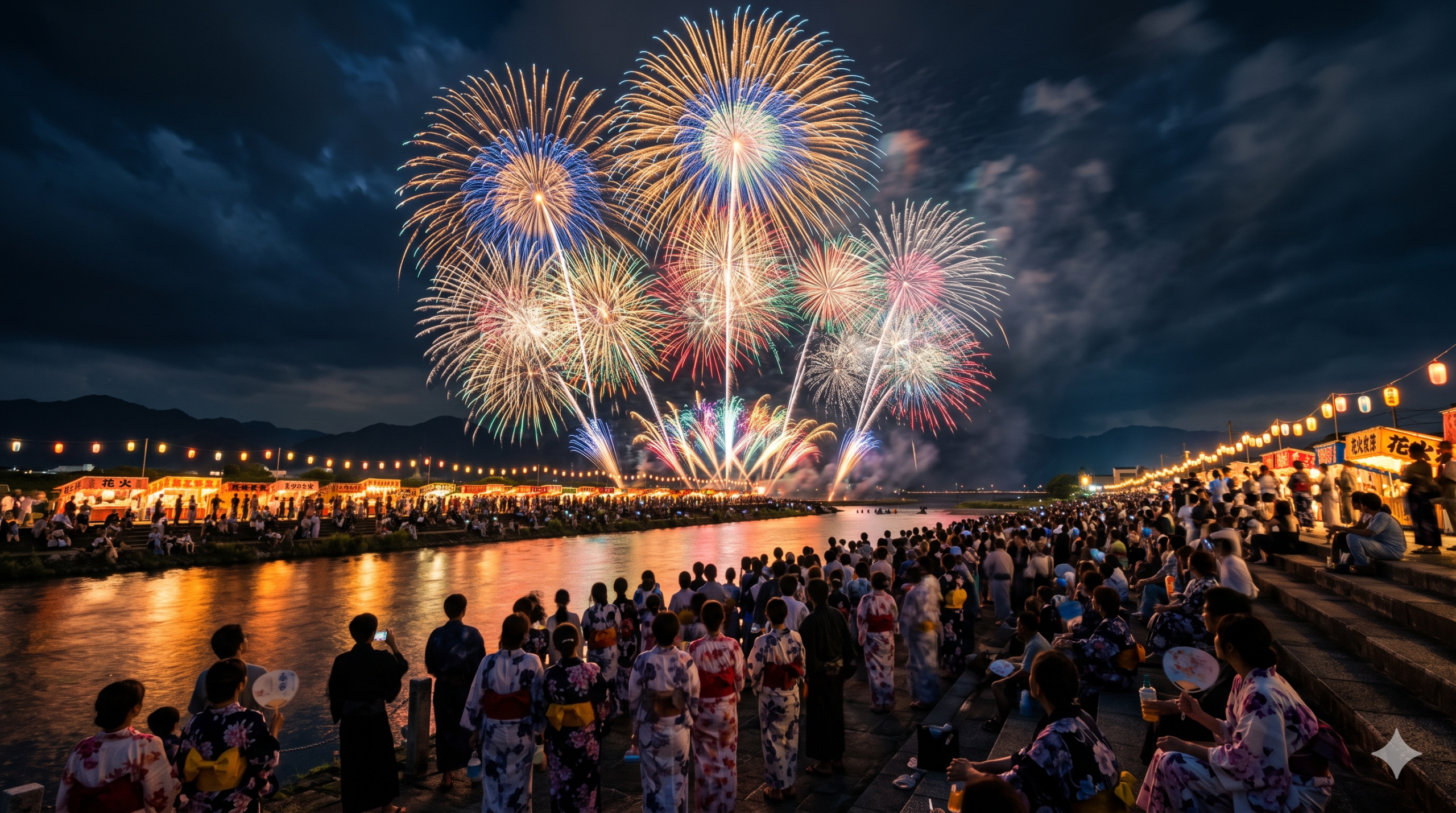
Japanese summer festivals blend centuries-old traditions with modern spectacle. Yukata-clad crowds, street food stalls (yatai), traditional dancing, taiko drums, and fireworks create an atmosphere unlike anything else in the world. Even if you only attend one matsuri during your time in Japan, the memory will last a lifetime.
Top 10 Japan Summer Festivals 2026
1. Sumida River Fireworks Festival (Sumidagawa Hanabi Taikai) — Tokyo
One of Tokyo’s oldest and most famous fireworks festivals, dating back to 1733. Over 20,000 fireworks are launched in a single evening along the Sumida River, drawing crowds of over a million people. The 2026 festival is scheduled for late July. The best viewing spots sell out months in advance, so book early. Asakusa area restaurants offer special hanabi viewing packages with riverside seats.
Date: Late July 2026 | Location: Sumida River, Asakusa, Tokyo | Access: Asakusa Station (Ginza/Asakusa Lines)
2. Gion Matsuri — Kyoto
Japan’s most famous traditional festival, held throughout the entire month of July in Kyoto. The highlight is the massive Yamaboko Junko procession on July 17th and 24th, where enormous decorated floats (yamaboko) weighing up to 12 tons are pulled through the streets by hundreds of people in traditional dress. The Shinpatsusai ceremony on July 1st officially begins the month-long festival. Stay in Kyoto for at least 2-3 days to experience the full atmosphere.
Date: All of July 2026 | Location: Central Kyoto | Access: Kyoto Station (Shinkansen)
3. Awa Odori — Tokushima, Shikoku
Japan’s largest traditional dance festival, held in Tokushima City (Shikoku Island) during mid-August. Over 100,000 dancers and 1.3 million spectators participate in this 400-year-old tradition. The famous chant “Odoru aho ni miru aho, onaji aho nara odoranya son son” (Those who dance are fools, those who watch are fools — since both are fools, you might as well dance!) captures the joyful spirit perfectly. Tourists are often invited to join the dance processions.
Date: August 12-15, 2026 | Location: Tokushima City, Shikoku | Access: Tokushima Station (bus from Osaka or flight)
4. Tenjin Matsuri — Osaka
One of Japan’s top three festivals along with Gion Matsuri and Kanda Matsuri. The Tenjin Matsuri in Osaka features a spectacular river procession of traditional boats (funatogyo) on July 25th, followed by a fireworks display over the Okawa River. The festival honors Sugawara no Michizane, the deity of learning enshrined at Osaka Tenmangu Shrine. Street food stalls line the entire route, making it a food lover’s paradise.
Date: July 24-25, 2026 | Location: Osaka Tenmangu Shrine and Okawa River | Access: Osaka Temmangu Station (JR Tozai Line)
5. Nebuta Matsuri — Aomori
The Aomori Nebuta festival is one of Japan’s most visually dramatic events. Enormous illuminated floats (nebuta) depicting warriors and mythological figures are paraded through the city streets at night. The floats are backlit from within, creating a breathtaking glowing spectacle. Haneto dancers — participants dressed in traditional costumes with colorful headwear — dance alongside the floats while chanting “Rassera!” The 2026 festival is expected to attract over 3 million visitors.
Date: August 2-7, 2026 | Location: Aomori City, Aomori Prefecture | Access: Aomori Station (Shinkansen)
6. Sendai Tanabata Matsuri — Miyagi
The largest Tanabata festival in Japan, held annually in Sendai. The city center is decorated with millions of colorful paper strips and ornaments hanging from bamboo poles, transforming the shopping arcades into a dreamlike tunnel of color. The Tanabata legend celebrates the meeting of the stars Vega and Altair (representing star-crossed lovers) once a year. The 2026 festival in Sendai is expected to be particularly spectacular as the city continues to thrive post-reconstruction.
Date: August 6-8, 2026 | Location: Sendai City, Miyagi | Access: Sendai Station (Shinkansen)
7. Obon Dance (Bon Odori) — Nationwide
Obon is a Buddhist tradition held in mid-August to honor ancestral spirits. During this time, Bon Odori (Obon dances) take place in parks, temples, and community centers throughout Japan. Each region has its own unique dance style and music. Tokyo’s Obon season (August 13-16) sees local festivals pop up in nearly every neighborhood park. Foreign visitors and expats are warmly welcomed to join the circular dances — no experience necessary!
Date: August 13-16, 2026 (varies by region) | Location: Nationwide | Access: Local parks and temples
8. Koenji Awa Odori — Tokyo
For those who cannot make it to Tokushima, the Koenji Awa Odori in Tokyo is the next best thing. Held on the last Saturday and Sunday of August, this Tokyo festival draws 700,000 spectators and 10,000 dancers. The Koenji neighborhood transforms into a lively street festival with over 100 dance troupes competing in traditional Awa Odori style. Easy access from central Tokyo makes this one of the most accessible summer festivals for international visitors.
Date: Last weekend of August 2026 | Location: Koenji, Tokyo | Access: Koenji Station (JR Chuo Line)
9. Takigi Noh at Heian Jingu — Kyoto
For a more refined cultural experience, Takigi Noh (firelight Noh theater) at Heian Shrine in Kyoto offers an atmospheric alternative. Ancient Noh dramas are performed outdoors by firelight against the backdrop of the beautiful Heian Shrine. The combination of ancient performing arts and the evening ambiance creates a uniquely Japanese cultural experience. Tickets sell out quickly so advance booking is essential.
Date: Early July 2026 | Location: Heian Jingu, Kyoto | Access: Higashiyama Station (Tozai Subway Line)
10. Yokohama Minato Matsuri — Kanagawa
Yokohama’s port district comes alive each May with the Minato Matsuri, featuring a spectacular international fireworks competition. Multiple countries send their best pyrotechnics teams to compete, resulting in uniquely varied fireworks styles. The festival takes place around the Yamashita Park and Osanbashi Pier area, with the illuminated skyline of Minato Mirai providing an unforgettable backdrop. The 2026 competition will feature teams from over 10 countries.
Date: May-August 2026 (multiple events) | Location: Yamashita Park, Yokohama | Access: Motomachi-Chukagai Station (Minatomirai Line)
What to Wear: Yukata Guide for Summer Festivals
Wearing a yukata (light summer kimono) to a summer festival is highly recommended and perfectly acceptable for foreign visitors. Many rental shops in Kyoto, Asakusa (Tokyo), and other tourist areas offer yukata rental packages starting from about ¥3,000-5,000. The package typically includes the yukata, obi belt, wooden sandals (geta), and hair accessories. Getting dressed takes about 30-45 minutes, so book your rental a few hours before the festival starts.
Festival Food (Yatai) Must-Tries
Festival street food stalls (yatai) are an essential part of the matsuri experience. Must-try foods include: Takoyaki (octopus balls) — the ultimate festival snack, Yakisoba (fried noodles), Taiyaki (fish-shaped sweet cake with filling), Kakigori (shaved ice with flavored syrups), Ringo Ame (candied apple), Jagabata (baked potato with butter), and Frankfurter sausages. Bring enough cash as most yatai only accept cash.
Practical Tips for Festival Season
Book accommodation well in advance for major festivals — hotels near Gion Matsuri and Nebuta fill up 6-12 months ahead. Wear comfortable shoes as you may walk several kilometers. Stay hydrated and be aware of heat exhaustion risk — summer festivals can be very hot and crowded. Arrive early for fireworks festivals to secure a good viewing spot. Follow festival etiquette: don’t block pathways, respect the procession routes, and follow crowd control instructions from staff.
How to Get to Festival Locations
Japan Rail Pass holders can travel to most major festival locations on the Shinkansen. The Japan Rail Pass 7-day option is ideal for visiting multiple festivals during a single summer trip. For local travel within festival cities, IC cards like Suica or ICOCA are accepted on most trains, buses, and even at yatai stalls at major festivals.
🔥 Editor’s Picks for Life & Travel in Japan
📘 The Japan Expat Starter Kit 2026
Banking, housing, My Number, taxes, 100 phrases and a 40-kanji cheat sheet — everything from this site in one 17-chapter PDF field manual. Free lifetime 2026 updates.
Reader price: $19 $9.90 with code JLL30 at checkout
30-day money-back guarantee · Instant download · PR
Practical guides for life and travel in Japan — free, about once a week. No spam, unsubscribe anytime.
🇯🇵 Travel & Life Essentials for Japan
Hand-picked gear to make your time in Japan easier. Available on Amazon US & Amazon Japan.
🔋 Portable charger
A must for long days of sightseeing and photos.
View on Amazon (US)View on Amazon Japan🔌 Travel plug adapter
Japan uses Type A outlets. Bring the right adapter.
View on Amazon (US)View on Amazon Japan🎧 Translation earbuds
Real-time translation to talk without barriers.
View on Amazon (US)View on Amazon JapanAs an Amazon Associate, Japan Life Lab earns from qualifying purchases.
Did this guide help you? 🍵
Japan Life Lab is a small independent blog, and every guide we publish is completely free — no paywalls, ever. If our work saved you time (or a headache), you can support us with a cup of Japanese tea. Every contribution, big or small, goes straight into keeping these guides free, accurate and up to date for everyone.
☕ Support Japan Life Lab
Leave a Reply