This article was created with AI writing assistance (ChatGPT, Claude, etc.). Product selection, specifications, and reviews are verified by the Japan Life Lab editorial team.
This article contains promotional / affiliate links.
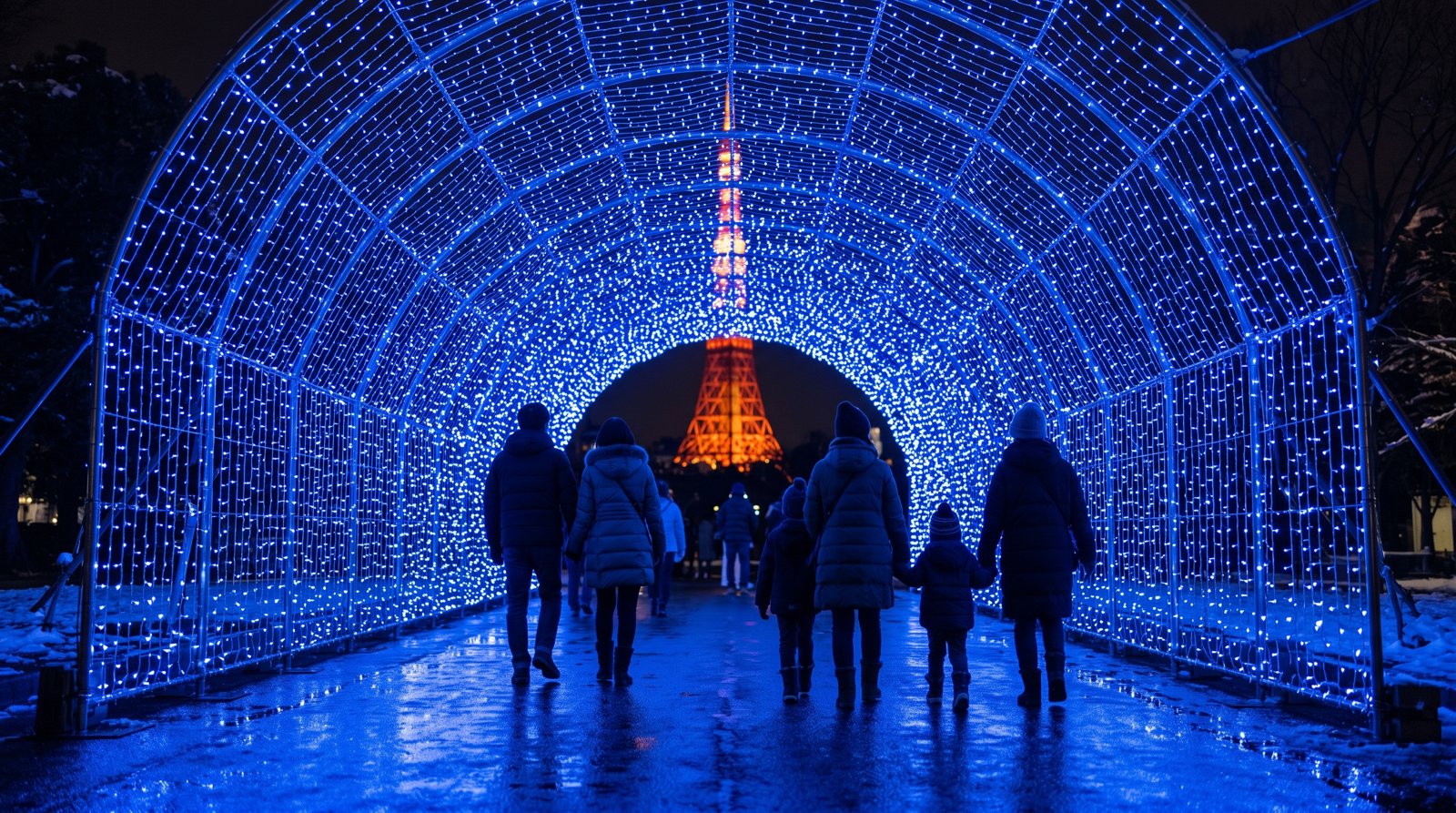
Tokyo in winter has a secret superpower: from early November through February, the city turns into one giant light festival. Millions of LEDs wrap the boulevards of Marunouchi, the keyaki trees of Roppongi and entire amusement parks, and — unlike most Japanese attractions — almost all of it is free. If you are visiting Japan in what looks like the “off season,” winter illuminations are the single best reason to be outside after dark.
This guide covers the best Tokyo winter illuminations for 2026–27: the landmark spots worth planning an evening around, two spectacular day trips, when everything switches on, and practical tips (timing, crowds, and how to survive the cold). Dates below follow each venue’s usual annual schedule — always check the official site for the final dates before you go.
⏱ The short answer (30 seconds)
In a hurry? The full reasons and prices are right below.
- Marunouchi & Tokyo MidtownThe Classy Classics
- Roppongi Hills KeyakizakaThe Tokyo Tower Money Shot
- Shibuya Blue Cave (Ao no Dokutsu)Walking Through Blue Light
- Yomiuriland JewelluminationThe Biggest Show in Town
- Day TripAshikaga Flower Park (Tochigi)
- Day TripEnoshima Sea Candle “Shonan no Hoseki” (Kanagawa)
※ If in doubt, go with #1. Budget picks are further down the page.
How Tokyo Illuminations Work
Most displays run from early-to-mid November until Christmas, with many continuing to mid-February. Lights typically switch on around 17:00 (sunset) and go off between 22:00 and 23:00. Christmas week — especially December 23–25 — is the absolute peak: couples treat Christmas Eve as a date night in Japan, so expect serious crowds. For photos without a sea of people, go on a weekday right at switch-on time, or in January when the tourists thin out but most lights are still shining.
The Best Illumination Spots in Tokyo for 2026–27
1. Marunouchi & Tokyo Midtown — The Classy Classics
The tree-lined Marunouchi Naka-dori between Tokyo Station and the Imperial Palace glows in champagne-gold every winter — understated, elegant, and completely free. It pairs perfectly with dinner around Tokyo Station or a look at the restored station building itself, beautifully lit at night. Across town, Tokyo Midtown (Roppongi) stages one of the city’s most sophisticated displays, with golden lit trees along its garden promenade. Both usually run from mid-November to late December.
2. Roppongi Hills Keyakizaka — The Tokyo Tower Money Shot
The 400-meter keyakizaka slope at Roppongi Hills is lit in “snow and blue” LEDs with Tokyo Tower glowing red-orange in the background — arguably the most famous illumination photo in Japan. It gets crowded, but the shot is worth it. Combine it with the Midtown display, a 10-minute walk away, for the best single illumination evening in central Tokyo.
3. Shibuya Blue Cave (Ao no Dokutsu) — Walking Through Blue Light
The Blue Cave transforms the zelkova avenue from Shibuya’s Yoyogi Park entrance into a tunnel of deep-blue light, mirrored on the ground by reflective sheeting so you feel fully submerged. It is short, intense and extremely photogenic — and just minutes from Shibuya Crossing, so it slots easily into any evening plan. Usually runs from early December to Christmas.
4. Yomiuriland Jewellumination — The Biggest Show in Town
Amusement park Yomiuriland (about 30 minutes from Shinjuku) hosts “Jewellumination” — over 6 million jewel-colored LEDs designed by lighting director Motoko Ishii, one of the largest displays in the Kanto region. This one has an admission fee (park entry), but you get illuminated rides, a light-and-fountain show, and entire hillsides carpeted in color. Runs from late October all the way to early April — the longest season of any major display.
5. Day Trip: Ashikaga Flower Park (Tochigi)
Regularly ranked among Japan’s top three illuminations, Ashikaga Flower Park covers its famous wisteria trellises in hanging curtains of light, recreating the purple blooms in LED form. It is about 90 minutes from Tokyo by train (JR Ryomo Line to Ashikaga Flower Park Station) and utterly worth the trip — go late afternoon to see the park in daylight, then stay for the switch-on. Usually mid-October to mid-February.
6. Day Trip: Enoshima Sea Candle “Shonan no Hoseki” (Kanagawa)
The island of Enoshima near Kamakura crowns its lighthouse and gardens in the “Jewel of Shonan” display — a tunnel of light leading to panoramic views over the winter sea. Combine a Kamakura day trip (Great Buddha, Hase-dera) with the evening lights for one of the best-value days out from Tokyo. Usually late November to late February.
| Spot | Usual season | Cost | Best for |
|---|---|---|---|
| Marunouchi Naka-dori | Mid Nov – late Dec (some to Feb) | Free | Elegant strolls near Tokyo Station |
| Tokyo Midtown | Mid Nov – late Dec | Free | Sophisticated garden lights |
| Roppongi Keyakizaka | Early Nov – Dec 25 | Free | Tokyo Tower photo |
| Shibuya Blue Cave | Early Dec – Dec 25 | Free | Immersive blue tunnel |
| Yomiuriland Jewellumination | Late Oct – early Apr | Park admission | Biggest scale, families |
| Ashikaga Flower Park | Mid Oct – mid Feb | Admission (~¥1,400) | Japan top-3 display, day trip |
| Enoshima Sea Candle | Late Nov – late Feb | Small admission | Sea views + Kamakura combo |
Practical Tips for Illumination Season
Dress warmer than you think. Tokyo winter evenings hover around 3–8°C and you will be standing outdoors for an hour or more. This is exactly what Japanese kairo (pocket hand warmers, about ¥40 each at any convenience store) were invented for — grab a pack. Arrive at switch-on (around 17:00) for the emptiest photos, and remember that December 23–25 is couple-date peak. Most displays are within a short walk of a train station, so an unlimited subway pass covers a whole evening of light-hopping. Finally, many venues run special New Year illuminations through early January — one more reason winter is a smarter time to visit Japan than most people think.
Frequently Asked Questions
When do Tokyo winter illuminations start in 2026?
Most major displays switch on in early-to-mid November 2026 and run at least until Christmas; several (Yomiuriland, Ashikaga, Enoshima, Marunouchi) continue into January and February 2027. Exact dates are announced on each venue’s official site in autumn.
Are the illuminations free?
Street displays — Marunouchi, Tokyo Midtown, Roppongi Keyakizaka, Shibuya Blue Cave — are completely free. Destination displays such as Yomiuriland Jewellumination, Ashikaga Flower Park and Enoshima charge admission, typically ¥1,000–2,500.
What is the best single evening plan?
Start at Tokyo Midtown at switch-on (~17:00), walk 10 minutes to Roppongi Hills Keyakizaka for the Tokyo Tower shot, then take the subway to Shibuya for the Blue Cave and dinner. Three of Tokyo’s best displays, all free, in one evening.
Is it worth going after Christmas?
Yes — January is the insider window. Many displays keep running, crowds drop sharply, and the air is at its clearest for night photography. Ashikaga and Yomiuriland both shine well into February.
Final Thoughts
Winter illuminations are Japan’s best free show: world-class lighting design, zero admission for the street displays, and a built-in excuse for hot amazake or a late ramen. Plan one central-Tokyo evening (Midtown → Keyakizaka → Blue Cave), add Yomiuriland or the Ashikaga day trip if you have time, and pack pocket warmers. Your November–February trip just got its highlight reel.
🔥 Editor’s Picks for Life & Travel in Japan

Japan Expat Starter Kit 2026 PDF guide
Your first 90 days in Japan, step by step: 17 chapters · 24 pages · 100 phrases in Japanese script · 40 kanji · printable checklists. Bank account, My Number, health insurance, apartment, phone, taxes & pension.
$9.99 $4.99 current price
📥 Get the kit →📄 Read 5 pages free: contents + Chapter 2
⚡ Instant PDF download · 🛡️ 30-day money-back guarantee · 🔄 Free 2026 updates
Practical guides for life and travel in Japan — free, about once a week. No spam, unsubscribe anytime.
☕ Enjoying our Japan guides?
If this article helped you, you can support our work with a coffee!
🇯🇵 Travel & Life Essentials for Japan
Hand-picked gear to make your time in Japan easier. Available on Amazon US & Amazon Japan.
🔋 Portable charger
A must for long days of sightseeing and photos.
View on Amazon (US)View on Amazon Japan🔌 Travel plug adapter
Japan uses Type A outlets. Bring the right adapter.
View on Amazon (US)View on Amazon Japan🎧 Translation earbuds
Real-time translation to talk without barriers.
View on Amazon (US)View on Amazon JapanAs an Amazon Associate, Japan Life Lab earns from qualifying purchases.
Did this guide help you? 🍵
Japan Life Lab is a small independent blog, and every guide we publish is completely free — no paywalls, ever. If our work saved you time (or a headache), you can support us with a cup of Japanese tea. Every contribution, big or small, goes straight into keeping these guides free, accurate and up to date for everyone.
☕ Support Japan Life Lab
Leave a Reply