Category: Life in Japan

Expat guides, shopping, and everyday life in Japan

  • Best Japanese Sunscreen 2026: Why J-Beauty SPF Beats Everything Else (7 Picks)

    Best Japanese Sunscreen 2026: Why J-Beauty SPF Beats Everything Else (7 Picks)

    Japanese sunscreen is globally recognized as the best available — and it costs ¥500–¥700 at your corner drugstore. Here’s why beauty enthusiasts fly to Japan specifically to stock up, which products to buy, and exactly how to navigate the label.

    Why Japanese Sunscreen Is in a Different League

    📅 Updated July 2026: Product information, prices, and travel details in this article have been updated to reflect the latest information as of July 2026.

    The gap comes down to three things: regulation, formulation, and climate engineering.

    In the United States, sunscreen is classified as a drug by the FDA, meaning new UV filter ingredients take years to approve. Japan’s regulatory framework approves innovations far faster, giving Japanese manufacturers access to advanced UV technology 5–10 years before Western brands can legally use them. Japanese brands have used this head start to build formulas that deliver SPF50+ protection while feeling like moisturizer.

    Japan’s hot, humid summers also pushed manufacturers to solve a real problem Western brands largely ignore: how do you keep sunscreen on through sweat, water, and heat? The answer is proprietary technologies like Anessa’s Auto Booster system, which actually strengthens the UV protection film when exposed to heat and water — the opposite of most sunscreens, which degrade.

    The labeling is also genuinely more honest. Japan’s PA++++ system gives you a precise, tested measure of UVA protection. Western “broad spectrum” labels tell you almost nothing specific.

    Understanding the Japanese Label

    SPF — UVB protection

    This works the same worldwide. SPF50+ is the maximum rating on Japanese labels, providing approximately 98% UVB protection. Note: Japan caps at SPF50+, while American brands sell SPF100+. The 100+ figure is scientifically misleading (the real difference is minimal). Japanese SPF50+ is the actual maximum effective protection.

    PA — UVA protection (Japan’s system)

    This is where Japanese labeling becomes genuinely more informative than Western alternatives:

    • PA+ — Minimal UVA protection
    • PA++ — Moderate UVA protection
    • PA+++ — High UVA protection
    • PA++++ — Maximum UVA protection (the highest rating)

    When you see SPF50+ PA++++ on a Japanese sunscreen, you’re getting the highest possible protection in both UVB and UVA categories. Compare this to “broad spectrum SPF50” on a US product, which tells you nothing specific about UVA protection levels.

    Best Japanese Sunscreens 2026

    1. Biore UV Aqua Rich Watery Essence — SPF50+ PA++++

    Japan’s #1 best-selling drugstore sunscreen and the best entry point for first-time buyers. The watery essence texture absorbs in seconds, leaves zero white cast, and sits invisibly under makeup. Contains hyaluronic acid for hydration. At ¥550–¥700 for 70g, it delivers performance that rivals Western products costing 5× more. Particularly good for oily and acne-prone skin.

    2. Anessa Perfect UV Sunscreen Skincare Gel — SPF50+ PA++++

    Shiseido’s premium lineup and a consistent cult favorite globally. The 2026 formula was released in February, featuring upgraded Auto Booster technology — the protection film actively strengthens when exposed to sweat and water. Gel texture, no white cast, works under or over makeup. Price: ¥2,700–¥3,200 for 90g. Best for outdoors, sports, and anyone who sweats heavily.

    3. Skin Aqua Super Moisture Gel — SPF50+ PA++++

    Rohto’s best-seller, updated in early 2026 with the highest concentration of three-type hyaluronic acid in the line. The three molecular weights (large, medium, small) provide layered hydration that penetrates to different skin depths. Lightweight gel. Price: ¥600–¥800. Best for dry or dehydrated skin that needs hydration alongside sun protection.

    4. Hada Labo UV White Gel Moisturizer — SPF50+ PA++++

    Bridging the gap between drugstore pricing and premium performance. Combines hyaluronic acid with vitamin C for brightening benefits alongside UV protection. Works as a two-in-one moisturizer and sunscreen. Price: ¥1,000–¥1,200. Best for combination skin or anyone wanting to simplify their morning routine.

    5. Anessa Perfect UV Sunscreen Skincare Milk — SPF50+ PA++++

    For people who prefer a creamier milk texture over gel. The same Auto Booster technology as the gel but in a formulation that feels richer. Better for dry skin or extended outdoor use (beach, hiking). Price: ¥2,500–¥3,000 for 60ml.

    Where to Buy

    StoreWhat You’ll FindNotes
    Matsumoto KiyoshiFull range, testers availableTax-free on ¥5,000+ purchases; English-friendly app coupons
    WelciaFull range, many 24-hourConvenient late-night option
    Don QuijoteLarge selection, sometimes cheapestGood for bulk buying multiple products
    Convenience storesLimited (Biore, Skin Aqua only)Emergency purchase only; limited selection

    Sunscreen by Skin Type

    • Oily / Acne-prone: Biore UV Aqua Rich, Skin Aqua Super Moisture Gel — both dry matte
    • Dry / Dehydrated: Hada Labo UV White Gel, Skin Aqua (triple hyaluronic acid)
    • Sensitive: Look for “敏感肌向け” (sensitive skin) or “低刺激” (low irritation) labels
    • Anti-aging: Hada Labo (vitamin C), Anessa gel (antioxidant ingredients)

    Can You Bring It Home?

    Yes. Japanese customs allows personal-use quantities to leave the country without restriction. For international travel, any bottle under 100ml can go in carry-on luggage; larger bottles need checked bags. For US customs specifically, personal-use quantities of cosmetics imported for personal use are generally allowed without declaration. Keep original packaging if asked at customs.

    Pro tip: Stock up at any major drugstore. A 100g Biore costs ¥700. That same formula in a “Japanese import” beauty store outside Japan often costs 3–4× more. Buy it while you’re here.

    🇯🇵 Travel & Life Essentials for Japan

    Hand-picked gear to make your time in Japan easier. Available on Amazon US & Amazon Japan.

    🔋 Portable charger

    A must for long days of sightseeing and photos.

    View on Amazon (US)View on Amazon Japan

    🔌 Travel plug adapter

    Japan uses Type A outlets. Bring the right adapter.

    View on Amazon (US)View on Amazon Japan

    🎧 Translation earbuds

    Real-time translation to talk without barriers.

    View on Amazon (US)View on Amazon Japan

    As an Amazon Associate, Japan Life Lab earns from qualifying purchases.

  • Best Supermarkets in Japan for Foreigners 2026: Secret Discounts & English-Friendly Picks

    Best Supermarkets in Japan for Foreigners 2026: Secret Discounts & English-Friendly Picks

    Grocery shopping in Japan as a foreigner can be either wonderfully easy or quietly baffling — depending on where you go. The good news: once you know which stores serve your needs best, it becomes one of the genuine pleasures of living in or visiting Japan.

    Here’s the honest breakdown of Japan’s best supermarkets for non-Japanese speakers in 2026.

    🛒 Quick Picks
    Cheapest overall: OK Store or Gyomu Super
    Best international food selection: Seijo Ishii or National Azabu
    Most convenient nationwide: AEON
    Best for bulk + imports: Costco Japan
    Best specialty/import finds: Kaldi Coffee Farm

    The Best Supermarkets in Japan for Foreigners (2026)

    1. AEON (イオン) — Best All-Rounder

    Japan’s largest supermarket chain with 350+ stores nationwide, AEON is the default recommendation for foreigners for good reason: it has everything. You’ll find it near major train stations, airports, and shopping malls across the country.

    AEON offers an excellent imported food section, tax-free shopping for non-residents (bring your passport), and ATMs that accept foreign cards. The house brand “TopValu” produces quality products at competitive prices. On the 20th and 30th of each month, AEON cardholders get 5% off — worth knowing if you’re staying longer term.

    • Price: Mid-range
    • International selection: Excellent
    • English support: Good (multilingual signage in major locations)
    • Best for: One-stop shopping with reliable quality

    2. OK Store (オーケー) — Tokyo’s Cheapest Option

    If you’re in the Tokyo, Kanagawa, Chiba, or Saitama area and prioritizing budget, OK Store is your answer. Prices here are consistently 20–30% lower than competitors — we’re talking lettuce for ¥200, grapefruit for ¥88, and weekly specials that are genuinely hard to beat.

    The trade-off: OK Store’s English support is minimal, and the international food selection is limited compared to AEON or Seijo Ishii. But for everyday staples — rice, vegetables, tofu, eggs, dairy — it’s unbeatable on price.

    • Price: Cheapest in Tokyo area
    • International selection: Limited
    • English support: Minimal
    • Best for: Budget shopping for daily essentials

    3. Gyomu Super (業務スーパー) — Wholesale Prices for Everyone

    Gyomu Super (“gyomu” means “business/commercial”) passes wholesale pricing to regular customers through bulk purchasing — and it works. With 1,000+ locations nationwide, it’s one of Japan’s fastest-growing chains.

    The international food section is surprisingly strong: French and Italian imported products, Southeast Asian ingredients, and over 100 halal-certified items. If you’re looking for large quantities of frozen food or imported staples at very low prices, this is your store. Just be prepared to buy a 1kg block of cheese, not a small wedge.

    • Price: Very cheap
    • International selection: Excellent (especially Asian and European imports)
    • Halal options: 100+ certified products
    • Best for: Budget shopping + international food lovers

    4. Seijo Ishii (成城石井) — Premium Imported Foods

    Seijo Ishii is Japan’s answer to a specialty import grocery store. Located in major train stations and upscale neighborhoods across Kanto and Kansai, it stocks European cheeses, specialty wines, imported chocolates, global condiments, and ingredients that are simply impossible to find elsewhere in Japan.

    Yes, it’s expensive — but when you need quality mozzarella, a specific Spanish olive oil, or a bottle of wine that isn’t “Japanese domestic,” Seijo Ishii delivers. It also has a solid prepared food section (their sandwiches and salads are genuinely good).

    • Price: Premium
    • International selection: Exceptional (European focus)
    • Best for: Quality imports, wine, specialty ingredients

    5. Costco Japan — For the Bulk Buyers

    Costco operates 30+ warehouse locations in Japan (major ones near Tokyo: Makuhari and Kawasaki). The membership system is the same as worldwide:

    • Gold Star: ¥5,280/year (individual)
    • Gold Star Executive: ¥10,560/year (extra benefits, usable globally)

    The selection skews heavily toward American and European imports — giant blocks of cheese, quality beef, imported snacks, and American-sized portions of everything. If you miss big Western portions and shopping in English, Costco feels like a brief return to home. The rotisserie chicken is legendary among Tokyo expats.

    • Price: Mid-high (membership required)
    • International selection: Excellent (US/European focus)
    • Best for: Households with storage space, expat comfort foods

    6. National Azabu — Tokyo’s Iconic Expat Store

    Located in Hiroo (near the embassy district), National Azabu has been serving Tokyo’s international community since 1962. It stocks the largest organic section in Tokyo and an extensive range of international products — but it’s expensive, and the location limits it to Tokyo residents.

    Worth knowing: National Azabu has a custom nut butter station where you can grind your own almond or peanut butter fresh. A small detail that expats tend to love disproportionately.

    7. Kaldi Coffee Farm (カルディコーヒーファーム)

    Not a traditional supermarket, but found in most major shopping malls nationwide. Kaldi specializes in imported specialty items: pasta, European sauces, Middle Eastern spices, Southeast Asian ingredients, plus their famous rotating import selection. The coffee range is particularly good. Check it when you need a specific international ingredient and can’t find it elsewhere.

    Key Japanese Supermarket Concepts for Foreigners

    Two Types of Expiration Dates (Critical)

    Understanding these two labels will save you from throwing away perfectly good food — or eating something you shouldn’t:

    • 賞味期限 (Shoumikigen) — Best-Before Date: Used on shelf-stable items (snacks, sauces, instant noodles, frozen food). The product is at its best quality before this date, but is often still safe and edible after it. You’ll see this on most packaged goods.
    • 消費期限 (Shouhikigen) — Use-By Date: Used on highly perishable items (fresh meat, fish, prepared bento, dairy, raw seafood). Do not eat after this date. This is the safety cutoff.

    Stores often mark down items approaching their Shoumikigen date — these are perfectly fine to buy.

    The Bagging System

    One thing that surprises most foreign visitors: in Japan, the cashier scans your items and takes payment, but you bag your own groceries at a separate packing table (袋詰め台, fukurozumeidai) near the exit. Don’t try to bag at the checkout counter — it slows everything down and creates confusion.

    Bring Your Own Bag

    Since 2020, plastic bags are charged at ¥3–¥10 each. Bring a reusable bag (エコバッグ, eco bag). If you need one, say “Rejibukuro, hitotsu kudasai” (レジ袋、一つください) — “One shopping bag, please.”

    Point Cards Worth Getting

    Japan’s point card culture is real and worth engaging with:

    • WAON Card (AEON): Used across AEON, Mini Stop, and affiliated stores. Points valid 2 years. 5% discount on 20th/30th at AEON supermarkets.
    • Ponta / dPoint: Accepted at multiple chains, linked to Lawson, various apps.
    • Most stores have their own app-based point system — worth downloading for regular stores.

    Discount Hours for Prepared Food

    Japanese supermarkets mark down prepared food (bento, sushi, deli items) heavily in the evenings — typically from 7–9 PM. If you’re comfortable eating supermarket meals, shopping in the evening gets you 30–50% off perfectly good food.

    Quick Comparison: Which Store Is Right for You?

    StorePriceInternationalEnglishBest For
    AEONMidExcellentGoodAll-around shopping
    OK StoreCheapestLimitedMinimalBudget daily shopping
    Gyomu SuperVery cheapExcellentMinimalBudget + international
    Seijo IshiiPremiumExceptionalGoodQuality European imports
    Costco JapanMid-HighExcellentGoodBulk US/EU products
    National AzabuPremiumExcellentExcellentOrganic + premium
    KaldiMid-HighExcellentGoodSpecialty finds

    🇯🇵 Travel & Life Essentials for Japan

    Hand-picked gear to make your time in Japan easier. Available on Amazon US & Amazon Japan.

    🔋 Portable charger

    A must for long days of sightseeing and photos.

    View on Amazon (US)View on Amazon Japan

    🔌 Travel plug adapter

    Japan uses Type A outlets. Bring the right adapter.

    View on Amazon (US)View on Amazon Japan

    🎧 Translation earbuds

    Real-time translation to talk without barriers.

    View on Amazon (US)View on Amazon Japan

    As an Amazon Associate, Japan Life Lab earns from qualifying purchases.

  • Japan Digital Nomad Visa 2026: Who Qualifies, Real Cost & How to Apply (Step-by-Step)

    Japan Digital Nomad Visa 2026: Who Qualifies, Real Cost & How to Apply (Step-by-Step)

    Japan launched a Digital Nomad Visa in March 2024 — and it’s one of the most interesting remote work visas in Asia. You get up to 6 months in one of the world’s most fascinating countries, zero Japanese income tax (if you stay under 183 days), and access to world-class infrastructure. There’s a catch: the income requirement is steep.

    Here’s everything you need to know — requirements, costs, application steps, and an honest answer to whether it’s worth it.

    📋 Japan Digital Nomad Visa — Quick Facts
    Official name: Designated Activities Visa (Digital Nomad)
    Launched: March 2024
    Duration: Up to 6 months (non-renewable)
    Income requirement: ¥10 million/year (~USD $65,000–68,000)
    Visa fee: ¥3,000 (~USD $20)
    Countries eligible: 50+ (with Japan tax treaties)
    Tax benefit: No Japanese income tax if stay under 183 days

    Who Qualifies for Japan’s Digital Nomad Visa?

    Nationality Requirements

    You must be a citizen of one of 50+ countries that have tax treaties with Japan. This includes the United States, Canada, United Kingdom, Australia, Germany, France, Singapore, South Korea, and most of Europe. Check the Ministry of Foreign Affairs website for the complete list.

    Income Requirement: The Big Hurdle

    This is where most people get filtered out. You need to demonstrate an annual income of ¥10 million or more (approximately USD $65,000–68,000 depending on exchange rates). This must come from a foreign employer or foreign clients — not from Japanese companies or customers.

    You’ll need to prove this with documents like tax returns, employment contracts, or bank statements showing consistent income. Self-employed freelancers and remote employees both qualify, provided the income is from overseas.

    Other Requirements

    • Valid passport (6+ months remaining, at least 2 blank pages)
    • Proof of remote employment or freelance contracts with non-Japanese employers/clients
    • Health insurance with at least ¥10 million coverage (required)
    • Proof of accommodation (hotel booking, lease agreement, etc.)
    • Clean criminal record

    The Application Process: Step by Step

    1. Gather your documents — Income proof (tax returns, employment contract), passport copy, accommodation proof, health insurance documentation
    2. Apply at a Japanese embassy or consulate in your home country. You cannot apply from within Japan.
    3. Pay the ¥3,000 visa fee (~USD $20 — one of the cheapest visa fees in the world)
    4. Wait for processing — typically 5–10 business days
    5. Enter Japan — immigration stamps your passport with the digital nomad designation

    Processing times vary by embassy. Apply at least 2–3 weeks before your planned departure date.

    What You Can (and Cannot) Do on This Visa

    ✅ Allowed ❌ Not Allowed
    Work remotely for overseas employers Work for Japanese companies
    Freelance for foreign clients Serve the Japanese domestic market
    Stay up to 6 months Renew or extend the visa
    Travel freely within Japan Open a Japanese bank account (no residence card)
    Bring family members Family members work in Japan

    Important: This visa does not provide a residence card (在留カード). You’re treated as a visitor, which limits some services. Budget accordingly.

    Tax Implications: The 183-Day Rule

    This is one of the most attractive aspects of the Japan Digital Nomad Visa. If you stay under 183 days in a calendar year, you are considered a non-resident for Japanese tax purposes. That means:

    • ✅ No Japanese income tax on foreign-sourced income
    • ✅ No local inhabitant tax (which is typically 10%)
    • ❌ You’ll still pay 10% consumption tax (Japan’s VAT) on daily purchases

    Stay 183+ days and you become a Japanese tax resident, subject to Japan’s progressive income tax (up to 45%). For most digital nomads using this visa, the 6-month limit keeps you safely under this threshold.

    Always consult a tax professional for your specific situation — especially if you have income sources in multiple countries.

    Cost of Living as a Digital Nomad in Japan 2026

    City Monthly Rent (1BR) Coworking/Month Total Monthly Budget
    Tokyo ¥120,000–180,000 ¥30,000–50,000 ¥250,000–400,000
    Osaka ¥80,000–110,000 ¥25,000–40,000 ¥200,000–320,000
    Fukuoka ¥60,000–80,000 ¥20,000–35,000 ¥160,000–250,000

    Fukuoka is increasingly popular with digital nomads — lower costs, excellent infrastructure, compact city, and a growing international community. The city actively promotes itself as a startup and nomad hub.

    Best Cities for Digital Nomads in Japan

    Tokyo — The Ultimate Hub

    Unmatched infrastructure, endless coworking options, incredible food, and global connectivity. More expensive, but if you’re earning ¥10M+/year, it’s manageable. Neighborhoods like Shibuya, Shinjuku, and Nakameguro have thriving expat and nomad communities.

    Osaka — The Value Pick

    Better value than Tokyo, friendlier locals (subjectively), excellent food scene, and easy access to Kyoto, Nara, and Kobe. Great for those who want Japan culture without full Tokyo prices.

    Fukuoka — The Nomad’s Secret

    Japan’s most nomad-friendly city per square kilometer. Lower rent, a growing startup ecosystem, direct flights to Seoul and other Asian hubs, and a more relaxed pace. Fukuoka hosts some of Asia’s largest digital nomad meetups.

    How Japan Compares to Other Asian Digital Nomad Visas

    Country Duration Income Req. Tax
    Japan 6 months ~USD $65,000/yr 0% (under 183 days)
    Thailand (DTV) 5 years None Variable
    Malaysia (DE Rantau) 12 months USD $24,000/yr No foreign income tax
    Indonesia (B211A) 5 years USD $30,000/yr Complete exemption

    Japan’s visa is shorter and has a higher income bar than competitors, but no other country in Asia offers the same combination of safety, infrastructure, food, culture, and quality of life. For high earners who’ve always wanted to live in Japan, 6 months is an incredible opportunity.

    🔒 A must-have for remote work in Japan

    Working remotely from Japan? ExpressVPN keeps your data secure on public and hotel Wi-Fi, lets you access your home-country tools, banking and streaming, and keeps client work private. Fast servers in 100+ countries, with a 30-day money-back guarantee.

    Try ExpressVPN →

    Is the Japan Digital Nomad Visa Worth It?

    Yes, if you:

    • Earn ¥10M+ annually from foreign sources
    • Have wanted to spend extended time in Japan
    • Value safety, cleanliness, and world-class infrastructure
    • Can work in Japan’s timezone (UTC+9) or have flexible hours

    Maybe not, if you:

    • Earn under ¥10M — the income bar is real
    • Need a longer stay — 6 months is not renewable
    • Need banking access — no residence card limits options
    • Want a warmer climate year-round (Japanese winters can be harsh)

    Real users who’ve used this visa consistently report it as “the best 6 months of their life” — the income threshold is genuinely filtering for high-earners who can afford Japan’s cost of living comfortably. If you qualify, apply.

  • Japan Earthquake Safety 2026: The 72-Hour Survival Kit Every Foreigner Must Have Ready

    Japan Earthquake Safety 2026: The 72-Hour Survival Kit Every Foreigner Must Have Ready

    Japan has an earthquake every 5 minutes. In 2024, the Noto Peninsula earthquake killed 703 people. In April 2026, a 7.4-magnitude quake struck off the Sanriku coast. The government predicts a 70% chance of a direct hit on Tokyo within 30 years — and an 80% chance of a Nankai Trough megaquake that could kill 290,000 people.

    Most foreigners living in or visiting Japan have no idea what to do. This guide fixes that — in plain English.

    ⚡ Quick Facts
    • Japan: ~1,500 earthquakes per year (M4+)
    • Noto Peninsula earthquake (Jan 1, 2024): 703 deaths
    • Tokyo: 70% chance of M7+ earthquake within 30 years
    • Nankai Trough: 80% chance of M8-8.5 megaquake — projected 290,000 deaths
    • Foreign-bought phones do NOT automatically receive Japan’s emergency alerts

    Before an Earthquake: Prepare Now (Not Later)

    The Emergency Kit You Actually Need

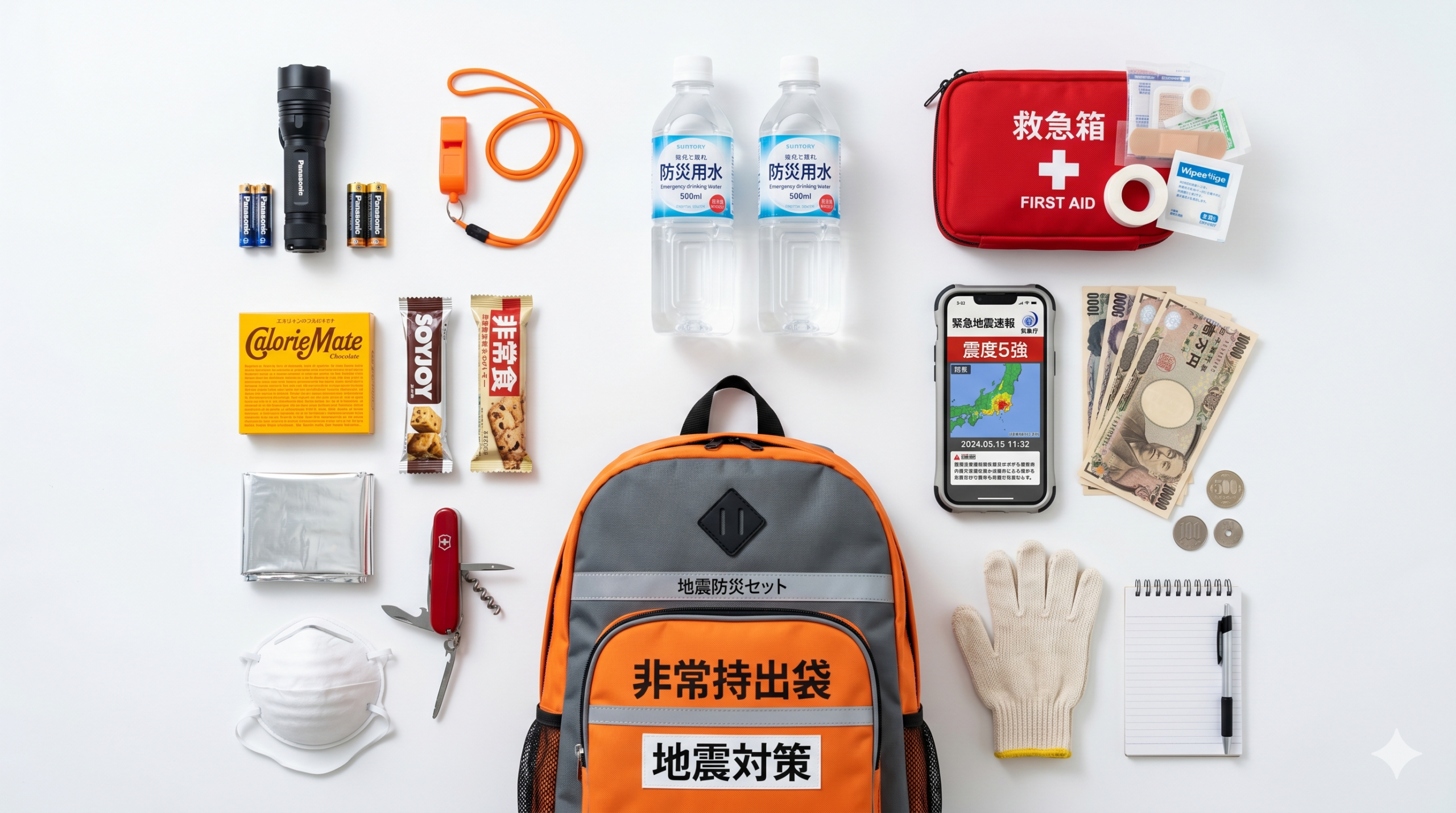
    Japanese emergency guidelines recommend a 72-hour kit minimum. Here’s what to pack:

    • Water: 4 liters per person per day × 3 days = 12 liters minimum
    • Food: Non-perishable items (energy bars, canned goods, instant noodles)
    • Documents: Passport, residence card, My Number card copies in waterproof bag
    • Medications: 30-day supply of any prescriptions
    • Cash: ¥30,000–50,000 in small bills (ATMs may be down)
    • Portable toilet bags: Essential for shelter life — Japanese evacuation centers expect you to bring your own
    • Flashlight + battery bank: Power outages are common after major quakes
    • Warm clothing: Gym floors are cold, especially in winter

    Keep your bag near the front door. You may have 30 seconds to grab it.

    The Apps That Could Save Your Life

    Critical: if your phone wasn’t bought in Japan, it will NOT automatically receive earthquake alerts. Japanese J-Alert uses a satellite-based system incompatible with international phones. Install these now:

    • Safety Tips (by JNTO) — 15 languages, government-backed, covers earthquakes, tsunamis, typhoons
    • NERV Disaster Prevention App — fastest real-time warnings in Japan, English UI available
    • Yurekuru Call — 5 million users, direct JMA data, 10–120 second advance warning
    • NHK World App — delivers J-Alert in English

    Install at least 2 of these. Enable push notifications. Grant location permissions.

    Register With Your Embassy

    Most embassies offer emergency SMS alerts for registered citizens. The U.S. Embassy Japan, British Embassy, and Canadian Embassy all have emergency registration systems. It takes 5 minutes. Do it before you need it.

    Know Your Evacuation Route

    Search “[your area] 避難所” (evacuation shelter) on your city’s website. Tokyo residents can check tokyo.lg.jp. Bookmark it offline.

    During an Earthquake: Drop. Cover. Hold On.

    When shaking starts, forget everything except three words: Drop. Cover. Hold On.

    1. DROP to your hands and knees immediately
    2. COVER — get under a sturdy table, or protect your head and neck with your arms if no cover is available. Stay away from windows.
    3. HOLD ON — stay in position until shaking completely stops. Do not run outside.
    Where You Are What To Do
    Indoors Drop, cover under table. Stay away from windows and kitchen appliances.
    Outdoors Move away from buildings and power lines. Drop and protect your head.
    In a car Pull over slowly. Stay in the car with seatbelt on. Avoid overpasses.
    On a train Hold railings. Trains stop automatically. Follow staff instructions.
    In an elevator Press all floor buttons. Exit at first available floor. Never use elevators after quakes.

    Understanding the Alert Sound

    Japan’s Earthquake Early Warning (緊急地震速報) gives you 5–30 seconds of warning before strong shaking arrives. You’ll hear a distinctive alarm from your phone, TV, and public speakers. When you hear it, act immediately — don’t wait to feel the shaking.

    After an Earthquake: The First 72 Hours

    Immediate Steps (First 30 Minutes)

    1. Check yourself and others for injuries. Apply first aid if needed.
    2. Check for gas leaks — smell gas? Open windows, don’t flip any switches, leave immediately.
    3. Turn on your emergency apps for updates and tsunami warnings.
    4. Text rather than call — networks get overloaded, texts usually get through.
    5. Charge your phone if power is still on.

    Finding an Evacuation Shelter

    Japan’s system has two phases: Evacuation Site (避難場所) — an open area safe from fire and structural collapse — and Evacuation Shelter (避難所) — an indoor facility (usually a school gymnasium) for multi-day stays. Official shelters accept all residents regardless of nationality. Show your residence card and follow others.

    Reality Check: What Shelters Are Like

    No sugarcoating: Japanese evacuation shelters are spartan.

    • Hard gymnasium floors with thin mats
    • 600+ people in a single gym is normal after a major quake
    • Cardboard privacy partitions between families
    • Meals are compressed emergency biscuits and bottled water
    • Portable toilets become overwhelmed quickly

    Multilingual support staff are available at major shelters in urban areas, but availability varies. The Safety Tips app has shelter-finding functionality in 15 languages.

    Emergency Japanese Phrases

    English Japanese Pronunciation
    Where is the shelter? 避難所はどこですか? Hinanjo wa doko desu ka?
    I need help 助けてください Tasukete kudasai
    I am injured 怪我をしています Kega wo shite imasu
    Does anyone speak English? 英語を話せる人はいますか? Eigo wo hanaseru hito wa imasu ka?
    Call an ambulance 救急車を呼んでください Kyukyusha wo yonde kudasai

    Emergency numbers: Police 110 | Ambulance & Fire 119

    Bottom Line: Should You Be Worried?

    Japan is the safest earthquake-prone country on Earth. The building codes are world-class (post-1981 buildings are extremely resilient), the early warning system is the most advanced globally, and emergency services are highly trained. Most earthquakes you experience will rattle your coffee cup, not your life.

    But preparedness is what separates “scary story” from “tragedy.” Download the apps today. Pack a kit this weekend. Register with your embassy. It takes 3 hours total and could save your life.

  • Japan Rainy Season 2026: Exact Dates, What to Pack & Insider Tips to Enjoy It

    Japan Rainy Season 2026: Exact Dates, What to Pack & Insider Tips to Enjoy It

    Japan’s rainy season — called Tsuyu (梅雨) — is one of the most misunderstood times to visit. Yes, it rains. But it’s also crowd-free, beautiful, and surprisingly affordable. This is your complete guide to Japan’s rainy season in June 2026.

    🌧️ Tsuyu 2026 Quick Facts

    • Tokyo, Osaka, Kyoto: Early June – mid-July
    • Okinawa: Mid-May – late June
    • Hokkaido: Usually rainy season-free
    • Temperatures: 22–28°C — warm but comfortable
    • Rain chance: ~40–60% — not all-day rain, just showers

    What Is Tsuyu? The Real Picture

    Tsuyu doesn’t mean constant rain. Most days bring light drizzle, intermittent showers, and misty mornings — not non-stop downpours. Think London weather, warmer, with better food. The humidity (70–85%) is the real challenge, but it’s manageable with the right clothing.

    5 Reasons to Actually Visit Japan During Rainy Season

    1. Dramatically Fewer Crowds

    Fushimi Inari with 40% fewer tourists? Yes. Arashiyama bamboo grove in the mist? Genuinely stunning. Popular attractions are far more manageable during tsuyu than during Golden Week or autumn.

    2. Lower Prices

    Flights and hotels drop noticeably during rainy season. Ryokans that are fully booked in October often have availability. It’s one of Japan’s few true “value travel” windows.

    3. Hydrangea Season at Its Peak

    Hydrangeas (ajisai) bloom during tsuyu and they’re breathtaking. Top spots:

    • Meigetsuin Temple, Kamakura — The “Hydrangea Temple,” 2,500 plants lining the paths
    • Hakone — Hydrangeas with misty mountain backdrops
    • Bunkyo Hydrangea Festival, Tokyo — Free June festival at Hakusan Shrine
    • Nishi Park, Fukuoka — 250 varieties

    4. Misty Temples Look Incredible

    Kyoto in the mist is a photographer’s dream. Kurama and Kibune mountain villages, Philosopher’s Path, Sanjusangendo — all take on an otherworldly quality in rainy season light.

    5. Onsen in the Rain

    Outdoor hot spring baths (rotenburo) in misty rain is a once-in-a-lifetime sensory experience. The combination of warm water, cool air, and mist is uniquely Japanese.

    What to Pack for Japan’s Rainy Season

    ☂️ Rainy Season Packing List

    Waterproof shoes — Most important item. Wet socks ruin entire days. Waterproof sneakers or light boots are perfect.

    Compact umbrella — Available at every konbini for ¥500–¥1,000 if you forget yours. Avoid large umbrellas on crowded streets.

    Lightweight rain jacket — Packable, breathable, with a hood. Far better than a poncho.

    Quick-dry clothing — Merino wool, linen, synthetics. Avoid heavy denim — it takes forever to dry.

    Dehumidifying packets — For your bag and shoes. Available at Daiso (100-yen shop) everywhere in Japan.

    Best Activities by City During Tsuyu

    Tokyo

    • teamLab Borderless/Planets — Digital art that’s even more atmospheric on rainy days
    • Depachika basement food halls — Isetan Shinjuku, Mitsukoshi Ginza: world-class food shopping
    • Yanaka district — Old-Tokyo neighborhood that looks incredible in the rain
    • Tokyo National Museum — World-class Japanese art collection in Ueno Park

    Kyoto

    • Kurama and Kibune — Mountain temple villages that glow in the mist
    • Sanjusangendo — Indoor hall of 1,001 warrior statues
    • Nishiki Market — Covered arcade “Kyoto’s Kitchen”

    Kamakura (Day Trip from Tokyo)

    • Meigetsuin Temple — Arrive before 9am for the hydrangeas without crowds
    • Engakuji Temple — Ancient Zen temple complex in the mist

    Practical Survival Tips

    Use Tokyo’s Underground Network

    Tokyo’s underground shopping malls connect major train stations. In Shinjuku, you can travel between multiple stations completely sheltered from rain. Osaka’s Namba underground connects entire districts.

    Check Hourly Weather Forecasts

    Japanese weather apps are remarkably accurate. Use Yahoo!天気 (Yahoo! Weather Japan) or Weather News for hourly rainfall forecasts. Plan outdoor sightseeing for predicted dry windows — often morning or after 3pm.

    The Konbini Umbrella Strategy

    If you get caught in rain, buy a ¥700 convenience store umbrella. When done, leave it in the umbrella stand at a temple or station for the next person. Very Japanese.

    Tsuyu 2026 Timeline by Region

    RegionStartEnd
    OkinawaMid-MayLate June
    Kyushu/ShikokuLate May–Early JuneMid-July
    Kansai (Osaka, Kyoto)Early JuneMid-July
    Kanto (Tokyo)Early JuneMid-July
    TohokuMid-JuneLate July
    HokkaidoUsually rainy season-free ✅

    The Bottom Line

    Japan’s rainy season rewards travelers who prepare. Come with waterproof shoes, a good rain jacket, and an open mind — and you’ll find June to be one of Japan’s most atmospheric and genuinely memorable travel experiences.

    🇯🇵 Travel & Life Essentials for Japan

    Hand-picked gear to make your time in Japan easier. Available on Amazon US & Amazon Japan.

    🔋 Portable charger

    A must for long days of sightseeing and photos.

    View on Amazon (US)View on Amazon Japan

    🔌 Travel plug adapter

    Japan uses Type A outlets. Bring the right adapter.

    View on Amazon (US)View on Amazon Japan

    🎧 Translation earbuds

    Real-time translation to talk without barriers.

    View on Amazon (US)View on Amazon Japan

    As an Amazon Associate, Japan Life Lab earns from qualifying purchases.

  • How to Get a Job in Japan as a Foreigner in 2026: 5 Realistic Paths (Sorted by Easiest)

    How to Get a Job in Japan as a Foreigner in 2026: 5 Realistic Paths (Sorted by Easiest)

    Can you really find a job in Japan without speaking Japanese? Yes — but your options depend heavily on your skills and industry. This is the honest, practical guide to finding work in Japan as a foreigner in 2026, based on real pathways that actually work.

    📋 Key Facts for 2026

    • Japan has record-high foreign worker demand — government actively recruiting
    • Specified Skilled Worker (特定技能) expanded to 16 industry sectors
    • Japan’s average salary: ~¥4.6 million/year (about $30,000 USD)
    • IT roles: ¥6–12 million/year — among highest-paid for foreigners
    • Tax/pension compliance now mandatory for permanent residency eligibility

    The Honest Truth About Finding Work in Japan

    Japan has a genuine labor shortage and actively wants foreign workers — but the system isn’t frictionless. Here’s what you actually need to know before you start job hunting:

    • Japanese ability matters more in some fields than others — IT and English teaching need very little, while hospitality management or finance require N3–N2 level
    • Visa sponsorship is common for skilled roles — many companies routinely sponsor work visas
    • The interview process is different — Japanese companies often do 3–5 rounds, value stability and loyalty, and hiring cycles are slow (3–6 months)
    • 2026 rule change: Any unpaid taxes or social insurance will automatically disqualify you for permanent residency

    7 Real Pathways to Work in Japan as a Foreigner

    Pathway 1: English Teaching (Lowest Bar to Entry)

    Still the most accessible entry point for foreigners with limited Japanese. Options include:

    • JET Programme — Government-run, $50,000+ USD salary equivalent, competitive but highly respected. Apply October–December for the following year.
    • Eikaiwa schools (Nova, GABA, ECC) — Entry-level, ¥210,000–280,000/month, often include housing assistance
    • ALT (Assistant Language Teacher) — Work in public schools via dispatch companies
    • Private tutoring — Via Preply, Cafetalk, or in-person through referrals

    Salary reality: ¥2.5–4.5 million/year. It’s livable in Japan, but not a wealth-building path.

    Pathway 2: IT & Tech (Best Salary, Lowest Japanese Requirement)

    Japan’s IT sector desperately needs engineers and is increasingly English-friendly. In-demand roles in 2026:

    • Software engineers (JavaScript, Python, Go, Java)
    • AI/ML engineers — especially with LLM experience
    • Cloud architects (AWS, GCP, Azure)
    • Cybersecurity specialists
    • Data engineers and analysts

    Best job sites:

    • TokyoDev (tokyodev.com) — English-first tech jobs in Japan. Excellent quality.
    • Daijob.com — Bilingual-friendly roles across industries
    • Jobs in Japan (jobsinjapan.com) — Wide variety of English-friendly roles
    • CareerCross — Mid-to-senior level bilingual professionals

    Salary reality: ¥6–12 million/year for senior engineers. Mid-level: ¥4–7 million. Entry: ¥3.5–5 million.

    Pathway 3: Recruitment (High Earnings, Network-Dependent)

    Japanese recruitment firms actively seek bilingual professionals to bridge the gap between Japanese companies and foreign talent. Most recruitment roles are commission-heavy with significant earning potential.

    • Major players: Michael Page, Robert Walters, Randstad Japan, JAC Recruitment
    • Starting salary: ¥4–5 million + performance bonus
    • Top performers: ¥8–15 million+
    • Japanese requirement: Usually N3 or client-specific (some fully English)

    Pathway 4: Hospitality & Tourism (Growth Sector)

    Tourism to Japan hit record numbers in 2024-2026, creating significant demand for English-speaking staff:

    • International hotel chains (Marriott, Hyatt, Hilton) — often hire in English
    • Tour guide companies — require excellent people skills and some Japanese
    • Travel tech companies — Japanese tourism apps, booking platforms
    • Ryokan management — for those with hospitality experience

    Salary reality: ¥3–5.5 million entry-mid. Management roles: ¥5–8 million.

    Pathway 5: Remote Work / Digital Nomad Visa (For Existing Employees)

    Japan launched a Digital Nomad Visa for remote workers earning ¥10 million+ annually from non-Japanese companies. It allows 6-month stays (renewable once for 12 months total) with a straightforward application process.

    Requirements: Valid employment contract with foreign company, income proof of ¥10M+/year (~$65,000 USD), health insurance.

    This is ideal for tech workers, consultants, and freelancers who want a Japan base while keeping their existing income.

    Pathway 6: Specified Skilled Worker (特定技能)

    Japan’s major visa innovation of recent years. Allows foreigners to work in 16 industries without a degree:

    • Agriculture, fishery, food manufacturing
    • Construction, shipbuilding
    • Automobile manufacturing and maintenance
    • Building cleaning
    • Nursing care (requires N4 Japanese)
    • Hotel management, food service

    Requirements: JLPT N4 (or JFT-Basic) + industry-specific skills exam. Category 2 (for most industries from 2025) allows indefinite stays and family visitation.

    Pathway 7: Startup & Scale-up Scene (High Risk, High Reward)

    Japan’s startup ecosystem has grown significantly, with Tokyo now ranking in the global top 10 startup cities. English-friendly startups and international companies often hire without Japanese requirements:

    • Foreign-funded startups in Tokyo’s tech hubs (Shibuya, Marunouchi, Hamamatsucho)
    • Global companies with Japan offices (Google, Amazon, Meta, Stripe Japan)
    • Japanese unicorns looking for international expansion talent

    How to Actually Get Hired: Practical Steps

    Step 1: Get Your Documents Ready

    • Japanese-style resume (rirekisho) for Japanese companies — different from Western CV
    • Western CV/resume for international or tech companies
    • Cover letter in English OR Japanese depending on company

    Step 2: Use the Right Job Platforms

    PlatformBest ForJapanese Required?
    TokyoDevTech/engineeringNo
    Daijob.comBilingual all fieldsSome
    CareerCrossMid-senior bilingualSome
    Jobs in JapanWide variety English-friendlyNo
    YOLO JapanPart-time, entry-levelNo
    GaijinPot JobsTeaching, hospitalityNo

    Step 3: Network in Person

    Japan still runs significantly on personal connections. Meetup.com Tokyo, Internations Japan, and Tokyo Tech Meetups are excellent for building a local professional network. Many jobs in Japan are found through referrals.

    Step 4: Understand the Timeline

    Japanese hiring cycles are slow. Expect 2–4 months from first application to offer. Don’t panic if you don’t hear back quickly — follow up politely after 2 weeks. Many companies hire for April or October start dates (Japan’s two main employment seasons).

    Salary Expectations in Japan 2026

    RoleAnnual Salary (¥)USD Equivalent
    English Teacher¥2.5–4M$17–27K
    Hospitality¥3–5.5M$20–37K
    Recruitment¥4–10M+$27–67K+
    Software Engineer¥5–12M$33–80K
    Senior Tech/AI¥8–18M+$53–120K+

    Note: Japan’s cost of living is lower than many Western cities. ¥5M in Tokyo is roughly equivalent in lifestyle to $60K+ in San Francisco or London.

    Important 2026 Rule: Tax & Pension Compliance

    ⚠️ Critical 2026 Immigration Change

    Any unpaid taxes or social insurance premiums will automatically disqualify permanent residency applications — regardless of years of residence or other qualifications. Stay current on all tax filings and health insurance/pension payments from day one.

    🇯🇵 Travel & Life Essentials for Japan

    Hand-picked gear to make your time in Japan easier. Available on Amazon US & Amazon Japan.

    🔋 Portable charger

    A must for long days of sightseeing and photos.

    View on Amazon (US)View on Amazon Japan

    🔌 Travel plug adapter

    Japan uses Type A outlets. Bring the right adapter.

    View on Amazon (US)View on Amazon Japan

    🎧 Translation earbuds

    Real-time translation to talk without barriers.

    View on Amazon (US)View on Amazon Japan

    As an Amazon Associate, Japan Life Lab earns from qualifying purchases.

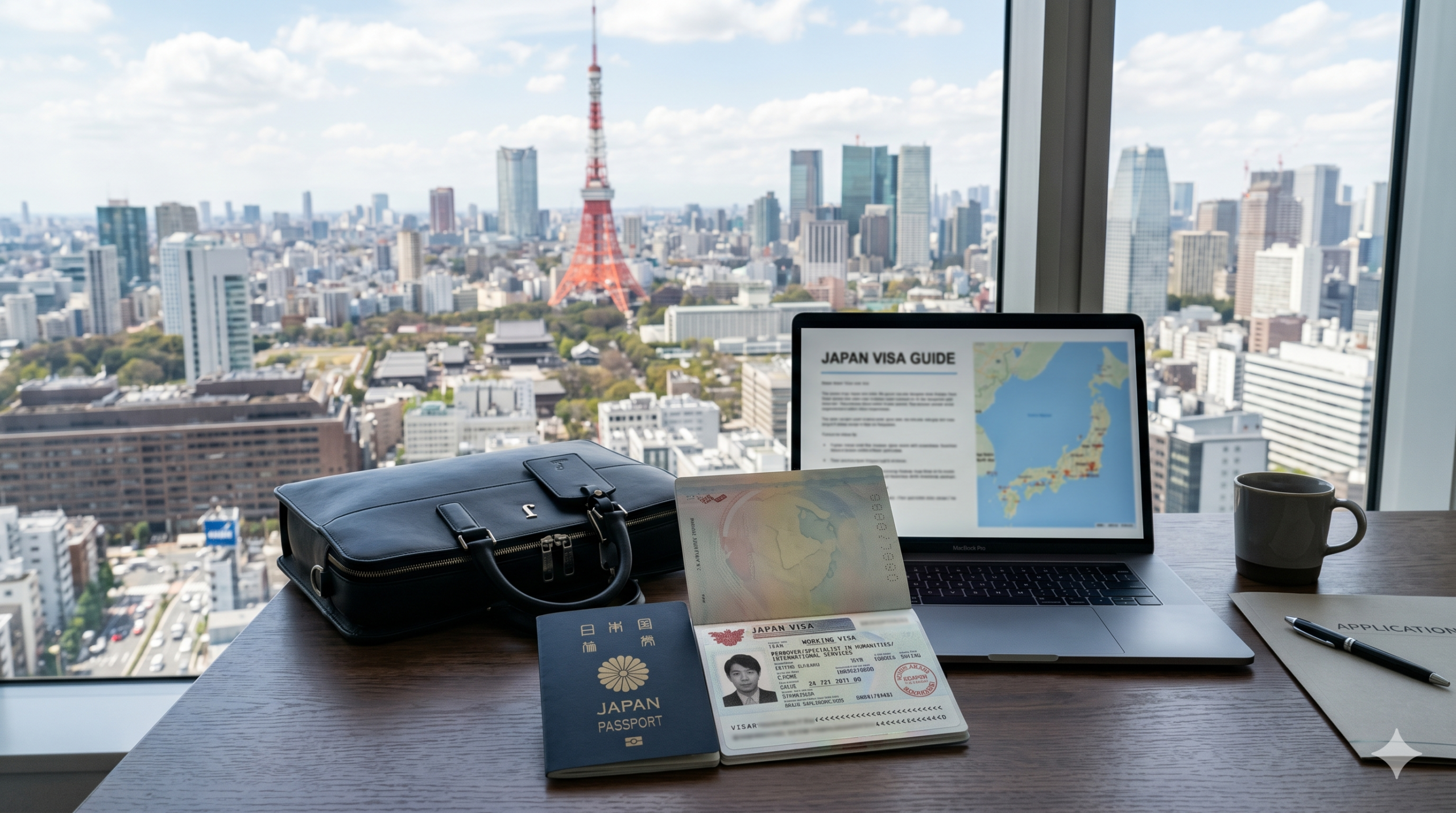
  • Japan Work Visa Guide 2026: Every Type Explained — Which One Can You Actually Get?

    Japan Work Visa Guide 2026: Every Type Explained — Which One Can You Actually Get?

    ⚠️ 2026 Visa & Immigration Changes — What You Need to Know

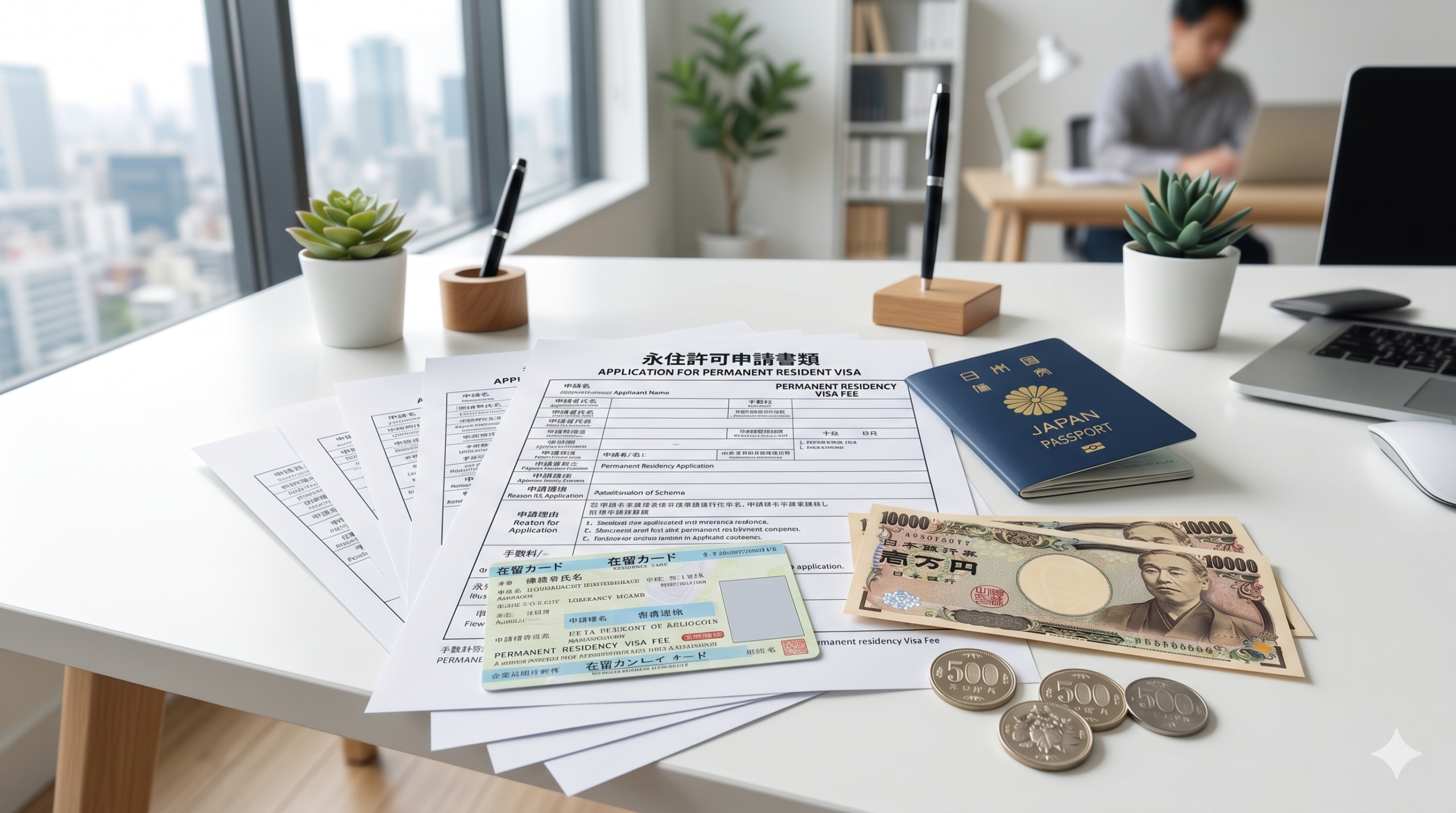
    • Tax & pension arrears = permanent residency rejection: Any unpaid taxes or social insurance premiums now automatically disqualify permanent residency applications
    • Specified Skilled Worker (特定技能) expanded to 16 industry sectors — more pathways available in 2026
    • Highly Skilled Professional (HSP) fast-track: 70 points → PR eligible after 3 years · 80+ points → PR eligible after just 1 year
    • Stricter scrutiny: Language ability, community ties, and filing compliance are increasingly reviewed in all visa renewals

    📥 Japan Expat Starter Kit 2026

    60+ page PDF: Banking, Housing, Suica, Taxes & daily life in Japan

    Get the Guide — $9.99 →
  • Japan Cost of Living 2026: Real Monthly Budget (Tokyo vs Osaka vs Rural — Actual Numbers)

    Japan Cost of Living 2026: Real Monthly Budget (Tokyo vs Osaka vs Rural — Actual Numbers)

    Is Japan Expensive to Live In? The Honest 2026 Answer

    Japan’s reputation for being expensive is outdated. In 2026, Japan is actually one of the more affordable developed countries for expats — especially outside Tokyo. The weak yen (140–155 JPY/USD range) has made Japan even more accessible for foreigners earning in dollars or euros. This guide breaks down the real cost of living in Japan with honest numbers.

    Monthly Budget Summary: Japan Cost of Living 2026

    ExpenseBudgetMid-RangeComfortable
    Rent (1BR)¥50,000–70,000¥80,000–120,000¥150,000+
    Food¥30,000–40,000¥50,000–70,000¥80,000+
    Transport¥5,000–10,000¥15,000–25,000¥30,000+
    Utilities¥8,000–12,000¥12,000–18,000¥20,000+
    Phone/Internet¥3,000–5,000¥5,000–8,000¥10,000+
    Entertainment¥10,000–20,000¥30,000–50,000¥60,000+
    TOTAL~¥106,000–157,000~¥192,000–291,000¥350,000+

    Rent Costs in Japan 2026: City by City

    Rent is your biggest expense, and it varies enormously by city. Here’s what to realistically expect:

    Tokyo (Most Expensive):

    • 1-room studio (1K/1DK): ¥60,000–100,000/month
    • 1-bedroom (1LDK): ¥100,000–160,000/month
    • 2-bedroom (2LDK): ¥150,000–250,000+/month
    • Share house: ¥40,000–60,000/month (all-inclusive)

    Osaka/Kobe: Approximately 20–30% cheaper than Tokyo. 1K studio from ¥45,000.

    Kyoto: Similar to Osaka, but older buildings are abundant. 1K from ¥40,000.

    Fukuoka: 40% cheaper than Tokyo. 1K from ¥35,000. Popular expat destination.

    Sapporo/Sendai/Hiroshima: 50% cheaper than Tokyo. Excellent quality of life at low cost.

    Moving in costs (初期費用): Budget 4–6 months of rent upfront for deposit (敷金), key money (礼金, often 1–2 months, sometimes 0), agency fee, and first month’s rent. Many new apartments and share houses have eliminated key money.

    Food Costs in Japan: Eating Cheaply vs. Well

    Japan is actually one of the most food-affordable developed countries when you eat like a local.

    Budget eating (¥300–800/meal):

    • Convenience store meals (onigiri, sandwiches, hot foods): ¥300–600
    • Gyudon chains (Yoshinoya, Sukiya): ¥400–700 for a full meal
    • Ramen shops: ¥700–1,000
    • Set lunch (ランチセット) at restaurants: ¥800–1,200 (often incredible value)
    • Supermarket bento (reduced after 6pm): ¥300–500

    Groceries (cooking at home): ¥30,000–40,000/month for one person eating well. Japan’s supermarkets offer excellent value on vegetables, fish, tofu, and rice. Imported goods and dairy are more expensive.

    Restaurant dining: A casual dinner out costs ¥1,500–3,000. Nice restaurants ¥5,000–15,000. Fine dining ¥20,000+.

    Transportation Costs in Japan

    Japan’s public transport is world-class but not cheap. Here’s what to budget:

    • IC card (Suica/PASMO): Load as needed. Average commuter spends ¥10,000–20,000/month on trains.
    • Monthly commuter pass: ¥10,000–30,000 depending on distance. Tax-deductible if employer provides.
    • Shinkansen: ¥7,000–25,000 per journey depending on distance.
    • Bicycle: The cheapest commute option. Used bikes from ¥3,000–10,000. Reduces transport costs dramatically.
    • Car ownership: Very expensive in cities. Parking alone costs ¥20,000–60,000/month in Tokyo. Most expats don’t own cars in cities.

    Utilities, Phone & Internet

    Electricity: ¥5,000–10,000/month (higher in summer for AC, winter for heating)

    Gas: ¥2,000–5,000/month (piped gas or electricity-only apartments)

    Water: ¥1,500–3,000/2 months (billed bimonthly, extremely cheap)

    Internet (home fiber): ¥3,000–6,000/month for 1Gbps fiber (fastest in the world)

    Mobile phone: ¥1,000–4,000/month on MVNO plans (Rakuten, IIJmio)

    Cut Your Utility Bills: Compare Electricity & Gas in Japan

    Electricity and gas are deregulated in Japan, which means you can freely switch providers — and many households overpay simply because they never compared. Especially with propane (LP) gas, common in apartments, switching companies alone can noticeably lower your monthly bill.

    An easy way to check is enepi, a comparison service run by a Tokyo Stock Exchange Prime–listed company. Enter your address and current usage, and it shows the cheapest electricity and gas plans in your area. Comparison and sign-up are free and done online (Japanese site — a translation tool helps).

    Healthcare Costs for Expats

    Japan’s National Health Insurance (NHI) is mandatory for all residents with a valid visa. Here’s what you’ll pay:

    • NHI premium: 7–10% of your previous year’s income (calculated annually). First year as new resident: typically ¥2,000–5,000/month minimum.
    • Doctor visits with NHI: You pay only 30% of the bill. A typical GP visit costs ¥1,500–3,000 out of pocket.
    • Prescription medications: Very affordable — ¥300–1,000 for most common medications with NHI.
    • Without NHI (shouldn’t happen but): Full price. A simple GP visit can be ¥5,000–15,000.

    Salary Expectations in Japan 2026

    What can you expect to earn as a foreigner in Japan?

    • English teaching (ALT/eikaiwa): ¥200,000–280,000/month. Entry-level, JET Program pays ¥280,000.
    • IT engineer/Developer: ¥350,000–700,000/month. Very high demand for bilingual engineers.
    • Finance/Banking: ¥400,000–1,000,000+/month at foreign firms.
    • Restaurant/Hospitality: ¥180,000–250,000/month. Minimum wage now ¥1,000–1,200/hour by prefecture.
    • Remote work (earning in USD/EUR): The weak yen makes Japan extremely affordable. Earning $3,000/month USD = ¥450,000+ in spending power.

    Japan Cost of Living vs. Other Countries

    How does Japan compare in 2026?

    • vs. USA (NYC): Tokyo is 30–40% cheaper overall. Cheaper rent, food, healthcare.
    • vs. UK (London): Tokyo is 20–30% cheaper. Much better public transport.
    • vs. Australia (Sydney): Tokyo is 25–35% cheaper. Better food culture, safer streets.
    • vs. Singapore: Tokyo is 15–25% cheaper. Similar quality of life.
    • vs. Southeast Asia: Japan is more expensive but offers dramatically better infrastructure, safety, and quality of life.

    🧮 Japan Cost-of-Living Calculator

    Estimate your monthly budget in Japan based on where and how you want to live.


    Rough estimates including rent, food, utilities, phone/internet, transport, national health insurance and leisure. USD shown at ¥155/$. Actual costs vary by ward, building age and habits.

    Money-Saving Tips for Living in Japan

    • Cook at home — Japanese supermarkets offer amazing ingredients at low prices
    • Buy reduced-price bento — Supermarkets and konbini heavily discount prepared foods after 6–8pm
    • Use Rakuten Mobile — Best value mobile plan in Japan (even free under 1GB)
    • Bicycle commute — Eliminates ¥10,000–20,000/month in train costs
    • Share house (シェアハウス) — All-inclusive from ¥40,000/month with utilities, internet, furnished
    • Furusato Nozei (hometown tax) — Return up to 30% of your income tax as food/goods from rural areas
    • 100-yen shops — Daiso, Seria, CanDo offer incredible value on everyday items

    📥 Japan Expat Starter Kit 2026

    60+ page PDF: Banking, Housing, Suica, Taxes & daily life in Japan

    Get the Guide — $9.99 →
  • Japan Tax-Free Shopping Guide 2026: Rules & Tips

    Japan Tax-Free Shopping Guide 2026: Rules & Tips

    ⚠️ MAJOR CHANGE: Japan’s Tax-Free System Overhauls on November 1, 2026

    Starting November 1, 2026, Japan switches to a “Pay First, Refund at Departure” system. The guide below describes the current system (valid until October 31, 2026).

    • Visiting Japan before October 31, 2026? → Use the guide below as-is
    • Visiting Japan from November 1, 2026 onward? → Pay full price at the store, then claim your 10% refund at the departure airport kiosk by scanning your passport. Scroll to the bottom for the new system details.

    🛍️ Save 10% on Almost Everything You Buy in Japan

    Here’s a secret most tourists don’t fully exploit: Japan offers a 10% consumption tax refund on purchases over ¥5,000 (about $33) at participating stores. That’s like getting a permanent 10% off coupon for your entire trip.

    But the system has rules, gotchas, and a new 2026 electronic refund process that changed everything. This guide explains exactly how to claim your tax-free savings — whether you’re shopping at Don Quijote, Uniqlo, Bic Camera, or a random drugstore.

    📋 Tax-Free Shopping: Quick Rules

    Rule Details
    Who qualifies?Non-resident foreigners staying in Japan less than 6 months (tourist visa)
    Minimum purchase¥5,000 (about $33) per store, per day (tax-excluded price)
    Tax rate refunded10% consumption tax (full refund)
    What you needPassport (original, not copy) + purchases + receipt
    2026 changeNew electronic recording system — no more paper forms stapled to passport
    Expats eligible?❌ No — residents with visa longer than 6 months do NOT qualify

    🏪 Where to Shop Tax-Free (Top Stores)

    1. Don Quijote (ドン・キホーテ)

    Japan’s legendary discount store. Accepts tax-free at ALL locations. Download the Majica app or get the tourist coupon for an extra 5-15% off on top of tax-free.

    • 💰 Tax-free: ✅ (dedicated counter at most stores)
    • 💳 Payment: Credit cards, PayPay, IC cards, cash
    • 🎫 Extra discount: Majica member card + tourist coupon = up to 15% additional off

    👉 Read our Don Quijote Complete Guide

    2. BIC Camera / Yodobashi Camera

    Electronics paradise. Tax-free + 8-10% point card rewards stack together.

    • 💰 Tax-free: ✅ (at checkout counter)
    • 💳 Payment: All major credit cards
    • 🎫 Extra: BIC Camera tourist coupon (7% off) + tax-free + point card = massive savings

    Pro tip: Buy your electronics here rather than Amazon Japan — the stacked discounts often beat online prices.

    3. Uniqlo

    Japan’s global fashion brand is cheaper at home. Tax-free available at flagship stores.

    • 💰 Tax-free: ✅ (at checkout, show passport)
    • 💳 Payment: All major credit cards, PayPay, IC cards
    • 🎫 Japan-exclusive items often 30-50% cheaper than overseas Uniqlo

    4. Matsumoto Kiyoshi / Welcia (Drugstores)

    Japanese beauty products, skincare, and medicines at drugstore prices + tax-free.

    • 💰 Tax-free: ✅ (most locations)
    • 💳 Payment: Credit cards, IC cards, cash
    • 🎫 Stock up on Japanese sunscreen, face masks, and eye drops — they’re world-famous for a reason

    👉 Best Japanese Skincare Products Guide

    5. Department Stores (Takashimaya, Isetan, Mitsukoshi)

    Luxury shopping with dedicated tax-free service counters.

    • 💰 Tax-free: ✅ (separate service counter, usually on 1F or B1F)
    • 💳 Payment: All credit cards, UnionPay
    • 🎫 Some offer additional tourist discounts (5% off card at information desk)

    📱 How the New 2026 Electronic Tax-Free System Works

    Japan upgraded its tax-free system in 2026. Here’s the new process:

    1. Shop normally — Pick your items (minimum ¥5,000 before tax at one store)
    2. Go to the tax-free counter — Usually near the regular checkout or a dedicated area
    3. Show your passport — The staff scans your passport’s IC chip
    4. Electronic recording — Your purchase is recorded digitally (linked to your passport number)
    5. Get your refund — Tax is deducted at the register, OR you get a separate cash/card refund
    6. At departure — Customs may check your passport record (random checks, not everyone)

    What changed from the old system: No more paper forms (購入者誓約書) stapled to your passport. Everything is electronic now, making the process faster and cleaner.

    ⚠️ Common Mistakes to Avoid

    • Forgetting your passport — No passport = no tax-free. Always carry the original
    • Spending under ¥5,000 — The minimum is per store, per day. You can’t combine purchases from different stores
    • Opening sealed items — Consumables (food, cosmetics, medicine) are sealed in a special bag. If you open it before leaving Japan, you owe the tax
    • Staying longer than 6 months — Once you become a resident, you lose tax-free eligibility
    • Not checking if the store participates — Look for the “TAX FREE” logo (red and white) at the entrance

    💰 How Much Can You Actually Save?

    Purchase Price (tax included) Tax-Free Price You Save
    Nintendo Switch + games¥45,000¥40,909¥4,091 (~$27)
    Sony headphones WH-1000XM5¥44,000¥40,000¥4,000 (~$27)
    Skincare haul (drugstore)¥15,000¥13,636¥1,364 (~$9)
    Uniqlo clothes haul¥30,000¥27,273¥2,727 (~$18)
    Total trip shopping¥134,000¥121,818¥12,182 (~$81)

    On a typical shopping trip, you can easily save $50-100+ just by asking for tax-free at checkout. That’s practically a free meal at a nice restaurant.

    🔗 Related Guides

    🆕 NEW SYSTEM (From November 1, 2026): Pay First, Refund at Departure

    How It Works

    1. Pay the full tax-inclusive price at the store (including 10% consumption tax)
    2. The store records your purchase electronically — no sealed packaging required
    3. At the departure airport, use the tax refund kiosk and scan your passport
    4. Receive your refund via credit card or bank transfer within 90 days of purchase

    ✅ What Gets Simpler

    • No more “consumables vs general goods” distinction — all items treated equally
    • No sealed packaging — open and use your purchases during your trip
    • No ¥500,000 daily limit
    • All items from one store combined to reach the ¥5,000 minimum

    ⏱️ Refund Timeline

    • Credit card: 1–2 weeks
    • Bank transfer: 2–4 weeks
    • Must depart within 90 days of purchase
    • Minimum purchase: ¥5,000 (tax-excluded) per store — same as current system

    💡 Bottom line: Same 10% savings, different process. You can now open and use your purchases during your trip — the refund comes at the airport. Just make sure to depart within 90 days of buying.

  • Japan Cashless Payment Guide 2026: Which Apps Actually Work for Foreigners?

    Japan Cashless Payment Guide 2026: Which Apps Actually Work for Foreigners?

    📱 PayPay 2026 Update — Check App for Current Promotions

    PayPay campaigns change frequently. Welcome bonuses and cashback rates are updated regularly — always check the PayPay app’s Campaigns tab after registering for the latest offers. Regional cashback campaigns (typically 10–30% back at local merchants) are often more valuable than signup bonuses and are available throughout Japan.

    💳 Japan’s Cashless Revolution: A Foreigner’s Survival Guide

    Japan in 2026 is a cashless puzzle. PayPay QR codes everywhere, IC card readers at every station, credit card terminals that sometimes work and sometimes don’t, and some ramen shops that STILL only take cash. Confusing? Absolutely.

    This guide cuts through the noise. After researching every major payment method across Tokyo, Osaka, and rural Japan, here’s exactly which payment to use where — so you never get stuck at a register again.

    🏆 The Big 4 Payment Methods in Japan (Ranked)

    Rank Method Acceptance Rate Best For Setup Difficulty
    🥇Cash (JPY)100%Small shops, temples, rural areasNone
    🥈IC Card (Suica/PASMO)~85%Trains, convenience stores, vending machinesEasy
    🥉Credit/Debit Card~70%Department stores, hotels, electronics shopsAlready have one
    4️⃣PayPay (QR code)~60%Restaurants, izakaya, local shopsModerate

    📱 PayPay: Japan’s #1 QR Code Payment

    What is PayPay?

    PayPay is Japan’s most popular mobile payment app with 60+ million users. Think of it like Venmo or Alipay, but Japanese. You scan a QR code at the shop (or they scan yours), and money is deducted from your PayPay balance.

    Why foreigners should care

    • 💡 Many small restaurants and izakaya accept PayPay but NOT credit cards
    • 💡 Regular cashback campaigns (sometimes 10-30% back!)
    • 💡 Free ¥1,000 welcome bonus (promotional — verify in PayPay app) for new users (limited time)
    • 💡 Split bills easily with friends who also use PayPay

    How to set up PayPay as a foreigner

    1. Download the PayPay app (iOS/Android)
    2. Register with your phone number (Japanese number required)
    3. Verify your identity with passport or residence card
    4. Add money via bank account, convenience store ATM, or credit card
    5. Start scanning QR codes!

    ⚠️ Tourist limitation: PayPay requires a Japanese phone number for registration. Tourists with eSIM/data-only SIM cannot use PayPay. It’s mainly for residents and long-term visitors.

    🚃 IC Cards (Suica / PASMO): The Essential Payment

    IC cards are the single most useful payment method for anyone in Japan. They work for trains AND shopping, and you can set them up before landing.

    Key advantages

    • 🚃 Tap-and-go at every train gate in Japan
    • 🏪 Works at 7-Eleven, FamilyMart, Lawson, and most chain stores
    • 🤖 Vending machines, coin lockers, some taxis
    • 📱 Set up on iPhone/Android — no physical card needed

    👉 Read our detailed guide: PASMO vs Suica: Which IC Card Should You Get?

    💳 Credit Cards: What Works in Japan

    Acceptance by brand (best to worst)

    1. Visa — Best overall acceptance (~70%)
    2. Mastercard — Very close to Visa (~65%)
    3. JCB — Japan’s domestic brand, great at Japanese shops but poor overseas
    4. American Express — Limited to hotels, department stores, large chains (~40%)
    5. Discover/Diners — Very limited (~20%)

    Pro tips for credit card users

    • 💡 Always carry cash as backup — Many restaurants still don’t take cards
    • 💡 Choose “Without conversion” when the terminal asks — This avoids DCC (Dynamic Currency Conversion) fees
    • 💡 Contactless (tap-to-pay) is growing but not universal yet
    • 💡 Wise or Revolut cards give the best exchange rates for foreigners

    👉 Read our guide: Best Credit Cards for Foreigners in Japan

    💴 Cash: Still King in Some Places

    Despite Japan’s cashless push, you’ll still need cash for:

    • 🏯 Temples and shrines (admission fees, omamori charms)
    • 🍜 Small ramen shops and street food stalls
    • 🏔️ Rural areas (especially onsen towns)
    • 🅿️ Some parking lots and laundromats
    • 🏥 Clinics and small hospitals

    Where to get Japanese yen

    • 7-Eleven ATMs (7Bank) — Accept international cards, English UI, 24/7
    • Japan Post ATMs — Good for Visa/Mastercard withdrawals
    • Wise card — Withdraw JPY at interbank rates
    • Airport exchange — Convenient but worst rates (avoid if possible)

    📊 Payment Method by Situation

    Situation Best Payment Why
    Taking the train🟢 Suica/PASMOOnly IC cards work at train gates
    Convenience store🟢 Suica/PASMOFastest checkout, no signature needed
    Department store💳 Credit cardTax-free processing + high amounts
    Izakaya / local restaurant📱 PayPay or 💴 CashMany don’t take credit cards
    Electronics (Yodobashi, BIC)💳 Credit cardTax-free + point cards stack
    Temple / shrine💴 CashElectronic payments not accepted
    Splitting dinner bill📱 PayPaySend money instantly to friends
    Don Quijote💳 Credit card + couponTax-free + 15% off coupon stacks

    🎯 The Perfect Setup for Living in Japan

    Here’s what we recommend for expats and long-term residents:

    1. Mobile Suica on your iPhone/Android — for daily transit and quick purchases
    2. Wise or Revolut card — for credit card payments with zero forex fees
    3. PayPay — for restaurants and local shops that only take QR
    4. ¥10,000-20,000 cash — always have some on hand for emergencies

    With this combo, you’re covered for 99% of payment situations in Japan.

    💸 The smart way to handle money in Japan

    A Wise account gives you a multi-currency debit card with the real exchange rate and low fees — perfect for cashless payments, paying bills, and withdrawing cash in Japan as a foreigner.

    Open a free Wise account →

    🔗 Related Guides

🏠 Life in Japan

Expat guides, shopping, and everyday life in Japan

30 guides available
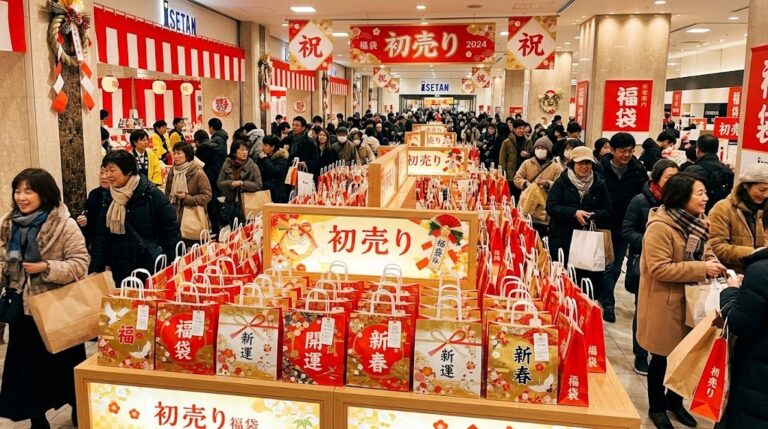
Fukubukuro 2027: How to Win Japan’s New Year Lucky Bags (Starbucks, Muji & More)
Life in Japan

Fukubukuro 2027: How to Win Japan’s New Year Lucky Bags (Starbucks, Muji & More)

Fukubukuro — Japan’s New Year lucky bags — pack 2–5× their price in mystery merchandise. When to enter the Starbucks lottery, where to line up on January 1st, and six tactics to avoid the duds.

Read more →
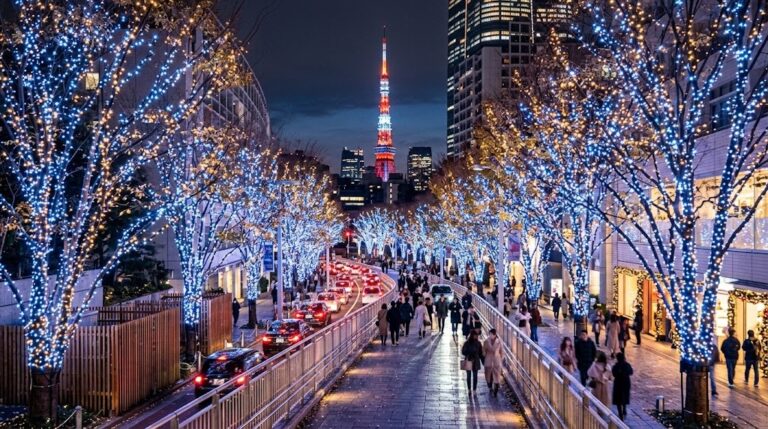
Christmas in Japan 2026: KFC, Cake & Illuminations — How Japan Really Celebrates
Life in Japan

Christmas in Japan 2026: KFC, Cake & Illuminations — How Japan Really Celebrates

Christmas in Japan means KFC dinners, strawberry shortcake, romantic Christmas Eve dates and world-class illuminations. Here is how Japan really celebrates — and how to join in, from cake reservations to the best light displays.

Read more →
Foreigners in Japan: 2026 Statistics — Record 4.12 Million Residents (Official Data)
Life in Japan

Foreigners in Japan: 2026 Statistics — Record 4.12 Million Residents (Official Data)

Last updated: August 2026 · Data: Immigration Services Agency of Japan (ISA), year-end 2025 statistics. Free to cite with a link to this page. How many foreigners live in Japan? As of December 2025, a record 4,125,395 foreign residents were living in Japan — up 9.5% (+356,418 people) in a single year, and the first […]

Read more →
Japan Pension Refund Calculator 2026: How Much Nenkin Do You Get Back?
Life in Japan

Japan Pension Refund Calculator 2026: How Much Nenkin Do You Get Back?

Leaving Japan after working here? You can claim back up to 5 years of your pension contributions as a lump-sum withdrawal payment (脱退一時金, dattai ichijikin). For many people this is hundreds of thousands of yen — but the official formulas are confusing, so we built this free calculator. Enter your numbers below for an instant […]

Read more →
Japanese Drugstore Guide 2026: What You Can Still Buy After the May Rule Change
Life in Japan

Japanese Drugstore Guide 2026: What You Can Still Buy After the May Rule Change

Since 1 May 2026, eight ingredients including dextromethorphan and diphenhydramine are limited to one box per purchase with age checks. What you can still buy freely, and how tax-free changes on 1 November 2026.

Read more →
Bear Safety in Japan 2026: Record Attacks, Where the Risk Really Is, and What to Do
Life in Japan

Bear Safety in Japan 2026: Record Attacks, Where the Risk Really Is, and What to Do

Bear attacks in Japan hit record highs in FY2025 with 238 injured and 13 killed. Here is where the risk actually is, when it peaks, what to do if you meet one, and why you should change your route rather than cancel your trip.

Read more →
Best Japanese Shampoos & Hair Care 2026: 6 Drugstore Heroes (Fino, YOLU, Tsubaki & More)
Life in Japan

Best Japanese Shampoos & Hair Care 2026: 6 Drugstore Heroes (Fino, YOLU, Tsubaki & More)

Japanese drugstore hair care has quietly become one of the country’s biggest beauty exports. TikTok discovered the Fino hair mask, Reddit’s haircare communities discovered YOLU, and suddenly products that cost ¥800 in a Matsukiyo are selling for triple overseas — with waiting lists. The hype is largely deserved. Japanese formulas focus on damage repair and […]

Read more →
Best Japanese Instant Ramen 2026: 7 Packs Actually Worth Buying (Tested)
Life in Japan

Best Japanese Instant Ramen 2026: 7 Packs Actually Worth Buying (Tested)

Ask anyone who has lived in Japan what they miss most after leaving, and instant ramen comes up surprisingly often. Japanese instant noodles are in a completely different league from the 10-cent packets you grew up with — we are talking restaurant-grade tonkotsu broth, chewy non-fried noodles, and flavour engineering perfected over 65+ years (the […]

Read more →
Typhoon Season in Japan 2026: The Warning System Just Changed (What Level 3 and Level 4 Really Mean)
Life in Japan

Typhoon Season in Japan 2026: The Warning System Just Changed (What Level 3 and Level 4 Really Mean)

If you are in Japan between August and October, you will almost certainly experience at least one typhoon. And in 2026, there is something new you need to know: Japan changed its entire disaster warning system on 29 May 2026. Almost every English-language typhoon guide online is now out of date. This guide covers what […]

Read more →
Best Japanese Makeup 2026: 8 Cult Products Worth Importing (@cosme Award Winners)
Life in Japan

Best Japanese Makeup 2026: 8 Cult Products Worth Importing (@cosme Award Winners)

Japanese makeup in 2026: why the drugstore beats the department store If you have ever walked into a Japanese drugstore, you already know the feeling: an entire wall of makeup, most of it under ¥2,000, and almost all of it genuinely good. Japan is one of the very few markets where the cheap stuff is […]

Read more →
Gyms in Japan for Foreigners 2026: Costs, Contracts, Tattoos & How to Cancel
Life in Japan

Gyms in Japan for Foreigners 2026: Costs, Contracts, Tattoos & How to Cancel

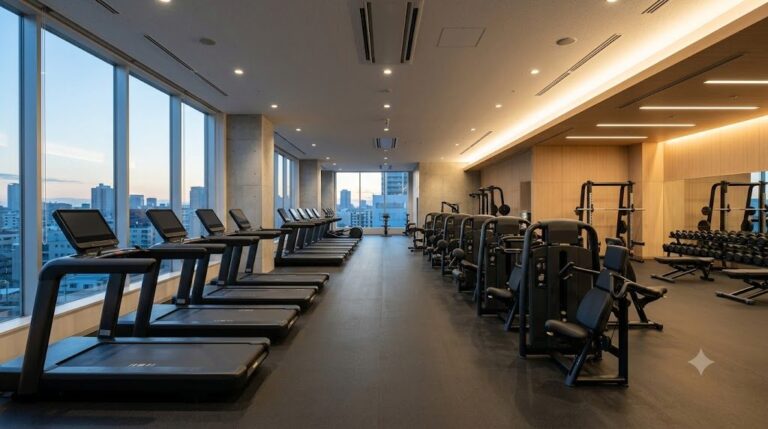
Joining a gym in Japan looks simple until you are standing at the counter holding a contract written entirely in Japanese, being asked for a bank account you may not have, and discovering that cancelling requires a visit in person before a specific date. The gyms themselves are excellent and often cheaper than in the […]

Read more →
Cycling in Japan 2026: New Blue Ticket Fines, Registration and Rules Foreigners Must Know
Life in Japan

Cycling in Japan 2026: New Blue Ticket Fines, Registration and Rules Foreigners Must Know

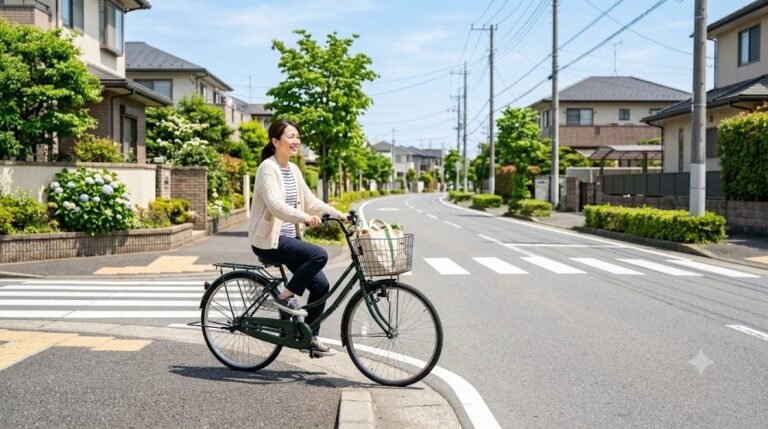
Since 1 April 2026 Japan issues on-the-spot fines to cyclists aged 16 and over. Phone use costs 12,000 yen, umbrella riding 5,000 yen. Here is the full fine table, where you are legally allowed to ride, how bicycle registration works, why insurance is required in most prefectures, and what to do when police stop you.

Read more →
Leaving Japan Checklist 2026: The Money You Lose If You Do It in the Wrong Order
Life in Japan

Leaving Japan Checklist 2026: The Money You Lose If You Do It in the Wrong Order

A two-month timeline for leaving Japan: the pension lump-sum deadline, the tax representative form that reclaims 20.42%, resident tax liability, the ward office visit, and why you should keep one bank account open.

Read more →
Japan Garbage Sorting Guide 2026: The Rules Nobody Explains (and Why Your Bag Got Rejected)
Life in Japan

Japan Garbage Sorting Guide 2026: The Rules Nobody Explains (and Why Your Bag Got Rejected)

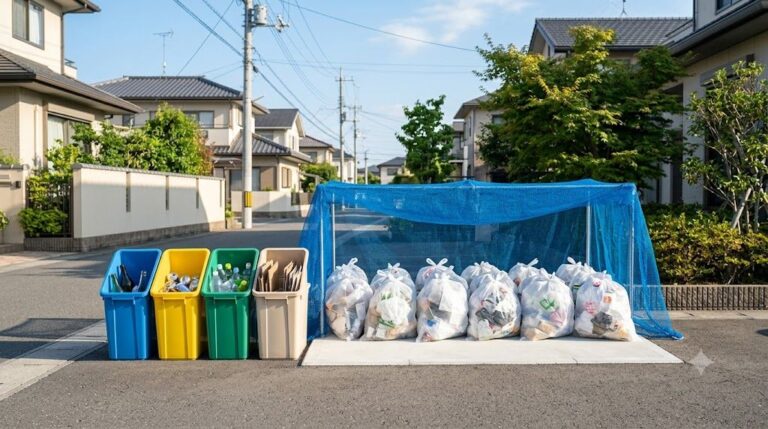
A practical guide to sorting rubbish in Japan: the seven categories, the PET bottle ritual, items that trip everyone up, oversized waste booking, and the unwritten rules that upset neighbours.

Read more →
Dashi Explained 2026: The Japanese Stock Behind Every Dish (and the Shortcuts Locals Actually Use)
Life in Japan

Dashi Explained 2026: The Japanese Stock Behind Every Dish (and the Shortcuts Locals Actually Use)

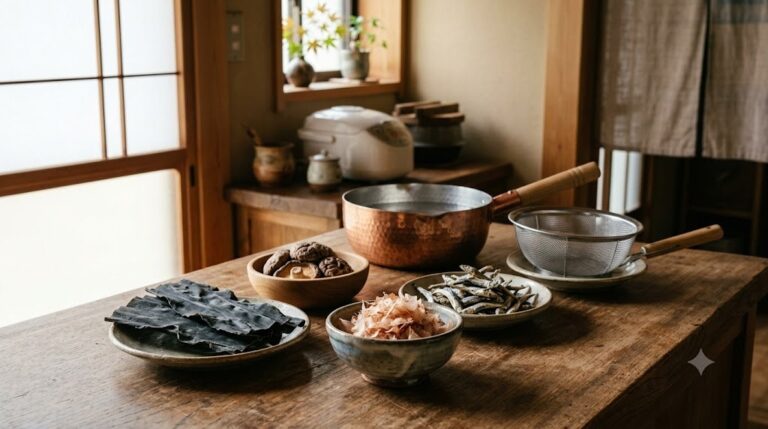
The invisible ingredient behind almost every Japanese dish You can buy the right soy sauce, the right miso and the right rice, and your Japanese cooking will still taste flat. The missing element is almost always dashi — the light, savoury stock that sits underneath miso soup, simmered dishes, noodle broths, tamagoyaki, and the dipping […]

Read more →
Kotatsu Guide 2026: How to Buy, Power and Live With Japan’s Best Winter Invention
Life in Japan

Kotatsu Guide 2026: How to Buy, Power and Live With Japan’s Best Winter Invention

The one piece of Japanese furniture that ruins winter everywhere else Ask anyone who has spent a winter in Japan what they miss most, and a surprising number will say the same thing: the kotatsu. A low table with a heater fixed underneath, draped in a heavy quilt, with a tabletop pressed on top to […]

Read more →
Best Areas to Live in Tokyo for Foreigners (2026 Neighborhood Guide)
Life in Japan

Best Areas to Live in Tokyo for Foreigners (2026 Neighborhood Guide)

Choosing where to live is one of the biggest decisions you’ll make as a foreigner in Tokyo. The right neighborhood can mean an easy commute, English-friendly services, great food, and a community that helps you settle in fast. This 2026 guide breaks down the best areas of Tokyo for foreigners — from international hubs to […]

Read more →
Getting Married in Japan as a Foreigner (2026): Complete Step-by-Step Guide
Life in Japan

Getting Married in Japan as a Foreigner (2026): Complete Step-by-Step Guide

Getting married in Japan as a foreigner is absolutely possible — but the paperwork can feel intimidating if you don’t know the steps. Whether you’re marrying a Japanese national or another foreigner, this 2026 guide walks you through exactly which documents you need, where to submit them, and what to do afterward (including the all-important […]

Read more →
Secondhand Shopping in Japan (2026): Mercari, 2nd STREET, Hard Off & Jimoty Guide for Foreigners
Life in Japan

Secondhand Shopping in Japan (2026): Mercari, 2nd STREET, Hard Off & Jimoty Guide for Foreigners

The complete guide to buying and selling used goods in Japan: Mercari basics for foreigners, 2nd STREET, Hard Off junk corners, Jimoty free furniture, safe used appliances, and the leaving-Japan sell-off timeline.

Read more →
Going to the Dentist in Japan (2026): Costs With Insurance, English Clinics & What to Expect
Life in Japan

Going to the Dentist in Japan (2026): Costs With Insurance, English Clinics & What to Expect

How to see a dentist in Japan as a foreigner: finding English-speaking clinics, costs with National Health Insurance (30% copay), first-visit flow, key Japanese vocabulary, and emergency options.

Read more →
How to Quit Your Job in Japan (2026): Resignation Rules, Visa, Unemployment Benefits & Taishoku Daiko
Life in Japan

How to Quit Your Job in Japan (2026): Resignation Rules, Visa, Unemployment Benefits & Taishoku Daiko

The law is on your side: 2 weeks notice is your legal right, your employer cannot refuse, and unused paid leave must be honored. Visa notifications, unemployment benefits at Hello Work, health insurance choices after quitting, and when a resignation agency is worth it.

Read more →
Buying a Home in Japan as a Foreigner (2026): Mortgages, PR & the Full Process Explained
Life in Japan

Buying a Home in Japan as a Foreigner (2026): Mortgages, PR & the Full Process Explained

Foreigners CAN buy property in Japan — no visa needed, freehold forever. The real challenge is the mortgage. Which banks lend without PR, the true cost (add 6-9% in fees), the 1981 earthquake rule, condo vs house vs akiya, and the step-by-step path from loan pre-screening to keys.

Read more →
Japanese Daycare & School for Foreign Kids (2026): Hoikuen Points, Costs, and the April Deadline Everyone Misses
Life in Japan

Japanese Daycare & School for Foreign Kids (2026): Hoikuen Points, Costs, and the April Deadline Everyone Misses

A foreign parent’s complete guide to Japanese daycare and school: hoikuen vs yochien, how the points system works, the October–December application window for April entry, real costs (ages 3–5 are free), and what happens when your child does not speak Japanese yet.

Read more →
How to Make Mochi & Daifuku at Home (2026): Easy Microwave Recipe + What to Buy
Life in Japan

How to Make Mochi & Daifuku at Home (2026): Easy Microwave Recipe + What to Buy

Make soft, chewy mochi and daifuku at home in 15 minutes with a microwave. Step-by-step recipe, shiratamako vs mochiko explained, the exact ingredients and tools to buy, plus matcha, strawberry and ice cream variations.

Read more →
How to Make Onigiri Like a Konbini Pro: Technique, Fillings & Gear (2026 Guide)
Life in Japan

How to Make Onigiri Like a Konbini Pro: Technique, Fillings & Gear (2026 Guide)

Onigiri — the humble Japanese rice ball — is the country’s original fast food: portable, endlessly customizable, and quietly perfect. If you’ve ever grabbed one from a konbini and wondered why yours fall apart at home, this guide is for you. We’ll cover the technique, the classic fillings, the gear that makes it foolproof, and […]

Read more →
Japanese Pantry Essentials 2026: The 7 Seasonings That Unlock Real Japanese Cooking
Life in Japan

Japanese Pantry Essentials 2026: The 7 Seasonings That Unlock Real Japanese Cooking

You can buy a rice cooker, master a curry roux, and still find your homemade Japanese food tastes… off. The missing piece is almost never technique — it’s the pantry. Japanese home cooking runs on seven core seasonings, and once they’re on your shelf, dishes like teriyaki, gyudon, miso soup, and restaurant-style dressing become 10-minute […]

Read more →
Best Japanese Curry Roux 2026: Golden Curry vs Vermont vs Java (The Complete Guide) [Aug Update]
Life in Japan

Best Japanese Curry Roux 2026: Golden Curry vs Vermont vs Java (The Complete Guide) [Aug Update]

Best Japanese curry roux 2026: S&B Golden Curry vs House Vermont vs Java vs Kokumaro vs Bon Curry compared — heat levels, flavors, where to buy on Amazon, plus the secret ingredients Japanese home cooks use.

Read more →
Best Japanese Sunscreens 2026: 5 Drugstore Icons Worth Hoarding (Anessa, Biore & More)
Life in Japan

Best Japanese Sunscreens 2026: 5 Drugstore Icons Worth Hoarding (Anessa, Biore & More)

Best Japanese sunscreens 2026: Anessa, Biore UV, Skin Aqua, Allie & Canmake compared. SPF50+ picks that survive Japan's humid summers — where to buy & prices for tourists and expats.

Read more →
Japan 100-Yen Shop Guide 2026: What to Buy at Daiso & Seria (And What to Skip)
Life in Japan

Japan 100-Yen Shop Guide 2026: What to Buy at Daiso & Seria (And What to Skip)

Ask any foreigner who has lived in Japan what they miss most, and a surprising number will say the same thing: the 100-yen shop. Not the temples. Not the sushi. The shop where everything costs about 70 cents. Daiso, Seria and Can Do are not “cheap junk stores.” They are where Japan quietly puts its […]

Read more →
Best Japanese Mosquito Repellents 2026: Coils, Sprays & Muhi (What Actually Works)
Life in Japan

Best Japanese Mosquito Repellents 2026: Coils, Sprays & Muhi (What Actually Works)

Japanese summers mean mosquitoes. Here are the 7 mosquito repellents Japan actually uses — KINCHO coils, Skin Vape mist, one-push room sprays, Muhi itch relief and more, with buying links.

Read more →
NEWThe Japan Expat Starter Kit 2026 — banking, visas, 100 phrases & more in one PDF$9.99 $6.99 code JLL30Get it →×