Category: Travel in Japan

Travel guides, destinations, and tips for visiting Japan

  • Japan Tourism 2026: The Honest Truth About Crowds, Costs & Which Parts Are Still Amazing

    Japan Tourism 2026: The Honest Truth About Crowds, Costs & Which Parts Are Still Amazing

    Japan Tourism in 2026: What Nobody Tells You Before You Go

    📅 Updated July 2026: Product information, prices, and travel details in this article have been updated to reflect the latest information as of July 2026.

    Japan has broken its own records again. With over 36 million international visitors expected in 2026, the country that once quietly welcomed travelers with empty temple courtyards and orderly queues is now grappling with something entirely new: the pressure of being the world’s most-wanted destination.

    If you’ve been scrolling through Instagram reels of golden torii gates and serene bamboo groves wondering whether Japan lives up to the hype — the honest answer is yes, but with caveats. This guide cuts through the filtered photos to give you the real picture of visiting Japan in 2026, from overcrowded hotspots to genuinely unmissable experiences.

    The Overtourism Problem Is Real — But Only in Certain Places

    Japan’s overtourism crisis is highly concentrated. The same half-dozen spots that appear on every Instagram feed are genuinely overwhelming — but step even slightly off the beaten path and you’ll find a country that feels remarkably unhurried.

    The Most Overcrowded Spots in 2026

    These destinations have become genuinely difficult to enjoy at peak times:

    • Arashiyama Bamboo Grove (Kyoto) — Now requires timed entry reservations booked weeks in advance. Walking it shoulder-to-shoulder at 10am on a Saturday feels nothing like the photos.
    • Fushimi Inari Shrine (Kyoto) — The lower gates are packed from 9am to 5pm. The only way to see it peacefully is arriving before 7am or hiking past the first hour up the mountain.
    • Senso-ji Temple, Asakusa (Tokyo) — The main approach (Nakamise-dori) is a tourist conveyor belt. Still worth a visit but set expectations accordingly.
    • Shibuya Crossing observation decks — Now ticketed at most venues, with queues often 30–60 minutes long.
    • Mount Fuji viewpoints, Fujikawaguchiko — The famous lawson convenience store view now has a barrier. Sunrise spots fill up the night before.

    New Rules Tourists Need to Know

    Japan has responded to overtourism with a wave of new policies in 2025–2026:

    • Tourist tax hikes — Tokyo, Kyoto and Osaka have increased accommodation surcharges. Kyoto now charges up to ¥10,000 per night for luxury ryokan stays.
    • Timed entry at 50+ sites — Advance online booking is now mandatory at many heritage sites. Walk-ups are regularly turned away.
    • Photography restrictions — Gion (Kyoto’s geisha district) has strict no-photography rules in residential lanes, with fines for violations.
    • Cruise ship caps — Several ports including Nagasaki and Shimizu have limited cruise ship arrivals to reduce same-day visitor spikes.

    What Japan Actually Costs in 2026

    The yen has recovered partially from its historic lows, but Japan still represents excellent value compared to Europe or North America — if you know where to spend and where to save.

    ExpenseBudgetMid-rangeLuxury
    Accommodation/night¥3,500–6,000 (hostel)¥10,000–20,000¥30,000+
    Meals/day¥1,500–2,500 (konbini+ramen)¥3,000–6,000¥15,000+
    Transport/day (local)¥500–1,000¥1,000–2,000Taxi/private car
    7-day JR Pass (2026)¥50,000 (adult) — worth it for 3+ Shinkansen trips

    The Experiences That Are Still Worth Every Yen

    Overtourism hasn’t ruined Japan — it’s just concentrated the crowds. These experiences still deliver on their promise in 2026:

    1. Staying in a Traditional Ryokan

    A night in a quality ryokan — tatami floors, yukata robes, multi-course kaiseki dinner, private or shared onsen — remains one of the most distinctive travel experiences in the world. The key is booking mid-week and avoiding Kyoto city center. Hakone, Kinosaki Onsen, and the Noto Peninsula offer excellent ryokan stays without the Kyoto price premium.

    2. Eating Your Way Through Japan

    Japan has more Michelin-starred restaurants than any other country, but the real joy is the everyday food culture. A bowl of ramen at a neighborhood shop, fresh sushi at Tsukiji Outer Market, takoyaki from an Osaka street stall — these experiences are completely unspoiled by tourism. Japan’s konbini (convenience store) food culture alone is worth the flight.

    3. The Shinkansen Network

    Traveling at 320km/h through the Japanese countryside — Mount Fuji appearing briefly through the window — never gets old. The Shinkansen is punctual to the second, spotlessly clean, and a genuine engineering marvel. The 2024 extension of the Hokuriku Shinkansen to Tsuruga makes Kanazawa and Fukui easier to reach than ever.

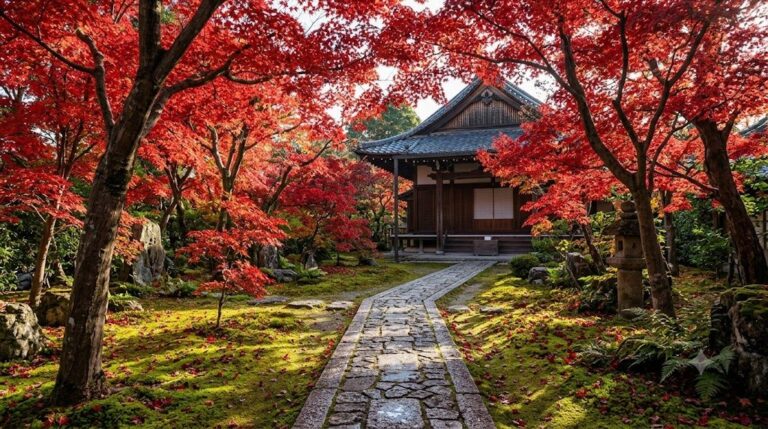
    4. Cherry Blossom and Autumn Foliage Seasons

    Yes, these seasons are crowded — but they’re crowded because the experience is genuinely transcendent. The trick is to seek out neighborhood parks and lesser-known spots alongside the famous ones. Local Japanese residents do this too; the famous spots are for photos, the neighborhood parks are for picnics.

    5. Day Trips to Small Cities

    Japan’s efficient rail network makes it easy to escape the main tourist circuit. Kamakura, Nikko, Kawagoe, Nara, and Uji are all easy day trips that offer world-class sights with a fraction of the crowds at their big-city counterparts.

    Honest Advice: How to Visit Japan Without Hating It

    Timing Is Everything

    The worst times to visit Japan in 2026 are Golden Week (late April–early May), Obon (mid-August), and the cherry blossom peak (late March–early April in central Honshu). The best times are mid-May to mid-June (before rainy season), September–October, and January–February (cold but crowd-free, with incredible winter scenery in Hokkaido and Tohoku).

    Book Everything in Advance

    This is no longer optional. Popular ryokan book out 3–6 months ahead. Timed entry slots for major attractions fill up weeks in advance. The Japan National Tourism Organization (JNTO) now operates a centralized booking portal for timed entry reservations — use it.

    Get Off the Golden Route

    The Tokyo–Kyoto–Osaka golden route is excellent, but Japan rewards those who venture further. Hiroshima and Miyajima island are deeply moving and surprisingly uncrowded. Kanazawa is arguably more beautiful than Kyoto with one-tenth the visitors. Tohoku in autumn is one of Japan’s best-kept secrets.

    Learn a Little Japanese

    Japan has improved English signage dramatically, especially at train stations. But making the effort to learn basic phrases — sumimasen (excuse me), arigatou gozaimasu (thank you), eigo ga hanasemasu ka (do you speak English?) — genuinely transforms how locals respond to you.

    Is Japan Worth Visiting in 2026?

    Absolutely — but go in with realistic expectations. The iconic spots can feel like theme parks at peak times. The country’s natural beauty, food culture, craftsmanship, public transport, and everyday politeness remain extraordinary. The secret is knowing when to follow the crowds and when to deliberately avoid them.

    Japan isn’t broken by tourism — it’s just changed. And the travelers who adapt to that change tend to have the best experiences.

    🇯🇵 Travel & Life Essentials for Japan

    Hand-picked gear to make your time in Japan easier. Available on Amazon US & Amazon Japan.

    🔋 Portable charger

    A must for long days of sightseeing and photos.

    View on Amazon (US)View on Amazon Japan

    🔌 Travel plug adapter

    Japan uses Type A outlets. Bring the right adapter.

    View on Amazon (US)View on Amazon Japan

    🎧 Translation earbuds

    Real-time translation to talk without barriers.

    View on Amazon (US)View on Amazon Japan

    As an Amazon Associate, Japan Life Lab earns from qualifying purchases.

  • Climbing Mount Fuji 2026: The Complete Foreigner’s Guide — New Rules, Fees & How to Book

    Climbing Mount Fuji 2026: The Complete Foreigner’s Guide — New Rules, Fees & How to Book

    🗻 Registration Is Open NOW — Don’t Miss Your Spot

    Mount Fuji’s 2026 climbing season opens on July 1 (Yoshida & Subashiri trails) and July 10 (Fujinomiya & Gotemba trails) — and online registration is already live. With a new daily cap of just 2,000 climbers on the most popular Yoshida Trail, slots are expected to sell out fast. If climbing Japan’s iconic 3,776m summit is on your 2026 bucket list, you need to book now.

    Japan introduced sweeping new rules for 2026 to combat overtourism on the mountain: mandatory fees, equipment checks, tighter daily limits, and new gate closure hours. This guide covers everything foreigners need to know — routes, fees, how to register, what to pack, and how to actually survive the climb.

    2026 Mount Fuji Rules at a Glance

    Rule Detail
    Entry Fee ¥4,000 per person (~$27 USD) on all 4 trails
    Daily Climber Cap 2,000 people/day (Yoshida Trail, Yamanashi side — down from 4,000)
    Gate Hours Open 3:00 AM – 2:00 PM (hut guests may climb anytime)
    Mandatory Gear Check Warm jacket, waterproof rain gear (2-piece), trekking boots — checked at Yoshida trailhead
    Registration Online advance booking required (fujisan-climb.jp or FUJI NAVI app)
    Season Ends September 10, 2026 (all trails)
    Drones Strictly prohibited on the mountain

    The 4 Trails: Which One Should You Take?

    Mount Fuji has four official climbing trails, each starting from a different “5th Station” and accessible from different prefectures. For most foreigners, the choice comes down to two: Yoshida or Fujinomiya.

    1. Yoshida Trail (Yamanashi) — Most Popular

    The Yoshida Trail is the most popular route and the easiest to access from Tokyo. The 5th Station sits at 2,305m and is connected directly to the Fuji Subaru Line road. The trail has the most mountain huts (for overnight stays), the most English support, and the most dramatic sunrise views. However, it’s also the most crowded — hence the new 2,000/day cap. Registration: Book via fujisan-climb.jp. Advance slots: 1,000/day; same-day: 1,000/day.

    2. Fujinomiya Trail (Shizuoka) — Highest 5th Station

    The Fujinomiya Trail starts at the highest 5th Station (2,400m), making it the shortest route to the summit. It’s popular with serious hikers and slightly less crowded than Yoshida. Downside: you descend the same route you ascended (no loop option). Registration: Via the FUJI NAVI app (available on iOS/Android in English, Chinese, Korean).

    3. Subashiri Trail (Shizuoka) — Best Loop Option

    The Subashiri Trail merges with the Yoshida Trail near the summit and allows a different descent route — making it great for a loop. The 5th Station forest section is beautiful in summer. Less crowded than Yoshida, and it opens July 1 alongside Yoshida. Registration: Via FUJI NAVI app.

    4. Gotemba Trail (Shizuoka) — Longest & Least Crowded

    The Gotemba Trail starts at the lowest 5th Station (1,440m) and has the longest ascent time (~8–10 hours up). It’s the least crowded route by far, offering the most peaceful experience. The famous “sand slide” descent (Osunabashiri) makes the descent fast and fun. Opens July 10. Registration: Via FUJI NAVI app.

    Trail Opens 5th Station Altitude Difficulty Crowds
    Yoshida July 1 2,305m Moderate Very High ⚠️
    Fujinomiya July 10 2,400m Moderate Medium
    Subashiri July 1 2,000m Moderate–Hard Low–Medium
    Gotemba July 10 1,440m Hard Very Low ✅

    How to Register & Book Your Spot (Step by Step)

    For Yoshida Trail (Yamanashi)

    1. Go to fujisan-climb.jp/en
    2. Select your climbing date and preferred time slot
    3. Pay the ¥4,000 entry fee by credit card
    4. You’ll receive a confirmation QR code — show it at the gate
    5. Arrive before the gate closes at 2:00 PM (unless staying in a hut)

    Tip: Book as early as possible — advance slots (1,000/day) fill up weeks ahead. Same-day slots (1,000/day) are first-come, first-served at the gate.

    For Shizuoka Trails (Fujinomiya, Subashiri, Gotemba)

    1. Download the FUJI NAVI app (iOS or Android — free)
    2. Create an account and register your climbing date
    3. Watch the mandatory 7-minute safety video and complete the quiz
    4. Pay the ¥4,000 fee within the app
    5. Show your digital pass at the trailhead

    The FUJI NAVI app is available in English, Chinese, Korean, Vietnamese, and Thai — making it very accessible for foreign climbers.

    Essential Gear: What to Bring (and What Gets Checked)

    Since 2025, Yoshida Trail gate staff physically check your gear before you start. Arriving without the mandatory items means you’ll be turned away — even after paying. Don’t take shortcuts.

    1. Trekking Boots — Mandatory

    Regular sneakers are banned. You need proper ankle-support trekking boots with grip soles. The volcanic rock and loose gravel on Fuji chew through anything less. The Salomon X Ultra and Merrell Moab series are popular choices.

    2. Waterproof Rain Jacket + Pants (2-piece) — Mandatory

    Mountain weather on Fuji changes instantly. You can go from sunshine to freezing rain within 20 minutes. A 2-piece waterproof set (separate jacket and pants) is mandatory — a poncho alone does not qualify. Columbia, The North Face, and Montbell are all excellent options available in Japan.

    3. Warm Fleece or Down Jacket — Mandatory

    At the summit (3,776m), temperatures can drop below 0°C even in summer. A warm mid-layer — fleece, down, or synthetic insulation — is mandatory and checked at the gate. Pack it even if it’s a hot summer day at the 5th Station. You will need it.

    4. Trekking Poles

    Not mandatory, but highly recommended — especially for the descent, which is brutal on the knees. The volcanic gravel makes every step unpredictable. Collapsible carbon poles are best for packing. Many 5th Station shops rent poles (around ¥1,000/day), but bringing your own means one less hassle.

    5. Headlamp

    Essential if you plan to start in the early hours (many climbers aim to reach the summit for sunrise, called goraiko). The trail is not lit — a phone torch is inadequate on Fuji’s rocky paths. A compact LED headlamp with at least 200 lumens and fresh batteries is non-negotiable.

    Mountain Huts: Should You Stay Overnight?

    Staying in a mountain hut (山小屋, yamagoya) is the traditional way to climb Fuji — and in 2026 it has a clear advantage: hut guests are exempt from the gate closure hours, meaning you can start your summit push at any time. Here’s what to know:

    • Price: ¥8,000–¥15,000 per person (breakfast included)
    • Conditions: Basic bunk beds in shared rooms — sleeping bags and earplugs are a good idea
    • Booking: Book 2–3 months in advance; Yoshida Trail huts fill up fast
    • Recommended stations: 7th or 8th Station huts for the ideal goraiko timing
    • What’s included: Bunk space, blankets, dinner (curry is popular), breakfast

    If you’re not staying overnight, plan to begin your climb at the 5th Station no later than 8:00 AM to safely summit and descend before the 2:00 PM gate closure.

    Tips & Common Mistakes for First-Time Foreigners

    • Don’t underestimate altitude sickness. Fuji is 3,776m — altitude sickness can hit even fit people above 2,500m. Go slow, drink water, and take rest breaks every 30 minutes.
    • The 5th Station is not the summit. Many visitors think the bus takes them to the top. The 5th Station is roughly halfway up. Budget 5–7 hours to summit from there.
    • Bring cash. Mountain huts, hot drinks (¥500–¥1,000), and the famous “climbing stamp” (¥200–¥500 per station) require cash. ATMs don’t exist on the mountain.
    • Sunscreen is critical. UV radiation at altitude is intense — even on cloudy days. Apply SPF 50+ before you start.
    • Don’t rush the descent. Descending on loose volcanic gravel is where most falls and injuries happen. Use your poles and take it slow.
    • There is no English staff at the gate. Have your QR code or FUJI NAVI app ready before you arrive — don’t try to sort it out at the trailhead.
    • The gear check is serious. Rangers will physically inspect your bag. No proper gear = no entry, no refund.

    Getting to Mount Fuji 5th Stations from Tokyo

    Trail From Tokyo Travel Time Cost
    Yoshida (Fuji Subaru Line 5th Station) Shinjuku → Fujikawaguchiko (Fuji Excursion train) → bus ~2h 20min ~¥2,500–3,500
    Fujinomiya (Shizuoka) Shinjuku → Mishima (Shinkansen) → bus ~2h 30min ~¥4,500–6,000
    Gotemba (Shizuoka) Shinjuku → Gotemba (Odakyu/JR) → bus ~2h ~¥2,000–3,000

    💡 Japan Rail Pass tip: The JR Pass covers the Shinkansen to Mishima and some buses. However, the Fuji Excursion limited express to Kawaguchiko requires an additional seat reservation fee (around ¥1,000) even with a pass.

    Summary: Mount Fuji 2026 Quick Checklist

    • ✅ Register & pay ¥4,000 fee online (Yoshida: fujisan-climb.jp | Shizuoka: FUJI NAVI app)
    • ✅ Pack trekking boots, 2-piece rain gear, and warm jacket (mandatory gear check)
    • ✅ Book mountain hut if doing overnight climb (2–3 months ahead)
    • ✅ Bring cash (¥5,000–¥10,000 recommended)
    • ✅ Arrive at 5th Station before 8:00 AM if day-climbing
    • ✅ Download FUJI NAVI app (for Shizuoka trails)
    • ✅ Bring headlamp, trekking poles, sunscreen, and plenty of water

    🗾 Living in Japan? Get the Complete Guide

    Banking · Health Insurance · Housing · Suica · Taxes · Daily Phrases — everything in one 60-page PDF guide

    📥 Get the Guide — $19

    30-day money-back guarantee · Instant PDF download

  • Japan’s New Tourist Rules 2026: What Could Get You Fined, Banned or Arrested (Full List)

    Japan’s New Tourist Rules 2026: What Could Get You Fined, Banned or Arrested (Full List)

    ⚠️ Updated May 2026: Japan has introduced dozens of new tourist rules since 2024. Some violations carry fines of up to ¥20,000. Read this before your trip.

    Japan is more popular than ever — but it’s also more regulated than ever. In 2024 and 2025, cities across Japan rolled out sweeping new rules targeting overtourism, reckless behavior, and disrespectful conduct. By 2026, those rules have teeth: fines, access bans, and in some cases, permanent blacklisting from popular sites.

    Whether it’s the ¥4,000 fee to climb Mount Fuji, the photography ban in Kyoto’s Gion district, or drone restrictions at national parks, this guide covers everything you need to know to stay on the right side of Japan’s new tourist rules — and avoid ruining your trip with an avoidable fine.

    📋 Quick Summary: What’s New in 2026
    • Mount Fuji: ¥4,000 trail fee + 4,000 daily hiker cap
    • Kyoto Gion: ¥10,000 fine for photographing geisha
    • Overtourism taxes at 20+ destinations
    • Drone bans at most national parks and UNESCO sites
    • Alcohol bans in popular tourist areas of Osaka & Kyoto
    • New “quiet hours” rules at 50+ temples and shrines

    ⛰️ 1. Mount Fuji: Fees, Hiker Caps & Gate Closures

    Mount Fuji’s iconic Yoshida Trail now charges a ¥4,000 climbing fee per person — and that’s just to use the trail. Combined with a hard cap of 4,000 hikers per day, popular climbing windows fill up fast. Book your slot in advance at the official Fuji Climbing website or risk being turned away at the gate.

    The trail gate closes at 2:00 AM and reopens at 3:00 PM during the official climbing season (July 1–September 10). This was introduced to stop the dangerous practice of “Bullet Climbing” — attempting to summit overnight without proper equipment or acclimatization. If you arrive at the gate during closure hours, you will be turned away. No exceptions.

    Detail Info
    Trail Fee (Yoshida)¥4,000 per person
    Daily Hiker Cap4,000 people
    Gate Closed2:00 AM – 3:00 PM
    Climbing SeasonJuly 1 – September 10
    Fine for Bypassing Gate¥100,000+ (plus removal)

    Pro tip: Book your climbing slot at least 2–3 weeks in advance during July and August. The Subashiri, Gotemba, and Fujinomiya trails have lighter restrictions but fewer services.

    📸 2. Kyoto’s Gion District: No Photos of Geisha (¥10,000 Fine)

    This is the one that catches tourists off guard most often. In Kyoto’s Gion district — Japan’s most famous geisha neighborhood — photographing maiko and geiko (geisha) without consent is now subject to a ¥10,000 fine. The rule applies to streets, alleys, and tea house entrances.

    The ban came after years of harassment: tourists chasing women in kimono through narrow alleys, blocking paths for photos, and refusing to respect clear “no photography” signs. Compliance officers now patrol the area, especially in the evenings when geisha are most active.

    🚫 What’s banned in Gion: Photographing geisha/maiko on public streets without permission, entering private alleys (marked with signs), and filming through tea house windows. The Hanamikoji-dori and Shirakawa areas are most heavily monitored.

    🖤 3. The Fujikawaguchiko Black Screen Saga — And What It Means for You

    In 2024, the town of Fujikawaguchiko (home to the famous “Mount Fuji convenience store” photo spot) erected a large black screen to block the view — after tourists ignored barriers, trespassed on private property, and caused traffic hazards for the perfect Instagram shot.

    The screen became international news, but the underlying message is clear: Japan’s local communities are willing to permanently block access to iconic views rather than tolerate disrespectful behavior. Several other photo spots around Japan have followed suit, erecting barriers or blocking views entirely.

    The rule: Always stay on designated viewing areas. Crossing barriers, trespassing on private property, or standing in traffic for a photo can result in fines of ¥20,000 or higher — and permanent access bans for the local community.

    🚁 4. Drone Bans: Most Popular Sites Are Off-Limits

    As of 2022 (enforced more strictly from 2025), Japan’s Civil Aeronautics Act requires drone operators to obtain permits from the Japan Civil Aviation Bureau (JCAB) before flying in most populated or sensitive areas. In practice, this means virtually every tourist destination is a no-fly zone for casual visitors.

    🚁 Drone-banned locations include:
    • All national parks (Fuji-Hakone-Izu, Nikko, Yoshino-Kumano, etc.)
    • UNESCO World Heritage Sites (Hiroshima Peace Memorial, Nara’s Todai-ji, etc.)
    • Within 150m of airports (Tokyo, Osaka, Sapporo)
    • Nara Park (to protect the deer)
    • Above crowds at any festival or public event
    • All imperial palace grounds

    Fines for unauthorized drone use start at ¥500,000 and can include criminal charges under the Aviation Act. Leave your drone at home unless you’ve secured permits weeks in advance — the process is extensive and not designed for casual tourist use.

    🍺 5. Alcohol Bans in Public Spaces

    Japan has traditionally been lenient about public drinking — buying a beer from a convenience store and enjoying it while walking or in a park was completely normal. But that’s changed in several areas due to overtourism and disorder.

    Areas with alcohol restrictions (2026):

    • Osaka’s Dotonbori area: No open containers on the main street during peak hours (weekends, holidays)
    • Kyoto’s Gion district: No drinking while walking through the historic lanes
    • Nara Park: No alcohol near the deer (it harms them)
    • Mount Fuji climbing trails: No alcohol above 5th station

    💰 6. Overtourism Taxes: What You’ll Be Charged

    Japan’s national departure tax is ¥1,000 per person and is automatically included in your airfare. But many destinations now layer their own tourist taxes on top:

    Location Tax Amount Notes
    Kyoto (accommodation)¥200–¥10,000/nightScales with room price
    Tokyo (accommodation)¥100–¥300/nightBased on room rate
    Osaka (accommodation)¥100–¥300/nightPer person
    Mount Fuji (Yoshida Trail)¥4,000/personTrail conservation fee
    National departure tax¥1,000/personAll international departures

    🦌 7. Nara Deer: Don’t Feed Them the Wrong Food (Serious Fine)

    Nara’s famous deer are technically wild animals under Japanese law, protected as national treasures. Feeding them is allowed — but only with official “shika senbei” (deer crackers) sold by licensed vendors. Feeding them human food, snacks, or anything else is illegal and carries fines.

    Tourists have been gored by deer after teasing them with food they couldn’t deliver, or after being surrounded by aggressive bucks during rutting season (September–November). During this period, approach the deer with extra caution and keep children close.

    🚶 8. Queuing & Line-Cutting: Japan Takes This Seriously

    Japan’s queue culture is sacred. Cutting in line — even at a busy tourist site — can result in being asked to leave by staff or security. At popular attractions, timed entry tickets are now mandatory at over 50 sites, meaning you can’t just walk in whenever you like.

    Sites with mandatory advance tickets (2026):

    • TeamLab Borderless & Planets (Tokyo & Osaka)
    • Fushimi Inari gates area (Kyoto) — weekends only
    • Arashiyama Bamboo Grove (Kyoto) — morning timed entry
    • Todai-ji (Nara) — during peak season
    • Hiroshima Peace Memorial Museum
    • Shibuya Sky observation deck

    ⛩️ 9. Temple & Shrine Etiquette: What Can Get You Removed

    Japan’s temples and shrines are actively monitored for disrespectful behavior. Staff and volunteer guides now have authority to remove visitors for the following:

    • Climbing on or touching sacred statues and structures
    • Entering “no entry” areas marked with rope or signs
    • Flash photography inside buildings (or photography at all in some areas)
    • Loud behavior during prayer times
    • Entering sacred areas without appropriate footwear
    • Using “quiet hours” areas with speakers or music

    Some shrines now ban photography entirely inside their main halls. Always check signage before raising your camera. Violations can result in being asked to leave and, at some sites, a formal ban from re-entry.

    📱 10. Using Your Phone While Cycling (New Fine)

    As of November 2024, Japan revised its Road Traffic Act to impose strict penalties on cyclists using smartphones while riding. This affects tourists who rent bikes at popular cycling destinations like Kyoto, Shimanami Kaido, and Nara.

    📱 Cycling + Smartphone fines: Using a phone while cycling → up to ¥120,000 fine or 1 year imprisonment. Causing an accident while using a phone on a bike → up to ¥300,000 fine or 3 years. Drunk cycling is also now subject to prison terms.

    ✅ How to Stay on the Right Side of Japan’s Rules

    The bottom line: Japan’s new tourist rules aren’t designed to punish visitors — they’re designed to preserve the destinations that make Japan worth visiting. Follow these principles and you’ll have no problems:

    ✅ Golden Rules for Tourists in Japan 2026:
    1. Always book major attractions in advance (Mount Fuji, popular museums, etc.)
    2. Never photograph people in traditional dress without asking first
    3. Stay on marked paths and behind barriers at scenic spots
    4. Leave drones at home (or get permits weeks in advance)
    5. Respect “no photography” and “quiet hours” signage
    6. Pay all local tourist taxes — they’re usually collected automatically at hotels
    7. Don’t feed animals anything except approved food from official vendors
    8. Keep off your phone while cycling

    🗾 Frequently Asked Questions

    Can I still visit Kyoto’s Gion district as a tourist?

    Yes, absolutely. The Gion district is open to tourists — you just can’t photograph geisha or maiko on the streets without their consent. Walking through, shopping, and dining are all completely fine. The ¥10,000 fine only applies to harassing or photographing working geisha.

    Is the Mount Fuji ¥4,000 fee per trip or per day?

    The ¥4,000 fee is per person, per climb on the Yoshida Trail. It includes a conservation contribution. Other trails (Subashiri, Gotemba, Fujinomiya) may have lower fees. The fee does not include lodging at mountain huts, which costs an additional ¥7,000–¥9,000 per night.

    Can I bring my drone to Japan?

    You can bring a drone to Japan, but flying it legally requires registration with the JCAB (Japan Civil Aviation Bureau), a Remote Pilot Certificate, and specific permits for each flight location. Most tourist sites are restricted areas. The process takes weeks — not suitable for short-term tourists.

    What is the “overtourism tax” and do I have to pay it?

    Yes. Most accommodation taxes in Japan (Kyoto, Tokyo, Osaka) are automatically added to your hotel bill. The national departure tax (¥1,000) is built into your flight ticket price. Site-specific fees like the Fuji trail fee must be paid at the gate or in advance online.

    📥 Complete Japan Survival Guide

    Japan Expat Starter Kit 2026

    Everything a foreigner needs to live, work, and travel in Japan — banking, health insurance, visas, housing, transport, taxes & more. 60+ pages PDF.

    📥 Get the Guide — $19

    🇯🇵 Travel & Life Essentials for Japan

    Hand-picked gear to make your time in Japan easier. Available on Amazon US & Amazon Japan.

    🔋 Portable charger

    A must for long days of sightseeing and photos.

    View on Amazon (US)View on Amazon Japan

    🔌 Travel plug adapter

    Japan uses Type A outlets. Bring the right adapter.

    View on Amazon (US)View on Amazon Japan

    🎧 Translation earbuds

    Real-time translation to talk without barriers.

    View on Amazon (US)View on Amazon Japan

    As an Amazon Associate, Japan Life Lab earns from qualifying purchases.

  • Japan Tax-Free Shopping 2026: The New ‘Pay First, Refund Later’ System — Complete Tourist Guide

    Japan Tax-Free Shopping 2026: The New ‘Pay First, Refund Later’ System — Complete Tourist Guide

    Japan’s Tax-Free System Is Getting a Major Overhaul

    If you’re planning to shop in Japan in 2026, there’s something important you need to know: Japan’s tax-free shopping system is changing dramatically on November 1, 2026. The old system — where stores deducted consumption tax (10%) immediately at the register — is being replaced with a completely new “Pay First, Refund Later” model.

    Under the new system, you pay the full price including tax at the store, receive a QR code receipt, and claim your refund at the airport before departing Japan. This guide explains everything you need to know about both the old system (valid until October 31, 2026) and the new one coming November 1st.

    Key Date: November 1, 2026 — Japan’s new tax-free refund system goes live. The old system ends completely on October 31, 2026.

    How Japan’s Current Tax-Free System Works (Until October 31, 2026)

    Until the end of October 2026, Japan uses an in-store tax exemption system:

    • Show your passport at checkout at participating stores
    • The store confirms your tourist status and applies a 10% consumption tax deduction immediately
    • You pay the tax-reduced price right there at the register
    • For consumables (food, cosmetics, medicine): minimum ¥5,000, maximum ¥500,000/day, must be sealed in packaging
    • For non-consumables (electronics, clothing): minimum ¥5,000
    • The two categories must be purchased separately

    This system has led to significant tax fraud — tourists buying tax-free items and reselling them commercially. The new system is designed to close this loophole.

    Japan’s New Tax-Free System: “Pay First, Refund Later” (From November 1, 2026)

    Step 1: Shopping at the Store

    Under the new system, you shop normally. At checkout:

    • Show your original passport to the cashier
    • The cashier uploads your passport info and purchase details to the National Tax Agency’s Tax-Free Sales Management System
    • You pay the full price including 10% consumption tax
    • You receive a receipt with a QR code containing your purchase records

    No immediate discount — you pay full price at the store. The refund comes later at the airport.

    Step 2: At the Airport (Self-Service Kiosk)

    When you’re ready to depart Japan:

    • Find the Tax Refund Kiosk at your departure airport (after security, in the international departure zone)
    • Scan your passport
    • The system automatically retrieves all your purchase records from participating stores
    • Confirm your purchases on screen
    • The system determines if a baggage inspection is required

    Step 3: Receiving Your Refund

    The refund is processed via e-payment methods (credit card refund, digital wallet) — no more waiting in cash lines. This is generally faster and eliminates the need to carry cash for refunds.

    Old System vs. New System: Key Differences

    FeatureOld System (Until Oct 31)New System (From Nov 1)
    When you pay taxDeducted at store immediatelyPay full price; refund at airport
    Minimum purchase¥5,000 per store¥5,000 per store (unchanged)
    Daily purchase limit¥500,000/dayAbolished
    Sealed packagingRequired for consumablesNo longer required
    Category separationConsumable / non-consumable separateNo longer required
    Refund methodInstant in-store discountAirport kiosk + e-payment
    Departure proofChecked at departure90-day departure required

    What Got Easier Under the New System

    While the new system requires extra steps at the airport, it removes several frustrating old restrictions:

    • No ¥500,000 daily limit — shop as much as you want in a single day
    • No sealed packaging requirement — you can open and use your purchases before departure
    • No category separation — buy food, cosmetics, and electronics in one transaction
    • All purchases aggregated — the airport kiosk automatically retrieves all records from participating stores

    Shopping Tips for Tax-Free Refunds

    Before November 1, 2026 (Old System Still Active)

    • Always carry your original passport — photocopies are not accepted
    • Ask at the store: “免税ショッピングはできますか?” (Do you offer tax-free shopping?)
    • Remember the ¥5,000 minimum per store
    • Keep consumables sealed in their packaging until you leave Japan

    From November 1, 2026 (New System)

    • Carry your original passport at all times while shopping
    • Keep all QR code receipts from participating stores
    • Allow extra time at the airport for the kiosk refund process
    • Make sure your credit card or digital wallet is linked for the refund
    • You must depart Japan within 90 days of purchase to claim the refund

    Which Airports Have Tax Refund Kiosks?

    The new kiosks are being deployed at Japan’s major international departure airports:

    • Narita International Airport (NRT)
    • Haneda Airport (HND) — International Terminal
    • Kansai International Airport (KIX)
    • Chubu Centrair International Airport (NGO)
    • Fukuoka Airport (FUK)

    Frequently Asked Questions

    Can I still get a tax-free discount at the store after November 1?

    No. From November 1, 2026, all stores must switch to the new “Pay First, Refund Later” model. There is no transitional overlap — the old system ends completely on October 31.

    What if I’m in Japan before November 1 but leave after?

    Purchases made before November 1 are processed under old rules at the store. Purchases made after November 1 use the new system with airport kiosk refunds.

    What is the minimum purchase for a refund?

    The ¥5,000 minimum per store remains unchanged under the new system.

    Is the refund exactly 10%?

    Japan’s standard consumption tax is 10%, which is what you get refunded on most goods. Groceries and non-alcoholic beverages are taxed at a reduced 8% rate.

    Want the Complete Japan Guide?

    Get everything you need for life in Japan — banking, health insurance, housing, Suica, taxes and more — in one downloadable PDF guide.

    Get the Japan Expat Starter Kit
  • Japan Etiquette 2026: 20 Rules That Will Save You From Embarrassing Yourself

    Japan Etiquette 2026: 20 Rules That Will Save You From Embarrassing Yourself

    Japan has rules. Lots of them. Most aren’t written anywhere. And most Japanese people will never tell you when you’ve broken one — they’ll just quietly cringe and move on. This guide covers the specific rules that matter, why they exist, and exactly what foreigners get wrong.

    Restaurant & Dining Etiquette

    📅 Updated July 2026: Product information, prices, and travel details in this article have been updated to reflect the latest information as of July 2026.

    Slurping noodles — yes, please

    Slurping ramen, udon, and soba loudly is not just acceptable — it’s a compliment to the chef. It’s also how the Japanese enhance flavor (aerating the noodles as you eat). However, this rule applies only to noodles. Slurping other foods, soup from a spoon, or drinks is still considered rude. The boundary is precise: noodles, yes. Everything else, no.

    Chopstick taboos — these are serious

    Two things that will genuinely disturb Japanese people at the dinner table:

    • Sticking chopsticks vertically in rice. This directly mimics the way rice is offered to the dead at funerals. Never do this.
    • Passing food chopstick-to-chopstick. This replicates the solemn ceremony of passing cremated bones between family members after a cremation. It’s a deep cultural taboo.

    Also: don’t rub disposable chopsticks together (implies they’re low quality and insulting to the restaurant), and when finished, lay them horizontally across your bowl — never pointing at anyone.

    Soy sauce — there’s a wrong way

    At a sushi restaurant, dip only the fish (not the rice) into soy sauce. Don’t mix wasabi into your soy sauce dish — apply it directly to the fish. And don’t pour soy sauce over white rice at a Japanese restaurant; it signals you don’t appreciate the rice’s natural flavor. These are noticed, even if nothing is said.

    Say this after every meal

    Gochisousama deshita” (ごちそうさまでした) — said when finishing a meal. This single phrase, directed to the staff or host, carries more weight than any tip. It’s deeply appreciated and instantly marks you as someone who understands Japanese culture. Learn it. Use it every time.

    No tipping — ever

    Japan has zero tipping culture, and this is not a guideline — it’s a fact of daily life. If you leave money on the table, a server will often chase you to return it. Staff who accept tips can face disciplinary action from management. Tipping in Japan implies the service was below standard and needs monetary improvement — the opposite of the intended message. Just say gochisousama deshita and walk out.

    Public Transport Etiquette

    No phone calls on urban trains

    This is one of Japan’s most strictly observed rules. Talking on your phone on Tokyo, Osaka, or Kyoto metro lines is genuinely taboo — you’ll feel the silent hostility of an entire train car. The exception: long-distance bullet trains (Shinkansen), where the space between cars allows calls. On urban trains, keep your phone on silent, keep your voice low, and keep conversations to texting.

    The escalator side rule

    In Tokyo: stand on the left, walk on the right. In Osaka: stand on the right, walk on the left. Yes, it’s different. Yes, locals follow this religiously. Getting it wrong in a crowded station during rush hour will create a minor but real problem behind you.

    Eating on trains

    Don’t eat on urban trains (subways, city lines). This is fine on Shinkansen, which have fold-down trays, cup holders, and food cart service. On city lines, even if no one says anything, eating is considered selfish behavior in a shared space.

    Onsen (Hot Spring) Etiquette

    Wash first — non-negotiable

    Before entering any onsen pool, you must thoroughly wash your entire body with soap and shampoo at the individual shower stations provided. This isn’t optional and isn’t just a suggestion. You’re about to share water with strangers; entering unwashed is genuinely unsanitary and deeply disrespectful in Japanese culture.

    The small towel rule

    You’ll receive a small towel (or bring your own). It goes on top of your head or folded at the poolside. Under no circumstances should it touch the water. Submerging the towel contaminates the shared bath — a serious offense.

    Tattoos: the situation in 2026

    Many traditional onsen still refuse entry to people with visible tattoos due to historical associations with yakuza (organized crime). The policy is gradually liberalizing — especially at urban facilities and tourist-oriented hot springs — but you should always check before arriving. Options: some facilities offer private baths, some allow waterproof sticker coverage, and some have completely changed their policy. Check the website or call ahead.

    Shrines & Temples

    The torii gate ritual

    When you walk through a torii gate (the red/orange archways at Shinto shrines), give a small bow. The gate marks the boundary between everyday and sacred space; acknowledging it as you cross matters to locals who observe you. At the main altar: toss a coin, bow twice, clap twice, pause to pray, then bow once more. At Buddhist temples, press palms together instead of clapping — the rituals are different, and mixing them up is like accidentally mixing up two different religions’ ceremonies.

    Photography rules

    Outdoor shrine and temple grounds are generally fine to photograph. The interiors of main halls, prayer areas, and rooms containing sacred objects are almost always off-limits. Look for signs. When in doubt, don’t. And always ask permission before photographing people at worship.

    Modern & 2026-Specific Etiquette

    Selfie sticks are banned

    All JR train platforms, most major shrines and temples, and many tourist hotspots now prohibit selfie sticks. The bans are expanding. Look for signs showing “jidoribo kinshi” (自撮り棒禁止) or a stick-and-camera with a red X. Using one where banned will attract attention — and not the kind you want.

    Walking while on your phone

    Several train stations have officially banned walking while using your smartphone. More importantly, it’s considered extremely inconsiderate behavior in Japanese pedestrian culture. If you need to look at your phone, stop, step to the side, check, then keep moving.

    Photographing people

    Japan has legal protections called “portrait rights” (肖像権). Photographing identifiable people without consent — even in public — can create legal issues. This applies especially to photos that will be published online or used commercially. When in doubt, ask. When someone waves you off, delete it.

    Common Myths vs. Reality (2026)

    The MythThe Reality
    “You must eat dishes in a specific order”Only at formal kaiseki; casual dining has no required order
    “Blowing your nose is always rude”Do it quietly in a restroom; loud honking in public IS rude
    “All eye contact is disrespectful”Normal eye contact is fine; aggressive staring is rude
    “Tattoos are banned everywhere”Outdated — policies vary; urban/tourist facilities increasingly accepting
    “You can’t photograph anything”Most public outdoor areas are fine; interiors of sacred buildings are not

    🇯🇵 Travel & Life Essentials for Japan

    Hand-picked gear to make your time in Japan easier. Available on Amazon US & Amazon Japan.

    🔋 Portable charger

    A must for long days of sightseeing and photos.

    View on Amazon (US)View on Amazon Japan

    🔌 Travel plug adapter

    Japan uses Type A outlets. Bring the right adapter.

    View on Amazon (US)View on Amazon Japan

    🎧 Translation earbuds

    Real-time translation to talk without barriers.

    View on Amazon (US)View on Amazon Japan

    As an Amazon Associate, Japan Life Lab earns from qualifying purchases.

  • Tipping in Japan 2026: Why You Must NEVER Do It (& What to Do Instead)

    Tipping in Japan 2026: Why You Must NEVER Do It (& What to Do Instead)

    Short answer: No. Never. Japan is one of the only countries in the world where tipping is not just unnecessary — it can actually be considered rude. This surprises most Western visitors, but understanding why will help you navigate Japan like a local.

    ⚡ Quick Answer
    • Restaurants, cafes, bars: Never tip
    • Hotels (standard): Never tip
    • Taxis: Never tip
    • Luxury ryokan (inn): ¥1,000–¥3,000 in an envelope, for exceptional personal service only
    • Private tour guides: Optional, ¥5,000–¥10,000 for a full day
    • What to do instead: Say “Gochisousama deshita” (ごちそうさまでした)

    Why Tipping Is Considered Rude in Japan

    Updated for July 2026 — prices and product information refreshed.

    In Japan, excellent service isn’t something extra — it’s expected. The concept of omotenashi (おもてなし), or wholehearted hospitality, means that service workers take pride in doing their job perfectly, regardless of financial incentive. Tipping implies that the service was somehow above and beyond what was deserved — which can feel insulting to someone who considers top-quality service a professional standard.

    There’s also a practical reason: Japanese service workers receive fair wages and benefits. Unlike the US, where tipped workers can be paid less than minimum wage, Japanese staff don’t rely on tips to survive. Offering one can make them uncomfortable, as many are company-policy prohibited from accepting them — meaning they’d have to refuse, creating an awkward situation for everyone involved.

    What Happens If You Try to Tip in Japan

    If you leave cash on the table at a restaurant, a server will often chase you down the street to return it, assuming you forgot your change. Taxi drivers have been known to exit their vehicle to hand back “extra” money. It’s not stubbornness — it’s genuine, deeply cultural behavior.

    Workers who accept tips risk getting in trouble with management. So when they politely but firmly return your money, accept it gracefully. Don’t insist.

    Service Charges: When You Do Pay Extra

    Japan does have service charges — but they’re set by the establishment, not optional.

    Venue TypeService ChargeNotes
    Casual restaurants, ramen, izakayaNonePay exactly what’s on the bill
    Upscale restaurants10–15% added automaticallyListed on menu before you order
    Business hotelsNoneRoom rate is all-inclusive
    Luxury hotels & ryokan10–15% added automaticallyClearly stated at booking
    TaxisNonePay the exact meter fare

    If a service charge applies, it will be clearly displayed on the menu or at the entrance — you’ll never be surprised by a hidden fee.

    Tipping Guide by Venue

    🍜 Restaurants & Cafes

    Tip: No. Whether you’re at a conveyor belt sushi counter, a standing ramen bar, or a multi-course kaiseki dinner, no tip is expected. Pay the bill as shown. At the end of the meal, say “Gochisousama deshita” (ごちそうさまでした) — “Thank you for the meal.” This single phrase means more to Japanese service staff than any tip ever could.

    🏨 Hotels

    Tip: No. Hotel staff — bellhops, concierge, housekeeping — are not tipped in Japan. Many are explicitly prohibited by company policy from accepting gratuities. A smile, a thank-you in Japanese, or a positive online review mentioning their name is far more meaningful.

    🏯 Ryokan (Traditional Japanese Inns)

    Tip: Rarely, and only if personal service was exceptional. The one genuine exception to Japan’s no-tipping rule is the high-end ryokan, where a nakai-san (personal attendant) serves your meals and cares for your room throughout your stay.

    If you’d like to show appreciation, the Japanese custom is kokorozuke (心付け) — literally “a gift from the heart.” Put ¥1,000–¥3,000 in a small envelope or folded paper, and present it to your nakai-san at the start of your stay (not the end), using both hands. Never hand over loose cash.

    🚕 Taxis

    Tip: No. Pay the exact meter fare. If you hand over ¥1,000 for a ¥850 ride and say “keep the change,” the driver will likely refuse and hand back your ¥150. This is normal. Just make sure you have small bills and coins ready.

    🗺️ Tour Guides

    Tip: Optional, and more accepted here than anywhere else. Private and group tour guides in Japan have more exposure to Western customs and generally won’t refuse a tip. For a full-day private tour, ¥5,000–¥10,000 per group (not per person) is a generous gesture. For organized tours (Trafalgar, etc.), roughly USD $5–$10 per person per day for tour managers.

    Present any tip in an envelope or folded paper, privately, before you part ways.

    💇 Hairdressers & Spas

    Tip: No. Pay the posted price. Like restaurants, Japanese beauty and wellness professionals consider excellent service their baseline standard, not something deserving extra payment.

    How to Show Appreciation in Japan (No Money Required)

    Japan has its own rich vocabulary of gratitude that means far more than tipping:

    • Gochisousama deshita (ごちそうさまでした) — After any meal. Essential.
    • Arigatou gozaimashita (ありがとうございました) — Formal thank you for service received.
    • Oishikatta desu (おいしかったです) — “That was delicious.” Use at restaurants.
    • Totemo tasukatte moraimashita (とても助かってもらいました) — “You really helped me out.” Use when someone went out of their way for you.

    Other genuine ways to show appreciation:

    • Write a positive online review mentioning specific staff — hotels and restaurants genuinely value this
    • Bring a small souvenir or local candy from your home country for ryokan or hotel staff
    • Make the effort to try Japanese phrases — even broken Japanese is deeply appreciated
    • Send a handwritten thank-you note for exceptional stays at a ryokan or boutique hotel

    USA vs. Europe vs. Japan: Tipping Culture Compared

    Aspect🇺🇸 USA🇪🇺 Europe🇯🇵 Japan
    Standard restaurant tip15–20%0–10%, varies0% — never tip
    Taxi tip10–15%Round upExact fare only
    If you don’t tipConsidered rudeUsually fineCompletely normal
    Culture view of tippingShows appreciationSupplement wagesPotentially insulting

    The Bottom Line

    Visiting Japan is a rare chance to experience a service culture where excellence is simply the standard — no financial coercion required. The freedom from tip math, the confidence that your server isn’t silently judging your 18% vs. 22%, and the knowledge that the cleaner who tidied your hotel room is paid fairly — it’s genuinely refreshing.

    So put away the extra bills. Learn a few Japanese phrases instead. Say “gochisousama deshita” after your meals. Leave a detailed positive review. Those gestures will be remembered long after any bank note.

    🇯🇵 Travel & Life Essentials for Japan

    Hand-picked gear to make your time in Japan easier. Available on Amazon US & Amazon Japan.

    🔋 Portable charger

    A must for long days of sightseeing and photos.

    View on Amazon (US)View on Amazon Japan

    🔌 Travel plug adapter

    Japan uses Type A outlets. Bring the right adapter.

    View on Amazon (US)View on Amazon Japan

    🎧 Translation earbuds

    Real-time translation to talk without barriers.

    View on Amazon (US)View on Amazon Japan

    As an Amazon Associate, Japan Life Lab earns from qualifying purchases.

  • Cash vs Cashless in Japan 2026: The Honest Answer (You Need Both — Here’s Why)

    Cash vs Cashless in Japan 2026: The Honest Answer (You Need Both — Here’s Why)

    Japan is still a cash country — but only kind of. The truth is more complicated than every travel blog tells you, and getting it wrong means standing at a shrine entrance with no cash and a dying credit card machine blinking at you.

    Here’s the honest answer: Japan was 42.8% cashless in 2024, and the government wants to hit 80% by 2030. That means roughly 30–40% of places you’ll visit still only take cash — especially the ones tourists love most.

    📊 Japan Cashless Stats 2026
    • 42.8% of consumer spending was cashless in 2024 (METI official data)
    • Government target: 80% cashless by 2030
    • Credit cards: 82.9% of all cashless transactions
    • ~30-40% of small businesses in Tokyo remain cash-only
    • 20,000+ 7-Eleven ATMs open 24/7 across Japan

    Where You Still Need Cash in Japan 2026

    These are the places that will catch you off guard:

    Temples, Shrines & Historic Sites

    This is the #1 cash trap for tourists. Almost every famous temple and shrine in Japan charges cash-only admission (¥300–1,000). The goshuin stamp you want? ¥300–500, cash only. The omamori charm at Fushimi Inari? Coins. The offering box at Meiji Shrine? Coins.

    Rule: Assume every temple and shrine is cash-only. Carry at least ¥5,000 when sightseeing.

    Small Restaurants & Local Izakayas

    That atmospheric little ramen shop down the alley with hand-written menus and no website? Cash only. Family-run izakayas, neighborhood soba restaurants, and local lunch spots frequently don’t accept cards. Even in Tokyo, about 30% of independent restaurants remain cash-only.

    Coin Lockers at Stations

    Storing your luggage? Station coin lockers cost ¥400–700 and accept coins only (some newer ones accept IC cards). Always carry ¥500–¥1,000 in coins for this.

    Gashapon Machines

    Those capsule toy machines tourists love? Strict coin-only, ¥100–500 each. Zero modernization planned.

    Public Bathhouses (Sento)

    Entry: ¥150–400 cash only. Locker coins required.

    Rural Japan

    Small-town taxis, traditional ryokan in the countryside, local pharmacies, and mountain hut accommodations are frequently cash-only. If you’re leaving major cities, carry ¥20,000–30,000 minimum.

    Best Cashless Payment Methods for Foreigners

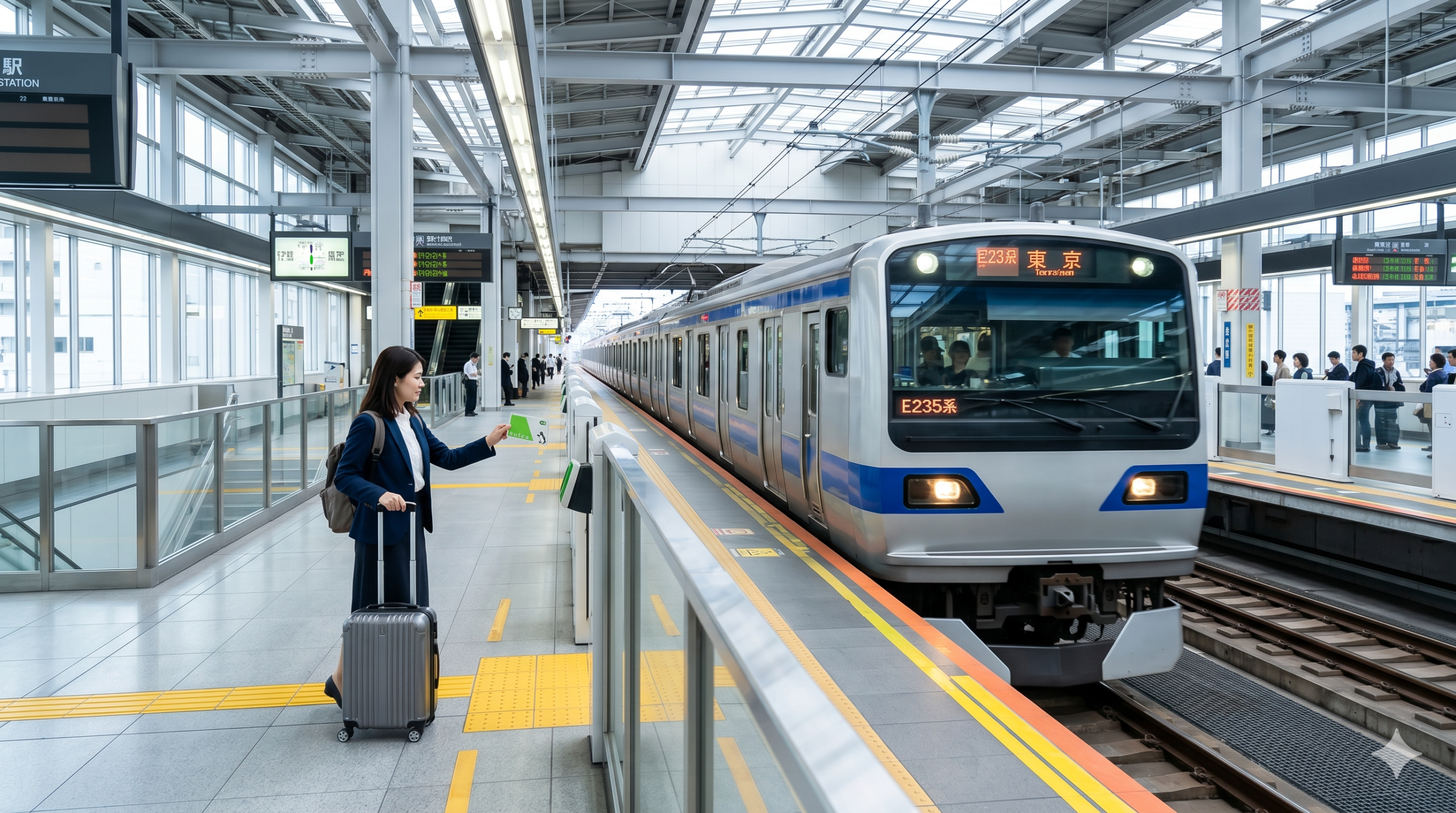
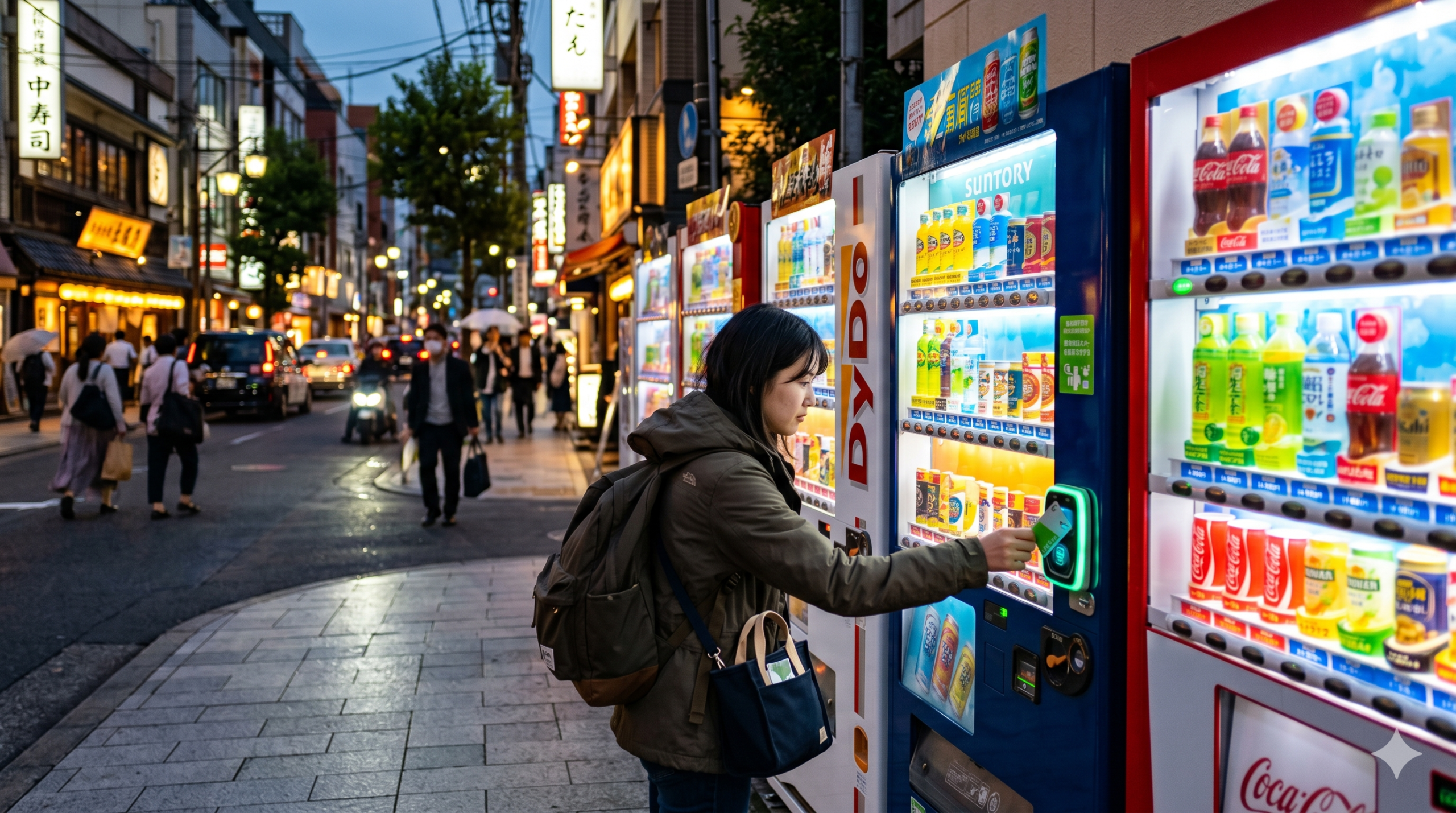
    1. Welcome Suica / PASMO Passport (Best for Tourists)

    This is your best friend in Japan. The Welcome Suica card costs ¥1,500 and is valid for 28 days. Load money onto it and use it for:

    • All trains and subway lines across Japan
    • Every convenience store (7-Eleven, FamilyMart, Lawson)
    • Vending machines
    • Many restaurants and supermarkets
    • Taxis in major cities

    No bank account required. No Japanese phone number. Available at airports and major stations. This single card eliminates most of your payment friction.

    2. Credit Cards (Visa or Mastercard)

    Both work equally well across Japan. American Express is limited to major urban venues (~30–40% fewer merchants). Discover and Diners Club are rarely accepted.

    Most important feature to look for: Zero foreign transaction fees. A 2–3% fee on every purchase adds up fast. Cards like Chase Sapphire Preferred, Capital One Venture, or Wise card eliminate this fee entirely.

    3. Apple Pay / Google Pay

    If your card is registered and contactless, tap-to-pay works at most modern retailers, convenience stores, and increasingly at restaurants. Over 50% of new cards issued in Japan are contactless-enabled as of 2026. This is growing fast.

    4. PayPay (For Residents, Not Tourists)

    PayPay has 65 million+ users in Japan and is accepted at small restaurants that don’t take cards. But it requires a Japanese phone number and Japanese bank account or credit card. Useful for long-term residents, not practical for most tourists.

    ATMs: Where to Get Cash in Japan

    7-Eleven ATMs (Best Option)

    Available at all 20,000+ 7-Eleven stores nationwide, open 24/7, with English interface. Accepts Visa, Mastercard, Maestro, Cirrus, JCB, UnionPay, and Discover. Fee: ¥110–220 per transaction. Withdrawal limit: ¥50,000–100,000 per transaction.

    First stop after landing: 7-Eleven ATM in the airport arrivals area. Withdraw ¥30,000–40,000 for your first few days.

    Japan Post Bank ATMs (Second Option)

    Found in post offices and major train stations. Also accepts foreign cards with similar fees. Limited hours (closed evenings and weekends).

    Regular Bank ATMs — Avoid

    Standard Japanese bank ATMs (MUFG, SMBC, etc.) often reject foreign cards. Don’t waste time trying them.

    Currency Exchange: Where to Get the Best Rate

    Location Rate Quality Notes
    7-Eleven ATM withdrawal ⭐⭐⭐⭐⭐ Best Very close to mid-market rate
    City exchange shops ⭐⭐⭐⭐ Good 2–4% above mid-market
    Airport exchange ⭐⭐ Poor 5–8% markup. Avoid except for small emergency amount
    Hotel exchange ⭐ Worst 5–10% markup. Never use if avoidable

    Check the mid-market rate on Google before exchanging anywhere: search “[your currency] to JPY.”

    How Much Cash to Carry?

    Traveler Type Recommended Daily Cash
    Budget traveler ¥5,000–8,000/day
    Mid-range traveler ¥10,000–15,000/day
    Comfortable traveler ¥15,000–25,000/day

    Keep ¥10,000–20,000 on you at all times as a backup. Even if you plan to pay cashless, Japan’s cashless infrastructure occasionally fails at the worst times.

    💸 The smart way to handle money in Japan

    A Wise account gives you a multi-currency debit card with the real exchange rate and low fees — perfect for cashless payments, paying bills, and withdrawing cash in Japan as a foreigner.

    Open a free Wise account →

    The Smart Japan Money Strategy

    1. Arrive with ¥30,000–50,000 (or withdraw immediately from 7-Eleven ATM at airport)
    2. Buy a Welcome Suica card for ¥1,500 and load ¥5,000–10,000 onto it
    3. Use Suica for trains, convenience stores, and everyday purchases
    4. Use a zero-fee credit card (Visa/Mastercard) for hotels, large restaurants, and shopping malls
    5. Keep ¥10,000 cash in your wallet at all times for temples, small restaurants, and emergencies
    6. Withdraw cash every 2–3 days at 7-Eleven if needed

    This approach covers 95%+ of payment situations you’ll encounter. You’ll look like a local — or at least, a well-prepared tourist.

  • Japan Rainy Season 2026: Exact Dates, What to Pack & Insider Tips to Enjoy It

    Japan Rainy Season 2026: Exact Dates, What to Pack & Insider Tips to Enjoy It

    Japan’s rainy season — called Tsuyu (梅雨) — is one of the most misunderstood times to visit. Yes, it rains. But it’s also crowd-free, beautiful, and surprisingly affordable. This is your complete guide to Japan’s rainy season in June 2026.

    🌧️ Tsuyu 2026 Quick Facts

    • Tokyo, Osaka, Kyoto: Early June – mid-July
    • Okinawa: Mid-May – late June
    • Hokkaido: Usually rainy season-free
    • Temperatures: 22–28°C — warm but comfortable
    • Rain chance: ~40–60% — not all-day rain, just showers

    What Is Tsuyu? The Real Picture

    Tsuyu doesn’t mean constant rain. Most days bring light drizzle, intermittent showers, and misty mornings — not non-stop downpours. Think London weather, warmer, with better food. The humidity (70–85%) is the real challenge, but it’s manageable with the right clothing.

    5 Reasons to Actually Visit Japan During Rainy Season

    1. Dramatically Fewer Crowds

    Fushimi Inari with 40% fewer tourists? Yes. Arashiyama bamboo grove in the mist? Genuinely stunning. Popular attractions are far more manageable during tsuyu than during Golden Week or autumn.

    2. Lower Prices

    Flights and hotels drop noticeably during rainy season. Ryokans that are fully booked in October often have availability. It’s one of Japan’s few true “value travel” windows.

    3. Hydrangea Season at Its Peak

    Hydrangeas (ajisai) bloom during tsuyu and they’re breathtaking. Top spots:

    • Meigetsuin Temple, Kamakura — The “Hydrangea Temple,” 2,500 plants lining the paths
    • Hakone — Hydrangeas with misty mountain backdrops
    • Bunkyo Hydrangea Festival, Tokyo — Free June festival at Hakusan Shrine
    • Nishi Park, Fukuoka — 250 varieties

    4. Misty Temples Look Incredible

    Kyoto in the mist is a photographer’s dream. Kurama and Kibune mountain villages, Philosopher’s Path, Sanjusangendo — all take on an otherworldly quality in rainy season light.

    5. Onsen in the Rain

    Outdoor hot spring baths (rotenburo) in misty rain is a once-in-a-lifetime sensory experience. The combination of warm water, cool air, and mist is uniquely Japanese.

    What to Pack for Japan’s Rainy Season

    ☂️ Rainy Season Packing List

    Waterproof shoes — Most important item. Wet socks ruin entire days. Waterproof sneakers or light boots are perfect.

    Compact umbrella — Available at every konbini for ¥500–¥1,000 if you forget yours. Avoid large umbrellas on crowded streets.

    Lightweight rain jacket — Packable, breathable, with a hood. Far better than a poncho.

    Quick-dry clothing — Merino wool, linen, synthetics. Avoid heavy denim — it takes forever to dry.

    Dehumidifying packets — For your bag and shoes. Available at Daiso (100-yen shop) everywhere in Japan.

    Best Activities by City During Tsuyu

    Tokyo

    • teamLab Borderless/Planets — Digital art that’s even more atmospheric on rainy days
    • Depachika basement food halls — Isetan Shinjuku, Mitsukoshi Ginza: world-class food shopping
    • Yanaka district — Old-Tokyo neighborhood that looks incredible in the rain
    • Tokyo National Museum — World-class Japanese art collection in Ueno Park

    Kyoto

    • Kurama and Kibune — Mountain temple villages that glow in the mist
    • Sanjusangendo — Indoor hall of 1,001 warrior statues
    • Nishiki Market — Covered arcade “Kyoto’s Kitchen”

    Kamakura (Day Trip from Tokyo)

    • Meigetsuin Temple — Arrive before 9am for the hydrangeas without crowds
    • Engakuji Temple — Ancient Zen temple complex in the mist

    Practical Survival Tips

    Use Tokyo’s Underground Network

    Tokyo’s underground shopping malls connect major train stations. In Shinjuku, you can travel between multiple stations completely sheltered from rain. Osaka’s Namba underground connects entire districts.

    Check Hourly Weather Forecasts

    Japanese weather apps are remarkably accurate. Use Yahoo!天気 (Yahoo! Weather Japan) or Weather News for hourly rainfall forecasts. Plan outdoor sightseeing for predicted dry windows — often morning or after 3pm.

    The Konbini Umbrella Strategy

    If you get caught in rain, buy a ¥700 convenience store umbrella. When done, leave it in the umbrella stand at a temple or station for the next person. Very Japanese.

    Tsuyu 2026 Timeline by Region

    RegionStartEnd
    OkinawaMid-MayLate June
    Kyushu/ShikokuLate May–Early JuneMid-July
    Kansai (Osaka, Kyoto)Early JuneMid-July
    Kanto (Tokyo)Early JuneMid-July
    TohokuMid-JuneLate July
    HokkaidoUsually rainy season-free ✅

    The Bottom Line

    Japan’s rainy season rewards travelers who prepare. Come with waterproof shoes, a good rain jacket, and an open mind — and you’ll find June to be one of Japan’s most atmospheric and genuinely memorable travel experiences.

    🇯🇵 Travel & Life Essentials for Japan

    Hand-picked gear to make your time in Japan easier. Available on Amazon US & Amazon Japan.

    🔋 Portable charger

    A must for long days of sightseeing and photos.

    View on Amazon (US)View on Amazon Japan

    🔌 Travel plug adapter

    Japan uses Type A outlets. Bring the right adapter.

    View on Amazon (US)View on Amazon Japan

    🎧 Translation earbuds

    Real-time translation to talk without barriers.

    View on Amazon (US)View on Amazon Japan

    As an Amazon Associate, Japan Life Lab earns from qualifying purchases.

  • Japan Onsen Guide 2026: Hidden Gems Where Foreigners Feel Welcome (Tattoos OK Included)

    Japan Onsen Guide 2026: Hidden Gems Where Foreigners Feel Welcome (Tattoos OK Included)

    What Is Onsen? Japan’s Hot Spring Culture Explained

    Onsen (温泉) are natural hot spring baths fed by geothermally heated water — and they’re one of Japan’s most beloved cultural experiences. With over 3,000 onsen resorts and 27,000 individual hot spring sources nationwide, Japan takes its bathing culture very seriously. From luxurious ryokan retreats to humble neighborhood sento bathhouses, there’s an onsen experience for every budget and travel style.

    This complete guide covers everything you need to know before taking your first onsen dip — etiquette, rules, recommended destinations, and tips for first-timers.

    Onsen vs. Sento: What’s the Difference?

    FeatureOnsen (温泉)Sento (銭湯)
    Water sourceNatural hot springHeated tap water
    MineralsRich in minerals (sulfur, iron, etc.)Plain water, sometimes added
    LocationOften rural, resort areasCity neighborhoods
    Price¥500–¥3,000 (day use)¥500–¥800
    ExperienceNature views, multiple bathsLocal neighborhood feel

    Essential Onsen Etiquette (Rules You Must Follow)

    Onsen have specific rules that must be followed. Breaking etiquette is considered very rude and may get you asked to leave.

    🚫 Do NOT:

    • Enter with a towel in the water (small towels go on your head or poolside)
    • Swim or splash
    • Enter without washing your body first at the shower stations
    • Bring food or drinks into the bathing area
    • Take photos in the bathing area (strictly prohibited)
    • Shave in the bath

    ✅ DO:

    • Shower thoroughly at the shower stations before entering
    • Keep your small towel folded on your head or poolside (not in the water)
    • Enter quietly and move calmly
    • Hydrate before and after bathing
    • Respect other bathers’ privacy and silence
    • Tie long hair up before entering

    The Tattoo Policy: What You Need to Know

    Many traditional onsen in Japan prohibit tattoos due to historical associations with organized crime. This is changing, but slowly. Here’s the 2026 reality:

    • Most traditional onsen: No tattoos policy (visible or covered)
    • Modern “tattoo-friendly” onsen: Growing in number, especially in cities and tourist areas
    • Private baths (貸切風呂, kashikiri-buro): Available at most ryokan for extra fee (¥1,000–¥5,000/hour) — no restrictions
    • Resources: Use the “Tattoo Friendly Onsen in Japan” maps on Google Maps or the “Sento & Onsen” app

    If you have tattoos, book ryokan with private onsen baths in advance. Most can accommodate you without issue.

    Best Onsen Destinations in Japan 2026

    1. Hakone — Easy Day Trip from Tokyo

    Just 90 minutes from Tokyo by Romancecar from Shinjuku (covered by Hakone Free Pass from ¥6,100). Hakone offers stunning views of Mt. Fuji with your onsen, plus the open-air Hakone Sculpture Museum, Lake Ashi, and the Owakudani volcanic valley. Best onsen: Hakone Yunessun (water park onsen, tattoo-friendly), Tenzan Tohji-kyo (traditional, no tattoos).

    2. Beppu & Yufuin — Kyushu’s Hot Spring Paradise

    Beppu (別府) has more hot spring sources than anywhere else in Japan. The famous “Beppu Hells” (地獄) are boiling spring pools of vivid colors — a unique sightseeing experience. Nearby Yufuin is a quieter, more upscale resort town. Accessible by Shinkansen to Hakata + limited express.

    3. Kinosaki Onsen — The Classic Onsen Town

    Located in Hyogo Prefecture, Kinosaki is the quintessential Japanese onsen town. Guests wear yukata (summer kimono) and wooden geta sandals to stroll between 7 public bathhouses. Highly recommended for first-time onsen experiences. Accessible by JR Limited Express from Osaka (~2.5 hours).

    4. Noboribetsu — Hokkaido’s Volcanic Onsen

    Famous for Jigokudani (Hell Valley) — a steaming volcanic crater surrounded by sulfurous hot springs. The mineral-rich waters here are some of the most therapeutic in Japan. Best in winter (snow + onsen = heaven) but excellent year-round.

    5. Kusatsu Onsen — Japan’s Top-Ranked Hot Spring

    Consistently rated Japan’s #1 onsen town in domestic rankings. Located in Gunma Prefecture (2.5 hours from Tokyo). Famous for its “Yumomi” traditional water cooling ceremony and the Yubatake (hot spring field) at the town center. The highly acidic water is said to heal skin conditions.

    Day-Use Onsen vs. Ryokan Stay

    OptionCostBest For
    Public sento¥500–¥800Budget, local experience
    Day-use (日帰り) onsen¥800–¥3,000Half-day experience, tourists
    Budget ryokan with onsen¥8,000–¥15,000/personOvernight, dinner + breakfast
    Mid-range ryokan¥15,000–¥30,000/personSpecial occasion, private bath
    Luxury ryokan¥30,000–¥100,000+/personUltimate Japan experience

    Health Benefits of Onsen

    Japanese onsen waters contain various minerals with different health benefits recognized by the Japanese government:

    • Sulfur onsen: Skin conditions, arthritis, hypertension
    • Sodium chloride (salt) onsen: Muscle pain, fatigue recovery, keeps you warm longer
    • Sodium bicarbonate onsen: Softens and beautifies skin (called “bijin-no-yu” — beautiful woman’s bath)
    • Acidic onsen: Antibacterial, skin conditions (Kusatsu is famous for this)
    • Iron onsen: Anemia, women’s health (water turns red/brown when oxidized)

    Onsen in Tokyo: Where to Go Without Leaving the City

    Can’t make it to the countryside? These Tokyo onsen facilities are excellent:

    • Ooedo Onsen Monogatari (Odaiba): Large theme park-style onsen, yukata included (¥2,750–¥3,300)
    • Spa LaQua (Bunkyo): Natural onsen in central Tokyo with high-tech facilities (¥2,900+)
    • Shimizu-yu (Minami-Aoyama): Stylish neighborhood sento with excellent facilities (¥700)
    • Koganeyu (Koenji): Retro-renovated sento, beloved by locals (¥700)

    ♨️ Book an onsen ryokan

    Ready to soak? Ikyu (一休.com) specialises in carefully selected onsen ryokan and quality hotels across Japan — from luxury hot-spring inns to city stays, often at member rates. (Japanese booking site; a browser translator makes it easy.)

    Find an onsen ryokan on Ikyu →

    What to Bring to an Onsen

    Most ryokan provide towels, yukata, and amenities. For public day-use facilities, bring:

    • Small towel (for washing and covering at poolside)
    • Large towel (for drying off)
    • Shampoo, conditioner, body soap (often provided at nicer facilities)
    • Waterproof bag for valuables
    • Hair tie if you have long hair

    📥 Japan Expat Starter Kit 2026

    60+ page PDF covering banking, housing, Suica, taxes and daily life in Japan

    Get the Guide — $19

    👘 Make your onsen trip special — rent a kimono

    Stroll an onsen town or temple in a traditional kimono. wargo offers easy online booking at locations across Japan (Kyoto, Tokyo, Asakusa & more).

    Book a kimono rental →

    🏨 Book Premium Ryokan & Onsen Hotels at Ikyu.com

    Ikyu.com (一休.com) specializes in Japan’s finest ryokan, onsen hotels, and luxury resorts. English-friendly booking with exclusive member deals.

    Browse Ryokan & Onsen at Ikyu.com →

    AD: This link contains affiliate advertising

    ✈️ Book Ryokan & Onsen Trips Across Japan【エアトリプラス】

    Planning an onsen trip? エアトリプラス lets you book domestic flights + hotels (including ryokan) in one place. Compare prices across Japan’s hot spring destinations and find the best deals for your stay.

    Search Flights & Ryokan in Japan ▶ [AD] Affiliate link — we may earn a commission at no extra cost to you.
  • Japan Summer Survival Guide 2026: Beat 40°C Heat, Typhoons & Humidity — Expat-Tested Tips

    Japan Summer Survival Guide 2026: Beat 40°C Heat, Typhoons & Humidity — Expat-Tested Tips

    Japan Summer 2026: What You Need to Know Before You Go

    Japan in summer (June–August) is an experience like no other — but it’s also brutally hot, intensely humid, and crowded. Temperatures regularly hit 35–38°C (95–100°F) with humidity above 80%, making it feel like 40°C+. Typhoon season runs from August through October. Yet summer is also when Japan’s most spectacular festivals, fireworks shows, and natural wonders come alive.

    This survival guide covers everything tourists and expats need to know to stay safe, comfortable, and happy during Japan’s summer months.

    Japan Summer Weather: Month by Month

    MonthAvg Temp (Tokyo)RainfallWhat to Expect
    June22–27°CHigh (rainy season)Tsuyu (梅雨) rainy season, hydrangeas bloom
    July26–32°CModeratePeak summer, Tanabata Festival, fireworks begin
    August27–35°CLow–ModerateHottest month, Obon Festival, typhoon risk
    September23–30°CHigh (typhoon)Typhoon peak season, starts to cool late Sept

    Heatstroke Warning: Japan’s Silent Summer Danger

    Heatstroke (熱中症, netchuushou) hospitalizes tens of thousands of people in Japan every summer. Here’s how to stay safe:

    Signs of heatstroke: Dizziness, nausea, confusion, hot/dry skin, headache, rapid heartbeat. If you or someone shows these signs, move to shade or AC immediately and call 119 (emergency services).

    Prevention tips:

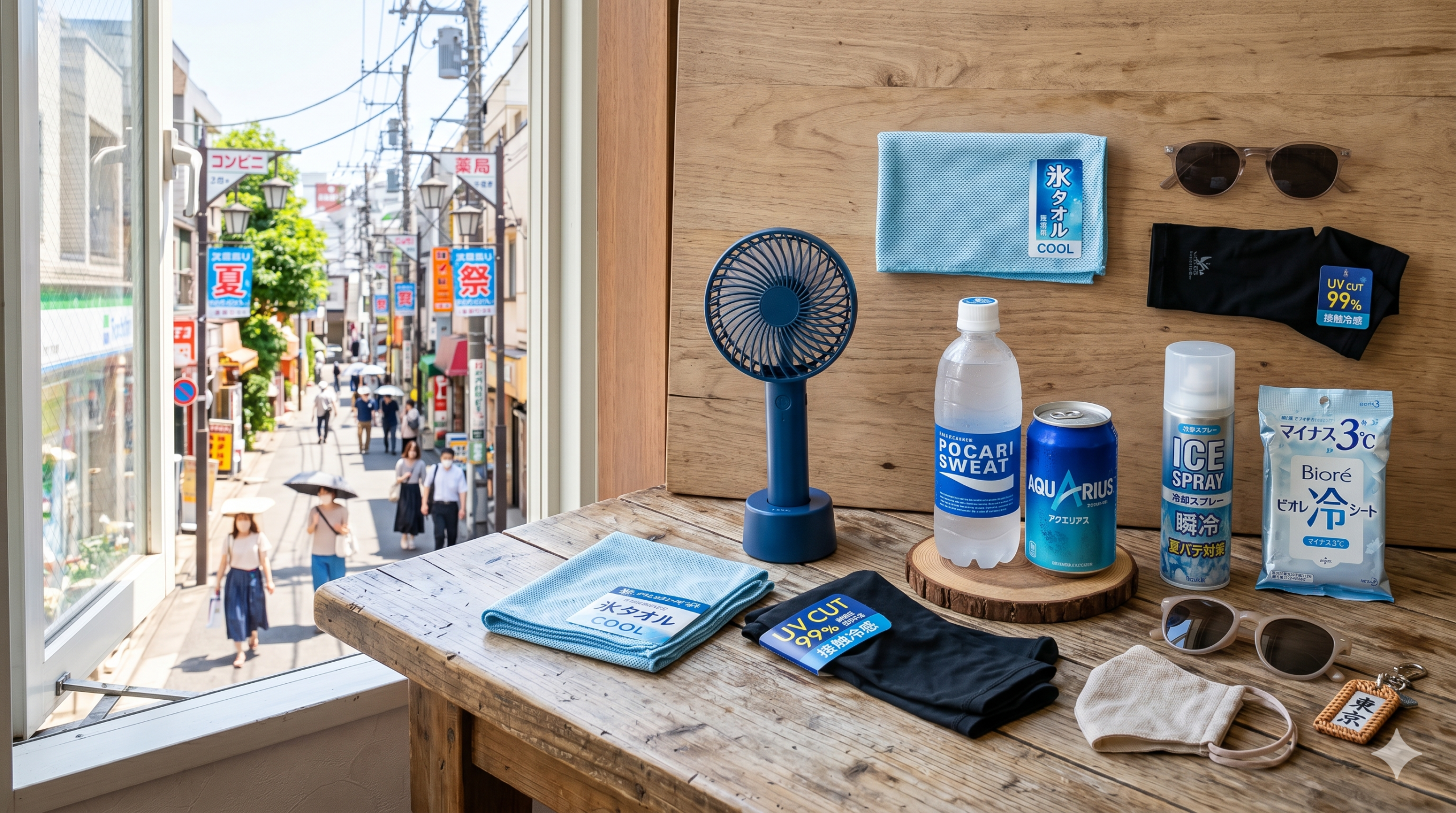
    • Drink water or sports drinks (Pocari Sweat, Aquarius) every 20–30 minutes — even if you don’t feel thirsty
    • Carry a portable neck cooler or cooling towel
    • Avoid outdoor activities between 11am–3pm on hot days
    • Wear light-colored, breathable clothing and a hat
    • Take regular breaks in air-conditioned spaces (konbini, department stores, underground malls)
    • Apply sunscreen SPF50+ every 2 hours

    Essential Summer Gear to Buy in Japan

    Japan’s convenience stores and pharmacies are stocked with summer survival products you won’t find elsewhere:

    Cooling products: Neck cooler wearables (¥2,000–¥5,000), cooling towels, mentholated cooling spray, UV-cut parasols (日傷傘 — highly recommended, used by everyone)

    Hydration: Pocari Sweat, Aquarius, and Kirin Supli electrolyte drinks are in every konbini. Electrolyte tablets for water bottles are sold at pharmacies.

    Sun protection: Japanese sunscreen is world-class. Look for Anessa Perfect UV (SPF50+) or Biore UV Aqua Rich — both lightweight and water-resistant.

    Portable fans: Handheld battery fans (¥500–¥3,000) are essential. Premium versions with misting functions are available at electronics stores.

    Rainy Season (Tsuyu) Tips: June–Mid-July

    Tsuyu (梅雨) is Japan’s rainy season — a 3–6 week stretch of overcast skies and daily rain from mid-June through mid-July. It’s not constant downpours, but expect 1–2 hours of rain each day.

    • Pack a compact umbrella — or buy one at any konbini for ¥500–¥1,000
    • Waterproof your bag — a simple rain cover (¥300–¥500) protects electronics
    • Embrace it — hydrangeas (アジサイ) are at peak bloom in tsuyu; Kamakura and Hakone are stunning
    • Check the “梅雨明け” (tsuyu明け) announcement — when rainy season officially ends, summer truly begins

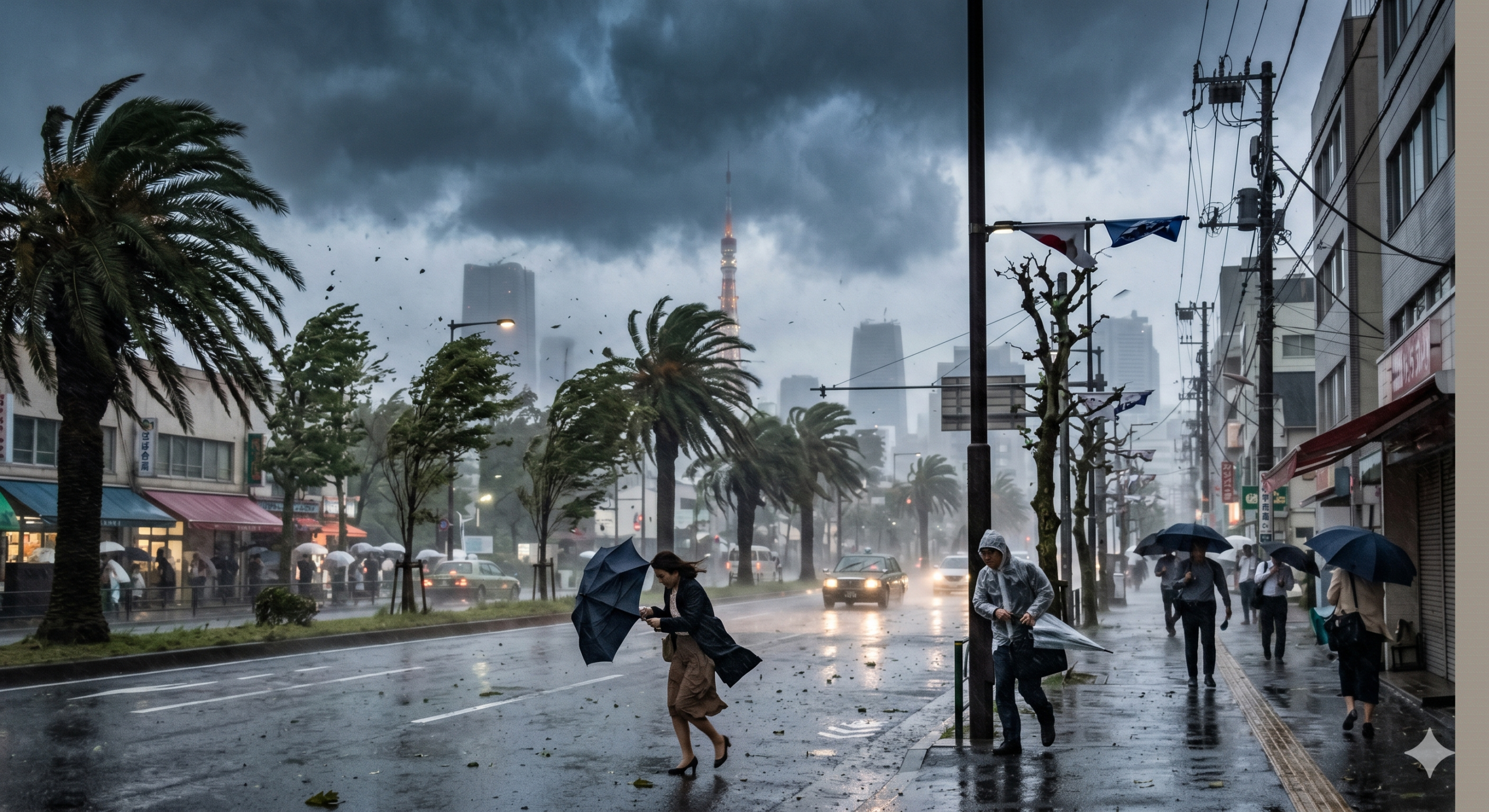
    Typhoon Season (August–October): What to Do

    Japan experiences 5–10 typhoons annually, with August–September being the most active months. Most pass through quickly (12–24 hours), but can disrupt transportation significantly.

    Before a typhoon: Stock 2–3 days of food and water. Know your nearest evacuation center (避難所). Download the NHK World app for English typhoon alerts. Keep your phone charged.

    During a typhoon: Stay indoors. If you must go out, avoid rivers and drainage canals (flash flood risk). All trains, flights, and buses may be cancelled — this is normal and safe decisions by operators.

    After a typhoon: Wait for official “all clear” before going out. Roads may be flooded. Check NHK or Japan Meteorological Agency (weather.yahoo.co.jp) for updates.

    Must-See Summer Events in Japan 2026

    Tanabata (七夕) — July 7: The Star Festival. Celebrated nationwide with colorful streamers and wishes written on paper strips. Best in Sendai (one of Japan’s largest Tanabata festivals, August 6–8).

    Sumida River Fireworks — Late July: Tokyo’s most famous hanabi taikai (fireworks festival). Over 20,000 fireworks in one evening. Book nearby restaurants and ryokan months in advance.

    Obon Festival — August 13–16: Japan’s Buddhist festival of ancestors. Many businesses close, cities empty as residents return to hometowns. Expect packed Shinkansen and quiet city centers.

    Awa Odori (阿波踊り) — August 12–15, Tokushima: Japan’s largest traditional dance festival with 1+ million attendees. One of the most visually spectacular events in Japan.

    Gion Matsuri (祇園祭) — All of July, Kyoto: Kyoto’s famous summer festival, culminating in massive float processions on July 17 and 24.

    Staying Cool: AC Culture in Japan

    Japanese summer survival depends heavily on air conditioning (エアコン). Here’s how the AC culture works:

    • Konbini are lifesavers: 7-Eleven, FamilyMart, and Lawson are air-conditioned refuges open 24/7. Grab a cold drink and cool down any time.
    • Set temperature wars: Japanese offices are often set to 28°C (legally mandated “Cool Biz” policy to save energy). Carry a light cardigan for overly air-conditioned spaces (trains, malls, restaurants).
    • Underground malls (地下街): Major cities like Osaka, Nagoya, and Tokyo have extensive underground shopping malls — cool, car-free, and perfect for hot days.
    • Department store basement floors (デパ地下): Heavily air-conditioned, packed with food, and a cultural experience in themselves.

    Summer Food & Drinks to Try

    Kakigori (かき氷): Japanese shaved ice topped with flavored syrups, condensed milk, or matcha. The premium version at specialty shops (from ¥800) is a revelation.

    Cold soba & hiyashi chuka: Cold noodle dishes are a summer staple. Hiyashi chuka (cold ramen with toppings) appears on restaurant menus only in summer.

    Edamame & cold beer: Japanese beer culture peaks in summer. Asahi, Sapporo, and Kirin tap beers at outdoor beer gardens are a uniquely Japanese summer experience.

    Natsu mikan & suika: Fresh seasonal fruits — summer mandarin oranges and watermelon — are sold at supermarkets and fruit stands at peak ripeness.

    Japan Summer Survival: Quick Reference

    SituationSolution
    Feeling too hot outdoorsEnter nearest konbini, buy cold drink, rest 10 minutes
    Sudden heavy rainKonbini umbrella (¥500) or underpass/arcade
    Typhoon approachingStay in hotel, NHK World app for English alerts
    Heatstroke symptomsShade + cold water + electrolytes, call 119 if severe
    SunburnJapanese aloe vera gel (pharmacies) + hydration

    📥 Japan Expat Starter Kit 2026

    60+ page PDF: Banking, Housing, Suica, Taxes & daily life in Japan

    Get the Guide — $19

    ✈️ Traveling Across Japan This Summer?【エアトリプラス】

    Whether you’re escaping to cooler mountains or exploring coastal towns, エアトリプラス lets you compare and book domestic flights + hotels together. Find deals and plan your Japan summer trip with ease.

    Search Japan Flights & Hotels ▶ [AD] Affiliate link — we may earn a commission at no extra cost to you.

✈️ Travel in Japan

Travel guides, destinations, and tips for visiting Japan

30 guides available
Best Japanese Izakaya Guide 2026 | How to Order, Eat & Drink Like a Local
Travel in Japan

Best Japanese Izakaya Guide 2026 | How to Order, Eat & Drink Like a Local

What Is an Izakaya? Japan’s Ultimate Social Dining Experience If you’ve ever wandered through Japan’s glowing city streets at night and spotted warm, lively restaurants with red lanterns and the sound of clinking glasses and laughter spilling out — you’ve found an izakaya (居酒屋). Literally translating to “stay-sake-shop,” an izakaya is Japan’s answer to the […]

Read more →
Best Day Trips from Tokyo 2026: Top 5 Easy Escapes for Tourists & Expats
Travel in Japan

Best Day Trips from Tokyo 2026: Top 5 Easy Escapes for Tourists & Expats

Why Day Trips from Tokyo Are a Must-Do in 2026 Tokyo is endlessly fascinating — but Japan’s exceptional rail network means you can escape the city, explore somewhere completely different, and be back in your hotel before midnight. In 2026, day trips from Tokyo remain one of the most searched activities for tourists and long-term […]

Read more →
Best Japanese Souvenirs 2026 | Top 5 Omiyage Picks Tourists Love
Travel in Japan

Best Japanese Souvenirs 2026 | Top 5 Omiyage Picks Tourists Love

📝 AI-Assisted Content Notice This article was created with AI writing assistance (ChatGPT, Claude, etc.). Product selection, specifications, and reviews are verified by the Japan Life Lab editorial team. Navi I’m heading to Japan soon — what souvenirs should I actually buy? There’s so much to choose from! Gaje Japan has the best omiyage (gift […]

Read more →
Best Japanese Ramen Guide 2026 | 5 Must-Try Styles for Tourists & Expats
Travel in Japan

Best Japanese Ramen Guide 2026 | 5 Must-Try Styles for Tourists & Expats

Introduction: Why Ramen is Japan’s Soul Food Few foods define Japan’s culinary identity like ramen (ラーメン). What started as Chinese-influenced noodle soup became, over decades, one of the world’s most celebrated comfort foods — with Japan taking it to extraordinary heights of craftsmanship and regional diversity. Today, Japan has over 30,000 ramen restaurants, and the […]

Read more →
Japan Travel Emergency Guide 2026: What to Do If You Lose Your Suica, Passport, or Have a Medical Crisis
Travel in Japan

Japan Travel Emergency Guide 2026: What to Do If You Lose Your Suica, Passport, or Have a Medical Crisis

Even the best-planned Japan trip can hit unexpected bumps. Losing your Suica card, getting stranded without internet, or facing a medical emergency can feel overwhelming — especially in a country where Japanese is the primary language. This guide gives you clear, step-by-step solutions for the most common travel emergencies in Japan. ① Lost Your Suica […]

Read more →
wargo Kimono Rental Japan 2026: Complete Guide | Best Prices, Locations & Booking Tips
Travel in Japan

wargo Kimono Rental Japan 2026: Complete Guide | Best Prices, Locations & Booking Tips

Wearing a kimono is one of the most memorable experiences in Japan — and wargo makes it easy, affordable, and available in English. Whether you’re strolling through Kyoto’s bamboo groves, visiting Asakusa in Tokyo, or attending a traditional ceremony, renting a kimono from wargo transforms any sightseeing into something truly special. In this guide, we […]

Read more →
Ikyu.com Guide 2026: How to Book Luxury Ryokan in Japan (Tips for Foreigners)
Travel in Japan

Ikyu.com Guide 2026: How to Book Luxury Ryokan in Japan (Tips for Foreigners)

📝 AI-Assisted Content NoticeThis article was created with AI writing assistance. Recommendations are verified by the Japan Life Lab editorial team. Japan is famous for its extraordinary ryokan (traditional inns) and luxury hotels — but booking them can feel intimidating, especially if you don’t read Japanese. Ikyu.com (一休.com) is Japan’s premier luxury accommodation booking platform, […]

Read more →
KKday Japan Review 2026: Best Tours & Activities to Book (Honest Guide)
Travel in Japan

KKday Japan Review 2026: Best Tours & Activities to Book (Honest Guide)

📝 AI-Assisted Content NoticeThis article was created with AI writing assistance. Product selection and recommendations are verified by the Japan Life Lab editorial team. Planning a trip to Japan and wondering how to book local experiences, day trips, or cultural activities without getting overwhelmed? KKday is one of the most popular booking platforms for Japan […]

Read more →
Best Japanese Summer Festivals 2026: Top 7 Matsuri You Must Experience
Travel in Japan

Best Japanese Summer Festivals 2026: Top 7 Matsuri You Must Experience

Best Japanese Summer Festivals 2026: The Ultimate Guide for Tourists Japanese summer festivals (夏祭り / Natsu Matsuri) are among the most spectacular cultural experiences Japan has to offer. From July through August, thousands of festivals light up cities and villages across the country — featuring fireworks (hanabi), traditional dances (Bon Odori), elaborate floats, street food […]

Read more →
PASMO Card Japan 2026: Complete Guide for Tourists & Expats (How to Get, Use & Refund)
Travel in Japan

PASMO Card Japan 2026: Complete Guide for Tourists & Expats (How to Get, Use & Refund)

What Is PASMO? The Complete Guide for Tokyo Tourists & Expats (2026) PASMO is a rechargeable IC (Integrated Circuit) smart card used for public transportation throughout the Greater Tokyo area. Launched in 2007 by a consortium of Tokyo-area private railways, PASMO works on subways, trains, buses, and even taxis — and can also be used […]

Read more →
Japan Street Food Guide 2026: 20 Must-Try Foods & Where to Find Them
Travel in Japan

Japan Street Food Guide 2026: 20 Must-Try Foods & Where to Find Them

Japan’s street food scene is one of the most exciting and delicious in the world. From Osaka’s takoyaki-lined alleys to Tokyo’s shrine festival stalls, discovering Japan one bite at a time is an essential part of any trip. This guide covers 20 must-try Japanese street foods, where to find them, what they cost, and exactly […]

Read more →
Japan Summer Festivals 2026: Complete Guide to Hanabi, Matsuri & Obon (Top 10 Events)
Travel in Japan

Japan Summer Festivals 2026: Complete Guide to Hanabi, Matsuri & Obon (Top 10 Events)

Summer in Japan is festival season! From spectacular fireworks shows to ancient Obon traditions, Japanese summer festivals (matsuri) offer some of the most authentic cultural experiences you can have as a visitor or expat. In 2026, thousands of festivals are taking place across Japan between July and August — here is your complete guide to […]

Read more →
Japan Summer Festivals 2026: The Ultimate Matsuri Guide (Gion, Obon, Nebuta & More)
Travel in Japan

Japan Summer Festivals 2026: The Ultimate Matsuri Guide (Gion, Obon, Nebuta & More)

📝 AI-Assisted Content Notice: This article was created with AI writing assistance. Festival dates and details are verified by the Japan Life Lab editorial team. Japan’s summer is alive with color, sound, and incredible energy — and it all centers around matsuri (festivals). From ancient religious ceremonies dating back over 1,000 years to dazzling fireworks […]

Read more →
Best Fireworks Festivals in Japan 2026 | Hanabi Guide for Tourists & Expats
Travel in Japan

Best Fireworks Festivals in Japan 2026 | Hanabi Guide for Tourists & Expats

Navi I keep hearing about “hanabi” in summer Japan — what exactly is it, and can tourists actually enjoy the festivals? Gaje Hanabi (花火) literally means “flower fire” — Japan’s summer fireworks festivals are one of the most magical experiences you can have here. Absolutely, tourists and expats are welcome, and these festivals are often […]

Read more →
Left Something on a Japanese Train? 2026 Lost & Found Guide (How to Get It Back)
Transport & IC

Left Something on a Japanese Train? 2026 Lost & Found Guide (How to Get It Back)

The doors close, the train pulls away — and you realize your phone, wallet, or umbrella is still on the seat. Heart-stopping, right? Here’s the reassuring truth: Japan has one of the best lost-and-found systems in the world. Tokyo police alone recovered around 4.5 million lost items in a recent year, and cash is returned […]

Read more →
Japan Train Delay & Suspension Guide 2026: What to Do When Trains Stop (Delay Certificate, Refunds & Apps)
Transport & IC

Japan Train Delay & Suspension Guide 2026: What to Do When Trains Stop (Delay Certificate, Refunds & Apps)

You’re standing on a platform in Tokyo, your train isn’t moving, and an announcement crackles over the speakers — entirely in Japanese. Stressful, right? Japanese trains are famously punctual, but delays (遅延) and full suspensions (運転見合わせ) do happen, especially during the June–October rainy and typhoon season. The good news: the system is built to help […]

Read more →
Best Souvenirs to Buy in Japan 2026: Ultimate Omiyage Shopping Guide
Travel in Japan

Best Souvenirs to Buy in Japan 2026: Ultimate Omiyage Shopping Guide

The Best Souvenirs to Buy in Japan (2026 Shopping Guide) 📅 Updated July 2026: Product information, prices, and travel details in this article have been updated to reflect the latest information as of July 2026. Half the fun of a trip to Japan is bringing a piece of it home. From beautifully packaged sweets to […]

Read more →
Japan Public Transport Guide 2026: Trains, Subways, Buses & IC Cards
Travel in Japan

Japan Public Transport Guide 2026: Trains, Subways, Buses & IC Cards

Getting Around Japan: The Complete Public Transport Guide 📅 Updated July 2026: Product information, prices, and travel details in this article have been updated to reflect the latest information as of July 2026. Japan’s public transport is famously punctual, clean, and far-reaching — but for first-timers the maze of train lines, IC cards, and operators […]

Read more →
Japan Vending Machine Guide 2026: How to Use Them & What to Buy
Travel in Japan

Japan Vending Machine Guide 2026: How to Use Them & What to Buy

Japan’s Vending Machines: A Traveler’s Wonderland With roughly one machine for every 30 people, Japan has the highest density of vending machines (jidou hanbaiki) in the world. They’re on quiet mountain trails, on nearly every city corner, and inside almost every station. For first-time visitors they’re a genuine highlight — clean, reliable, and stocked with […]

Read more →
Japan Fireworks Festival Guide 2026: Best Hanabi Events, Tickets & Tips
Travel in Japan

Japan Fireworks Festival Guide 2026: Best Hanabi Events, Tickets & Tips

📝 AI-Assisted Content Notice This article was created with AI writing assistance (ChatGPT, Claude, etc.). Product selection, specifications, and reviews are verified by the Japan Life Lab editorial team. Japan’s fireworks festivals — known as hanabi taikai (花火大会) — are some of the most spectacular summer events in the world. Every year from late July […]

Read more →
Japan Typhoon Season 2026: Complete Survival Guide (Dates, Tracking & What To Do)
Travel in Japan

Japan Typhoon Season 2026: Complete Survival Guide (Dates, Tracking & What To Do)

Understanding Japan’s Typhoon Season 2026: What Every Visitor Needs to Know 📅 Updated July 2026: Product information, prices, and travel details in this article have been updated to reflect the latest information as of July 2026. Japan’s typhoon season runs from June through November, with the peak hitting between August and October. In 2026, meteorologists […]

Read more →
Japan Rainy Season 2026: The Complete Survival Guide (Tsuyu Dates, Tips & Hidden Upsides)
Travel in Japan

Japan Rainy Season 2026: The Complete Survival Guide (Tsuyu Dates, Tips & Hidden Upsides)

Japan’s Rainy Season Is Real — and Most Tourists Are Completely Unprepared Every year, millions of visitors arrive in Japan during June and early July without knowing what they’re walking into. The tourist boards don’t shout about it. The Instagram highlights don’t show it. But tsuyu (梅雨) — Japan’s rainy season — is a genuine […]

Read more →
Japan Summer Survival Guide 2026: 15 Amazon Finds That'll Save You From the Brutal Heat
Travel in Japan

Japan Summer Survival Guide 2026: 15 Amazon Finds That'll Save You From the Brutal Heat

Japan’s summer is no joke. Tokyo in August hits 35–38°C (95–100°F) with humidity above 80% — the kind of heat that saps your energy within 30 minutes outdoors. Yet millions of tourists visit Japan in summer every year and have amazing trips. The secret? The right gear. We tested and researched the best heat-survival products […]

Read more →
Japan Packing List 2026: 27 Things to Buy on Amazon Before You Land (Don't Skip #12!)
Travel in Japan

Japan Packing List 2026: 27 Things to Buy on Amazon Before You Land (Don't Skip #12!)

Planning your Japan trip? Here’s the hard truth: most travelers pack wrong. They bring things sold at every 7-Eleven in Japan while forgetting essentials that could have saved their trip. After reviewing thousands of Japan travel reports and testing products ourselves, here are 27 items to order on Amazon right now — before you board. […]

Read more →
No Internet in Japan? Complete Fix Guide for Tourists & Expats (2026)
Tech & Gadgets

No Internet in Japan? Complete Fix Guide for Tourists & Expats (2026)

Why Your Phone Might Not Work in Japan (Even With a “Good” Plan) 📅 Updated July 2026: Product information, prices, and travel details in this article have been updated to reflect the latest information as of July 2026. You land at Narita or Haneda, turn on your phone, and… nothing. Or worse — you have […]

Read more →
Japan ATM Problems 2026: Why Your Foreign Card Gets Rejected & Every Fix That Works
Money & Banking

Japan ATM Problems 2026: Why Your Foreign Card Gets Rejected & Every Fix That Works

Why Does Japan Reject Foreign Cards at ATMs? (The Real Reason) 📅 Updated July 2026: Product information, prices, and travel details in this article have been updated to reflect the latest information as of July 2026. You’re standing at a Japanese ATM, your debit card in hand, and the machine just spits it back out. […]

Read more →
Japan Budget Travel Guide 2026: How to Visit Japan for Under $50/Day
Travel in Japan

Japan Budget Travel Guide 2026: How to Visit Japan for Under $50/Day

Can You Really Travel Japan on a Budget in 2026? 📅 Updated July 2026: Product information, prices, and travel details in this article have been updated to reflect the latest information as of July 2026. Japan has a reputation for being expensive — but that reputation is outdated. While Tokyo can rival New York or […]

Read more →
Osaka vs Tokyo 2026: Which City Should You Visit First? (Honest Comparison After Living in Both)
Travel in Japan

Osaka vs Tokyo 2026: Which City Should You Visit First? (Honest Comparison After Living in Both)

It’s the most debated question in Japan travel: Osaka or Tokyo — which city should you visit first? Both are world-class destinations with completely different personalities. Tokyo is a hyper-modern megalopolis; Osaka is Japan’s food capital with a warmer, more laid-back soul. We break down every factor so you can make the right call for […]

Read more →
Japan's Departure Tax Triples in July 2026: What Every Traveler Must Know Before Booking
Travel in Japan

Japan's Departure Tax Triples in July 2026: What Every Traveler Must Know Before Booking

Breaking news for anyone planning to travel to Japan in 2026: Japan is tripling its departure tax from ¥1,000 to ¥3,000 per person, effective July 1, 2026. Whether you’re a tourist, expat, or frequent traveler, this change affects every international flight out of Japan. ⚡ Quick Facts: • Old tax: ¥1,000 per person • New […]

Read more →
Japan Hidden Gems 2026: 10 Stunning Places Most Tourists Never Find (No Crowds Guaranteed)
Travel in Japan

Japan Hidden Gems 2026: 10 Stunning Places Most Tourists Never Find (No Crowds Guaranteed)

Why Japan’s Hidden Gems Are Better Than the Famous Ones Here’s a travel truth most guides won’t tell you: Japan’s most memorable experiences rarely happen at its most photographed spots. They happen in the narrow alleyways of a castle town that doesn’t appear on the top-10 lists, at a quiet hot spring inn with no […]

Read more →
NEWThe Japan Expat Starter Kit 2026 — banking, visas, 100 phrases & more in one PDF$19 $9.90 code JLL30Get it →×